Aerial taxis are rapidly advancing, promising to transform urban mobility by easing congestion and providing faster, more efficient travel options. Thanks to innovations in eVTOL technology, batteries, and autonomous systems, these vehicles are becoming safer and cleaner. Infrastructure like vertiports and evolving regulations are also taking shape, making urban air mobility increasingly feasible. If you want to explore how these new systems might fit into your city’s future, there’s more to uncover ahead.
Key Takeaways
- Rapid market growth and technological innovations position aerial taxis as a feasible urban mobility solution soon.
- Advances in electric and autonomous systems improve safety, efficiency, and environmental sustainability of aerial taxi services.
- Infrastructure development like vertiports and regulatory frameworks are progressing to support urban deployment.
- Consumer demand for faster, convenient, and greener transportation boosts acceptance of aerial taxis in cities.
- Challenges such as battery limitations, safety regulations, and infrastructure costs are being actively addressed for mainstream adoption.
The Rapid Growth of Urban Air Mobility Markets

Urban air mobility markets are experiencing explosive growth driven by technological advancements and increasing urbanization. You’ll notice the market size is projected to skyrocket from USD 6.54 billion in 2025 to over USD 92.60 billion by 2034, with a compound annual growth rate of around 20%. The global air taxi industry alone is expected to grow from USD 1.32 billion in 2024 to nearly USD 7.74 billion by 2033. This rapid expansion is fueled by innovations in electric vertical takeoff and landing (eVTOL) aircraft, improved battery technology, and autonomous systems. As cities become more congested, the demand for faster, more efficient urban transportation options increases, pushing the market toward mainstream adoption. Investment, infrastructure development, and regulatory progress are also accelerating this upward trajectory. Additionally, the integration of urban air mobility systems with existing transportation networks is set to revolutionize city travel.
Cutting-Edge Technologies Powering Aerial Taxis

Advancements in technology are transforming aerial taxis from futuristic concepts into practical urban transportation solutions. You benefit from electric vertical takeoff and landing (eVTOL) aircraft, which enable quick, short-range travel without traditional runways. Breakthroughs in battery technology boost range and reduce charging times, making flights more feasible. Autonomous flight systems and AI enhance safety and streamline operations, minimizing human error. Lightweight materials decrease weight, increasing efficiency and payload capacity. Automation integration allows for smoother navigation and air traffic management. Passenger drones, designed for 1-2 passengers, are emerging as a convenient solution for city commutes. Noise reduction tech and improved sensors help address urban environmental concerns. These innovations collectively accelerate the deployment of reliable, safe, and efficient aerial taxi services in your city. Machine learning algorithms are also being integrated into navigation systems to optimize routes and improve safety protocols.
Infrastructure and Regulatory Frameworks Shaping Adoption
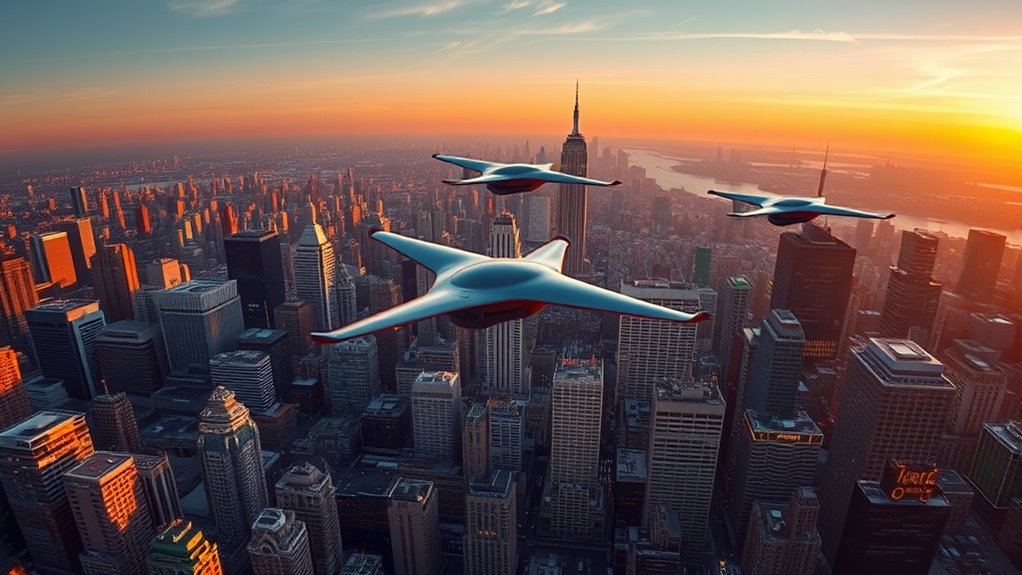
You need to understand how vertiport development strategies are shaping where and how air taxis operate within cities. Evolving regulatory policies set the safety, noise, and flight corridor standards that can either accelerate or hinder adoption. Additionally, urban air traffic management systems are vital for coordinating increasing aerial activity and ensuring safe, efficient operations.
Vertiport Development Strategies
The development of vertiports is a crucial component in enabling the widespread adoption of air taxis, as it directly influences operational efficiency and accessibility. You need strategically placed vertiports in high-demand areas like city centers, airports, and transit hubs to minimize travel time and maximize convenience. Designing vertiports for quick aircraft turnaround, safe passenger flow, and seamless integration with ground transportation is essential. You should also prioritize standardization in infrastructure to streamline construction and operation across different cities. Investing in charging stations and autonomous ground support enhances efficiency. Collaboration with city planners, regulators, and private partners ensures compliance and supports scalable deployment. Additionally, considering size and dimensions of vertiports is vital to accommodate various aircraft types and ensure safety. Ultimately, well-planned vertiport networks will build public trust, boost market growth, and accelerate urban air mobility adoption.
Evolving Regulatory Policies
As urban air mobility expands, evolving regulatory policies play a vital role in shaping its adoption. Governments worldwide are developing frameworks to guarantee safety, manage noise, and establish flight corridors. These policies provide clear standards for aircraft certification, pilot training, and operational protocols, reducing uncertainty for investors and operators. Public-private partnerships are essential, with cities like Los Angeles and Miami leading pilot projects that influence regulatory evolution. Investment in vertiport infrastructure and air traffic management systems depends on these regulations, which must balance innovation and safety. As regulations become more defined, they foster confidence among consumers and industry stakeholders, accelerating deployment. Additionally, regulatory harmonization across jurisdictions can facilitate international operations and expand market opportunities. However, delays in regulatory approval can hamper market growth, making adaptive, forward-looking policies indispensable for timely urban air mobility adoption.
Urban Air Traffic Management
Urban air traffic management is shaping the future of aerial mobility by establishing the necessary infrastructure and regulatory frameworks that guarantee safe, efficient, and scalable operations. You’ll see investments in vertiports, charging stations, and air traffic control systems to support air taxi deployment. Regulatory frameworks are evolving to address flight corridors, noise limits, and safety standards, enabling smoother integration into cityscapes. Public-private partnerships accelerate these developments, with early adopters like Los Angeles and New York leading pilot projects. Effective management requires sophisticated coordination to handle dense urban airspace, ensuring safety and efficiency. Progress in infrastructure and regulation is critical for widespread adoption, reducing barriers and fostering confidence among users and stakeholders. Additionally, implementing airspace management systems can optimize traffic flow and reduce congestion in crowded urban environments.
Consumer Preferences and Market Drivers

Consumer preferences play a pivotal role in shaping the growth of urban air mobility, as travelers increasingly prioritize speed, convenience, and safety. You’re looking for quick, hassle-free ways to beat traffic and save time, especially during rush hours or urgent trips. Many see air taxis as a premium service offering comfort and efficiency, appealing to high-income professionals and busy commuters. Environmental concerns also influence choices, with electric-powered eVTOLs presenting a greener alternative. Additionally, you value accessibility and seamless integration with existing transportation modes. Public acceptance hinges on perceived safety and reliability, while affordability remains essential for broader adoption. As these preferences evolve, market drivers like technological advances, urbanization, and supportive infrastructure will determine how quickly urban air mobility becomes a mainstream option for daily travel. Understanding the differences in security roles can also inform how new technologies are protected and implemented in this emerging sector.
Challenges Facing the Deployment of Urban Air Taxis
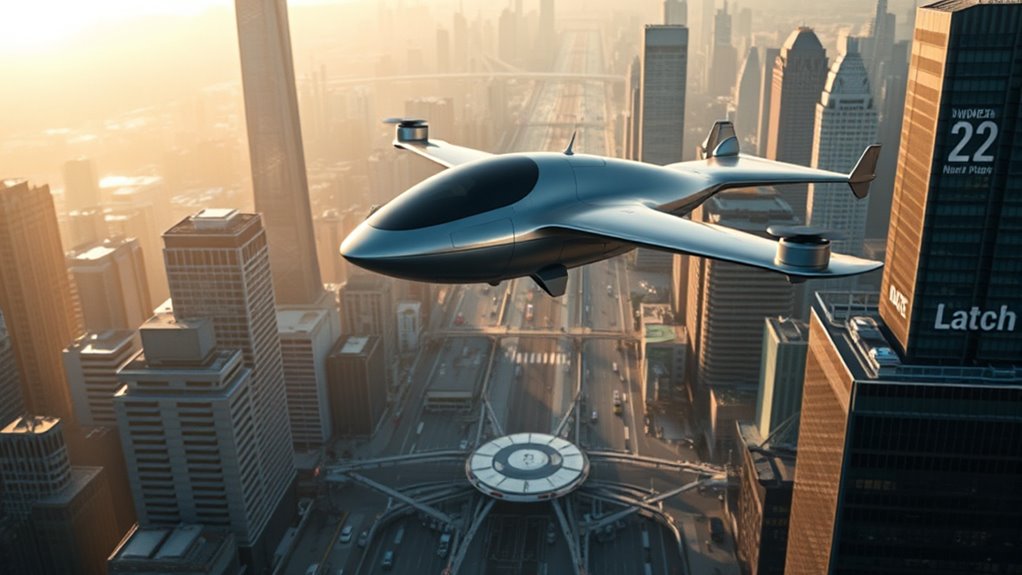
Deploying urban air taxis faces a range of technical, regulatory, and logistical hurdles that could slow down widespread adoption. These challenges include:
- Battery capacity and range limitations, which restrict flight distances and operational efficiency.
- Developing extensive regulations for safety, noise control, and flight corridors to guarantee public trust.
- Building infrastructure like vertiports and integrating them seamlessly into urban environments.
- Managing air traffic in dense city skies, requiring sophisticated coordination systems.
- Ensuring compatibility with existing portable power solutions such as chargers and energy sources to support operational needs.
Overcoming these obstacles demands coordinated efforts among manufacturers, regulators, and city planners. Public concerns about safety, noise, and cost also influence acceptance, making it vital to address these issues early. Without resolving these challenges, the promise of urban air taxis may remain out of reach.
The Future Outlook for Aerial Transportation Solutions

As technological advancements continue to accelerate, the future of aerial transportation solutions looks poised for transformative growth. You can expect rapid market expansion, with projections indicating the industry could reach tens of billions in value within the next decade. Innovations in eVTOL aircraft, battery technology, and autonomous systems will make urban air mobility safer, more efficient, and more accessible. Infrastructure investments, such as vertiports and air traffic management systems, will support seamless integration into cityscapes. Public acceptance is increasing, driven by convenience, time savings, and environmental benefits. However, challenges remain, including regulatory hurdles, safety concerns, and infrastructure logistics. Additionally, battery technology advancements will be crucial in powering these vehicles more sustainably. Overall, you’re likely to see aerial taxis becoming a essential part of urban mobility, reshaping how you commute and reducing congestion.
Frequently Asked Questions
What Are the Main Safety Concerns for Urban Air Taxis?
Your main safety concerns with urban air taxis include guaranteeing reliable autonomous flight systems, managing air traffic in crowded urban spaces, and addressing technical issues like battery failures or system malfunctions. Noise pollution and safety during takeoff and landing are also critical. Additionally, public trust depends on strict regulatory standards, effective safety protocols, and advanced collision avoidance technologies to prevent accidents and ensure passenger safety in complex city environments.
How Will Air Traffic Management Handle Dense Urban Aerial Routes?
Think of dense urban air routes as a busy highway in the sky. Air traffic management will act like skilled traffic controllers, guiding each vehicle with precision. Advanced radar, autonomous systems, and real-time data will coordinate flights, prevent collisions, and guarantee smooth flow. Just as traffic lights keep cars moving, smart algorithms will orchestrate aerial traffic, making sure everyone reaches their destination safely amidst the city’s bustling skyline.
What Are the Environmental Impacts of Widespread Aerial Taxi Deployment?
You might worry about environmental impacts, but widespread aerial taxis could reduce ground traffic emissions and congestion, lowering overall pollution. Electric eVTOLs produce minimal noise and no exhaust gases, helping air quality. However, increased energy demand for charging stations and manufacturing batteries might have environmental costs. Proper regulation and renewable energy integration are essential to guarantee these vehicles are truly sustainable, balancing urban mobility benefits with ecological responsibility.
How Affordable Will Urban Air Taxi Services Become for Average Consumers?
Urban air taxi services are expected to become more affordable as technology advances and competition increases. You’ll likely see prices drop, making short city hops comparable to or even cheaper than traditional taxis or ride-shares. Reduced operational costs from improved batteries, autonomous systems, and increased market entry will help lower fares. However, initial costs may stay higher until infrastructure and regulatory frameworks fully mature, gradually bringing prices within reach for the average consumer.
What Specific Regulations Are Needed to Ensure Passenger Safety?
You need clear safety regulations that cover aircraft certification, pilot training, and operational standards. These rules should guarantee rigorous maintenance protocols, enforce strict air traffic management, and require real-time monitoring systems. By establishing these standards, you create a safe environment where passenger safety is prioritized, risks minimized, and public confidence built. This coordinated approach helps prevent accidents, ensures compliance, and supports the reliable integration of urban air mobility into daily life.
Conclusion
As urban air mobility takes flight, you’ll see innovation accelerate, infrastructure evolve, and regulations adapt. You’ll witness demand grow, technology improve, and safety standards tighten. You’ll embrace convenience, sustainability, and efficiency, all while steering challenges. Ultimately, you’ll be part of a transformative journey—shaping, supporting, and riding the wave of aerial taxis. Together, you’ll move beyond ground-bound limits toward a future where urban skies become as bustling as city streets.