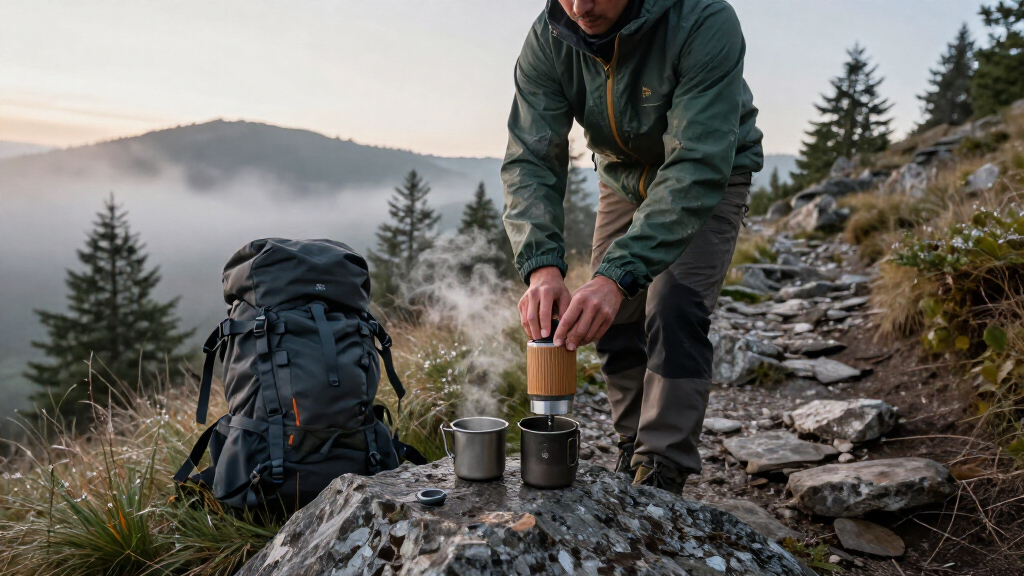
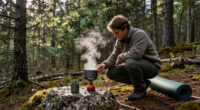
Portable travel espresso makers split into two camps: manual pressure brewers like the WACACO Minipresso NS, which are compact and require nothing but hand power, and self-heating electric models like the Fanttik Cafein 11 and AMZCHEF 2-in-1, which brew anywhere but add bulk, battery limits, and cleaning complexity. The Minipresso NS stands out as the best overall pick for its balance of true espresso pressure, pocket-friendly size, and no dependence on charging — though you’ll need a separate source of hot water. If you want hot coffee from cold water on a trail, a self-heating model like the Fanttik Cafein 11 makes more sense. The core tradeoff in this category is always convenience versus weight and crema quality: electric models sacrifice portability for all-in-one brewing, while manual units deliver richer shots at the cost of pre-heating logistics. Read on for the full breakdown of all 14 models and which one fits your travel style.

Get travel and outdoor gear delivered free with Prime
- Fast, free delivery on millions of items
- Prime Video, Amazon Music and more included
- Member-only deals all year
Complete the kit


Key Takeaways
- Manual pump brewers (WACACO Minipresso NS and GR, AeroPress) consistently deliver better crema and pressure consistency than the self-heating electric models, but they require pre-heated water — a dealbreaker for true off-grid use.
- The self-heating category is crowded with near-identical models (Yorenson, Dawnstar, MyCampix, Havato, and several generic units); battery capacity and heat-up time are the only meaningful differentiators, and claims above 13,500 mAh rarely translate to more than 3–4 shots per charge.
- The 3-in-1 and grinder-equipped models (AMOSA set) are the heaviest and least travel-friendly in the lineup — they suit car campers and van lifers, not backpackers or frequent flyers.
- Ground-coffee compatibility separates the field: models restricted to capsules (Minipresso NS) lock you into proprietary pods, while the Minipresso GR, AeroPress, and most electric units accept any ground coffee, which matters for cost and availability abroad.
- Cleaning difficulty is the most overlooked factor: electric models with internal heating chambers need rinsing between shots and full drying before packing, while manual brewers like the AeroPress clean in seconds with no reservoirs to trap moisture.
| Yorenson Portable Self-Heating Espresso Maker |  | Best Capsule Flexibility | Coffee compatibility: Ground coffee, NS capsules, DG capsules | Water capacity: 2.7 oz | Heating temperature: 194°F (92°C) | VIEW LATEST PRICE | See Our Full Breakdown |
| Portable Self-Heating Espresso Maker, 13,500 mAh |  | Best Battery Life for Extended Trips | Weight: 906 g | Battery capacity: 13,500 mAh, USB-C rechargeable | Output pressure: 20 bar | VIEW LATEST PRICE | See Our Full Breakdown |
| WACACO Minipresso NS Portable Manual Espresso Maker |  | Best No-Power Pick | Operation: Manual piston | Output pressure: 8 bar | Coffee input: Nespresso OriginalLine capsules | VIEW LATEST PRICE | See Our Full Breakdown |
| Dawnstar Portable Electric Espresso Machine for Travel |  | Best for Fast Brewing | Coffee compatibility: Ground coffee (up to 10 g) or Nespresso Original capsules | Water capacity: 80 ml | Battery capacity: 7,800 mAh | VIEW LATEST PRICE | See Our Full Breakdown |
| AeroPress Original Coffee Press |  | Best Budget All-Rounder | Brewing methods: French press, pour-over, and espresso-style | Brew time: About 2 minutes | Included filters: 50 paper micro-filters | VIEW LATEST PRICE | See Our Full Breakdown |
| AMZCHEF Portable Rechargeable 2-in-1 Coffee Maker |  | Best Battery Endurance | Brewing methods: Ground coffee and compatible NS capsules | Battery capacity: 9000mAh (three 3000mAh batteries) | Water heating: 2.7 oz from 77°F to 198°F in ~200 seconds | VIEW LATEST PRICE | See Our Full Breakdown |
| Portable 3-in-1 Self-Heating Espresso Maker with USB-C, Carrying Case, and Stand |  | Most Complete Travel Kit | Water capacity: 1.7 oz | Heating time: ~3 minutes from room temperature to 92°C | Pressure: 20 bar | VIEW LATEST PRICE | See Our Full Breakdown |
| Wacaco Minipresso GR Portable Manual Espresso Maker |  | Best No-Battery Pick | Operation: Manual pump | Power: No battery or electricity required | Coffee type: Ground coffee | VIEW LATEST PRICE | See Our Full Breakdown |
| MyCampix Portable Self-Heating Espresso Machine |  | Best for Backpacking | Pressure: 15 bar | Heating temperature: 185°F – 202°F | Capacity: 90 ml | VIEW LATEST PRICE | See Our Full Breakdown |
| 3-in-1 Portable Self-Heating Espresso Maker |  | Best Capsule Flexibility | Compatible inputs: Ground coffee, pods, Nespresso Original and DG capsules | Output pressure: 20 bar | Water heating: 2.03 oz to 185°F in ~4 minutes | VIEW LATEST PRICE | See Our Full Breakdown |
| AMOSA Portable Espresso Machine Set with Grinder and Milk Frother |  | Best Complete Travel Coffee Kit | Included: Espresso maker, manual grinder, electric milk frother, storage bags, cables, coffee spoon, cleaning brush | Pump pressure: 20 bar | Coffee compatibility: Ground coffee and NS capsules | VIEW LATEST PRICE | See Our Full Breakdown |
| Havato Portable Espresso Machine with Self-Heating and LCD Display |  | Best for Long Battery Life | Brew pressure: 15 bar | Battery: 9000 mAh, USB-C, about 2 hours to full charge | Heating time: 40 ml in 3 minutes; 80 ml in 4 minutes | VIEW LATEST PRICE | See Our Full Breakdown |
| Portable Self-Heating Espresso Maker with LED Display |  | Best Lightweight Self-Heating Pick | Weight: 650 g | Water capacity: 50 ml | Heating: 90°C (194°F) in about 120 seconds | VIEW LATEST PRICE | See Our Full Breakdown |
| Fanttik Cafein 11 Portable Espresso Maker |  | Best for Brew Quality | Weight: 825 g | Pressure: 20 bar | Heating: 135 seconds to about 92°C from room temperature | VIEW LATEST PRICE | See Our Full Breakdown |
| portable travel espresso maker | Weight |
|---|---|
| Yorenson Portable Self-Heating | — |
| Portable Self-Heating Espresso | 906 g |
| WACACO Minipresso NS Portable | 10.24 ounces |
| Dawnstar Portable Electric Esp | 1.9 lb |
| AeroPress Original Coffee Pres | — |
| AMZCHEF Portable Rechargeable | — |
| Portable 3-in-1 Self-Heating E | — |
| Wacaco Minipresso GR Portable | — |
| MyCampix Portable Self-Heating | — |
| 3-in-1 Portable Self-Heating E | — |
| AMOSA Portable Espresso Machin | 600 g (espresso maker); 325 g (grinder); 110 g (frother) |
| Havato Portable Espresso Machi | 1.8 lbs |
| Portable Self-Heating Espresso | 650 g |
| Fanttik Cafein 11 Portable Esp | 825 g |
More Details on Our Top Picks
Yorenson Portable Self-Heating Espresso Maker
Most portable espresso makers lock you into one coffee format, but the Yorenson accepts ground coffee, NS capsules, and DG capsules in a single device. That flexibility is its defining strength: if you travel somewhere with only one type of coffee available, this model adapts while competitors like the WACACO Minipresso NS (capsules only) or the AeroPress Original (grounds only) do not. The self-heating function brings 2.7 oz of water to 194°F in about five minutes, and the one-touch hot/cold modes with an LED display make operation nearly foolproof. The tradeoff is real, though: the transparent bottom is not leak-proof, so you have to pour your shot into a cup or thermos immediately rather than brewing and going. Compared with the 13,500 mAh model below it, the 7,500 mAh battery yields fewer cups per charge, but it’s lighter to carry.
Pros:- Works with ground coffee plus two different capsule systems
- Self-heats water with one-touch hot and cold brewing
- LED display makes operation simple
- Rechargeable USB-C battery for true off-grid use
Cons:- Transparent bottom leaks, so you must transfer the brew to another vessel
- Battery delivers only about 4 cups per charge with cold water
- Fewer cups per charge than higher-capacity rivals
Best for: Travelers who switch between capsules and ground coffee and want one device that handles both
Not ideal for: Hikers who want to drink straight from the brewer — the non leak-proof base means you need a separate cup
- Coffee compatibility:Ground coffee, NS capsules, DG capsules
- Water capacity:2.7 oz
- Heating temperature:194°F (92°C)
- Pressure:20 bar
- Battery capacity:7,500 mAh, USB-C rechargeable
- Brewing options:Hot and cold, one-touch
- Materials:Food-grade ABS and stainless steel
Our verdict“This pick makes the most sense for travelers who refuse to commit to one coffee format and don’t mind carrying a cup to pour into.”
Portable Self-Heating Espresso Maker, 13,500 mAh
Where the Yorenson tops out around four cups per charge, this model’s 13,500 mAh battery roughly doubles your off-grid output — about 8 shots from room-temperature water, and dramatically more if you feed it pre-heated water. For multi-day camping or road trips away from outlets, that difference is the whole story. Heating 1.7 oz from 77°F to 198°F in under three minutes also beats the Yorenson’s five-minute cycle, and the aluminum-and-stainless build feels more durable than plastic-bodied rivals like the WACACO Minipresso NS. The compromise is weight: at 906 g, it’s heavier than nearly every manual option here, so backpackers counting grams will feel it. It also drops DG capsule support, accepting only grounds and NS capsules, narrowing the flexibility the Yorenson offers.
Pros:- 13,500 mAh battery outlasts most rivals for multi-day use
- Heats water in under 3 minutes, faster than many self-heating models
- Durable aluminum and stainless steel construction
- Works with ground coffee or NS capsules
Cons:- At 906 g, it’s heavy for a portable device
- Only 8 shots per charge with room-temperature water
- No DG capsule support unlike some competitors
Best for: Campers and road-trippers on multi-day trips who need the most shots per charge
Not ideal for: Ultralight backpackers — at over 900 g it’s one of the heaviest options in this category
- Weight:906 g
- Battery capacity:13,500 mAh, USB-C rechargeable
- Output pressure:20 bar
- Wattage:150 W
- Heating capacity:1.7 oz, 77°F to 198°F in under 3 minutes
- Coffee input:Ground coffee and NS capsules
- Material:Aluminum and stainless steel
Our verdict“This model is better suited to extended off-grid trips where battery endurance matters more than pack weight.”
WACACO Minipresso NS Portable Manual Espresso Maker
The WACACO Minipresso NS takes the opposite approach from the self-heating models here: no battery, no charging, no heating element. You pump a manual piston to build 8 bars of pressure, which means it works indefinitely anywhere — a claim the Dawnstar or Yorenson can’t make once their batteries drain. At just 10.24 ounces, it’s also lighter than every electric option in this lineup. The catch is that you must supply your own hot water, so it only shines where a kettle, camp stove, or hot water source exists. And unlike the WACACO Minipresso GR sibling that uses ground coffee, this NS version is capsule-only, tied to Nespresso OriginalLine, with some third-party capsules fitting poorly. Compared with the AeroPress, it produces something closer to true espresso texture, but with zero versatility beyond capsules.
Pros:- No electricity or batteries required — never runs out of power
- Featherlight at 10.24 ounces, pocket-sized footprint
- Manual piston produces genuine espresso-style pressure
- Simple, few-parts design that’s easy to rinse clean
Cons:- Does not heat water, so you must carry hot water separately
- Locked to Nespresso OriginalLine capsules; some off-brand capsules underperform
- Only 8 bar of pressure, below the 20 bar of electric rivals
Best for: Capsule loyalists who want espresso anywhere without worrying about batteries or outlets
Not ideal for: Cold-water situations — with no heating element, you need a separate hot water source to brew
- Operation:Manual piston
- Output pressure:8 bar
- Coffee input:Nespresso OriginalLine capsules
- Capacity:70 ml
- Weight:10.24 ounces
- Dimensions:2.75 x 6.88 x 2.35 inches
- Power source:Manual
Our verdict“This option stands out for travelers who already use Nespresso capsules and want an espresso maker that works forever without a charge.”
Dawnstar Portable Electric Espresso Machine for Travel
Speed is the Dawnstar’s headline: with hot water, it pulls a shot in about 50 seconds — faster than anything self-heating in this roundup, including the 13,500 mAh model’s sub-3-minute heat cycle. Even starting from cold water, it brews within 6 minutes. The one-button operation and included charger make it the most approachable electric option for someone who doesn’t want to fuss with modes or displays, whereas the Yorenson’s hot/cold toggling and LED screen add complexity some users won’t need. Its quirks matter though: you must open the unit after brewing to release pressure, and it won’t operate while charging, which interrupts back-to-back shots. At 1.9 lb and over 12 inches tall, it’s also bulkier than the manual WACACO Minipresso NS, so it belongs in a suitcase rather than a daypack.
Pros:- Brews in about 50 seconds with hot water
- Genuine one-button automatic operation
- Accepts both ground coffee and Nespresso Original capsules
- 12-month replacement and 24-month after-sales support
Cons:- Must be opened after each brew to release internal pressure
- Cannot be used while charging, limiting consecutive shots
- Bulky proportions compared with manual rivals
Best for: Morning-routine travelers who want a hot shot in under a minute and value push-button simplicity
Not ideal for: Minimalist packers — the tall footprint and 1.9 lb weight make it awkward for small bags
- Coffee compatibility:Ground coffee (up to 10 g) or Nespresso Original capsules
- Water capacity:80 ml
- Battery capacity:7,800 mAh
- Power:86.6 W
- Brewing time:About 50 seconds with hot water; within 6 minutes with cold water
- Weight:1.9 lb
- Dimensions:3.74 × 3.74 × 12.2 in
Our verdict“This pick makes the most sense for buyers who prioritize the fastest possible shot and don’t mind a taller, heavier device.”
AeroPress Original Coffee Press
The AeroPress Original isn’t a true espresso maker, and that’s precisely its strength. Unlike the capsule-locked WACACO Minipresso NS or the battery-dependent Dawnstar, it brews with any ground coffee in about two minutes, using air pressure and a paper micro-filter to produce a smooth, grit-free cup that lands somewhere between pour-over and espresso. You control brew time, temperature, and grind size — more flexibility than any one-touch electric model here offers. It’s shatterproof, nearly indestructible, and trivially easy to clean. The tradeoffs: it consumes paper filters you have to restock, and it demands manual technique, so results vary with your skill. Compared with the battery-driven options, it also can’t build real 15–20 bar pressure, so espresso purists will find the result thinner than a Dawnstar shot. For everyone else, it’s the most dependable all-around travel brewer in this lineup.
Pros:- Works with any ground coffee — no capsules or proprietary formats
- Shatterproof and lightweight for real backcountry use
- Multiple brewing styles from one device
- Rinses clean in seconds with no tricky parts
Cons:- Requires ongoing paper filter replacement
- Manual brewing means inconsistent results without practice
- Cannot generate true espresso-level pressure
Best for: Coffee drinkers who want one inexpensive, unbreakable brewer for travel that works with any beans
Not ideal for: Espresso purists chasing crema and true 15–20 bar extraction — this produces a milder concentrated coffee
- Brewing methods:French press, pour-over, and espresso-style
- Brew time:About 2 minutes
- Included filters:50 paper micro-filters
- Design:Compact, lightweight, shatterproof
- Brewing controls:Brew time, temperature, and grind size
- Power source:Manual
Our verdict“This option stands out for budget-minded travelers who value versatility and durability over authentic espresso intensity.”
AMZCHEF Portable Rechargeable 2-in-1 Coffee Maker
Most self-heating espresso makers in this roundup fizzle out after a handful of hot brews, but the AMZCHEF separates itself with a 9000mAh battery — the largest in this batch. Where the 3-in-1 Portable Self-Heating Espresso Maker manages roughly five cold-water brews per charge, this model delivers six or more self-heated extractions, and over 200 if you start with preheated water. That gap matters on multi-day trips far from an outlet. The LCD display showing water temperature and remaining battery is a genuinely useful touch that the MyCampix and Minipresso GR lack — no guessing when the charge is about to die. The tradeoff is heating speed: roughly 200 seconds to warm 2.7 oz is slower than some rivals, and capsule drinkers are locked into compatible NS pods. Compared with the Wacaco Minipresso GR, you gain full independence from a kettle, at the cost of needing to keep it charged.
Pros:- 9000mAh battery outlasts rivals for self-heated brews
- LCD screen shows battery level and live water temperature
- Brews both ground coffee and compatible NS capsules
- Fully standalone operation — no kettle or stove needed
Cons:- Fewer than ten fully self-heated brews per charge
- Capsule support limited to compatible NS pods only
Best for: Campers and road-trippers who need the most hot brews per charge and want battery clarity on screen
Not ideal for: Vertuo or K-Cup capsule loyalists, and anyone who wants the absolute fastest heat-up time
- Brewing methods:Ground coffee and compatible NS capsules
- Battery capacity:9000mAh (three 3000mAh batteries)
- Water heating:2.7 oz from 77°F to 198°F in ~200 seconds
- Brews per charge:6+ self-heated, 200+ with preheated water
- Pump pressure:20 bar
- Charging:USB-C
- Display:LCD with battery level and water temperature
Our verdict“This pick makes the most sense for travelers who prioritize battery endurance and temperature visibility over capsule flexibility.”
Portable 3-in-1 Self-Heating Espresso Maker with USB-C, Carrying Case, and Stand
This option stands out less for raw specs and more for what’s in the box. While the AMZCHEF ships as a bare unit, this model arrives with a padded carrying case and a coffee stand, which solves two real travel problems at once: protection in a packed bag and stability on uneven surfaces. Its 3-in-1 versatility — ground coffee, NS/DG capsules, and even cold brew — beats both the AMZCHEF (NS only) and the Wacaco Minipresso GR (grounds only), making it the most flexible brewer in this batch. The 7,800mAh battery and car charging support keep it viable on road trips. The compromise is capacity: 1.7 oz of water per brew is the smallest tank here, so it produces short, intense shots rather than longer drinks, and hot-brewing is capped at five to six cups per charge.
Pros:- Ground coffee, NS/DG capsules, and cold brew in one device
- Padded carrying case and stand included
- Charges via USB or car outlet
- One-button self-heating operation
Cons:- 1.7 oz water capacity is the smallest in the lineup
- Only 5-6 hot brews per charge with room-temperature water
Best for: Travelers who want a grab-and-go kit with case and stand included, plus cold brew on the side
Not ideal for: Drinkers who prefer longer espresso-based drinks — the 1.7 oz tank caps every brew
- Water capacity:1.7 oz
- Heating time:~3 minutes from room temperature to 92°C
- Pressure:20 bar
- Battery capacity:7,800 mAh
- Brewing options:Ground coffee, NS/DG capsules, cold brew
- Charging:USB and car charging
- Included accessories:Padded carrying case and coffee stand
- Materials:BPA-free
Our verdict“The best choice if you value an all-inclusive travel bundle and brew versatility over shot size or battery scale.”
Wacaco Minipresso GR Portable Manual Espresso Maker
In a roundup dominated by battery-powered heaters, the Minipresso GR takes the opposite approach — and that’s exactly its appeal. With no battery, no charging, and no electronics, it never runs out of juice the way the AMZCHEF or MyCampix inevitably do mid-trip. Pressure comes entirely from your hand on the pumping mechanism, and because it accepts any ground coffee, you’re free to bring whatever roast you love rather than hunting for compatible capsules. The obvious tradeoff: you must supply hot water separately — a kettle, camp stove, or hotel kettle — which is a real constraint for true backcountry use. The 50 ml maximum yield is a single short shot, smaller than the 90 ml MyCampix tank, and accessories are sold separately, so budget for those. For anyone who already has access to hot water, this model is better suited than every self-heating rival for sheer reliability and packability.
Pros:- No batteries or electricity — zero charging anxiety
- Works with any ground coffee, any roast
- Extremely compact and lightweight for travel
- Proven, simple manual operation
Cons:- Requires separately prepared hot water
- 50 ml maximum output per extraction
- Accessories sold separately
Best for: Minimalists and frequent flyers who have easy access to hot water and never want to worry about charging
Not ideal for: Backpackers without a stove or kettle — it cannot heat water on its own
- Operation:Manual pump
- Power:No battery or electricity required
- Coffee type:Ground coffee
- Maximum espresso volume:50 ml
- Water requirement:Preheated hot water
Our verdict“If you can source hot water, this is the most dependable and freedom-loving pick in the entire lineup.”
MyCampix Portable Self-Heating Espresso Machine
At 2.83 by 8.27 inches, the MyCampix is the most trail-friendly self-heater in this batch — unlike the bulkier AMZCHEF or the case-clad 3-in-1 model, it slips into a pack without a second thought. The built-in heating system reaches 185-202°F without a stove, and its one-touch operation makes it the easiest entry point for beginners who don’t want to fiddle with manual pumping like the Wacaco Minipresso GR demands. The 15-bar pressure is slightly below the 20-bar claims of its rivals, though most drinkers will struggle to notice the difference in the cup. The honest drawbacks: battery life won’t stretch across long off-grid trips, the 90 ml capacity demands refills for a second cup, and airline rules mean carry-on only with no in-flight use. Compared with the Minipresso GR, you trade battery dependence for total water independence.
Pros:- Ultra-compact, lightweight footprint built for packs
- Self-heating eliminates stove or kettle dependency
- Accepts Nespresso Original capsules and ground coffee
- Simple one-touch operation for beginners
Cons:- Battery life is limited for extended trips away from power
- 90 ml capacity requires frequent refills for multiple cups
- Airline restrictions limit it to carry-on with no in-flight use
Best for: Backpackers and ounce-counting travelers who need self-heating in the smallest possible package
Not ideal for: Multi-day off-grid trips without charging access, or anyone hoping to use it on a plane
- Pressure:15 bar
- Heating temperature:185°F – 202°F
- Capacity:90 ml
- Coffee input:Nespresso Original capsules, ground coffee
- Power source:Battery powered, USB-C rechargeable
- Dimensions:2.83″ D x 2.83″ W x 8.27″ H
- Materials:Food-grade ABS, stainless steel
Our verdict“The right call when packed size and weight matter more than battery scale or shot volume.”
3-in-1 Portable Self-Heating Espresso Maker
Where the AMZCHEF stops at NS capsules and the Wacaco Minipresso GR skips capsules entirely, this model casts the widest net: ground coffee, Nespresso Original pods, and DG capsules in one aluminum-and-stainless body that feels more substantial than the plastic-heavy MyCampix. That flexibility is the whole point — households split between grounds and capsules don’t need two devices. The 20-bar pump matches the best in this batch, and USB-C plus car charging covers both wall outlets and dashboards. The catch is heating performance: warming 2.03 oz to 185°F takes about four minutes, slower than the AMZCHEF’s roughly 200-second cycle, and fully self-heated brewing yields only five extractions per charge. Start with hot water and that climbs to 50, which makes it far more practical as a desk or camp-with-kettle machine than a cold-water workhorse.
Pros:- Widest capsule compatibility in the lineup: grounds, NS, and DG pods
- 20-bar extraction matches premium rivals
- Aluminum and stainless construction feels durable
- Charges via USB-C or car outlet
Cons:- Roughly four-minute heat time is the slowest in this batch
- Only 5 fully self-heated extractions per charge
- No support for Nespresso Vertuo or K-Cup capsules
Best for: Buyers juggling multiple capsule formats and grounds who mostly have access to hot or warm water
Not ideal for: Cold-water-only travelers — five self-heated extractions per charge is the lowest hot-brew yield here
- Compatible inputs:Ground coffee, pods, Nespresso Original and DG capsules
- Output pressure:20 bar
- Water heating:2.03 oz to 185°F in ~4 minutes
- Battery capacity:7500 mAh
- Battery yield:5 self-heated brews; 25-50 with hot water
- Charging:USB-C and car charging
- Capacity:2 cups
- Dimensions:2 × 2.8 × 9.6 in
- Materials:Aluminum, stainless steel
Our verdict“Choose this for unmatched coffee-format flexibility, provided you can live with slower heating and modest cold-water battery yield.”
AMOSA Portable Espresso Machine Set with Grinder and Milk Frother
This option stands out as the only pick in this lineup that treats portable espresso as a full brewing system rather than a single gadget. The espresso maker, manual grinder, and electric milk frother arrive together with storage bags, which means no hunting for compatible accessories before a trip. Compared with the Havato or the Fanttik Cafein 11, the AMOSA gives up self-heating entirely — you must supply your own hot water — but that tradeoff buys a much lighter base unit at 600 g and the flexibility of brewing with either ground coffee or NS capsules. The 20-bar pump and 14 g grounds capacity put it on par with pricier self-heating models for extraction quality.
What this set does that none of the others here do: freshly grind beans anywhere. For campers or van-lifers who carry whole beans, that matters more than water heating.
Pros:- Complete three-piece kit including a manual grinder and milk frother
- Brews with either ground coffee or NS capsules for flexibility
- Light 600 g espresso maker with USB-C charging and a claimed 60 cups per charge
- Includes storage bags, cleaning brush, and accessories for organized travel
Cons:- Does not heat water, so hot espresso requires carrying a separate kettle or hot water bottle
- The 100 ml tank is small, limiting how much you can brew per fill
Best for: Travelers and campers who want to grind fresh beans and froth milk on the road, and don’t mind carrying a separate hot water source like a kettle or thermos
Not ideal for: Day-trippers and air travelers who want one device that heats its own water — this unit requires hot water from an external source
- Included:Espresso maker, manual grinder, electric milk frother, storage bags, cables, coffee spoon, cleaning brush
- Pump pressure:20 bar
- Coffee compatibility:Ground coffee and NS capsules
- Water heating:No heating; add hot or cold water
- Battery:1500 mAh, USB-C, up to 60 cups per charge
- Water tank:100 ml
- Grounds capacity:14 g
- Weight:600 g (espresso maker); 325 g (grinder); 110 g (frother)
Our verdict“Buy this if you value a complete bean-to-cup travel kit over self-heating convenience; skip it if you want one device that does everything.”
Havato Portable Espresso Machine with Self-Heating and LCD Display
Where the AMOSA asks you to bring your own hot water, the Havato goes the opposite direction: a 9000 mAh battery heats water to 198°F on its own and still leaves capacity for multiple brews. Compared with the 50 ml LED-display model later in this list, that battery is in a different league — roughly several times the capacity — making this the pick for multi-day trips away from outlets. The LCD display showing water temperature, battery level, and brew mode is genuinely useful here, because heating from cold water drains the battery fast and you’ll want to monitor it.
The tradeoff is speed: heating 80 ml takes about four minutes, and the 15-bar pump sits below the 20-bar standard of the Fanttik Cafein 11 or the AMOSA. For cold-water extractions from a bottle, though, it’s nearly instant and sips power.
Pros:- Massive 9000 mAh battery supports several hot brews per charge
- Self-heats water to 198°F without a kettle or external power
- LCD shows real-time water temperature, battery level, and brew mode
- Accepts both coffee grounds and Nespresso Original Style capsules
Cons:- Heating takes 3–4 minutes depending on volume, slower than some rivals
- Frequent hot brewing drains the battery and requires regular recharging
- 15-bar pressure is lower than the 20-bar pumps in competing models
Best for: Backpackers and road-trippers who need multiple hot shots per charge and won’t see an outlet for days
Not ideal for: Impatient commuters or anyone wanting espresso in under a minute — heating takes 3 to 4 minutes, and heavy hot-water use requires recharging between sessions
- Brew pressure:15 bar
- Battery:9000 mAh, USB-C, about 2 hours to full charge
- Heating time:40 ml in 3 minutes; 80 ml in 4 minutes
- Water temperature:198°F
- Coffee input:Coffee grounds and Nespresso Original Style capsules
- Weight:1.8 lbs
- Dimensions:9.06 × 2.87 × 2.87 in
Our verdict“This model makes the most sense for travelers whose priority is battery endurance over brew speed.”
Portable Self-Heating Espresso Maker with LED Display
This model splits the difference between the AMOSA’s no-heat approach and the Havato’s big-battery bulk. At 650 g with built-in heating, it heats 50 ml to 90°C in about 120 seconds — noticeably quicker per milliliter than the Havato — while staying lighter than both the Havato and the Fanttik Cafein 11. The 20-bar pump matches the higher extraction standard that the Havato’s 15-bar design falls short of, and the leak-resistant body makes it a confident choice for tossing into a backpack pocket.
The compromise is capacity: the battery manages up to six hot shots from cold water before needing a charge, and the 50 ml tank means a short single shot per fill. Its IP4 rating also rules out rinsing it under a tap — cleaning is a wipe-and-wipe-again affair, which is fussier than the Fanttik’s stainless build.
Pros:- Heats water internally in about 120 seconds, faster per volume than the Havato
- Light 650 g build with a leak-resistant design for packed bags
- 20-bar pressure for proper espresso extraction and crema
- Works with both Nespresso Original Style capsules and ground coffee
Cons:- Battery supports only up to 6 hot shots starting from cold water
- IP4 rating means it cannot be washed under running water
- 50 ml tank limits each brew to a single shot
Best for: Hikers and city travelers who want fast self-heating espresso at the lowest possible weight, typically one or two shots at a time
Not ideal for: Group campers or anyone brewing several hot shots in a row — the battery caps out around six hot brews, and the 50 ml tank only fits one shot
- Weight:650 g
- Water capacity:50 ml
- Heating:90°C (194°F) in about 120 seconds
- Extraction pressure:20 bar
- Brewing options:Nespresso Original Style capsules and ground coffee
- Charging:USB-C, rechargeable battery
- Material:Food-grade ABS and stainless steel
Our verdict“A sensible middle ground for solo travelers who prize speed and low weight over shot capacity.”
Fanttik Cafein 11 Portable Espresso Maker
Among all the self-heating options in this roundup, the Fanttik Cafein 11 is the one aimed squarely at espresso quality. The 8-second pre-soak — a feature none of the other three picks offer — wets the grounds before full-pressure extraction, which reduces channeling and produces a more even, crema-rich shot. Its 135-second heat-up to 92°C is quicker than the Havato’s 3–4 minute routine, and the 30 W USB-C with pass-through brewing means you can pull shots from a power bank without waiting for the internal battery.
Where it gives ground: at 825 g it’s the heaviest of this batch, and its capsule compatibility stops at Nespresso Original — no third-party NS capsule flexibility like the AMOSA offers. Shot counts also swing widely depending on your starting water temperature, so pre-heated water is almost a requirement for a full day of brewing.
Pros:- 8-second pre-soak and 20-bar pressure for even extraction and better crema
- Heats room-temperature water to 92°C in just 135 seconds
- 30 W USB-C supports brewing while charging from a power bank
- Durable food-grade stainless steel construction
Cons:- At 825 g, it’s heavier than every other pick in this batch
- Capsule support limited to Nespresso Original only
- Shots per charge vary widely based on starting water temperature
Best for: Espresso enthusiasts who care about extraction quality and crema, and who often brew near a power bank or outlet
Not ideal for: Ultralight backpackers — at 825 g it’s the heaviest pick here, and users of non-Nespresso capsule systems are out of luck
- Weight:825 g
- Pressure:20 bar
- Heating:135 seconds to about 92°C from room temperature
- Pre-soak:8 seconds
- Shots per charge:About 8 with room-temperature water
- Charging:30 W USB-C
- Compatibility:Coffee grounds and Nespresso Original capsules
- Material:Food-grade stainless steel
Our verdict“The pick for buyers who refuse to compromise on shot quality while traveling, provided weight and capsule flexibility aren’t dealbreakers.”

How We Picked
I evaluated each of these portable travel espresso makers against five buyer-relevant criteria, weighted by how people actually travel with them. Brew quality came first: whether a unit produces genuine 8–15 bar pressure and real crema, or something closer to strong filter coffee. Portability was second — packed size, packed weight, and whether the unit needs capsules, ground coffee, or both. Power independence ranked third, since the category’s biggest fork is between manual brewers that work anywhere and electric models tethered to battery life or a USB-C outlet. Ease of cleaning and maintenance followed, because a machine that traps coffee oils in hidden chambers becomes a liability on a multi-day trip. Finally, I weighed versatility and value: capsule flexibility, included accessories, and whether the build quality justifies the position in the lineup.
The ranking logic is straightforward: manual brewers that reliably produce true espresso with minimal fuss sit at the top for most travelers, followed by self-heating electric models ranked by battery capacity, heat-up speed, and build quality. Grinder-equipped and multi-function sets rank lower for travel despite their features, because every added component adds packed weight and failure points. Where two models are near-duplicates — common in the generic self-heating segment — I separated them by display usability, accessories, and coffee-type flexibility.
Factors to Consider When Choosing Portable Travel Espresso Makers
Choosing between portable travel espresso makers comes down to matching the machine to how you actually travel, not to which one has the longest feature list. Before picking from the fourteen above, work through these factors.Manual Pump or Self-Heating Electric?
This is the single biggest decision, and it shapes everything else. Manual brewers (the Minipresso line, the AeroPress) weigh less, never run out of battery, and typically produce better pressure — but you need a kettle, camp stove, or access to hot water. Self-heating models brew from cold water anywhere, which is transformative on trailheads, long flights, or roadside stops, but they add half a kilo or more, take several minutes to heat, and cap you at a handful of shots per charge. A common mistake is buying a self-heating model for daily office use, where a kettle is steps away — you’re carrying battery weight you never use. Match the power source to your actual itinerary, not to the most impressive spec sheet.
Capsules Versus Ground Coffee
Capsule-only machines are tidier and dose-consistent, but they create two hidden problems: ongoing cost per cup and availability while abroad. If you travel internationally, proprietary capsule formats may be impossible to find locally, turning your espresso maker into dead weight. Ground-coffee machines accept anything, including beans you buy at your destination, and let you dial in grind and dose. The most flexible units take both, which is why the dual-compatible electric models and the Minipresso GR rank higher than capsule-locked units for frequent travelers. If you drink two shots a day on a two-week trip, the capsule-versus-grounds cost gap alone can rival the price of the machine.
Realistic Battery Capacity and Shots Per Charge
In the self-heating segment, marketing numbers need translation. Heating water is the single most power-hungry step — far more than pumping — so a large claimed capacity often yields only three to four full cold-water brews. Check whether the stated capacity covers heating plus brewing or brewing alone, and whether the unit can operate while plugged into USB-C, which effectively removes the limit on road trips. A smaller unit that brews while charging beats a bigger unit that must charge fully between shots. Also look at heat-up time: anything beyond six or seven minutes rivals just boiling water manually with a pocket kettle and a manual brewer.
Packed Size, Weight, and What You’ll Actually Carry
The gap between ‘portable’ and ‘packable’ is where most buyer regret lives. A machine that fits a daypack weighs very different consequences than one that fits a suitcase — under 500 grams packed is the practical threshold for carry-on travel, while grinder sets and 3-in-1 kits with stands and cases push well past a kilogram. Think through the full kit: machine, coffee, capsules or grinder, cable, and case. A compact manual brewer plus a travel kettle often weighs less in total than one all-in-one electric machine. If you fly frequently, also check whether the water reservoir must travel empty and dry — internal moisture in a sealed chamber causes mold within days.
Cleaning and Long-Term Durability
Espresso is an oily, fine-ground brew, and travel machines have small passages that clog and trap residue. Manual piston brewers are the easiest to maintain — a rinse and a shake and they’re dry. Electric models with integrated heating chambers require rinsing after every session and full drying before packing, which is a real chore in a tent or hotel bathroom. Look for units that disassemble without tools and have fewest separate seals and gaskets, since those are the parts that fail first. Read the manufacturer’s guidance on descaling too: self-heating models used with hard water will scale internally within months, and there’s no way to inspect it.
Pressure Claims Versus Real Crema
Nearly every model in this category advertises ’15 bar’ or ’20 bar’ pressure, but the number matters less than how pressure is generated and sustained. Hand-pump designs build pressure gradually and consistently, which is why they produce recognizable crema from finely ground coffee. Many budget electric units rely on small vibratory pumps that hit peak pressure only briefly, producing thin, fast shots — closer to strong drip than espresso. If crema and shot quality are your priority, favor machines with proven pump mechanisms and finer-grind compatibility, and plan to buy a decent hand grinder or pre-ground espresso rather than expecting any portable machine to rescue coarse supermarket coffee.
Frequently Asked Questions
Can a portable espresso maker really match a home espresso machine?
Honestly, no — but the best ones get closer than most people expect. Genuine espresso depends on stable 9-bar pressure, precise temperature, and a quality pump sustaining that pressure through the whole extraction, and a battery- or hand-powered travel unit compromises on all three to some degree. The manual pump models in this lineup, particularly the WACACO Minipresso NS and GR, come closest because a hand pump delivers fairly consistent pressure when you maintain a steady rhythm. What you give up is mainly body and layered flavor complexity; what you keep is a concentrated, crema-topped shot that works beautifully in lattes, americanos, or straight if your standards are calibrated to travel rather than to a café counter. If you’re a shot-purist who notices extraction nuances, temper expectations; if you simply refuse bad hotel coffee, these machines are transformative.
Do self-heating espresso makers work with cold bottled water?
Yes, that’s their entire reason for existing — the heating element takes ambient or cold water up to brewing temperature internally, typically in five to eight minutes depending on starting temperature and battery charge. A few practical caveats apply. Very cold water, like a bottle left in a winter car, lengthens heat-up time and drains the battery disproportionately, sometimes cutting your shots per charge roughly in half. Some models also struggle with extremely hard mineral water, which accelerates internal scaling. For best results, start with room-temperature filtered water whenever possible, and keep the machine topped up on charge, since a partially depleted battery noticeably slows heating. If most of your brewing happens near a kettle or hot water tap anyway, a manual model does the same job faster and lighter.
Are capsule-based travel espresso makers worth it, or should I choose ground coffee?
It depends on how and where you travel. Capsules win on consistency and mess-control: each dose is pre-measured, there’s no grinder to carry, and cleanup is a five-second ejection. That predictability is genuinely valuable when you’re brewing in a moving vehicle or a cramped tent. The downsides are cumulative cost — capsules cost several times more per shot than ground coffee — and availability, since proprietary formats can be hard to find outside major markets, leaving you shipping pods ahead of a trip. Ground-coffee machines offer better value over time, more control over strength, and the freedom to buy beans anywhere, at the price of carrying a grinder or good pre-ground espresso and dealing with loose grounds. Multi-day hikers and international travelers generally do better with grounds; commuters and road-trippers often prefer capsules.
How many shots can I get from one charge on a self-heating model?
Plan on three to four full cold-water brews per charge for most models in this roundup, regardless of how large the advertised battery capacity sounds. Heating the water consumes the overwhelming majority of the power — often 80 percent or more of each cycle — while the actual pumping costs very little. Starting with warm water can stretch that considerably, sometimes doubling your brew count, so if you’re near any hot water source, pre-warming is worth the habit. The other variable worth checking before buying is whether the unit can brew while plugged into USB-C; models that do effectively remove the limit in cars, airports, and hotel rooms. If you regularly need more than four shots away from power, either carry a power bank rated for the machine’s draw or reconsider whether a manual brewer plus a small travel kettle serves you better.
Which type is better for flights and carry-on luggage?
Manual brewers are the clear winners for air travel. They’re lighter, have no lithium battery to declare or explain at security, and contain no electronics that raise questions at checkpoints. A Minipresso or AeroPress fits in a carry-on corner at a fraction of the weight of a self-heating unit, and airport lounges, cafés, and hotel breakfast buffets are all reliable hot-water sources — which removes the electric model’s main advantage. Self-heating machines are allowed in carry-ons in most jurisdictions under standard lithium-battery watt-hour limits, but they add weight you may not use, and they must travel clean and dry to avoid moisture problems in a sealed bag. The one scenario favoring an electric unit in flight contexts is long layovers or budget terminals with no kettle access, where a cold-water brew from your seat is worth every gram.
Conclusion
For most travelers, the WACACO Minipresso NS is the best overall choice — it nails the balance of true espresso pressure, genuinely pocketable size, and zero dependence on batteries, with the one caveat that you’ll need access to hot water. For the best value, the AeroPress Original is nearly indestructible, costs the least to own over time, and cleans in seconds, though purists should note it brews strong coffee rather than strict espresso. Beginners should start with the WACACO Minipresso GR — ground-coffee flexibility removes the capsule learning curve and the pod-supply hassle while keeping the same simple hand-pump operation.
If you want the premium all-in-one experience, the Fanttik Cafein 11 leads the self-heating field with faster heat-up and stronger build than the generic units, while the AMZCHEF 2-in-1 earns the value spot in the electric category for its coffee-type flexibility. For specific needs: cold-water brewing far from any power source favors the higher-capacity self-heating models like the Yorenson or the 13,500 mAh unit; car campers and van lifers who want the full ritual — grinding, brewing, even milk frothing — should look at the AMOSA set, accepting its weight; and frequent flyers should stay manual. Whatever you pick, match the machine to your real travel routine rather than the longest spec list — that’s the difference between a device you use every trip and one that stays in a drawer.