

Space debris in low Earth orbit is increasing rapidly due to more satellite launches, especially mega-constellations, which raise collision risks and congestion. To address this, international regulations promote responsible satellite design, end-of-life disposal, and active debris removal, with industry players adopting new technologies. Strengthening these policies and implementing real-time monitoring are vital to keep orbit safe. If you want to understand how global efforts are shaping space’s future, this overview covers key strategies and innovations.
Key Takeaways
- International guidelines from UNOOSA and IADC promote voluntary debris mitigation and responsible satellite end-of-life practices in LEO.
- Mandatory regulations are increasingly advocated to enforce collision avoidance, debris removal, and sustainable satellite deployment.
- Active debris removal technologies, including robotic capture and laser mitigation, are being integrated into regulatory frameworks.
- Real-time monitoring and data sharing among space operators are essential components of effective LEO debris regulation.
- Strengthening international cooperation and binding standards is critical to prevent further debris creation and ensure long-term orbital sustainability.

COMFEE' Portable Mini Dishwasher Countertop with 1.32Gal Built-in Water Tank for Apartments& RVs, No Hookup Needed, 6 Programs, 360° Dual Spray, 162℉ High-Temp& Air-Dry Function
Please make sure the distance between your countertop and wall cupboard is more than 19.6" No installation needed:...
As an affiliate, we earn on qualifying purchases.
The Current State of Space Debris in LEO
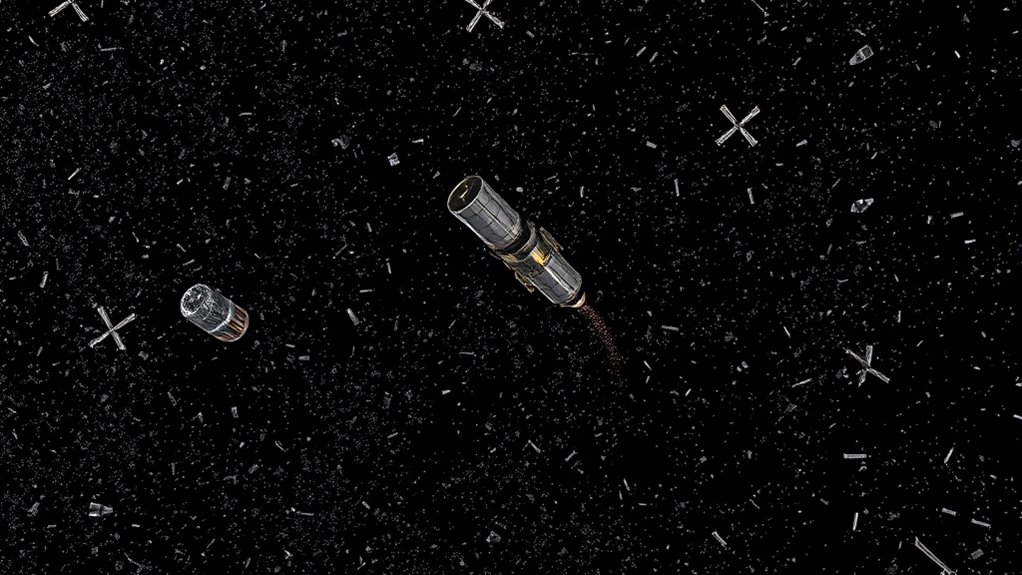
Have you ever wondered how crowded Low Earth Orbit (LEO) has become? Today, LEO hosts over 24,000 tracked objects, including active satellites, defunct spacecraft, and debris from past collisions. The total debris population is estimated to be over a million pieces larger than 1 centimeter, with millions more too small to track directly. The mass of all objects exceeds 15,000 metric tons, mostly from inactive satellites and rocket stages. Since 2019, the number of objects in LEO has increased by 76%, and projections suggest it could reach 70,000 satellites by 2030. Most debris isn’t operational; it’s remnants of past missions and collisions. Commercial mega-constellations like Starlink now dominate the landscape, further increasing congestion and complicating space traffic management. Understanding space debris is crucial for developing effective mitigation strategies and ensuring sustainable use of low Earth orbit.

AIRMSEN Portable Countertop Dishwashers, 5 Washing Programs Mini Dishwashers with 5 L Built-in Water Tank and Double-layered Glass Door, No Hookup Needed for Home, Apartments & RVs
Small Size but Large Capacity - The ultra-compact design allows the mini dishwasher to wash 40+ items (up...
As an affiliate, we earn on qualifying purchases.
Risks and Challenges for Satellite Operations

Space debris markedly increases the risk of collision for satellites operating in LEO, making safe and reliable space operations more challenging. Even tiny fragments can cause significant damage, forcing satellites to perform frequent collision-avoidance maneuvers. In early 2025, over 340 satellites made more than ten maneuvers per month—seven times more than in 2019—highlighting a less stable environment. Larger debris can cause catastrophic damage, creating more fragments and worsening congestion. The threat of cascading collisions, or Kessler syndrome, already exists at many LEO altitudes. As debris accumulates, operators face increased costs, operational delays, and potential satellite failures. Managing this environment requires constant monitoring and rapid response, but the rising debris population complicates efforts to keep space activities safe and sustainable. Color accuracy in satellite sensors can also influence detection and avoidance strategies, further impacting operational reliability.

COMFEE’ Countertop Dishwasher, Energy Star Portable Dishwasher, 6 Place Settings & 8 Washing Programs, Speed, Baby-Care, ECO& Glass, Dish Washer for Dorm, RV& Apartment, Black
6 Place Setting- A perfect size (H17.2″×W21.7″×D19.7″) for 2-3 people, COMFEE’ compact countertop dishwasher is suitable for dorms,...
As an affiliate, we earn on qualifying purchases.
Drivers of Growth in Space Traffic

You can see that the rapid increase in satellite deployments, especially mega-constellations, is driving the growth of space traffic. These large networks boost the number of active satellites and clutter the orbit with debris and maneuvering objects. As this trend continues, managing congestion and collision risks becomes an urgent challenge. Proper installation guidelines for managing space debris and regulating Low Earth Orbit are essential to ensure safety and sustainability in space activities.
Increased Satellite Deployments
The surge in satellite deployments over the past decade has dramatically increased space traffic in Low Earth Orbit. You’ll notice more satellites launched annually, driven by commercial ventures, government projects, and new technologies. Large satellite constellations, like Starlink, now add thousands of active units, transforming LEO into a crowded environment. This growth is fueled by falling launch costs and demand for global internet, Earth observation, and data services. As a result, the number of active satellites has skyrocketed, with projections suggesting a fivefold increase by 2030. This rapid expansion not only raises congestion concerns but also heightens collision risks, especially as many satellites are maneuverable, complicating traffic management. Overall, increased satellite deployments are reshaping the landscape of space activity, demanding new approaches to safety and regulation. space traffic management is becoming an essential aspect of ensuring sustainable operations in Low Earth Orbit.
Rise of Mega-Constellations
How have mega-constellations transformed the landscape of space traffic? You now face a remarkably more crowded environment, driven by the rapid rise of large satellite networks. These mega-constellations, such as Starlink, OneWeb, and Kuiper, have increased the number of active satellites considerably. Here are key impacts:
- The number of maneuverable satellites has surged, making collision avoidance more complex.
- They contribute to the overall debris population, especially when satellites become non-operational.
- The density of objects in low Earth orbit has risen, increasing collision risks.
- Their sheer volume amplifies congestion, leading to more frequent maneuvers and potential cascade effects.
- The increased activity underscores the need for stricter regulations and improved tracking systems to manage space traffic effectively.
This growth accelerates space traffic and debris concerns, demanding stricter regulations and improved tracking systems.

NOVETE Portable Countertop Dishwashers, Compact Dishwashers with 5L Built-in Water Tank & Inlet Hose, 5 Washing Programs, Baby Care, Air-Dry Function and LED Light for Small Apartments
【SMALL SIZE, LARGE CAPACITY】This portable dishwasher only measures 16.9 x 16.8 x 18.1 inches, but holds 4 full...
As an affiliate, we earn on qualifying purchases.
Monitoring and Tracking Space Debris

Monitoring and tracking space debris involves a combination of ground-based radar and optical systems that constantly observe objects in orbit. You rely on these systems to detect and catalog debris larger than 10 centimeters, such as defunct satellites and rocket stages. The U.S. Space Surveillance Network (USSPACECOM) maintains the largest public catalog, tracking about 31,000 objects. Smaller debris, estimated by models like ESA’s MASTER-8, remains untracked but is factored into risk assessments. You also use systems like DISCOS to monitor fragmentation events and orbit changes. Despite these efforts, the actual debris population exceeds official records, especially for tiny fragments. Continuous monitoring is essential for collision avoidance and maintaining safer orbital conditions, but many smaller objects still go undetected. Monitoring the debris’ size and trajectory helps improve prediction accuracy and debris mitigation strategies.
Debris Mitigation Strategies and Practices

Effective debris mitigation relies on proactive design and operational practices that minimize the creation of new space debris and extend the lifespan of existing satellites. You can implement these strategies:
- Design satellites with passivation measures to eliminate residual energy after end-of-life, preventing explosions.
- Use collision-avoidance maneuvers proactively to reduce collision risks.
- Adopt active debris removal technologies, like robotic capture or drag augmentation devices.
- Schedule controlled deorbiting at end-of-mission to ensure satellites re-enter safely.
- Promoting active engagement and monitoring among satellite operators further enhances debris mitigation efforts.
International Regulations and Policy Frameworks

International regulations and policy frameworks play a crucial role in managing space debris in Low Earth Orbit by establishing shared standards and encouraging responsible behavior among spacefaring entities. You’re expected to adhere to guidelines like those from the United Nations Office for Outer Space Affairs (UNOOSA) and the Inter-Agency Space Debris Coordination Committee (IADC), which promote debris mitigation and responsible satellite operations. These frameworks recommend practices such as end-of-life deorbiting, collision avoidance, and minimizing fragmentation risks. While these policies are voluntary, they create a consensus for sustainable space use. Countries and private organizations are urged to implement these standards to prevent unchecked debris growth. Although enforcement varies, international cooperation is essential to coordinate efforts, share data, and develop consistent regulations that protect the long-term usability of Low Earth Orbit. Promoting space debris mitigation initiatives is key to maintaining a sustainable orbital environment for future generations.
Technological Innovations for Debris Removal

You can explore how active debris capture technologies are developing to safely remove large objects from orbit. Autonomous removal systems are being designed to identify and eliminate smaller fragments efficiently. Additionally, laser debris mitigation offers a promising approach to alter debris trajectories and prevent collisions. Incorporating holistic approaches to space debris management can enhance the effectiveness of these technological innovations.
Active Debris Capture Tech
Recent advances in active debris capture technologies aim to address the growing challenge of space junk in Low Earth Orbit. You can expect innovations like:
- Capture Nets and Tethers: These physically ensnare debris, allowing safe retrieval or deorbiting.
- Robotic Arms: They grapple with large debris, maneuvering it for controlled disposal.
- Laser Ablation: Focused laser pulses modify debris trajectories, nudging them toward re-entry.
- Electrodynamic Tethers: These generate electromagnetic forces to gradually deorbit debris without physical contact.
These methods improve precision, reduce risks, and enhance efficiency in debris removal efforts. By deploying such technologies, you contribute to mitigating collision risks, protecting active satellites, and restoring sustainable Low Earth Orbit conditions. Additionally, understanding regulatory frameworks can facilitate international cooperation in space debris management.
Autonomous Removal Systems
Autonomous removal systems are revolutionizing how we address space debris by leveraging advanced robotics, artificial intelligence, and sensor technologies to operate independently in orbit. These systems can identify, track, and capture debris without human intervention, reducing costs and response times. They use a combination of sensors and algorithms to assess debris size, trajectory, and risk, then execute precise maneuvers for removal. Here’s a closer look at key technologies involved:
| Technology | Functionality |
|---|---|
| Robotic Arms | Capture and secure debris objects |
| AI Algorithms | Identify, assess, and plan removal actions |
| Sensors | Detect debris and monitor system status |
| Propulsion Systems | Maneuver and deorbit debris effectively |
Laser Debris Mitigation
Laser debris mitigation represents a promising technological approach to reducing space clutter by remotely altering the trajectories of small debris fragments. You can leverage laser systems to exert photon pressure, nudging debris away from critical paths. Here are key aspects:
- Target Identification: Precise tracking ensures lasers focus on debris larger than 10 cm, minimizing collateral effects.
- Energy Delivery: High-powered lasers deliver pulses to generate momentum transfer, gradually modifying debris orbits.
- Operational Timing: Lasers operate during optimal windows, avoiding interference with operational satellites.
- Safety Protocols: Systems include safeguards to prevent unintended impacts on active satellites or space stations.
This method offers a non-contact, scalable, and potentially cost-effective way to mitigate collision risks and extend satellite lifespans in LEO.
The Role of Industry and Commercial Stakeholders

Industry and commercial stakeholders play a vital role in shaping the future of low Earth orbit management. Your decisions influence debris creation, satellite design, and collision avoidance practices. Active participation in debris mitigation and responsible satellite disposal is crucial to prevent further congestion. You can adopt best practices, such as end-of-life deorbiting and collision risk reduction, to minimize debris. Collaboration with regulators and sharing tracking data helps improve situational awareness. Below is a table illustrating your impact across key areas:
| Area | Responsibility | Impact |
|---|---|---|
| Satellite Design | Use debris-resistant materials | Reduce in-orbit fragmentation |
| Launch Operations | Follow debris mitigation guidelines | Limit new debris creation |
| End-of-Life Management | Ensure proper deorbiting or disposal | Decrease long-term debris buildup |
| Data Sharing | Share tracking info with authorities | Improve collision avoidance |
| Innovation | Develop debris removal technologies | Promote sustainable LEO environment |
Future Outlook and the Need for Enhanced Regulation

As space debris continues to accumulate at an alarming rate, the urgency for stronger regulation becomes increasingly clear. You must recognize that without enhanced oversight, risks will escalate, endangering future missions. To address this, consider these steps:
- Establish binding international standards for debris mitigation and active removal.
- Implement mandatory end-of-life planning for satellites and rocket stages.
- Enhance real-time monitoring and data sharing among space agencies and private entities.
- Promote responsible satellite design, including collision avoidance and deorbit capabilities.
Frequently Asked Questions
How Do Debris Fragmentation Events Impact Long-Term Space Sustainability?
Fragmentation events create countless debris pieces, increasing collision risks for operational satellites and spacecraft. You’ll face more frequent avoidance maneuvers, which raise costs and reduce satellite lifespans. These events can trigger cascading debris growth, known as Kessler syndrome, making LEO unsafe for future missions. Long-term space sustainability suffers as debris accumulates, threatening both current and future space activities, forcing stricter regulations and innovative mitigation efforts to preserve orbital environments.
What Are the Challenges in Tracking the Smallest Space Debris Particles?
Tracking the smallest space debris particles is like finding a needle in a haystack—you need incredibly sensitive instruments. These tiny fragments, less than 10 centimeters, often evade detection because radar and optical systems lack the resolution. For example, models estimate over 140 million particles between 1 mm and 1 cm, but only a fraction are tracked, making it difficult to assess collision risks accurately and maintain safe satellite operations.
How Effective Are Current International Policies in Preventing Debris Creation?
Current international policies are only partially effective at preventing debris creation. You’ll find that voluntary guidelines and best practices are often ignored or not enforced consistently, especially by private operators. While agencies like NASA and ESA promote mitigation efforts, a significant amount of debris still results from launch accidents, collisions, and defunct satellites. Without stricter regulations and global compliance, debris continues to accumulate, risking future space operations and sustainability.
What Technological Methods Are Most Promising for Active Debris Removal?
You should consider technologies like robotic arms and nets, which can grasp and capture debris for safe removal. Laser ablation is promising, as it can slow down debris, causing it to re-enter the atmosphere naturally. Harpoon systems and ion thrusters also show potential by pushing debris into controlled deorbit paths. These methods actively reduce debris, helping keep LEO safer for future missions.
How Do Commercial Satellite Operators Influence Debris Mitigation Efforts?
You know what they say, “Many hands make light work.” Commercial satellite operators influence debris mitigation efforts by adopting best practices, such as designing satellites for end-of-life deorbiting and sharing tracking data. They also push for international standards and actively develop debris removal technologies. Their cooperation and innovation are essential to reducing space clutter, ensuring safer, sustainable operations, and preventing the space environment from becoming an uncontrollable mess.
Conclusion
As you consider the future of low Earth orbit, remember that over 34,000 pieces of debris larger than 10 cm currently orbit, posing serious collision risks. To protect satellite operations and guarantee sustainable space activities, you’ll need stronger international regulations, innovative debris removal tech, and proactive industry collaboration. By staying vigilant and supporting enhanced policies, you can help preserve this essential, crowded domain for generations to come.