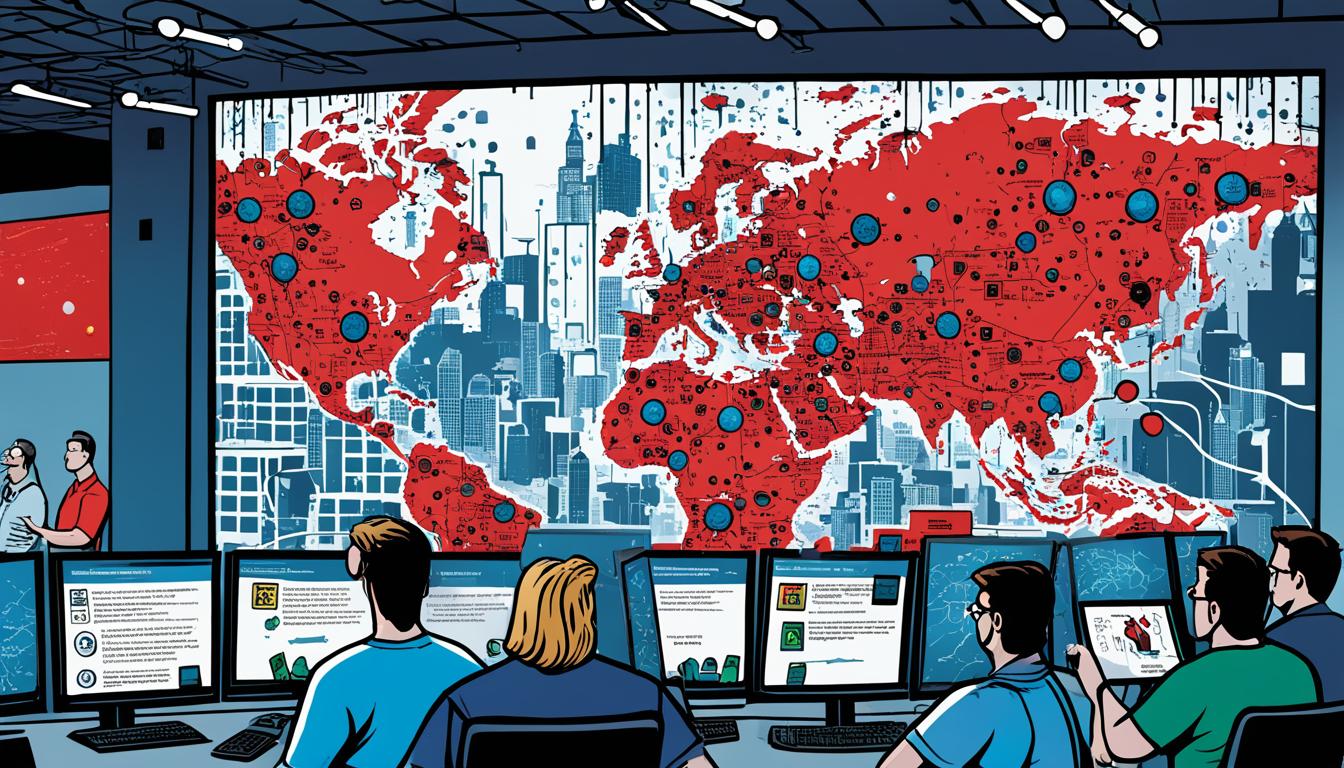
Despite global efforts, many children still face barriers to quality education caused by poverty, conflict, and social exclusion. In regions like Sub-Saharan Africa and crisis zones, access remains limited, especially for marginalized groups and children with disabilities. Gaps in learning outcomes and gender inequalities persist, often tied to socioeconomic status. Innovations and policies are working to address these issues, offering hope for a more equitable future—if you keep exploring, you’ll discover how progress is shaping global education.
Key Takeaways
- Significant disparities exist in global education access, with over 270 million children out of school, mostly in low-income regions.
- Vulnerable groups, including children with disabilities and marginalized communities, face higher exclusion and lower quality learning opportunities.
- Infrastructure deficits, poverty, and conflict severely limit access to quality education, especially in crisis-affected and rural areas.
- Learning outcomes are uneven worldwide, with only about half of primary students meeting reading and math standards.
- Policies leveraging technology, inclusive practices, and targeted support are critical to bridging education access and quality gaps.
Global Trends in Out-of-School Populations

In 2023, the global out-of-school population reached approximately 272 million children and youth, marking an increase of 21 million from previous estimates. You see, this rise isn’t just about numbers; it reflects growing challenges in ensuring universal access to education. High out-of-school rates are concentrated in low-income countries, where 36% of children miss out, compared to just 3% in wealthier nations. Factors like population growth and recent restrictions, such as Afghanistan’s ban on girls attending secondary school, contribute to these figures. Despite commitments to cut out-of-school children by 165 million by 2030, progress has slowed. You can understand that demographic shifts and insufficient enrollment growth are key barriers, making it clear that global efforts need to accelerate to meet these ambitious goals. Additionally, addressing issues like education quality is essential to ensuring that children who are in school receive meaningful learning experiences.
Regional and Socioeconomic Disparities in Education Access
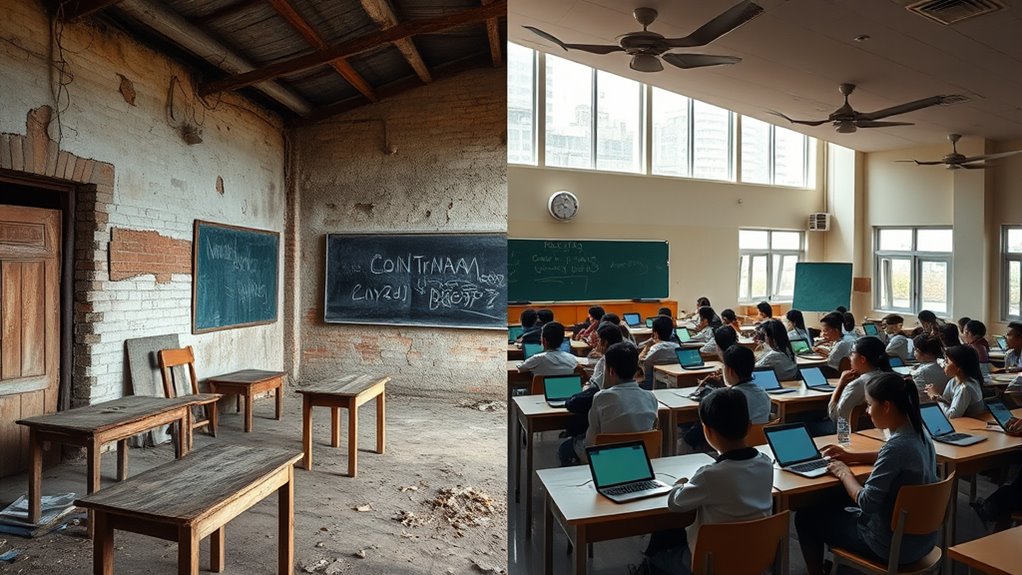
You’ll notice that regional enrollment gaps remain wide, with Sub-Saharan Africa hosting over half of the world’s out-of-school children. Socioeconomic barriers, like poverty and lack of infrastructure, continue to block access for many marginalized groups. In crisis zones, conflict and instability further deepen these disparities, leaving vulnerable children out of school entirely. Implementing targeted space and organization strategies can help optimize limited educational resources and improve learning outcomes in underserved areas.
Regional Enrollment Gaps
Regional enrollment gaps reveal stark disparities in education access worldwide, with low-income and crisis-affected regions facing the greatest challenges. You’ll notice that Sub-Saharan Africa hosts more than half of the global out-of-school children, highlighting severe access issues. In conflict zones like Afghanistan, Sudan, and the Democratic Republic of the Congo, educational disruption is widespread, with up to 47% of older students out of school. These regions often lack infrastructure, resources, and stability, making consistent enrollment difficult. You’ll see that children with disabilities and those affected by crises are disproportionately excluded. Wealthier regions and countries with stable governments tend to have higher enrollment rates, leaving the most vulnerable populations behind. Addressing these gaps requires targeted policies and investments tailored to regional needs. Additionally, understanding resources and tools available can help improve access and support for marginalized students.
Socioeconomic Barriers Persist
Despite global efforts, socioeconomic barriers continue to restrict education access for many children, especially in low-income regions. Poverty limits families’ ability to afford school fees, supplies, and transportation, forcing some children to drop out or never enroll. In low-income countries, children from impoverished backgrounds often face chronic absenteeism and limited support, which hampers their learning progress. These barriers are worse in rural areas where infrastructure is lacking and resources are scarce. Children with disabilities or from marginalized communities encounter additional hurdles, such as discrimination and inadequate accommodations. As a result, socioeconomic disparities deepen educational inequities, leaving vulnerable groups behind. Without targeted policies and investments, these persistent barriers threaten to undermine global goals for equitable access and quality education for all.
Crisis Impact on Access
Crisis situations exacerbate existing inequalities in education access, disproportionately affecting vulnerable populations. You’ll find that:
- About 29% of primary and 47% of upper secondary children in conflict zones are out of school.
- Nearly half of crisis-affected out-of-school children reside in five protracted crises: Sudan, Afghanistan, Ethiopia, DRC, and Pakistan.
- Children with disabilities in crisis areas are overrepresented among the out-of-school population, with 20% affected.
- Crisis-affected regions experience long-term disruptions, hindering recovery and widening gaps for marginalized groups.
These crises deepen regional and socioeconomic disparities, making it harder for vulnerable children to access quality education. Without targeted interventions, existing inequalities will persist and grow, limiting opportunities for millions affected by instability.
Challenges Faced by Crisis-Affected and Marginalized Groups
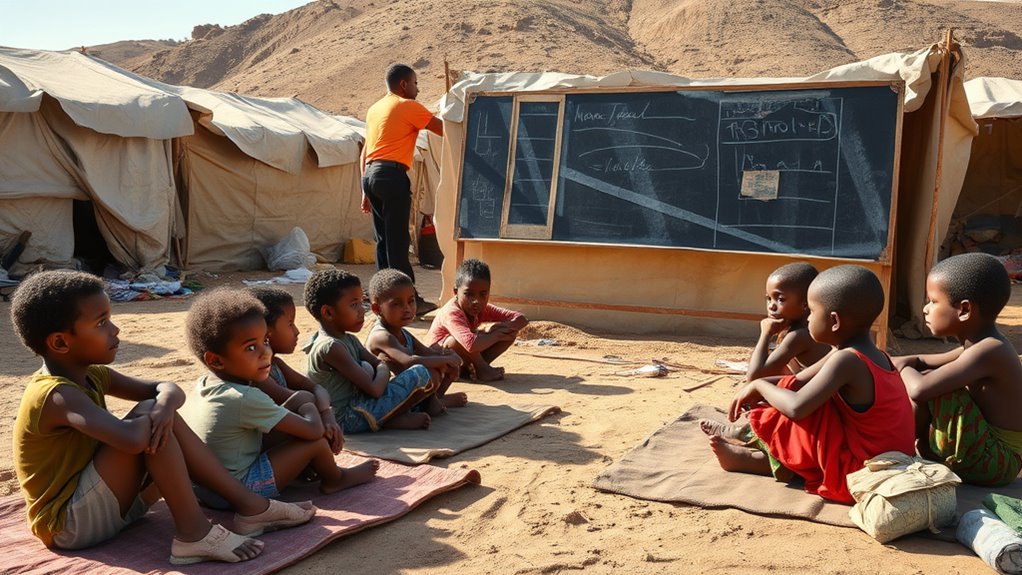
You face significant barriers if you’re displaced or living in crisis-affected areas, making it hard to access quality education. Children with disabilities often find themselves excluded, especially in unstable environments where resources are scarce. These challenges deepen educational inequalities and hinder long-term social and economic opportunities for marginalized groups.
Barriers for Displaced Children
What are the main barriers preventing displaced children from accessing quality education? You face multiple challenges that hinder your learning. First, lack of safe, stable school environments makes attendance difficult in conflict zones. Second, disrupted infrastructure—such as damaged or absent schools—limits access. Third, legal and documentation barriers prevent registration, especially for refugees or undocumented individuals. Fourth, economic hardship and resource shortages mean families can’t afford school supplies or transportation. Additionally, language differences and cultural barriers can create exclusion, while trauma and psychological stress reduce your ability to focus and learn. These obstacles compound, leaving displaced children at a significant disadvantage in obtaining quality education. Overcoming these barriers requires coordinated international efforts, policy reforms, and tailored support systems for crisis-affected populations.
Disability and Exclusion
Disability often exacerbates the challenges faced by marginalized and crisis-affected groups seeking education, making access even more difficult. You may find that physical, sensory, or cognitive barriers prevent participation in mainstream classrooms. In crisis zones, these obstacles intensify as infrastructure collapses and resources dwindle. Children with disabilities are disproportionately excluded; over 20% of out-of-school children affected by crises have disabilities. You might encounter limited specialized support, inaccessible learning materials, or societal stigmas that reinforce exclusion. These barriers hinder not only access but also learning outcomes, perpetuating cycles of inequality. Addressing this requires targeted interventions—such as inclusive policies, accessible facilities, and trained educators—to ensure all children, regardless of disability or crisis status, can access quality education and reach their full potential.
Quality of Learning and Achievement Gaps

Globally, the quality of learning remains a significant challenge, with many students failing to achieve basic proficiency in core subjects. You often see disparities based on socioeconomic status, region, and access to resources. To understand this better: 1. Only 58% of primary students meet minimum reading proficiency, and just 44% in math. 2. Proficiency scores decline in upper-secondary levels, with a 15-point drop in math from 2018 to 2022. 3. Completion rates are uneven, with only 60% finishing upper secondary education. 4. Learning gaps are worse among marginalized groups, where access issues compound the quality deficit. Additionally, learning environments play a crucial role in student achievement and can either mitigate or exacerbate existing disparities. These disparities hinder individual progress and threaten global development goals, making it essential to address both access and learning quality simultaneously.
Gender Inequities in Education Opportunities and Leadership

Although gender parity has improved over recent years, significant disparities remain in educational opportunities and leadership roles for women and girls. You may notice that girls now outperform boys in some regions, but gaps still exist in access, especially in low-income countries. Many girls face barriers such as cultural norms, early marriage, and safety concerns, limiting their enrollment and continuation beyond primary school. Leadership opportunities also lag; women are underrepresented in school administration, policy-making, and higher education leadership. This imbalance affects not only individual empowerment but also the development of inclusive, diverse education systems. To close these gaps, policies must promote gender-sensitive practices, support female leaders, and challenge societal norms that hinder girls’ educational progress. Recognizing the importance of personal growth and development can empower individuals and communities to advocate for equitable education. Achieving true gender equity remains a crucial challenge worldwide.
Impact of Socioeconomic Status on Educational Success

Socioeconomic status plays a decisive role in shaping students’ educational outcomes, often determining access to quality learning opportunities and resources. When you come from a low-income background, you face barriers like limited school supplies, inadequate facilities, and fewer extracurricular options. This affects your motivation and ability to succeed. Consider these key impacts:
- Reduced access to quality schools and resources
- Higher dropout rates due to financial pressures
- Limited exposure to enriching learning experiences
- Lower academic achievement and future opportunities
Additionally, limited access to quality education can hinder the development of skills necessary for economic mobility. These factors create a cycle where socioeconomic disadvantages hinder educational success, making it harder for you to break into higher education or better job prospects. Addressing these disparities is vital for achieving equitable educational outcomes worldwide.
Innovations and Policies Addressing Education Inequities

How are innovative policies transforming efforts to reduce educational inequities? You see, many countries are adopting technology-driven solutions like digital learning platforms to reach marginalized students, especially in remote or conflict zones. Policies now prioritize inclusive education, ensuring children with disabilities have access to tailored resources and support. You also notice initiatives like conditional cash transfers that motivate families to send their children to school, reducing dropout rates among low-income groups. Governments and organizations are forging public-private partnerships to expand infrastructure and improve teacher training, making education more equitable. Additionally, policies promoting gender equality, such as scholarships for girls and leadership programs, help close participation gaps. Top Beaches These innovations and policies are essential in making education more accessible and fair for all, regardless of background or circumstance.
The Future of Equitable Access to Quality Education

What does the future hold for ensuring all children can access high-quality education? It’s promising, but progress depends on strategic actions. Here’s what you can expect:
- Innovative technology will expand reach, especially in remote or crisis zones, enabling personalized learning experiences.
- Inclusive policies will prioritize marginalized groups, ensuring children with disabilities and those affected by crises aren’t left behind.
- Global collaborations will boost funding and share best practices, creating a unified effort toward equitable access.
- Community engagement will empower local stakeholders, fostering sustainable solutions tailored to specific needs.
- The integration of educational technology will further bridge gaps, making quality education more accessible worldwide.
These steps can transform education systems, making quality learning accessible to every child, regardless of location or background. The future depends on your support, innovation, and commitment.
Frequently Asked Questions
How Do Cultural Norms Influence Access to Education Worldwide?
Cultural norms shape your access to education by influencing societal attitudes toward gender roles, disabilities, and traditional practices. If your community values boys’ education over girls’, you might face restrictions or discouragement from attending school. In some cultures, early marriage or work takes precedence over schooling. Challenging these norms can be difficult, but changing perceptions is essential for ensuring everyone, including marginalized groups, can pursue quality education.
What Role Do Technology and Digital Tools Play in Reducing Disparities?
Technology and digital tools can critically bridge education gaps by providing remote learning opportunities, especially in underserved areas. You can access quality resources, personalized lessons, and interactive platforms that adapt to your needs, regardless of location or socioeconomic status. By leveraging these tools, you help reduce disparities, empower marginalized groups, and promote inclusive education. However, ensuring equitable access to devices and internet remains essential to maximize these benefits for everyone.
How Can Community-Based Programs Improve Education for Marginalized Groups?
Community-based programs reach over 85 million crisis-affected children who can’t access traditional schools, making a huge difference. You can improve education for marginalized groups by involving local leaders, tailoring programs to cultural contexts, and providing resources like scholarships and learning materials. These initiatives foster trust and relevance, encouraging attendance and engagement. When you empower communities, you create sustainable solutions that break down barriers and guarantee every child’s right to quality education.
What Policies Effectively Address Gender Disparities in Educational Leadership?
You should implement policies that promote gender-inclusive leadership development, such as mentorship programs and leadership training for women. Establish quotas or targets for female representation in educational decision-making roles to guarantee balanced participation. Additionally, create supportive environments through anti-discrimination policies and flexible work arrangements. By actively encouraging female leaders and addressing systemic barriers, you can foster gender equality in educational leadership and open diverse perspectives that improve educational outcomes.
How Does Early Childhood Education Impact Long-Term Societal Equity?
You understand that early childhood education sets the foundation for societal equity by fostering critical skills, social inclusion, and cognitive development from a young age. When you invest in quality programs, you give children from diverse backgrounds a fair start, reducing gaps in opportunity later in life. This proactive approach promotes social mobility, decreases inequality, and builds a more just and inclusive society, benefitting everyone in the long run.
Conclusion
So, as you’ve seen, access to quality education isn’t exactly a level playing field—more like a game of chance. While some enjoy VIP passes, others are stuck in the back of the bus. But don’t worry, with a little innovation and a lot of effort, maybe one day everyone will get a fair shot. Until then, keep advocating—after all, education’s the real equalizer, right? Or so they say.