
Blockchain goes far beyond cryptocurrencies, transforming industries with real-world applications. It enhances supply chain transparency, allowing you to trace products from origin to delivery and reduce fraud. In healthcare, it secures data sharing and protects patient info. Financial services benefit from faster cross-border payments and digital assets, while digital identities improve security and streamline government services. Property management, energy trading, and insurance also gain efficiency and trust. Explore how these innovations are reshaping our world in more detail.
Key Takeaways
- Blockchain enhances supply chain transparency by enabling tamper-proof tracking from origin to delivery.
- It secures digital identities, reducing fraud and allowing user-controlled data sharing across sectors.
- Governments digitize official documents and voting systems, increasing trust and reducing fraud.
- Financial institutions leverage blockchain for faster cross-border payments, settlements, and decentralized finance (DeFi).
- Blockchain facilitates secure digital ownership, such as NFTs and property titles, transforming asset management.
Supply Chain Transparency and Traceability
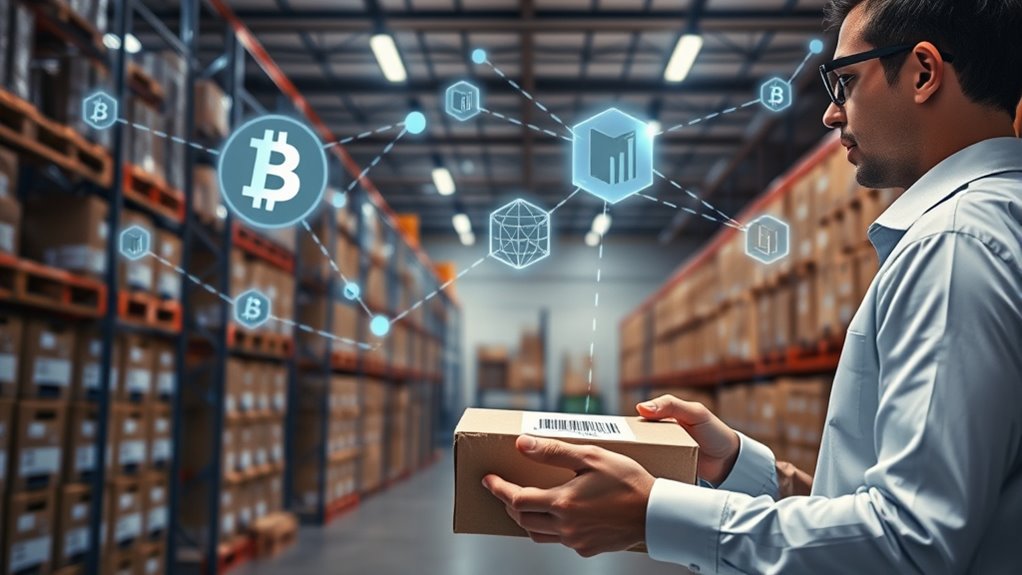
Have you ever wondered how companies guarantee the authenticity and safety of the products you buy? Blockchain makes this possible through real-time tracking from origin to delivery. When you purchase food, clothing, or electronics, blockchain platforms like IBM Food Trust or Maersk share tamper-proof ledgers that record every step of the supply chain. This transparency helps reduce fraud and counterfeit products. Immutable records ensure that the product’s journey is trustworthy, so you can verify its authenticity easily. Additionally, blockchain supports ethical sourcing by providing verified data to consumers and regulators. With decentralized data, logistics operations become more reliable, accountable, and secure. This technology ultimately builds your confidence in the products you choose, knowing they meet safety, quality, and ethical standards. Using Etsy SEO for Traffic can also help businesses showcase their authentic and ethically sourced products effectively.
Healthcare Data Security and Interoperability

Blockchain enhances healthcare by enabling secure data sharing, giving you control over your medical information while protecting your privacy. It also promotes interoperability among different health systems, making it easier for providers to access accurate, up-to-date records. This technology helps reduce errors and streamlines processes, improving overall patient care. The adoption of data privacy challenges in blockchain systems is crucial to maintaining trust and compliance within healthcare environments.
Secure Data Sharing
Secure data sharing in healthcare has become essential to protect patient privacy while ensuring timely access to vital information. Blockchain technology enables you to control who accesses your health data, sharing only what’s necessary with authorized providers. Its decentralized nature ensures data remains tamper-proof, reducing risks of breaches or unauthorized modifications. Smart contracts automate data exchanges, streamlining processes like referrals and insurance claims, while maintaining strict access controls. With blockchain, you can verify the authenticity of shared information instantly, reducing errors and duplication. This transparent system also supports compliance with privacy laws like GDPR, giving you confidence that your data is secure and properly managed. Overall, blockchain facilitates a more efficient, trustworthy, and privacy-preserving approach to healthcare data sharing.
Interoperable Health Systems
Interoperable health systems leverage blockchain technology to seamlessly connect diverse electronic health record (EHR) platforms, enabling secure and efficient data exchange. You can share patient information across providers without risking data breaches or inconsistencies. Blockchain’s decentralized ledger guarantees data integrity, so records remain tamper-proof and trustworthy. Patients gain control over who accesses their data, enhancing privacy protections. Smart contracts automate processes like insurance claims and authorizations, reducing administrative delays. Standardized blockchain protocols promote interoperability among different healthcare systems, simplifying data sharing. Self Watering Plant Pots can serve as an analogy for how automated, reliable systems operate within blockchain-enabled healthcare infrastructure. Compliance with data protection laws like GDPR becomes easier with transparent, secure management of sensitive information. Overall, blockchain improves collaboration, reduces errors, and strengthens trust in healthcare data management, transforming how providers, patients, and regulators interact.
Decentralized Finance (DeFi) and Financial Services

Decentralized Finance (DeFi) is transforming traditional financial services by removing the need for intermediaries like banks, which often add costs and slow down transactions. With DeFi, you can lend, borrow, and trade directly on blockchain platforms, making transactions faster and cheaper. Stablecoins like USDC and CBDCs such as China’s Digital Yuan improve payment transparency and efficiency. Major banks, including JPMorgan and Citi, use blockchain to streamline cross-border payments and settlements. Permissioned blockchains enhance privacy and compliance while scaling financial applications. Smart contracts automate complex transactions, reducing manual errors and speeding up processes. Overall, DeFi opens access to financial services for more people worldwide, fostering inclusivity and innovation in the financial industry.
Digital Identity and E-Governance

Blockchain-based digital identities let you verify your identity securely and control what data you share. Governments are using blockchain to create tamper-proof documents, speeding up processes and reducing fraud. Transparent voting systems built on blockchain can increase election security and public trust through auditable, immutable records. Incorporating high-quality vegetable juices can also promote overall health and well-being.
Secure Identity Verification
Secure identity verification has become essential in ensuring that you can prove your identity reliably while maintaining control over your personal data. Blockchain enables decentralized, tamper-proof digital identities that you own and manage. This approach reduces identity theft and fraud because your data isn’t stored in a single vulnerable database. Instead, verified credentials are stored securely on the blockchain, accessible only with your permission. Governments and organizations use blockchain to digitize official documents, speeding up verification processes. Here’s a key comparison:
| Traditional Method | Blockchain-Based Identity | Benefits |
|---|---|---|
| Centralized data storage | Decentralized control | Increased security and privacy |
| Risk of data breaches | Tamper-proof records | Enhanced data integrity |
| Slow verification | Immediate access | Faster, reliable identity proof |
Transparent Voting Systems
Digital identities verified through blockchain technology pave the way for more transparent and trustworthy voting systems. With blockchain, you can securely cast your vote, knowing it’s tamper-proof and easily auditable. This technology guarantees each vote is recorded immutably, reducing the risk of fraud and double voting. It also offers verifiable results that stakeholders can trust, increasing public confidence in elections. Blockchain-based voting systems enable voters to confirm their participation and track their vote’s inclusion without compromising privacy. Governments can digitize and secure ballots, streamlining the entire process while maintaining high security standards. By providing transparent, tamper-resistant records, blockchain enhances election integrity and fosters greater engagement from citizens. Overall, it transforms how democracies conduct secure, credible voting. Supporting emotional well-being for voters and election officials is essential to ensure trust and acceptance of new voting technologies.
Efficient Document Management
Efficient document management is transforming how governments and organizations handle identities and official records. You can imagine a system where:
- Citizens access secure, digital IDs that they control and share selectively.
- Governments digitize and verify documents like birth certificates, driver’s licenses, and diplomas, reducing fraud.
- Voting systems become transparent with auditable, tamper-proof records that ensure election integrity.
- Agencies share verified data seamlessly, speeding up services while safeguarding privacy.
This approach minimizes paperwork, prevents forgery, and boosts trust. You’ll see faster processing times, improved accuracy, and enhanced security. Blockchain’s decentralized nature guarantees data integrity, making official records more reliable, accessible, and resistant to tampering. Additionally, understanding bank SWIFT/BIC codes helps ensure secure and accurate international data exchanges.
Real Estate and Property Management

Have you ever wondered how blockchain is transforming real estate transactions? It creates immutable ownership records, making title transfers smoother and reducing fraud risks. Tokenizing properties allows for fractional ownership, opening investment opportunities to more people and increasing liquidity. Smart contracts automate rental agreements, payments, and enforcement, removing the need for intermediaries like escrow agents. Transparent transaction histories build trust among buyers, sellers, and regulators, speeding up closings. Additionally, blockchain improves record-keeping efficiency by storing property data on shared ledgers, reducing paperwork and administrative errors. This technology streamlines processes, enhances security, and promotes transparency in property management. As a result, real estate becomes more accessible, trustworthy, and efficient for everyone involved. Furthermore, remote hackathons foster innovative solutions in property technology by bringing together diverse talents from around the world.
Energy, Insurance, and Emerging Sectors

Blockchain technology is expanding its impact beyond real estate, transforming sectors like energy, insurance, and other emerging fields. You can imagine this change as:
- Peer-to-peer energy trading, where you buy and sell electricity directly, using transparent, immutable meter data.
- Insurance claims processed swiftly, with fraud detection and policy management handled seamlessly via smart contracts.
- Intellectual property registration secured and expedited, with NFTs showcasing digital ownership clearly.
- Educational credentials verified on blockchain, reducing fraud and enabling quick, secure sharing of achievements.
- The importance of projector contrast ratio in visual displays highlights how clarity and detail are essential across various digital applications.
These innovations bring trust, speed, and transparency, making complex processes more efficient. Blockchain’s decentralized and tamper-proof nature guarantees data integrity while empowering users across these industries. The future of energy, insurance, and beyond is being reshaped by these transformative applications.
Innovative Use Cases Transforming Industries

Innovative use cases are revolutionizing industries by applying blockchain technology to solve long-standing challenges and open new opportunities. You can see this in sectors like supply chains, healthcare, finance, identity, real estate, and energy. Blockchain’s transparency, security, and decentralization enable smarter processes and trusted transactions. For example, supply chains now track goods in real-time, reducing fraud. Healthcare providers safeguard patient data while improving interoperability. Financial institutions automate contracts and streamline cross-border payments. Governments deploy tamper-proof IDs and voting systems. Properties transfer faster with immutable records and fractional ownership. Peer-to-peer energy trading becomes more efficient, and insurance claims process faster with smart contracts. These innovations reshape traditional models and create new possibilities across industries. Understanding store hours can also help consumers plan their visits more effectively and avoid missed opportunities.
Frequently Asked Questions
How Does Blockchain Ensure Data Privacy Across Different Industries?
You see, blockchain guarantees data privacy by using encryption and permissioned access controls, allowing only authorized parties to view sensitive info. You can rely on blockchain’s decentralized structure to prevent data tampering and ensure integrity. Smart contracts automate secure data sharing, while transparent audit trails give you visibility without exposing private details. This combination helps industries like healthcare, finance, and government protect user data effectively.
What Are the Main Challenges in Implementing Blockchain Solutions at Scale?
Implementing blockchain solutions at scale is like building a skyscraper on shaky ground. You face technical hurdles like network scalability, slower transaction speeds, and increased energy consumption. Regulatory uncertainty and lack of standardization also create roadblocks. Plus, integrating blockchain with legacy systems demands significant resources and expertise. These challenges can stall progress, requiring careful planning, collaboration, and innovation to turn blockchain’s potential into reality at a large scale.
How Does Blockchain Integration Impact Existing Regulatory Frameworks?
You’ll find that integrating blockchain impacts existing regulatory frameworks by requiring updates to laws and standards to address its decentralized, immutable nature. You need to guarantee compliance with data protection laws like GDPR, especially around privacy and data sharing. Regulators may also need to develop new guidelines for smart contracts, digital identities, and cross-border transactions, so your organization stays compliant while leveraging blockchain’s transparency, security, and efficiency benefits.
Can Blockchain Truly Prevent Fraud and Data Tampering in Real-World Scenarios?
Blockchain can absolutely prevent fraud and data tampering in real-world scenarios—it’s like having an unbreakable digital fortress. Its immutable records and cryptographic security make altering data nearly impossible, ensuring trustworthy transactions. You’ll find that shared ledgers, real-time tracking, and smart contracts considerably reduce errors, counterfeiting, and fraud. While not foolproof, blockchain’s transparency and decentralization create a level of security that’s vastly superior to traditional systems.
What Are the Cost Implications of Adopting Blockchain Technology for Businesses?
Adopting blockchain can initially be costly due to infrastructure setup, integration with existing systems, and staff training. However, it often reduces long-term expenses by decreasing paperwork, manual processes, and fraud risks. You might also face ongoing costs for maintenance and updates. Despite the upfront investment, many businesses find blockchain’s transparency and efficiency boost outweigh the expenses, leading to savings over time and improved operational trust.
Conclusion
Imagine a world where blockchain’s promise transforms industries, like a steady lighthouse guiding ships through uncharted waters. You’re not just witnessing technological progress—you’re part of a revolution shaping transparency, security, and trust across sectors. As blockchain extends beyond cryptocurrency, it’s paving the way for innovation that’s as unstoppable as a rising tide. Embrace this wave of change, and you’ll find yourself at the forefront of a future built on trust and limitless potential.