Biometric authentication enhances security and offers convenience, but it also presents significant privacy and vulnerability risks. You could face data breaches, spoofing, or replay attacks that trick sensors with masks, photos, or synthetic fingerprints. Weak storage, device vulnerabilities, and template manipulation worsen these issues. Furthermore, privacy concerns grow as biometric data can’t be easily revoked or changed, and biases can lead to unfair treatment. To understand how to protect yourself and the system, keep exploring these essential issues.
Key Takeaways
- Biometric systems are vulnerable to spoofing attacks using synthetic fingerprints, masks, or high-resolution images to deceive sensors.
- Biometric data theft is a major concern because such data cannot be revoked or changed, risking long-term privacy breaches.
- Weak anti-spoofing and liveness detection methods can be exploited, compromising system security.
- Insecure storage and transmission of biometric data increase risks of identity theft and unauthorized access.
- Privacy concerns include potential misuse, mass surveillance, and unauthorized tracking without user consent.

FIDO2 U2F Security Key Passkey Two-Factor Authentication (2FA) USB Key PIN+Touch (Non-Biometric) USB-C Type TrustKey T120
- Security Protocol: FIDO2 and U2F authentication support
- Compatibility: Works with Windows, Mac, Linux, browsers
- Certification: FIDO2 certified for security and speed
As an affiliate, we earn on qualifying purchases.
As an affiliate, we earn on qualifying purchases.
Common Vulnerabilities in Biometric Terminals
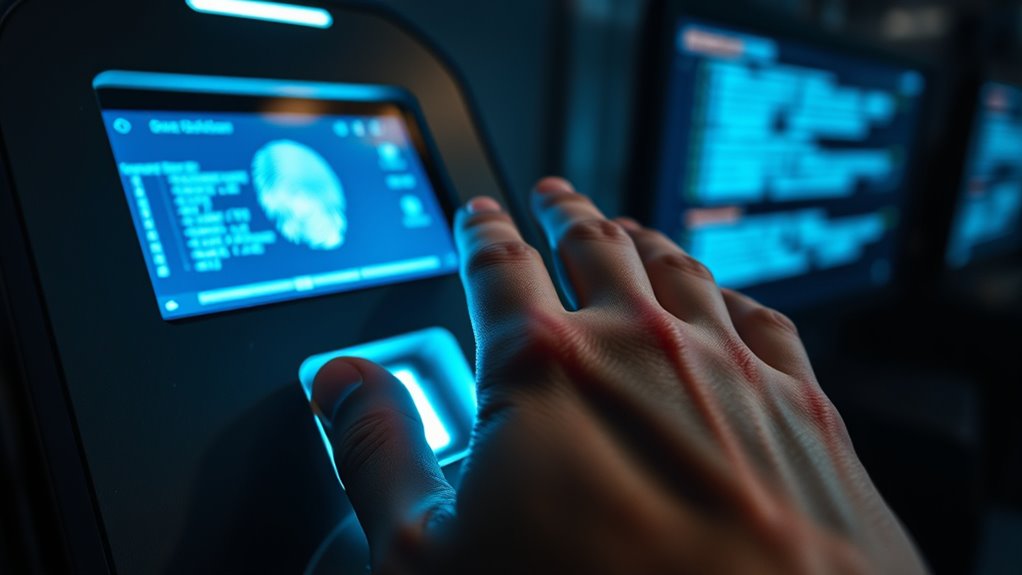
Have you ever wondered how secure biometric terminals really are? Many vulnerabilities exist that can compromise their integrity. For example, attackers can deploy spoofing methods, using synthetic fingerprints, high-resolution photos, or 3D masks to trick sensors. These techniques bypass traditional defenses, granting unauthorized access. Additionally, some systems store biometric templates insecurely, making data theft easier if not properly protected. Malware can also be introduced to manipulate or disable biometric functions, while replay attacks capture and reuse valid authentication data to deceive the system. Local privilege escalations pose another risk, allowing hackers with admin access to bypass biometric checks altogether. These vulnerabilities highlight the importance of robust security measures to defend biometric terminals against evolving threats. Furthermore, implementing remote hack prevention strategies can significantly reduce the risk of cyberattacks targeting biometric systems.
Risks Associated With Biometric Data Breaches
Biometric data breaches pose a significant threat because they compromise information that cannot be changed or revoked like passwords. Once your biometric traits, such as fingerprints or facial scans, are stolen, they remain vulnerable forever. Attackers can misuse this data for identity theft, fraud, or unauthorized access, risking long-term harm. Large-scale breaches have exposed millions of biometric templates, affecting sensitive sectors like law enforcement and defense. Unlike passwords, you can’t simply reset your biometric data. Mishandling or insecure storage increases the risk, especially if encryption and secure hardware aren’t used. These breaches can also lead to privacy violations and civil liberties concerns, as unauthorized surveillance becomes easier. Protecting your biometric data requires robust security measures to prevent these irreversible and potentially damaging leaks. Additionally, implementing secure storage methods such as encrypted databases and hardware security modules is essential to minimize the risk of such breaches.
Techniques Used in Spoofing and Presentation Attacks
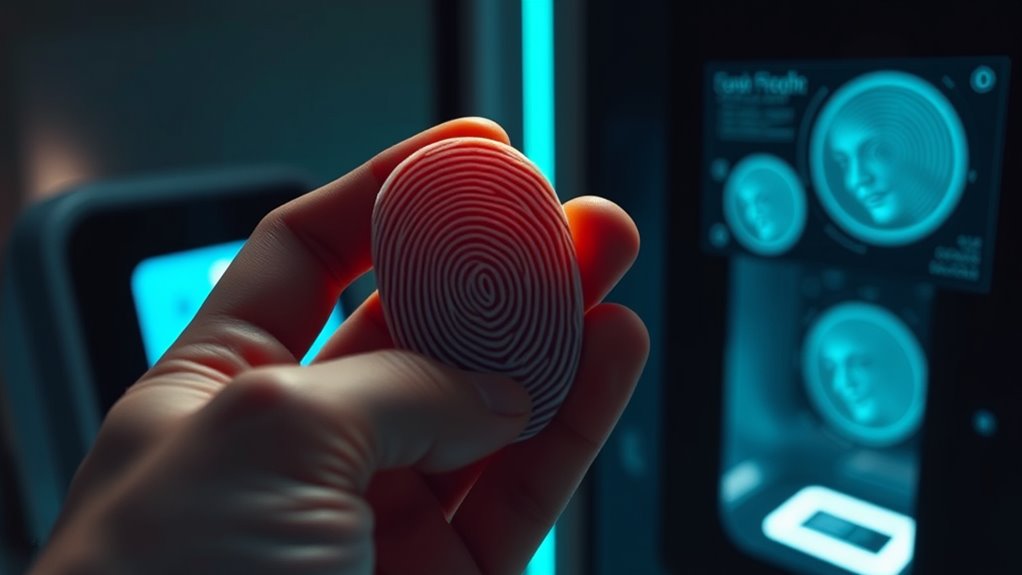
You should be aware that attackers use various spoofing techniques to fool biometric sensors, such as creating synthetic fingerprints or using high-resolution photos. They also employ 3D masks to mimic real facial features and bypass security measures. Understanding these methods helps you recognize potential vulnerabilities and strengthen your defenses. Additionally, the increasing sophistication of biometric security measures highlights the need for ongoing research to stay ahead of emerging spoofing techniques.
Synthetic Fingerprint Creation
Synthetic fingerprint creation involves generating fake fingerprint patterns that can deceive biometric sensors during authentication processes. Attackers use various methods, such as 3D printed molds, gelatin molds, or silicone casts, to replicate fingerprint ridges and valleys. These synthetic fingerprints aim to trick fingerprint scanners into accepting forged prints as legitimate ones. To increase success, attackers often analyze fingerprint images to replicate unique features like minutiae points. They may also use high-resolution scans of stolen fingerprint data to produce more accurate replicas. The goal is to bypass liveness detection and other security measures, granting unauthorized access. As technology advances, creating convincing synthetic fingerprints becomes easier, raising the stakes for biometric system security and emphasizing the need for improved anti-spoofing techniques. Incorporating robust security features is essential to detect and prevent such spoofing attempts effectively.
High-Resolution Photo Attacks
High-resolution photos have become a powerful tool for spoofing biometric authentication systems. Attackers use sharp, detailed images to deceive facial recognition sensors, bypassing security measures. These photos can be captured covertly or obtained from social media profiles, then printed or displayed on screens for presentation. To succeed, they often exploit weak liveness detection methods that don’t verify real-time presence. They may also combine high-res images with other techniques like print attacks or digital manipulation. Common tactics include:
- Using high-quality photos to mimic genuine facial features
- Displaying images on screens to deceive sensors during authentication
- Circumventing poor liveness detection systems
- Combining images with digital editing for enhanced realism
These methods highlight vulnerabilities in biometric systems relying solely on static image analysis, emphasizing the need for advanced detection techniques. Additionally, implementing multi-factor authentication can significantly improve security against such spoofing attempts.
3D Mask Spoofing
Mask spoofing techniques have become increasingly sophisticated, exploiting vulnerabilities in biometric presentation attacks. Attackers now use high-quality 3D masks, silicone, or latex to mimic a person’s facial features, fooling facial recognition systems. These masks often replicate skin texture, color, and even expressions, making them difficult to detect with standard sensors. Some attackers combine masks with printed images or embedded electronics to enhance realism. Advanced presentation attack instruments can bypass liveness detection by mimicking natural movements or warmth. As a result, biometric systems that rely solely on static images or superficial checks are vulnerable. To counteract mask spoofing, multi-factor authentication, enhanced liveness detection, and 3D sensing technologies are essential for improving security and preventing unauthorized access. Incorporating total-cost clarity into security protocols helps organizations weigh the benefits of more advanced detection methods against their implementation costs.
The Threat of Template Poisoning and Data Manipulation
You need to be aware that attackers can manipulate biometric templates to bypass security systems without detection. By silently hijacking user data updates, they can weaken system integrity and cause false authentications. Protecting biometric data from tampering is vital to maintaining trust and preventing long-term security breaches. Implementing robust security protocols can help detect and prevent such malicious alterations.
Risks of Data Tampering
Template poisoning and data manipulation pose significant risks to biometric systems because attackers can silently alter user templates to gain unauthorized access or undermine system integrity. If successful, you might face compromised authentication, enabling intruders to be bypass security measures unnoticed. Attackers exploit vulnerabilities to inject malicious data or modify existing templates, weakening the system’s reliability. Vulnerabilities in communication channels can be exploited to facilitate these manipulations and increase the attack surface. They can introduce false biometric data, causing legitimate users to be denied access or false positives. Manipulated templates may be used repeatedly, increasing the risk of ongoing breaches. Attackers can target update mechanisms, corrupting templates during system refreshes. Tampered data can skew system algorithms, reducing accuracy and trustworthiness over time. Understanding these risks emphasizes the importance of protecting biometric data from silent, insidious tampering.
Safeguarding Biometric Integrity
Protecting biometric systems from template poisoning and data manipulation is essential to maintaining security and trust. Attackers can silently hijack user data updates or inject false templates, compromising system integrity. To defend against this, guarantee biometric templates are stored securely using encryption and hardware security modules. Regularly update firmware and software to patch vulnerabilities that could be exploited for data manipulation. Implement strict access controls and audit logs to monitor changes in biometric data. Use robust liveness detection to prevent spoofing attacks that could corrupt templates. Additionally, incorporate validation mechanisms to verify data authenticity before updates. These measures help prevent silent tampering, maintain data integrity, and preserve the overall trustworthiness of biometric authentication systems. Ensuring that the system employs secure storage practices and rigorous verification helps further mitigate risks associated with data manipulation.
Replay Attacks and Their Impact on Authentication Security
How vulnerable are biometric systems to replay attacks, and what does this mean for authentication security? Replay attacks occur when an attacker captures a valid biometric token—like a fingerprint scan or facial image—and reuses it to gain unauthorized access. These attacks can bypass real-time verification if safeguards aren’t in place. To strengthen defenses, consider these factors:
Replay attacks exploit captured biometric data, risking unauthorized access if systems lack proper safeguards.
- Attackers may record biometric data during legitimate sessions for future reuse.
- Weak or absent anti-replay mechanisms make systems susceptible.
- Encrypted biometric templates alone aren’t enough if transmission isn’t secured.
- Replay attacks can remain undetected if system logs don’t track anomalies or repeated attempts.
- Implementing anti-replay protocols is essential to prevent such vulnerabilities.
Because of these vulnerabilities, replay attacks undermine trust in biometric systems, emphasizing the need for robust anti-replay protocols and continuous monitoring to protect authentication integrity.
Privacy Concerns and Civil Liberties Implications
You should be aware that biometric systems can enable unauthorized surveillance, threatening your privacy and freedoms. Misuse of biometric data can lead to identity theft and long-term privacy breaches, often without your consent. These issues raise serious civil liberties concerns, especially when governments or corporations track individuals without clear oversight.
Unauthorized Surveillance Risks
Have you ever considered how biometric systems might be used for widespread surveillance without your knowledge? These technologies can track your movements and identity across public and private spaces, raising serious privacy concerns. Governments and corporations could deploy facial recognition to monitor individuals without consent, infringing on civil liberties. You might face constant scrutiny, with your biometric data stored and analyzed silently. This unchecked surveillance risks creating a “Big Brother” society where privacy erodes.
- Facial recognition used in public spaces for mass monitoring
- Data collection without explicit user consent
- Real-time tracking of individuals across multiple locations
- Potential misuse for political or social control
Data Misuse Potential
Biometric data misuse poses significant privacy and civil liberties risks, as sensitive information can be exploited beyond intended security purposes. When your biometric data is mishandled, it can lead to long-term identity theft, unauthorized surveillance, and privacy violations. Data breaches expose your fingerprints, facial features, and other traits, which can’t be changed like passwords. These risks threaten personal freedom and civil liberties, especially when data is used without consent or oversight.
| Risk Type | Impact |
|---|---|
| Unauthorized Surveillance | Widespread monitoring without consent |
| Data Breaches | Loss of sensitive biometric information |
| Misuse for Profiling | Discrimination and bias in services |
Civil Liberties Impact
The misuse and mishandling of biometric data extend beyond privacy breaches to directly threaten civil liberties. When authorities or corporations deploy facial recognition or fingerprint scans without proper oversight, they risk mass surveillance and unwarranted monitoring. This can lead to discrimination, targeting specific communities or political groups. You might find your movements tracked without consent, infringing on your right to privacy and free expression.
- Unauthorized surveillance enables pervasive monitoring without accountability.
- Racial or gender biases in recognition systems can lead to unjust treatment.
- Lack of transparency around data collection erodes trust and civil rights.
- Limited oversight increases risks of data misuse, profiling, and suppression of dissent.
Security Failures in Storage and Device Hardening
Security failures in storage and device hardening often stem from inadequate protection of biometric templates and weak device configurations. If you don’t encrypt stored biometric data, attackers can easily access and steal this sensitive information, leading to identity theft and privacy violations. Poorly secured devices, such as those lacking secure boot or firmware updates, become vulnerable to malware and privilege escalation attacks. Without proper hardening, attackers can exploit vulnerabilities to bypass biometric checks or modify system settings. Insecure fallback mechanisms, like weak passwords or PINs, provide easy entry points for malicious actors. To prevent these failures, you need to implement encryption, use hardware security modules, regularly update firmware, and enforce strict device access controls. Neglecting these measures exposes biometric data and devices to significant security risks.
Ethical Challenges and Bias in Biometric Systems
Securing biometric data isn’t just about encryption and device hardening; it also involves addressing complex ethical challenges and biases that can undermine fairness and trust. You must recognize that biometric systems often reflect societal biases, leading to disproportionate errors for certain groups. These biases can result in unfair treatment, exclusion, or misidentification, raising ethical concerns. Additionally, the use of biometrics without proper consent may violate privacy rights and civil liberties. To mitigate these issues, you should consider:
- Training data diversity to prevent demographic biases
- Transparent algorithms that allow scrutiny and accountability
- Clear consent procedures for biometric collection
- Ongoing bias assessment and system refinement
Addressing these challenges is essential for building equitable, trustworthy biometric solutions.
Trends Driving Market Adoption and Consumer Perceptions
Growing consumer confidence in biometric technologies is fueling widespread adoption across various sectors. You’re more comfortable using facial recognition for accessing your phone or making payments, which drives businesses to integrate these systems. The convenience of quick, contactless authentication appeals to both consumers and companies, especially during health concerns. Market research shows a high percentage of people prefer biometrics over traditional passwords, perceiving them as more secure. Industries like travel, banking, and law enforcement are investing heavily, expecting biometric solutions to streamline operations and enhance security. As awareness of biometric benefits grows, so does acceptance. However, concerns about privacy and data security remain, prompting ongoing debates. Overall, consumer perception is shifting toward viewing biometrics as a modern, efficient, and trustworthy way to verify identity.
Future Threats and the Evolving Cybersecurity Landscape
As biometric systems become more widespread, cybercriminals are developing increasingly sophisticated methods to exploit their vulnerabilities. You face threats like injection flaws, insecure APIs, and firmware bugs that can compromise data integrity. Attackers are advancing spoofing techniques, using deepfake technology or high-quality masks to deceive sensors. Malware targeting biometric devices can hijack authentication processes, while phishing schemes may trick users into revealing biometric data. The limited options for revoking or resetting biometric credentials mean breaches have long-lasting impacts. You also need to watch for privacy concerns, as expanding deployment can lead to misuse and unauthorized surveillance. To stay protected, implement strong security measures, keep firmware updated, and educate users about evolving attack methods.
Frequently Asked Questions
How Can Biometric Systems Be Made Resistant to Spoofing Attacks?
To make biometric systems resistant to spoofing attacks, you should implement strong liveness detection techniques that verify user presence through dynamic signals like heartbeat or eye movement. Use multi-factor authentication combining biometrics with PINs or passwords. Regularly update firmware and software to patch vulnerabilities. Encrypt biometric data and store it securely, and employ hardware security modules to prevent tampering, ensuring attackers can’t easily deceive the system.
What Are the Best Practices for Securely Storing Biometric Data?
You should encrypt biometric data using strong algorithms and hardware security modules to prevent unauthorized access. Don’t rely solely on plaintext storage or weak encryption methods, as they’re vulnerable. Implement secure hardware, like Trusted Platform Modules (TPMs), for storing templates, and enforce strict access controls with audit logs. Regularly update firmware and software, and use biometric template protection techniques like hashing and salting for added security.
How Do Biases in Facial Recognition Impact Different Demographic Groups?
You should be aware that biases in facial recognition can cause higher error rates for certain demographic groups, especially racial and gender minorities. These inaccuracies lead to unfair treatment, false rejections, or false acceptances, which can impact security and fairness. To address this, push for inclusive training data, regular system audits, and transparency in algorithms. Ensuring fairness helps reduce discrimination and improves overall system reliability for all users.
What Regulatory Measures Exist to Protect Biometric Privacy Rights?
You’re protected by regulations like GDPR and the Illinois Biometric Information Privacy Act, which act as shields guarding your biometric data. These laws require companies to obtain your explicit consent, implement strict data security, and allow you to delete your information at any time. They’re the gatekeepers ensuring your biometric rights aren’t trampled, helping prevent unauthorized use and privacy breaches. Staying informed means you can stand your ground in this digital frontier.
How Will Emerging AI Technologies Influence Biometric Security?
Emerging AI technologies will enhance biometric security by improving accuracy, liveness detection, and threat detection. You’ll see smarter algorithms that identify spoofing attempts and unauthorized access faster. AI also helps in analyzing patterns to spot anomalies, making systems more resilient. However, you must stay vigilant, as hackers will leverage AI for sophisticated spoofing and attacks. Continuous updates and robust controls are essential to protect your biometric data amid these advancements.
Conclusion
Biometric systems offer convenience but come with significant risks. Did you know that over 60% of biometric breaches involve stolen templates? As technology advances, so do threats like spoofing and data manipulation. Stay vigilant by understanding these vulnerabilities and advocating for stronger security measures. Protecting your biometric data is essential because once compromised, it’s gone forever—making awareness your best defense in this evolving cybersecurity landscape.