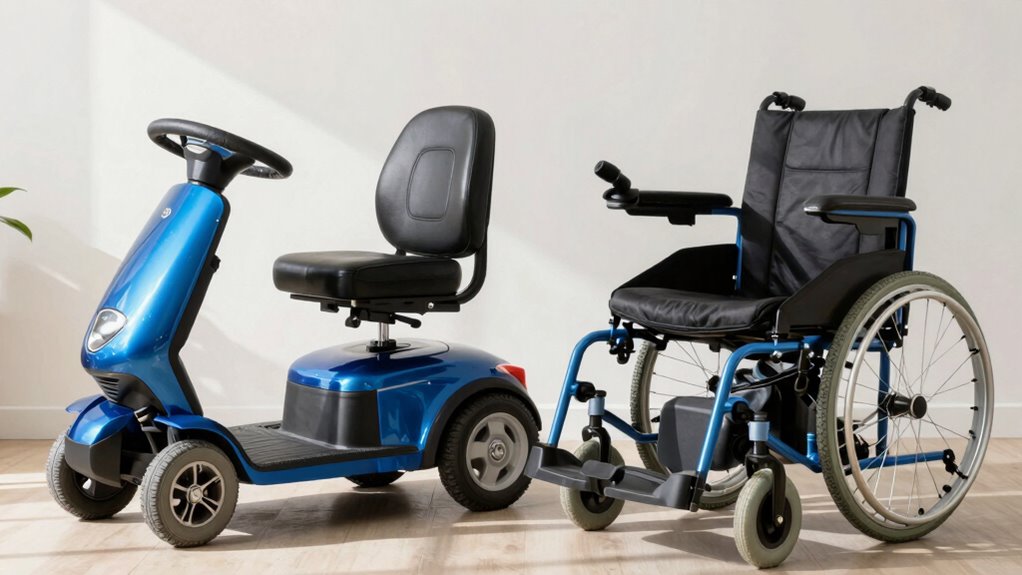

Mobility scooters are better for outdoor trips and longer distances, thanks to their larger batteries and rugged wheels that handle uneven terrain. Electric wheelchairs are more compact, with precise joystick controls ideal for indoor use and tight spaces. They’re usually heavier and less portable but offer better maneuverability indoors. Your choice depends on your lifestyle, environment, and physical needs—keep exploring to find out which option suits you best.
Open a free Amazon Business account
Business pricing, bulk buying and tax-exempt orders.
As an affiliate, we earn on qualifying purchases.
Key Takeaways
- Mobility scooters offer longer battery life and better outdoor range, while electric wheelchairs excel in indoor maneuverability and precision control.
- Scooters are suitable for outdoor terrain with rugged wheels; wheelchairs are optimized for indoor use and tight space navigation.
- Scooters use tiller steering for simple operation; wheelchairs utilize joysticks for detailed control, affecting user comfort and ease.
- Electric wheelchairs tend to be heavier and less portable; mobility scooters often disassemble for easier transport and storage.
- Choice depends on lifestyle: scooters suit outdoor and extended trips, wheelchairs provide better indoor agility and comfort.

When choosing between mobility scooters and electric wheelchairs, understanding their differences is essential to finding the right fit for your needs. One of the first factors to evaluate is battery life. Mobility scooters typically have larger batteries, giving them longer ranges on a single charge. This means you can travel greater distances without worrying about running out of power, making them ideal if you need to get around town or go on day trips. Electric wheelchairs usually have smaller batteries, which suffice for shorter trips or indoor use. If you prefer frequent outings or extended outdoor adventures, a mobility scooter’s longer battery life might serve you better.
Mobility scooters offer longer battery life, ideal for outdoor trips and extended travel.
Terrain adaptability is another critical aspect. Mobility scooters generally excel on smooth, even surfaces like pavement, shopping malls, or sidewalks. Many models also feature larger, rugged wheels that can handle uneven terrain, gravel paths, or slight inclines. If you live in an area with varied terrain or want to venture outside the house regularly, you’ll want a scooter that offers good terrain adaptability. Electric wheelchairs, on the other hand, are often designed with a focus on indoor mobility. They typically feature smaller wheels optimized for maneuverability within tight spaces, such as rooms or narrow hallways. However, some advanced models are equipped with all-terrain tires and suspension systems, making them more capable of handling outdoor environments. Still, their primary strength remains indoor use, especially when steering through tight corners or crowded spaces. Additionally, terrain versatility is continuously improving as manufacturers develop more advanced features.
In terms of design, mobility scooters are usually more straightforward to operate, with tiller steering that resembles a bicycle handlebar, which many users find intuitive. Electric wheelchairs often come with joystick controls, offering precise maneuverability, especially on uneven surfaces or complex environments. If you have limited hand strength or dexterity, evaluating which control style feels more comfortable can make a significant difference. Moreover, the ergonomics of each device can impact user comfort during prolonged use, so considering this aspect is also important.
Weight and portability are also worth thinking about. Electric wheelchairs tend to be heavier and less portable, often requiring a vehicle lift or assistance to transport. Many mobility scooters can be disassembled into smaller parts, making them easier to store or take on public transportation. This flexibility can greatly influence your everyday mobility choices, especially if you frequently travel or have limited storage space. Additionally, battery technology continues to improve, leading to more efficient and longer-lasting power sources for both types of devices. Advances in lightweight materials and folding mechanisms also contribute to increasing portability, making it easier to carry or store the devices when not in use.
Ultimately, your decision hinges on your lifestyle, environment, and physical needs. If you need longer battery life and better terrain adaptability for outdoor adventures, a mobility scooter might be the best choice. But if you prioritize indoor agility and precise control, an electric wheelchair could serve you better. Consider these factors carefully to find the device that offers comfort, independence, and confidence in your daily life.

VEVOR Heavy Duty 4-Wheel Mobility Scooter, Powerful 1000W Brushless Motor, 500 lbs Capacity, 21.5 Miles Long Range, All Terrain Mobility Scooter with Lockable Trunk for Seniors & Adults
- Powerful 1000W Brushless Motor: Handles slopes up to 20 degrees
- Heavy-Duty 500 lbs Capacity: Supports a wide range of users
- Long Range 21.5 Miles: On a single full charge
As an affiliate, we earn on qualifying purchases.
As an affiliate, we earn on qualifying purchases.
Frequently Asked Questions
Can I Use a Mobility Scooter Indoors?
Yes, you can use a mobility scooter indoors, but consider indoor maneuverability and accessibility. Choose a compact model with a tight turning radius to navigate tight spaces easily. Make sure your living area has enough space for safe movement, and check door widths and furniture placement. Before using it indoors regularly, test the scooter in your environment to confirm it meets your needs without causing obstructions or safety concerns.
Are Electric Wheelchairs Suitable for Rough Terrain?
Electric wheelchairs typically aren’t built for rough terrain or off-road capabilities. Unlike rugged mobility scooters, they’re designed for smooth, flat surfaces and indoor use. If you need to navigate uneven paths or outdoor trails, a specialized off-road wheelchair or a rugged mobility scooter is better suited. Electric wheelchairs excel indoors but fall short when it comes to handling rough terrain, limiting their versatility outside controlled environments.
How Long Do Battery Charges Last for Each Device?
Battery longevity varies between mobility scooters and electric wheelchairs. Typically, a mobility scooter’s battery lasts around 12 to 20 miles per charge, requiring recharging every few days with regular use. Electric wheelchairs usually have shorter ranges, around 8 to 15 miles, and may need more frequent charging depending on usage. You should consider your daily distance needs and charging frequency to choose the device that best fits your lifestyle.
Do Both Require Regular Maintenance?
Yes, both require regular maintenance to keep them running smoothly. You’ll want to check the battery lifespan and perform maintenance frequency tasks like cleaning, inspecting tires, and checking electrical components. Neglecting these can lead to unexpected breakdowns or reduced efficiency. Staying on top of maintenance guarantees your device remains reliable, extending its lifespan and keeping you safe. Don’t wait for issues—regular upkeep is your best bet for hassle-free mobility.
Which Is More Cost-Effective Long-Term?
A mobility scooter generally proves more cost-effective long-term because of its lower initial purchase price and easier maintenance. When you consider accessibility considerations, scooters are perfect for outdoor use and longer distances, often requiring less upkeep. Electric wheelchairs tend to have higher upfront costs and more complex maintenance, making them more expensive over time. Ultimately, your choice depends on your specific needs and how often you’ll use the device.
Conclusion
Ultimately, choosing between a mobility scooter and an electric wheelchair depends on your lifestyle. While some say scooters are better for outdoor adventures and independence, others believe wheelchairs offer more agility indoors. The truth? It’s like comparing apples to oranges—you need to weigh your daily needs. Personally, I think trying both could reveal which suits you best. After all, the right choice boosts confidence and freedom, making life’s journey smoother and more enjoyable.
Flea & tick season Picks
flea and tick prevention
As an affiliate, we earn on qualifying purchases.