TL;DR
Compact travel hammocks are lightweight, packable hammocks designed for camping, backpacking, and outdoor lounging. Compare the weight of the full setup, including straps and any bug net, tarp, or insulation you need; then check fit, load limits, anchor safety, and local rules before using it.
A hammock that fits in a small pouch can still take up a surprising amount of your backpack once you add the gear that makes it sleep-ready. That difference matters when you are weighing every item before a long trail day, or carrying your kit through a busy airport.

Get travel and outdoor gear delivered free with Prime
- Fast, free delivery on millions of items
- Prime Video, Amazon Music and more included
- Member-only deals all year
Compact travel hammocks are packable places to rest between two suitable anchor points. This guide helps you compare the full carry weight, choose a fabric and size that fit your plans, and decide when you need shelter or warmth. You will also get a straightforward setup checklist, so your first hang feels relaxed instead of like a wrestling match with straps.
Think of the hammock as the bed, not the whole bedroom. A sunny park nap may need little else; a damp night in the woods calls for more planning.
Compare the packed weight of the full sleep setup, including straps and any tarp, bug net, or insulation you need.
Choose hammock length and width for your height, sleeping position, and intended use; a longer model can make a diagonal lie easier.
Check the stated load limit for the hammock and suspension, and inspect seams, straps, and hardware before use.
Use wide tree straps on suitable anchors, follow local rules, keep the hang low, and clear hazards from underneath.
For overnight comfort, plan for rain, insects, and cold air beneath the hammock; the hammock body alone does not cover those needs.
What You Get From a Compact Travel Hammock
A compact travel hammock is a lightweight, packable hammock designed to hang between two sturdy anchor points for lounging or sleeping. Many models fold into a stuff sack and use nylon or polyester fabric, though the hammock alone does not provide a roof, bug protection, or warmth beneath you.
That distinction is easy to miss when you see a tidy bundle on a gear shelf. For an afternoon in a leafy park, the hammock and straps may be enough. For an overnight trip beside a lake, you may also need a bug net, a tarp to keep rain off, and insulation under your body.
One evening, imagine arriving at camp as clouds gather and mosquitoes start to buzz. You can still use the same hammock, but your plan now depends on whether your kit includes weather and insect protection. That is why packable hammocks designed for travel vary from simple lounge slings to more complete hammock camping kits.
So what are they, really: a convenient bed, or a complete shelter? They are a bed you can adapt. Treat the fabric as one part of a system, and you can choose what to carry for each trip.
Products Worth Considering

Travelpro Tourlite 21-Inch Expandable Softside Carry-On Spinner Luggage, Blue

GoPro Fluid Pro AI 3-Axis Gimbal Stabilizer with AI Tracking and Fill Light

Samsonite Freeform Large Expandable Hardside Checked Luggage with Spinner Wheels and TSA Lock, Black
As an affiliate, we earn on qualifying purchases.
Compare the Whole Packed Setup Before You Buy
To compare compact travel hammocks, add up the weight of the hammock, suspension straps, and every accessory you need for the trip. The lightest hammock body may not make the lightest sleep system once you add a tarp, bug net, and insulation. Looking at the whole system matters because each missing component may become a separate purchase, take up more space than expected, or leave you without protection when conditions change.
Try this comparison before buying: picture a weekend where you will sleep outdoors. One setup might be a hammock and straps for warm, dry weather; another might add insect protection and a tarp; a cold night may call for an underquilt or sleeping pad too. Each extra piece adds weight, but it can solve a real problem. The useful question is whether its protection is worth carrying for the places and seasons you actually visit. If the forecast and campsite are predictable, you may leave some accessories behind; if conditions are exposed or changeable, their extra weight buys flexibility and a better chance of sleeping comfortably.
| Trip | Likely setup | What to weigh |
|---|---|---|
| Park or beach rest | Hammock and compatible straps | Body and suspension together |
| Buggy overnight camp | Hammock, straps, bug net, and insulation | Every item packed for the night |
| Rainy or exposed camp | Hammock, straps, tarp, and suitable insulation | Full weather-ready setup |
Now check what is actually included in the product listing. A pouch may contain only the hammock and hardware; it may not include tree straps or a tarp. On a backpacking trip, that missing detail can mean a heavier second purchase or an uncomfortable night. Compare packed weights using the same scope—for example, all items needed for the same overnight conditions—so a bare hammock is not mistaken for a lighter ready-to-use system.
Choose Fabric and Size for the Way You Rest
Fabric and dimensions shape how a travel hammock feels, carries, and holds up. Most are made from nylon or polyester: nylon is common because it is light and strong, while polyester tends to stretch less and can feel more stable. Construction matters too, so inspect stitching, seams, hardware, and the maker’s stated load limit. The tradeoff is practical: saving weight or choosing a more stable feel matters only if the hammock still suits how you will use it and is built for the load you plan to place on it.
Length and width affect comfort just as much as material. A longer hammock can give you more room to lie diagonally, which many people find flatter than lying straight along the centerline. That extra room can matter over a full night, when a cramped position may interrupt sleep, but a larger hammock can also take up more space in your pack. If you are tall, broad-shouldered, or want to tuck a sleeping bag around yourself, a compact model that saves a few inches may feel cramped after midnight.
Picture testing a hammock before a trip: you settle into it and shift slightly across the fabric instead of lying straight like a pencil. That diagonal position can ease the curved feeling, but only if the hammock gives your legs and shoulders room. The best choice depends on your height, preferred sleeping position, and whether you plan to lounge or sleep overnight. A hammock that feels fine for a short nap may not provide the same comfort after hours in one position, so test the intended sleep setup if you can.
Use the published load limit for the specific hammock and suspension, not a guess based on fabric thickness. A high rating for one part does not mean every strap or connector shares it. The usable limit is governed by the weakest component, so check that the hammock, suspension, and connectors are all appropriate for the intended load. For example, a roomy hammock marketed for two may still feel crowded for two adults, even when its stated capacity allows the combined weight. Capacity describes a limit; it does not promise comfortable space.
Set Up Safely Without Damaging Trees
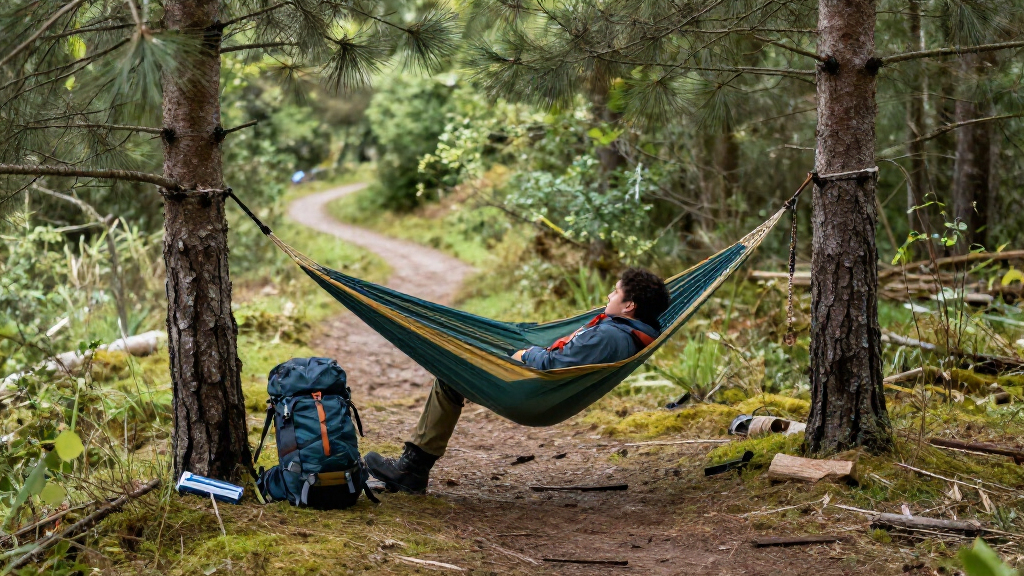
A safe hammock setup uses healthy anchor points, compatible suspension, and a low hang with no dangerous obstacle underneath. Follow the manufacturer’s setup instructions and check local park or campsite rules before attaching anything to trees. These checks address different risks: sound anchors and properly used suspension help prevent a fall, while site rules and suitable straps help protect trees and avoid damage to the place you are visiting.
Start by choosing sturdy, living trees and using wide suspension straps made for hanging. Wide straps spread pressure across more bark; cord wrapped directly around a trunk can cut into it. Avoid thin, damaged, or protected trees, and never hang above a drop, sharp rocks, a fire, or other hazards. A low hang limits the consequences if something slips, but it does not make a poor anchor or worn strap safe.
- Check the site rules and choose two suitable anchor points.
- Inspect the hammock, straps, stitching, and connectors for wear.
- Attach the suspension as the manufacturer directs, then check that the hammock hangs low and comfortably.
- Test the setup gently before settling in, and check again if anything shifts.
For example, if your only available trees force you to stretch the hammock tightly or hang it above a rocky slope, move to another spot or use a compatible stand where permitted. A stand can help when trees are unavailable, but confirm that it matches your hammock and that the surface is stable. The goal is a secure, comfortable hang with enough clearance from hazards; forcing a setup to work can add strain to the equipment and leave you with little room to recover if it fails.
Keep children within close adult supervision around hammocks. A fall can happen quickly, even from a low height; never leave a child unattended, and keep the area underneath clear. Hammocks are for resting, not swinging high or playing over water and other hazards.
Stay Dry, Bug-Free, and Warm Overnight
An overnight hammock needs protection matched to the weather: a rain tarp blocks rain and some wind, a bug net helps keep insects out, and insulation beneath you reduces heat loss. The hammock by itself is an open bed, so it will not shelter you from a storm or stop cold air from moving underneath. Each item solves a different problem, which is why choosing gear from the forecast and site conditions is more useful than assuming one all-purpose accessory will cover everything.
That moving air is the surprise many first-time hammock campers notice. Even if your sleeping bag feels warm on top, compressed insulation under your body may provide little protection. A suitable sleeping pad or underquilt can help; choose layers for the expected conditions and your own comfort. A pad may already be part of your kit and can be a practical choice, though it may shift; an underquilt hangs beneath the hammock and avoids being compressed in the same way, but adds a separate item to pack.
Consider a mild evening at a wooded campsite: you may feel fine when you first lie down, then start to cool as a breeze slips beneath the hammock. An underquilt or a compatible pad can prevent that cold, clammy feeling. If insects are active, a bug net can make the difference between sleeping and swatting mosquitoes all night. These additions improve comfort only when they fit the hammock and are set up to cover the areas exposed to cold or insects.
For a short daytime rest in dry weather, extra gear may add more hassle than value. For a forecast with rain, wind, or biting insects, leaving protection behind can turn a light setup into a miserable one. Check the forecast and your campsite exposure before deciding what to pack. A forecast is a planning tool, not a guarantee, so consider whether you have a suitable backup or a way to leave if conditions worsen.
Keep Your Hammock Ready for the Next Trip
A hammock stays dependable when you inspect it, keep it clean, and store it fully dry. Sharp objects can snag fabric, worn stitching can weaken a seam, and damp storage can leave your kit smelling musty or damage it over time.
Before each use, look over the fabric, seams, suspension straps, and hardware. Do not use a hammock or strap that shows damage, and never exceed the manufacturer’s load rating. A two-minute check at the trailhead is easier than discovering a weak connector after you have settled in.
After a sandy beach day, shake grit from the fabric and follow its care label for cleaning. Let it dry completely before storing it away from prolonged sunlight, moisture, and pests. For instance, putting a damp hammock straight into its stuff sack after a rainy camp can leave it with a stale smell by the time you unpack for your next trip.
Care instructions vary by material and construction, so the maker’s label is the practical guide for washing and drying. Store straps with the hammock only when both are clean and dry. A little care helps your compact kit stay ready for a park afternoon or a longer trip.
Frequently Asked Questions
Are compact travel hammocks comfortable for overnight sleeping?
Many people sleep comfortably in them, but comfort depends on fit, setup, sleeping position, and insulation. A longer hammock can make it easier to lie diagonally; try your setup before a trip if you can.
Can I use a travel hammock without a stand?
Yes, if you have suitable sturdy anchor points and the location allows hanging. If trees are unavailable or hanging is prohibited, use a compatible, stable stand where permitted.
How much weight can a compact travel hammock hold?
Use the manufacturer’s stated limit for your specific hammock and suspension. Do not assume the hammock body, straps, and connectors all have the same rating, and never exceed the lowest applicable limit.
Do I need a bug net or rain tarp?
For a casual rest in good weather, you may not need either. For overnight camping, a bug net can help in insect-heavy places, while a tarp can shelter you from rain and some wind.
How do I stay warm in a hammock?
Insulate underneath with a suitable sleeping pad or underquilt, and use sleeping layers suited to the forecast. A sleeping bag alone may not prevent cold air from drawing warmth away beneath you.
How should I store a travel hammock after a trip?
Follow the care label, clean it as directed, and let it dry completely before storage. Keep it away from prolonged sunlight, moisture, and pests so the fabric and straps are ready for your next outing.
Conclusion
Choose your hammock for the trip you will actually take, then weigh the whole setup and plan for the weather. Check the fit, load rating, suspension, and campsite rules before you hang it.
A good travel hammock turns two suitable trees into a quiet place to rest. Pack the right extras, and that small bundle can feel like a welcome bed beneath a canopy of leaves.