
Adaptogens like ashwagandha, holy basil, and ginseng are now common in skincare serums because they help your skin respond better to stress and environmental damage. They reduce inflammation, fight free radicals, and boost your skin’s resilience, leaving it calmer, brighter, and healthier over time. These herbs are carefully incorporated based on traditional use and scientific studies, making them a natural, effective way to support your skin’s overall wellness. Keep exploring to learn more about how these botanicals work for your skin.
Key Takeaways
- Adaptogens like ashwagandha and holy basil are now incorporated into serums to help reduce stress-related skin issues.
- These herbs support skin resilience, combat inflammation, and protect against environmental stressors in botanical skincare.
- Adaptogenic serums promote a holistic approach to skin health, addressing both surface concerns and overall resilience.
- Their antioxidant properties help fight free radicals, reducing aging signs caused by stress and pollution.
- The integration of adaptogens aligns with clean beauty trends, offering natural, science-backed stress-relief skincare options.
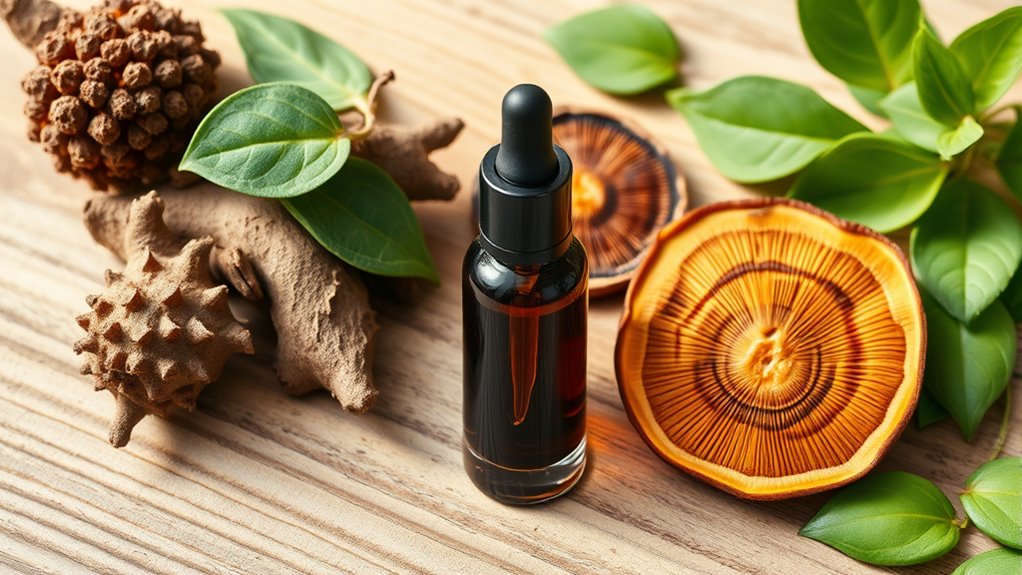
In recent years, adaptogens have gained popularity in the beauty industry for their ability to help your skin and overall appearance thrive under stress. This surge in interest is largely due to the growing awareness that stress impacts your skin’s health, causing breakouts, dullness, and premature aging. To combat this, many brands have begun incorporating adaptogens into herbal formulations designed specifically for botanical skincare. These ingredients are celebrated for their ability to restore balance, reduce inflammation, and bolster your skin’s resilience.
Adaptogens in skincare help your skin thrive under stress by restoring balance and boosting resilience.
When you look at herbal formulations in skincare, adaptogens are often highlighted as key ingredients because of their proven ability to adapt to your body’s stress levels. Instead of just targeting surface symptoms, these herbs work internally and externally to support your skin’s natural defenses. For example, ingredients like ashwagandha, holy basil, and ginseng are used in serums, creams, and masks to help your skin respond more effectively to environmental stressors such as pollution, UV rays, and fatigue. Their inclusion in botanical skincare products isn’t accidental; it’s based on centuries of traditional use and modern scientific validation showing how these herbs can enhance skin robustness.
Botanical skincare that features adaptogens offers a multi-layered approach. It’s not just about soothing irritated skin but also about strengthening it from within. When you apply these serums or creams regularly, you’re giving your skin a chance to recover from stress-induced damage. The antioxidants present in adaptogens combat free radicals, which are responsible for aging and dullness. Plus, their anti-inflammatory properties help calm redness and irritation, making your skin look healthier and more radiant over time.
What makes these herbal formulations stand out is their ability to integrate seamlessly into your skincare routine. They’re often combined with other plant-based ingredients to amplify their effects, creating a holistic approach to beauty. By choosing botanical skincare infused with adaptogens, you’re not just addressing surface issues but also supporting your skin’s overall resilience. This approach aligns with the trend of clean beauty, emphasizing natural ingredients that work in harmony with your body.
Incorporating adaptogens into your skincare routine means you’re actively using nature’s tools to combat stress-related skin concerns. Whether in serums, oils, or masks, these herbal formulations provide a gentle yet effective way to nurture your skin under pressure. As you continue to explore botanical skincare, you’ll discover how these powerful herbs can help you maintain a youthful, glowing appearance even in the face of daily stressors.
Top picks for "adaptogen beauty stres"
Open Amazon search results for this keyword.
As an affiliate, we earn on qualifying purchases.
Frequently Asked Questions
Are Adaptogens Suitable for All Skin Types?
You might wonder if adaptogens suit all skin types. Generally, they’re gentle and can benefit many, but skin sensitivity varies. If you have sensitive skin, check ingredient compatibility first and do a patch test to avoid irritation. Adaptogens like ginseng or holy basil are suitable for most, but always consider your unique skin needs. Consulting a dermatologist guarantees these herbs support your skin’s health without causing adverse reactions.
How Long Does It Take to See Results From Adaptogen Serums?
You’re wondering how long it takes to see results from adaptogen serums. Typically, you can expect some visible improvements within 2 to 4 weeks of consistent use. Keep in mind, individual skin types and concerns influence the timeframe expectations. Patience is key, and regular application enhances your chances of experiencing the full benefits. Stay committed, and you’ll likely notice a calmer, more balanced complexion over time.
Can Adaptogens Cause Skin Irritation or Allergies?
You might wonder if adaptogens can cause skin irritation or allergies. It’s possible if you have plant sensitivities or experience ingredient interactions. Always patch-test new serums before full application to check for reactions. While most adaptogens are gentle, some ingredients could trigger irritation in sensitive skin. If you notice redness or itching, discontinue use and consult a dermatologist to avoid adverse effects related to plant sensitivities or ingredient interactions.
Are Adaptogens Effective in Treating Skin Conditions Like Acne?
Imagine you’re living in the roaring ’20s, but today, adaptogens might help with acne. Clinical studies suggest some adaptogens, like Ashwagandha or Rhodiola, could reduce inflammation and balance oil production, aiding skin conditions. However, effectiveness depends on ingredient sourcing and formulation. While promising, you should consult a dermatologist, as individual responses vary. Adaptogens show potential, but more research is needed before claiming they’re a cure-all for acne.
What Are the Best Adaptogens for Anti-Aging Skincare?
When choosing anti-aging skincare, you want herbs with strong herbal potency and age-defying ingredients. You should look for adaptogens like ginseng, ashwagandha, and rhodiola, which help reduce fine lines and boost skin resilience. These herbs work actively to combat signs of aging by supporting your skin’s natural renewal process. Incorporate serums with these adaptogens into your routine for a more youthful, radiant complexion and visible anti-aging benefits.
Conclusion
Incorporating adaptogens into your skincare routine can truly transform your glow and resilience. For example, imagine a busy professional who feels stressed and fatigued; after using a serum with adaptogenic herbs like ashwagandha, she notices her skin looks calmer and more radiant, even during hectic days. These stress-relief herbs work by supporting your skin’s natural defenses, helping you feel more balanced and beautiful inside and out. Embrace adaptogens and let your skin thrive amidst life’s daily pressures.