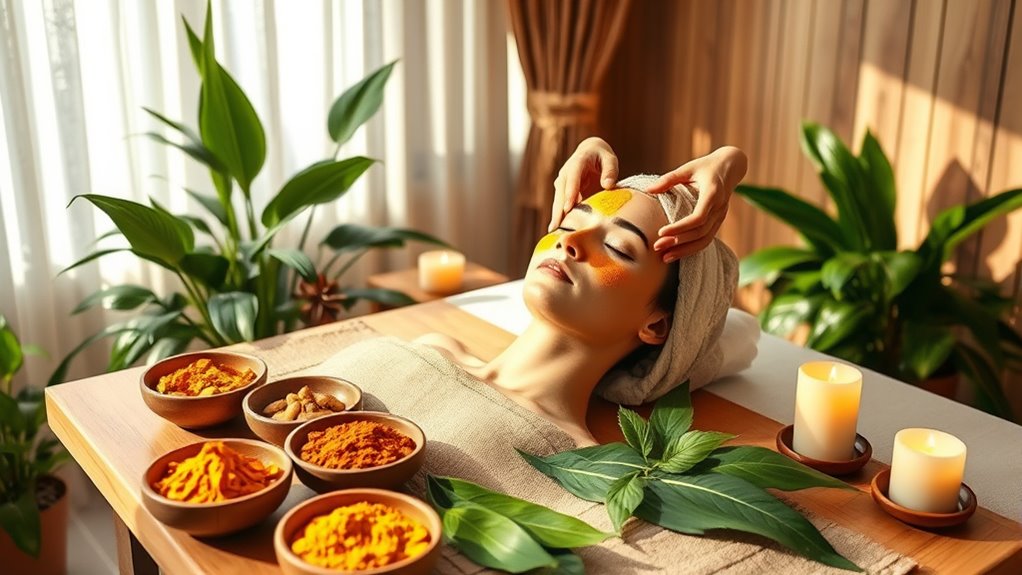

Modern dermatologists now endorse Ayurvedic beauty rituals for their natural, holistic approach to skin health. These practices focus on balancing mind, body, and spirit using herbal ingredients like turmeric, neem, and sandalwood, which offer anti-inflammatory, antibacterial, and brightening benefits. They promote gentle, effective skincare that avoids harsh chemicals, supporting overall wellness. If you want to discover how these ancient rituals can enhance your skin’s radiance and well-being, keep exploring the secrets behind these time-tested methods.
Key Takeaways
- Modern dermatologists endorse Ayurvedic principles for promoting balanced, healthy skin through natural remedies and herbal ingredients.
- Ayurvedic rituals emphasize internal wellness, stress management, and lifestyle practices that support skin health.
- Herbs like turmeric, neem, and sandalwood are recognized for their healing, anti-inflammatory, and antioxidant benefits in skincare.
- Natural application methods such as herbal pastes and oils align with current trends favoring chemical-free, gentle skincare.
- The holistic approach of Ayurveda complements contemporary dermatology by integrating internal health with external beauty for radiant skin.
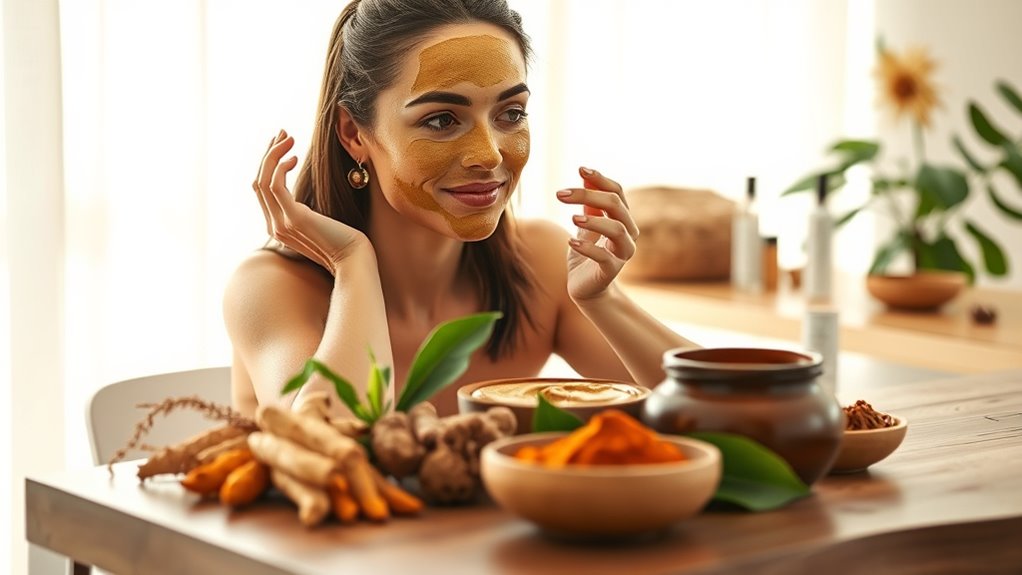
Ayurvedic beauty rituals have been practiced for thousands of years, emphasizing harmony between the mind, body, and spirit to achieve radiant skin and overall well-being. If you’re exploring ways to enhance your skincare routine, you’ll find that many modern dermatologists now endorse the principles behind these ancient practices, especially their focus on herbal skincare and natural remedies. These natural approaches are gaining recognition for their ability to nourish your skin without harsh chemicals or synthetic ingredients.
Ayurvedic practices promote harmony and natural healing, now embraced by modern dermatologists for radiant, balanced skin.
When you incorporate herbal skincare into your routine, you tap into nature’s potent resources. Ayurvedic traditions recommend using herbs like neem, turmeric, sandalwood, and ashwagandha, which are known for their healing and anti-inflammatory properties. Many dermatologists appreciate that these herbs can help reduce redness, soothe irritation, and promote a healthier complexion. For example, turmeric’s curcumin component is celebrated for its antioxidant and brightening effects, making it a popular ingredient in natural remedies for skin clarity. Similarly, neem’s antibacterial qualities make it effective in managing acne and preventing breakouts naturally.
You might also find that natural remedies such as herbal pastes, decoctions, or oils work in synergy with your skin’s own functions. For instance, applying a turmeric and honey mask can help even out skin tone and diminish dark spots, while herbal-infused oils like Brahmi or coconut oil provide deep hydration and boost skin elasticity. These remedies work gently yet effectively, aligning with modern dermatological advice to avoid aggressive chemical treatments that can damage your skin’s barrier.
Many skincare experts now emphasize the importance of a holistic approach, which is a cornerstone of Ayurveda. It’s not just about topical treatments but also about supporting your internal health through diet, stress management, and lifestyle changes. When you adopt herbal skincare and natural remedies, you’re not only caring for your skin but also promoting overall wellness. This integrated approach helps your skin respond better to external factors, resulting in a more resilient, vibrant appearance.
Additionally, herbal skincare has become a popular trend in modern dermatology, showcasing the growing recognition of natural ingredients’ benefits. When you embrace herbal skincare, you’re choosing a path rooted in respect for nature and a desire for balanced, radiant skin that reflects your inner health.
Top picks for "ayurvedic beauty ritual"
Open Amazon search results for this keyword.
As an affiliate, we earn on qualifying purchases.
Frequently Asked Questions
Can Ayurvedic Practices Replace Conventional Skincare Treatments?
You might wonder if Ayurvedic practices can substitute conventional skincare treatments. While they promote holistic healing through herbal formulations and natural methods, they may not always address urgent skin issues or specific conditions effectively. It’s best to see Ayurveda as a complementary approach that supports overall skin health. Incorporating herbal formulations and holistic healing can enhance your routine, but consult a dermatologist for serious concerns to ensure proper care.
Are Ayurvedic Ingredients Safe for Sensitive Skin?
You might wonder if Ayurvedic ingredients are safe for sensitive skin. Generally, herbal safety and ingredient purity are key factors, but everyone’s skin reacts differently. Always check for potential allergens and opt for products with high-quality, pure herbs. Patch test new ingredients first, and consult a dermatologist if you’re unsure. With proper care, Ayurvedic herbs can be gentle, but personalization is vital for sensitive skin.
How Long Does It Take to See Results From Ayurvedic Routines?
Did you know that most people see noticeable results from ayurvedic routines within 4 to 8 weeks? The time to see changes varies based on your skin type and routine consistency. Generally, patience is key—your ayurvedic timeline might be shorter or longer. Stick with your regimen, and you’ll likely start noticing improvements in your skin’s texture, glow, and overall health in a few weeks.
Can Ayurveda Help With Specific Skin Conditions Like Acne or Eczema?
You can definitely see improvements with Ayurveda for skin conditions like acne or eczema. Herbal remedies target inflammation and help balance your body’s doshas, promoting clearer skin. Skin detoxification through Ayurvedic practices clears toxins that worsen your skin issues. By consistently following personalized routines, you might notice relief over time, as Ayurveda works holistically to restore your skin’s health naturally and effectively.
Are There Any Side Effects of Using Ayurvedic Beauty Products?
You might wonder if using Ayurvedic beauty products has side effects. While they’re generally natural, you should watch out for herbal allergies and ingredient sensitivities. Some herbs can cause allergic reactions or skin irritation, especially if you have sensitive skin. Always do a patch test before trying new products, and consult a dermatologist if you experience any adverse reactions. Being cautious helps you enjoy the benefits safely.
Conclusion
Embracing Ayurvedic beauty rituals isn’t just a trend; it’s a magic wand for your skin, transforming your skincare routine into a sacred self-care ritual. Modern dermatologists now endorse these ancient secrets because they work wonders, turning dullness into radiance faster than you can say “glow-up.” So, why not tap into centuries of wisdom and give your skin the love it truly deserves? Trust me, your reflection will thank you with a luminous, goddess-like glow that’s simply unstoppable.