CBD skincare may help reduce inflammation, calm conditions like acne and eczema, and protect your skin with antioxidants, making it appealing for natural relief. However, risks include potential irritation or allergic reactions, especially if you have sensitive skin. Regulations vary widely depending on your location, so check local laws and product quality. Curious about how to safely incorporate CBD into your routine and stay within legal bounds? Keep exploring to learn more.

Get travel and outdoor gear delivered free — and shop member deals
- Fast, free delivery on millions of items
- Access to Prime Big Deal Days deals on October 6–7
- Prime Video, Amazon Music and more included
Key Takeaways
- CBD in skincare offers anti-inflammatory, antioxidant, and moisturizing benefits, potentially improving conditions like acne, eczema, and skin aging.
- Risks include skin irritation and allergic reactions, especially in sensitive individuals; patch testing is recommended.
- Current scientific evidence is limited; most studies are preliminary, requiring larger clinical trials to confirm efficacy.
- Regulations vary globally; ensure products comply with local laws and quality standards, emphasizing transparency and ingredient safety.
- Incorporating CBD into routines involves applying topicals after cleansing, choosing suitable formulations, and monitoring skin response.
Understanding the Therapeutic Effects of CBD on Skin

Understanding the therapeutic effects of CBD on skin begins with recognizing its ability to target key biological processes involved in skin health. You’ll find that CBD can reduce inflammation, which helps calm skin conditions like acne and rosacea. Its emollient properties boost hydration by increasing water content and improving skin firmness. As a strong antioxidant, CBD can defend against environmental damage from UV rays and pollutants. It also helps regulate sebaceous glands, potentially lowering excess oil production that causes breakouts. Additionally, CBD’s antimicrobial effects may inhibit harmful bacteria, such as *C. acnes*. By interacting with the skin’s endocannabinoid system, CBD can support overall skin balance, making it a promising ingredient for those seeking natural, targeted skincare solutions. Incorporating CBD into skincare routines can support skin health by promoting a balanced and resilient skin barrier.
Potential Risks and Side Effects of CBD Use

While CBD skincare products are generally safe, some people may experience skin irritation or allergic reactions. It’s important to test a small area first, especially if you have sensitive skin or allergies. Being aware of these risks can help you avoid uncomfortable or adverse reactions. Additionally, understanding inspirational quotes about fatherhood can remind us of the importance of care and support in our lives.
Skin Irritation Possibilities
Although CBD is generally considered safe for topical use, some people may experience skin irritation after applying CBD products. This reaction can occur due to sensitive skin or ingredients in the formulation, such as preservatives or carrier oils. You might notice redness, itching, or a rash where the product was applied. These symptoms are usually mild but can be uncomfortable or concerning. It’s important to perform a patch test before using a new CBD skincare product, especially if you have sensitive skin or known allergies. If irritation develops, discontinue use immediately and consult a dermatologist. While skin irritation is a potential side effect, it remains relatively uncommon, and most users tolerate CBD topicals well. Proper formulation and testing can help minimize this risk. Additionally, understanding the ingredients and product safety can help you make informed choices about CBD skincare.
Allergic Reactions Risk
Even though CBD is generally considered safe for topical use, some individuals may experience allergic reactions. You might notice redness, itching, swelling, or a rash after applying a CBD product. These reactions occur if you’re sensitive or allergic to certain components, such as the hemp extract, carrier oils, or added ingredients like fragrances. It’s important to perform a patch test before using a new product extensively. If you experience any adverse reactions, discontinue use immediately and consult a dermatologist. While rare, allergic responses can be more severe, so staying alert is essential. Remember, everyone’s skin reacts differently, and what’s safe for one person might not be for another. Being cautious helps you enjoy CBD’s benefits without risking unwanted side effects. Additionally, understanding allergic reactions can help in recognizing symptoms early and taking appropriate action.
Navigating Legal and Regulatory Considerations
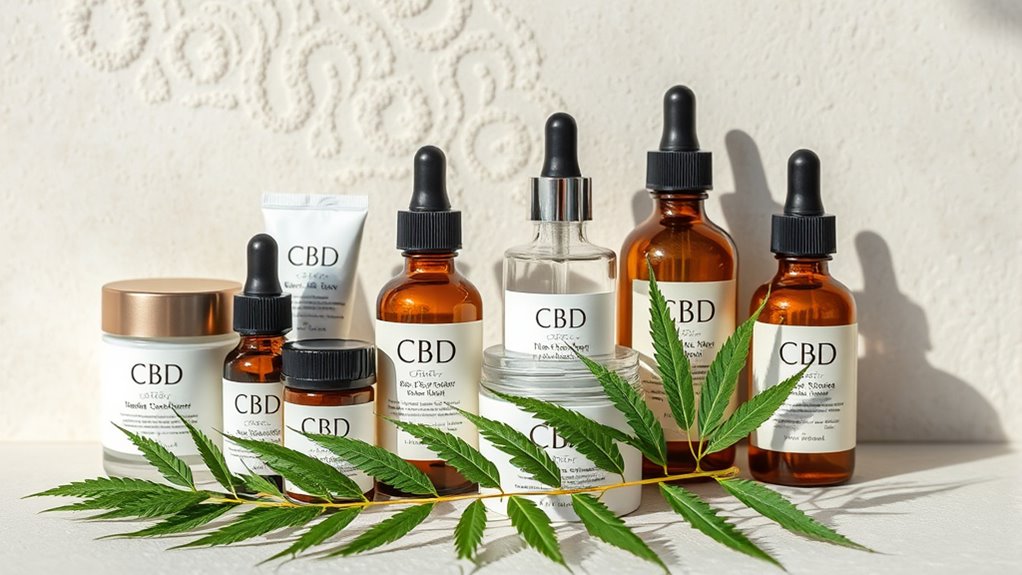
Navigating legal and regulatory considerations of CBD skincare can be complex because rules vary considerably across different countries and regions. You need to stay informed about local laws, as some places permit CBD in cosmetics only if derived from hemp with minimal THC, while others impose stricter restrictions or bans. Labeling requirements are also critical—accurate ingredient lists and health claims are often mandatory, but enforcement can be inconsistent. Quality control is essential to guarantee product safety and consistency, yet standards differ globally. You must understand whether regulatory authorities approve CBD for topical use, as approval status influences market access. Charting these considerations requires diligent research and compliance to avoid legal issues and build consumer trust in your products. Additionally, understanding home decor trends can help brands create appealing packaging that aligns with current aesthetic preferences, enhancing consumer appeal and trust.
Current Trends and Consumer Preferences in CBD Skincare
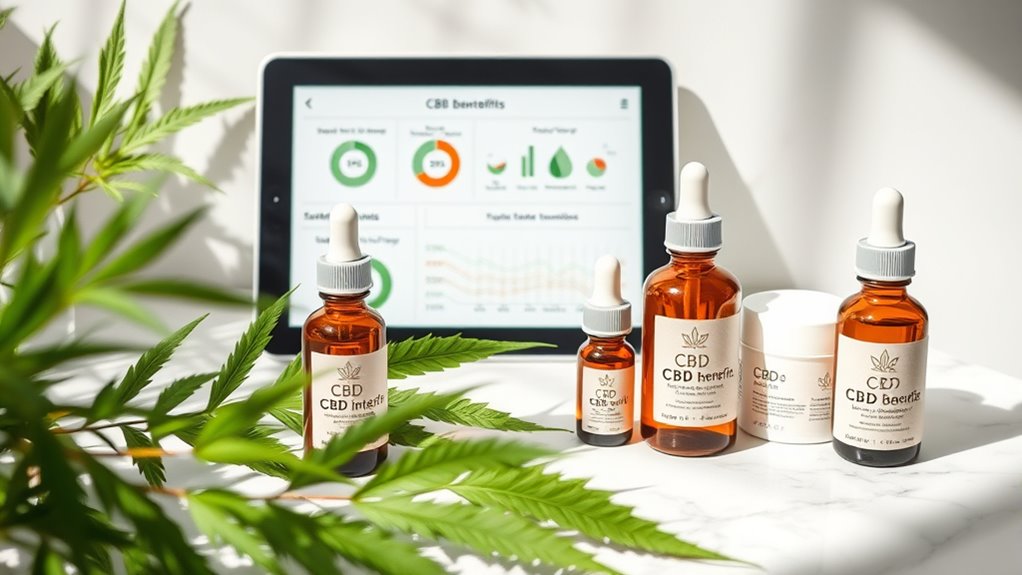
The popularity of CBD skincare has surged as more consumers seek natural remedies for skin concerns and holistic wellness. You’re drawn to products with clean, plant-based ingredients that promise calming and anti-inflammatory benefits. Today’s consumers prefer versatile options like creams, serums, and oils that fit seamlessly into daily routines. Transparency matters; you want clear labeling about CBD content and sourcing. Brands that emphasize organic, cruelty-free, and sustainably produced products attract your loyalty. Social media influences your choices, with influencers highlighting CBD’s relaxing properties and skin benefits. You also prioritize affordability and effectiveness, often turning to online platforms for reviews and comparisons. Overall, your preferences lean toward innovative, trustworthy products that combine science and nature to support healthier, more balanced skin. The focus on understanding AI’s transformative impact, such as AI Bifurcation, helps you appreciate the importance of transparency and informed choices in emerging industries like CBD skincare.
Scientific Evidence Supporting CBD for Skin Conditions

You should look at the scientific evidence to understand how effective CBD really is for skin conditions. Preclinical studies suggest it can reduce inflammation and support skin health, but human trials are still limited. Exploring its therapeutic mechanisms can help clarify how CBD might benefit your skin. Additionally, understanding the regulatory landscape surrounding CBD products is crucial for making informed choices.
Preclinical Efficacy Data
Preclinical studies provide important insights into the potential benefits of CBD for skin conditions. Laboratory experiments and animal models show that CBD can reduce inflammation, which is key for conditions like acne and psoriasis. It also demonstrates antioxidant properties that help protect skin cells from UV damage and environmental stressors. Additionally, CBD appears to regulate sebaceous glands, potentially decreasing excessive oil production associated with acne. Its antimicrobial effects can inhibit the growth of bacteria such as *C. acnes*, further supporting skin health. These preclinical findings suggest that CBD might offer multi-faceted benefits, targeting inflammation, oxidative stress, and microbial imbalance. Furthermore, understanding the regulatory landscape surrounding CBD products is essential for safe and informed use. While promising, these results are preliminary, and further studies are needed to confirm efficacy and safety in human skin.
Human Clinical Trials
Are human clinical trials providing clear evidence for CBD’s effectiveness in treating skin conditions? Currently, the evidence is limited and inconclusive. Some small studies suggest that topical CBD may reduce inflammation and improve symptoms of conditions like acne and eczema. For example, a few trials reported decreased sebum production and less skin irritation after CBD application. However, these studies often involve small sample sizes, lack control groups, or have short durations. Larger, well-designed clinical trials are needed to confirm these preliminary findings and determine ideal dosages and formulations. Until then, while promising, the scientific community doesn’t have definitive proof that CBD effectively treats skin conditions in humans. More rigorous research is essential to establish clear, evidence-based benefits.
Therapeutic Mechanisms
CBD’s therapeutic effects on skin conditions are supported by various studies that highlight its interaction with multiple biological pathways. It influences inflammation, sebum production, and oxidative stress, which are key factors in skin health. You can see that CBD:
- Reduces inflammation by modulating cytokine activity, helping calm skin conditions like acne and eczema.
- Regulates sebaceous glands, potentially decreasing excessive oil and preventing breakouts.
- Provides antioxidant protection, shielding skin from environmental damage and aging.
- Its role in skin health is also influenced by its capacity to support the skin’s natural barrier function, promoting overall resilience. These mechanisms suggest CBD’s multifaceted role in skin health. While more research is needed, current evidence indicates that CBD interacts with the endocannabinoid system and other pathways to promote a healthier skin barrier and reduce common skin issues.
Integrating CBD Into Existing Skincare Routines

Integrating CBD into your existing skincare routine can be a seamless way to enhance skin health, especially if you’re looking for natural anti-inflammatory and hydrating benefits. Start by choosing products compatible with your skin type, such as creams, serums, or oils containing CBD. Apply CBD products after cleansing and before moisturizing to maximize absorption. You can mix a few drops of CBD oil into your moisturizer or serum for added benefits. Pay attention to how your skin responds; some individuals may experience irritation, so perform a patch test first. Incorporate CBD gradually to monitor its effects. Combining CBD with ingredients like hyaluronic acid or antioxidants can boost hydration and protection. Using appropriate application techniques can also help optimize the effectiveness of your CBD-infused products. With consistent use, CBD can complement your routine, helping to soothe inflammation and improve overall skin resilience.
Frequently Asked Questions
How Do I Identify High-Quality CBD Skincare Products?
To identify high-quality CBD skincare products, check for transparency in labeling, ensuring they list the CBD concentration and ingredients clearly. Look for products made with broad-spectrum or full-spectrum CBD, which contain additional beneficial compounds. Verify third-party lab testing results for purity and potency, and choose reputable brands with good reviews. Avoid products with artificial additives or vague claims, and prioritize those formulated by trusted manufacturers.
Can CBD Help With Specific Skin Conditions Like Eczema?
You wonder if CBD can help with eczema—there’s promising evidence, but nothing conclusive yet. While some users report relief from itching and inflammation, clinical studies are limited. You might experience benefits due to CBD’s anti-inflammatory and soothing properties, but results vary. Keep in mind, individual reactions differ, and more research is needed. Always consult a dermatologist before trying CBD for eczema, especially if your skin is sensitive.
Are There Any Long-Term Safety Concerns With Topical CBD Use?
You might wonder about long-term safety concerns with topical CBD. While current evidence suggests it’s generally safe for short-term use, there’s limited data on its prolonged effects. Some people could experience skin irritation or allergic reactions over time, especially with continuous use or sensitive skin. It’s wise to monitor your skin’s response and consult a dermatologist if you notice persistent irritation or adverse reactions during long-term use.
How Does CBD Compare to Traditional Skincare Ingredients?
You might find that CBD is gaining popularity, with a 50% increase in sales over the past year. Compared to traditional skincare ingredients like retinoids or hyaluronic acid, CBD offers anti-inflammatory and antioxidant properties that can complement or enhance skin health. While ingredients like vitamin C target brightening and collagen production, CBD may help reduce inflammation and regulate oil, making it a versatile addition to your skincare routine.
What Should I Check Before Purchasing CBD Skincare Online?
Before buying CBD skincare online, check the product’s lab testing results for purity and potency. Make sure it’s from a reputable brand with clear labeling and ingredients list. Verify the CBD concentration and ensure it’s derived from hemp with less than 0.3% THC. Read customer reviews for real experiences. Confirm the seller complies with local regulations and offers quality guarantees to avoid low-quality or mislabeled products.
Conclusion
So, now that you know CBD’s promises and pitfalls, it’s clear that trusting a miracle cure might be just as wise as believing in fairy dust. While it’s tempting to slap on some CBD and expect flawless skin overnight, science and regulation remind you to stay cautious. Remember, skincare’s a journey, not a magic potion—so enjoy the ride, stay informed, and maybe, just maybe, skip the hype. Your skin will thank you—probably.
Fall Picks
fall essentials
As an affiliate, we earn on qualifying purchases.