
If you have sensitive skin, choose makeup labeled hypoallergenic or formulated for sensitive skin. Look for mineral-based ingredients like zinc oxide and titanium dioxide, and avoid fragrances, dyes, parabens, and harsh preservatives. Always patch test new products behind your ear or on your forearm to check for reactions. Using gentle tools and maintaining proper hygiene also helps prevent irritation. Keep exploring for more tips to keep your skin healthy and protect against allergies.
Open a free Amazon Business account
Business pricing, bulk buying and tax-exempt orders.
As an affiliate, we earn on qualifying purchases.
Key Takeaways
- Choose mineral-based makeup with zinc oxide or titanium dioxide, and look for products labeled as hypoallergenic or for sensitive skin.
- Always patch test new makeup products behind the ear or on the inner forearm for 24-48 hours before full application.
- Read ingredient labels carefully, avoiding fragrances, dyes, parabens, and preservatives known to trigger allergies.
- Use soft, clean application tools and avoid sharing makeup to prevent contamination and skin irritation.
- Maintain skin hygiene by washing the face before makeup application to support barrier health and minimize sensitivities.

Almay Skin Perfecting Healthy Biome Foundation Makeup, 100 Fair, 1 fl oz
- Texture: Rich, lightweight, buildable coverage
- Finish: Dewy, natural glow
- Hydration: Instant skin hydration
As an affiliate, we earn on qualifying purchases.
As an affiliate, we earn on qualifying purchases.
Understanding Hypoallergenic Makeup: What Does It Mean?

Understanding hypoallergenic makeup starts with recognizing that it’s specially formulated to minimize the risk of allergic reactions. It avoids common irritants like fragrances, dyes, parabens, and certain preservatives that can trigger sensitivities. Often, these products use mineral-based ingredients such as zinc oxide and titanium dioxide, which are less likely to cause irritation. The goal is to create formulas suitable for people with sensitive skin, eczema, rosacea, or contact dermatitis. Additionally, some hypoallergenic products undergo dermatologist testing to ensure they are suitable for sensitive skin types. However, the term “hypoallergenic” isn’t strictly regulated, so formulations can vary. Even if a product bears the label, it’s vital to check ingredients carefully and perform patch tests to guarantee compatibility. While these products aim to be gentler, individual reactions are still possible, making ingredient awareness essential.
How to Identify Genuine Hypoallergenic Products
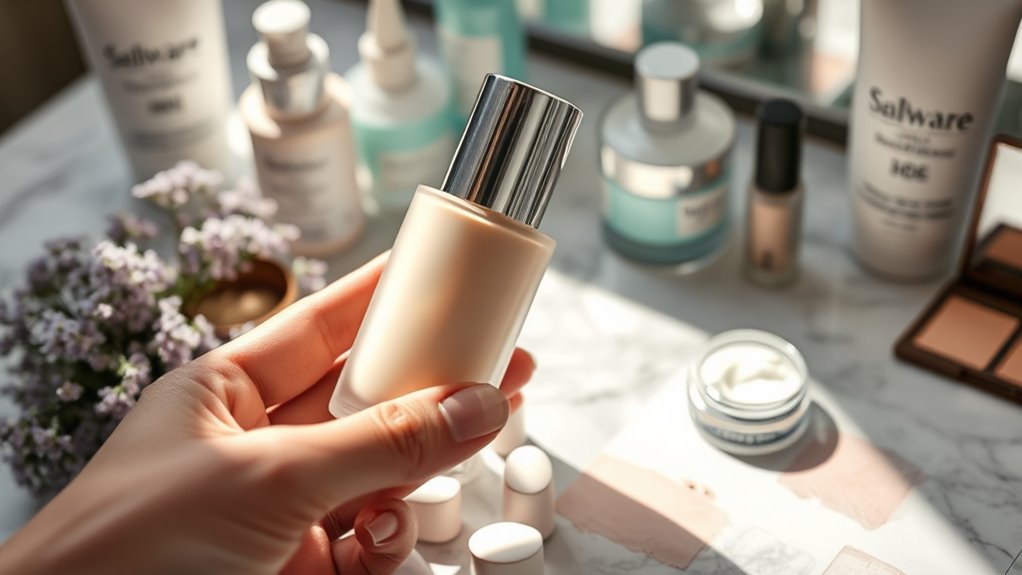
To make certain you’re choosing truly hypoallergenic makeup, start by carefully reading ingredient labels and avoiding known irritants such as fragrances, artificial dyes, and certain preservatives like parabens. Look for products tested and certified by dermatological organizations, which verify safety. Pay attention to labels indicating mineral-based ingredients like zinc oxide or titanium dioxide, as these are less likely to cause reactions.
| Ingredient Type | Common Irritants | Safer Alternatives |
|---|---|---|
| Fragrances | Synthetic scents, parfum | Fragrance-free, natural extracts |
| Preservatives | Parabens, formaldehyde releasers | Preservative-free formulations |
| Dyes | Artificial colorants | Mineral or plant-based colors |
Choosing products with transparent ingredient lists helps you avoid hidden allergens and ensures safer makeup use.
Key Ingredients to Look For and Avoid
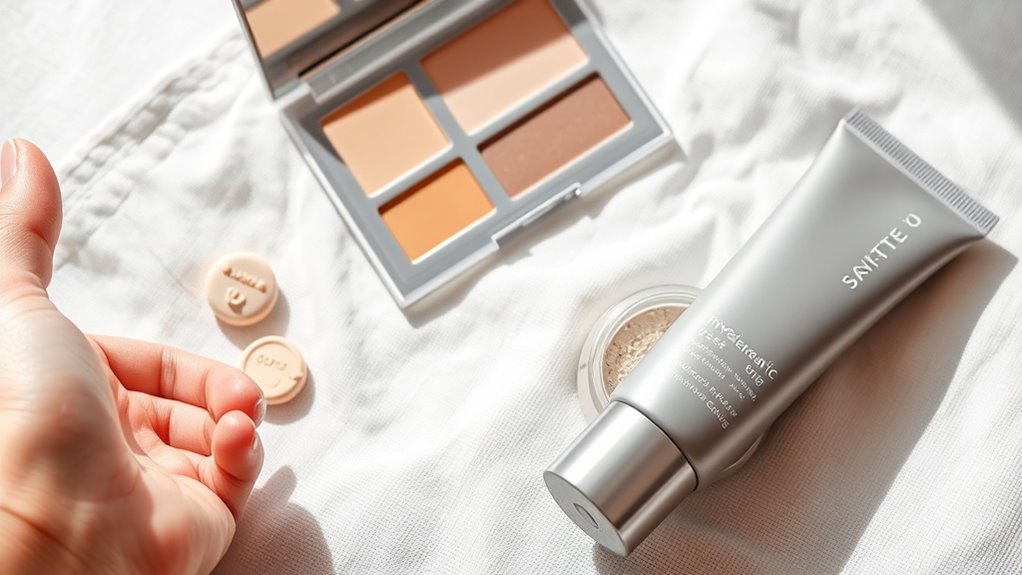
When choosing makeup for sensitive skin, paying attention to key ingredients can make all the difference. Look for mineral-based ingredients like zinc oxide and titanium dioxide, which are inert and less likely to cause irritation. These physical sunblocks also provide good coverage without harsh chemicals. Avoid fragrances, artificial dyes, parabens, and preservatives known to trigger allergies. These irritants can cause redness, swelling, or rashes even in hypoallergenic products. Instead, opt for formulations with gentle silicones or water-in-oil emulsions, which tend to be more soothing. Check labels carefully and choose products tested and certified by dermatological organizations. Remember, even safe ingredients can sometimes cause reactions, so patch testing new products remains essential—always introduce one product at a time to monitor your skin’s response. Understanding ingredients can help you make more informed choices when selecting makeup suitable for sensitive skin.
The Importance of Patch Testing Before Full Use
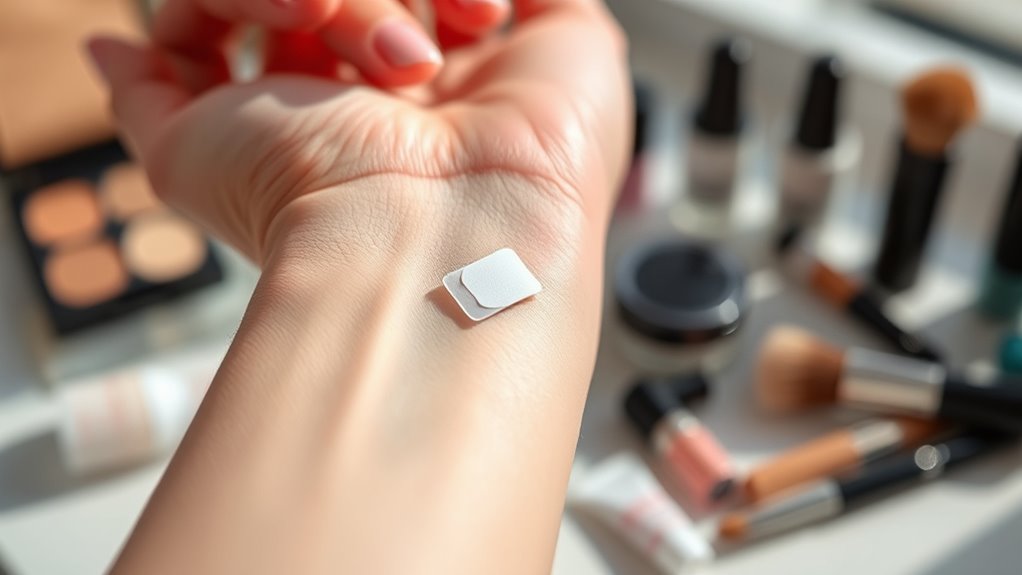
Before trying a new makeup product, it’s essential to perform a patch test to prevent reactions. Apply a small amount to a discreet area, like behind your ear, and wait 24 to 48 hours to check for any signs of irritation. Recognizing redness, swelling, or rash early can save you from full-face discomfort and allergic reactions. Being aware of your skin sensitivity can help you choose hypoallergenic options that are less likely to cause irritation.
Proper Patch Test Method
Performing a patch test is an essential step in guaranteeing your skin tolerates a new makeup product, especially if you have sensitive skin. To do this correctly, apply a small amount of the product behind your ear or on your inner forearm. Cover the area with a bandage and leave it undisturbed for 24 to 48 hours. During this time, avoid washing or rubbing the area. Check for signs of irritation, redness, swelling, or rash before using the product on your face. If no reaction occurs, it’s generally safe to proceed with full application. Remember, even hypoallergenic products can cause reactions, so patch testing remains a crucial precaution. This simple step helps protect your skin from potential irritation and ensures your makeup routine stays gentle.
Recognizing Reaction Signs
Recognizing reaction signs early is crucial because even products labeled hypoallergenic can cause adverse effects. You need to stay alert to prevent worsening symptoms or longer-lasting irritation. Look out for these common signs:
- Redness or persistent itching that doesn’t fade after a few hours
- Swelling, especially around the eyes or lips, or developing hives
- Dry, flaky, or blistered skin that worsens with continued use
If you notice any of these, stop using the product immediately. Patch testing helps catch these reactions early—apply a small amount behind your ear or along your jawline and wait 24-48 hours. Being attentive to reaction signs can save you from bigger skin issues and help you find truly compatible makeup. Additionally, choosing products with hypoallergenic ingredients can reduce the likelihood of skin irritation.
Choosing the Right Foundation for Sensitive Skin
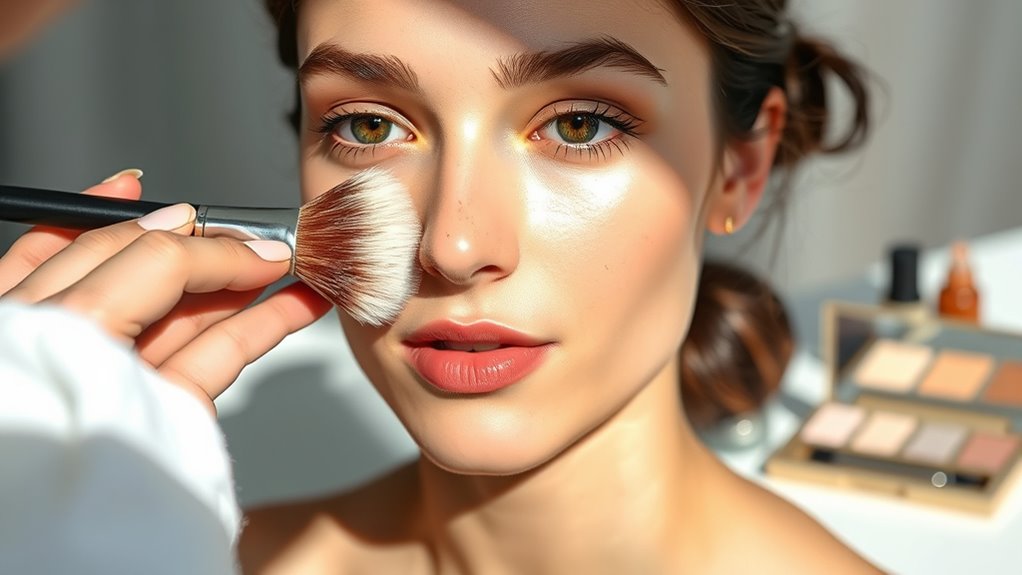
Choosing the right foundation for sensitive skin requires careful selection of formulations that minimize irritation. Look for products labeled “hypoallergenic” or “for sensitive skin,” but always check ingredient lists. Opt for mineral-based foundations with zinc oxide or titanium dioxide, as these are less likely to cause reactions. Avoid fragrances, artificial dyes, parabens, and preservatives. Water-based or silicone-based formulas tend to be gentler and less occlusive. Test new foundations on a small skin patch before full application to monitor any reactions. Stick to lightweight, non-comedogenic options that won’t clog pores or cause dryness. Remember, ingredients matter—prioritize products backed by dermatological testing or certifications from reputable organizations to guarantee safety and comfort for your sensitive skin. Regularly reviewing Patchology.ORG can provide additional tips on safe skincare ingredients and practices.
Best Practices for Applying Makeup on Sensitive Skin
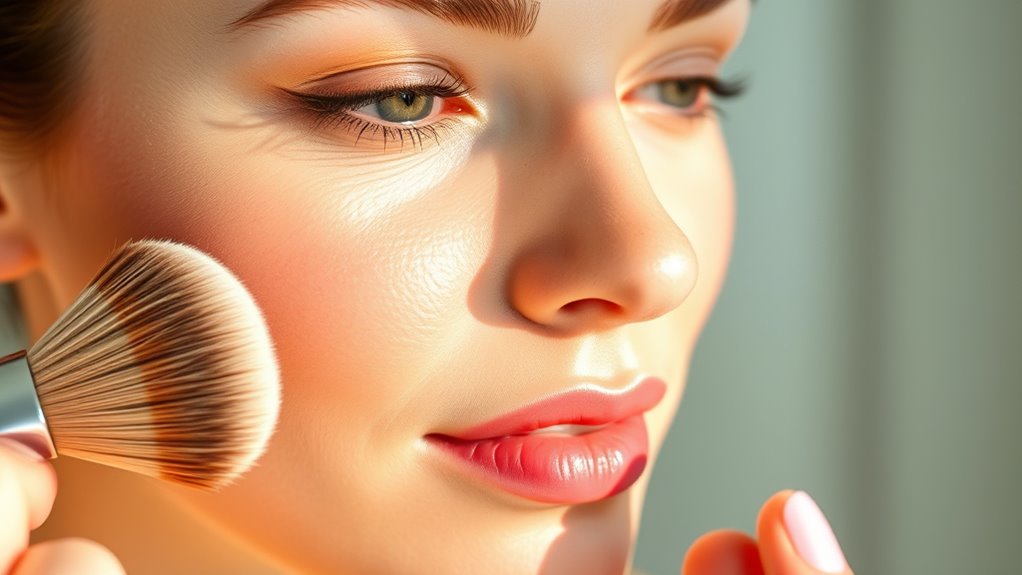
When applying makeup on sensitive skin, use gentle techniques to avoid irritation, like light dabbing instead of rubbing. It’s vital to patch test new products to catch any reactions early and prevent flare-ups. Also, opt for hypoallergenic tools that are soft and clean to minimize the risk of allergic responses. Incorporating personalized responses powered by AI can help tailor skincare routines to individual sensitivities, enhancing overall skin health.
Gentle Application Techniques
Applying makeup gently is essential for sensitive skin, as harsh techniques can cause irritation, redness, and breakouts. To protect your skin, follow these best practices:
- Use soft brushes or fingers instead of harsh sponges or applicators, applying products with light, tapping motions.
- Avoid rubbing or dragging the skin; instead, pat foundation and concealer gently to blend seamlessly.
- Limit the number of layers and products you use, giving your skin time to breathe and recover between applications.
- Incorporating gentle sound therapy techniques during your makeup routine can help promote relaxation and reduce stress, contributing to healthier skin.
Always handle your skin with care, especially around delicate areas like the eyes. Using gentle techniques helps minimize irritation and maintains your skin’s barrier, keeping it calm and healthy. Remember, less is often more when it comes to sensitive skin makeup application.
Patch Testing Importance
Patch testing is a simple but effective step to minimize the risk of reactions when trying new makeup products on sensitive skin. Before applying a product to your face, choose a small, discreet area—like behind your ear or along your jawline—and apply a tiny amount. Leave it on for 24 to 48 hours, avoiding washing or rubbing the area. Monitor for signs of irritation, such as redness, itching, swelling, or rash. If you notice any adverse reaction, wash the area immediately and avoid using that product further. Patch testing helps identify potential allergens or irritants, saving you from discomfort and skin damage. Incorporate this step into your routine whenever trying new makeup, especially if your skin is prone to sensitivity or allergies. Referencing For Sale 100, choosing hypoallergenic products can further reduce the risk of adverse reactions.
Use Hypoallergenic Tools
Using hypoallergenic tools is essential for minimizing irritation and protecting sensitive skin during makeup application. These tools reduce the risk of transferring bacteria, oils, and allergens that can cause flare-ups. To keep your skin safe, consider these best practices:
- Use soft, synthetic brushes and applicators designed for sensitive skin to avoid scratching or irritating your skin.
- Clean tools regularly with gentle, fragrance-free cleansers to prevent bacteria buildup and contamination.
- Avoid sharing makeup tools with others to reduce the risk of cross-contamination.
- Choosing hypoallergenic brushes and sponges can further help maintain a gentle touch on your skin. Proper cleaning and sharing habits further protect your skin’s barrier, keeping irritation at bay and ensuring a flawless, comfortable makeup experience.
Safe Makeup Options for Eyes, Lips, and Cheeks
When choosing makeup for your eyes, lips, and cheeks, opting for hypoallergenic options can help minimize the risk of irritation and allergic reactions. Focus on products formulated without fragrances, artificial dyes, parabens, or harsh preservatives. Mineral-based makeup, such as those with zinc oxide or titanium dioxide, is often gentler and less likely to cause irritation. Look for labels indicating dermatological testing or certifications from trusted institutions like Dermatest. Use water-in-oil or silicone-based formulas that are designed for sensitive skin. Avoid waterproof or long-wear products with strong removers, which can irritate delicate areas. Always patch test new products behind your ear or along your jawline and introduce them one at a time to monitor your skin’s response. For additional assurance, consider exploring the trustworthiness of Patchology brand, which is known for quality ingredients and transparency in manufacturing.
Natural and Organic Hypoallergenic Makeup Choices
Choosing natural and organic hypoallergenic makeup can benefit your sensitive skin by using ingredients free from harsh chemicals and synthetic dyes. Look for products with certified labels to make certain they meet strict standards for safety and purity. Being transparent about ingredients helps you make informed choices and avoid potential irritants.
Organic Ingredient Benefits
Organic ingredients in hypoallergenic makeup offer numerous benefits for sensitive skin, as they are typically free from synthetic chemicals, artificial preservatives, and artificial fragrances that can trigger reactions. When you choose products with natural and organic ingredients, you’re reducing exposure to common irritants, helping your skin stay calmer and healthier. These ingredients often include plant-based oils, mineral pigments, and botanical extracts known for their gentle properties.
Here’s why you’ll love organic options:
- They minimize the risk of allergic reactions due to fewer harsh chemicals.
- They support skin health with nourishing antioxidants and vitamins.
- They promote environmental sustainability by using eco-friendly farming and production methods.
Certification Importance
Certification labels help you confidently identify natural and organic hypoallergenic makeup that truly meets high safety standards. When shopping, look for seals from reputable organizations like USDA Organic, COSMOS, or Dermatest. These certifications verify that products are made with safe, skin-friendly ingredients and contain minimal or no artificial chemicals, fragrances, or preservatives. They also guarantee the products undergo rigorous testing for allergenic potential, giving you peace of mind. Keep in mind, though, that not all labels are equal—some may be more thorough than others. Choosing certified products helps you avoid ingredients that could trigger irritation or allergic reactions, especially if you have sensitive skin. Always check the certification details to ensure the product aligns with your safety and health priorities.
Ingredient Transparency
Ingredient transparency is essential when selecting natural and organic hypoallergenic makeup, especially if you have sensitive skin. Knowing what’s in your products helps you avoid potential irritants and make safer choices. To verify transparency, look for brands that clearly list all ingredients and avoid vague terms like “fragrance” or “preservatives.” Here are three tips to help you:
- Check for certifications from independent labs, such as USDA Organic or Ecocert, which verify ingredient claims.
- Read ingredient labels carefully, focusing on mineral ingredients like zinc oxide and titanium dioxide that are less likely to cause reactions.
- Research unfamiliar ingredients online to understand their safety profiles and allergenic potential.
Being informed empowers you to choose makeup that respects your skin’s sensitivity.
Recognizing and Managing Allergic Reactions
How can you tell if your skin is reacting negatively to makeup? You might notice redness, itching, swelling, or a rash after applying a product. Burning or stinging sensations are also signs of irritation. If these symptoms appear shortly after use, it’s likely your skin is reacting to an ingredient. Sometimes, reactions develop gradually, causing dry, flaky patches or persistent redness. To manage this, stop using the suspected product immediately. Gently cleanse your skin with a mild, fragrance-free cleanser and apply a soothing, hypoallergenic moisturizer. Keeping a skincare journal helps track which products cause reactions. If symptoms worsen or persist, consult a dermatologist for testing and personalized advice. Recognizing early signs and acting promptly can prevent more serious allergic responses.
Maintaining Your Sensitive Skin With Proper Makeup Hygiene
Proper makeup hygiene plays a vital role in keeping your sensitive skin healthy and reducing the risk of reactions. To do this effectively, you should:
- Cleanse your brushes and applicators regularly with gentle, fragrance-free cleansers to remove bacteria and product buildup.
- Avoid sharing makeup products or tools to prevent cross-contamination and potential infections.
- Replace old or expired makeup promptly, especially if you notice changes in texture, smell, or color, as these can irritate sensitive skin.
Additionally, always wash your face before applying makeup to remove excess oil and dirt. Use hypoallergenic products suited for sensitive skin, and patch-test new items to prevent adverse reactions. Consistent hygiene helps maintain your skin’s barrier and minimizes irritation.
Frequently Asked Questions
Can Hypoallergenic Makeup Be Completely Free of Allergens?
No, hypoallergenic makeup can’t guarantee it’s completely free of allergens. While these products are formulated to minimize the risk by avoiding common irritants like fragrances, dyes, and certain preservatives, individual sensitivities vary. You might still react to some ingredients. That’s why it is crucial to read labels carefully, do patch tests, and choose products with verified safety standards to reduce the chances of irritation, but absolute allergen-free makeup isn’t guaranteed.
How Long Does It Take to See if a Product Causes a Reaction?
You should test a new product for at least 24 to 48 hours to see if it causes a reaction. Apply a small amount behind your ear or along your jawline, then monitor for redness, swelling, or irritation. If you notice any symptoms, wash it off immediately and avoid using the product. Waiting this period helps you identify potential allergies early, preventing more serious skin issues later.
Are Organic Makeup Products Always Hypoallergenic?
Did you know that only about 10% of organic cosmetics are certified hypoallergenic? Organic makeup isn’t always hypoallergenic because “organic” mainly indicates natural ingredients, not allergen safety. While many organic products avoid synthetic irritants, they can still contain known allergens like certain plant extracts or oils. Always check labels, perform patch tests, and choose products with verified hypoallergenic certifications to guarantee suitability for sensitive skin.
Does Mineral Makeup Provide Better Allergy Protection Than Liquid Formulas?
Mineral makeup often offers better allergy protection than liquid formulas because it uses inert ingredients like zinc oxide and titanium dioxide, which are less likely to cause irritation. You’ll find it free from common irritants such as fragrances and preservatives that can trigger reactions. Plus, mineral makeup tends to have fewer chemicals, making it a gentler choice for sensitive skin. Just remember to check labels and patch-test new products before full application.
Can I Use Hypoallergenic Makeup on Broken or Irritated Skin?
A stitch in time saves nine, so you should avoid using hypoallergenic makeup on broken or irritated skin. Applying makeup can trap bacteria and irritants, worsening your condition. Wait until your skin heals completely, then choose gentle, fragrance-free products. Patch test new makeup before full application, and always consult a dermatologist if your skin’s severely inflamed or shows signs of infection. Protect your skin first, then enjoy your beauty routine.
Conclusion
Think of your skin as a delicate garden that needs gentle tending. By choosing hypoallergenic makeup, you’re planting seeds of care that help your beauty blossom without harm. Always patch test and select products thoughtfully, like nurturing each plant with love. With patience and the right tools, your sensitive skin can flourish, radiating health and confidence. Remember, caring for your skin is like tending a garden—consistent, gentle, and full of potential.
Fall Picks
fall essentials
As an affiliate, we earn on qualifying purchases.