
Spa culture has evolved from ancient civilizations where water was seen as healing and spiritual, to the Renaissance’s renewed focus on health and leisure, and then to the Industrial Era’s technological innovations that made treatments more effective and accessible. Today, modern spas combine traditional practices with cutting-edge therapies, emphasizing holistic wellness, mindfulness, and personalized experiences. If you want to explore how these therapies continue to shape wellness practices worldwide, there’s more to uncover.
Key Takeaways
- Ancient civilizations used water for healing, spiritual cleansing, and social bonding, shaping early spa practices.
- The Renaissance revived classical water treatments, transforming spas into centers of leisure, health, and social interaction.
- The Industrial Era introduced mechanized hydrotherapy and improved access, broadening treatment options and spa destinations.
- Modern spas adopt holistic, personalized treatments blending traditional practices with cutting-edge technologies like cryotherapy and VR.
- Cultural and social roles of spas evolved from spiritual rituals to centers promoting health, wellness, and community engagement.

Bio Ouster Hot Tub Water Balancing Kit – Spa pH Up, pH Down, Alkalinity Increaser, Calcium Hardness Increaser & Test Strips – Spa Chemicals Starter Kit for Inflatable & Acrylic Hot Tubs – Made in USA
COMPLETE SPA WATER BALANCE KIT – Includes pH Up, pH Down, Alkalinity Increaser, Calcium Hardness Increaser, and 50…
As an affiliate, we earn on qualifying purchases.
As an affiliate, we earn on qualifying purchases.
Ancient Civilizations and Their Bathing Practices
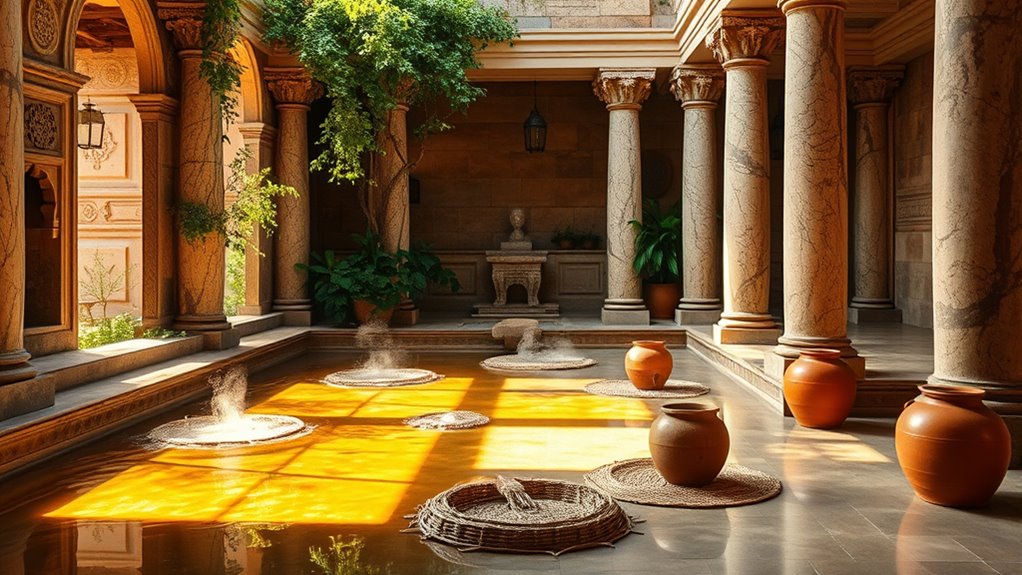
Ancient civilizations recognized the healing and hygienic benefits of water, developing diverse bathing practices that reflected their cultural and spiritual beliefs. You see, the Greeks, Egyptians, and Romans all valued water’s therapeutic power, using baths for health, relaxation, and religious rituals. The Greeks integrated baths into their philosophy, promoting balance and well-being through communal bathing in gymnasiums and bathhouses. Egyptians revered natural springs, often associating them with spiritual cleansing and healing. Romans took this further with public baths that became social hubs, featuring different temperature pools and steam rooms. They believed water could purify both body and soul. These practices laid the foundation for later spa traditions, emphasizing water’s essential role in health, socialization, and spiritual renewal across ancient cultures. Additionally, many of these ancient practices have influenced modern spa culture, blending tradition with contemporary wellness techniques.

Polar Active Ice 3.0 | 9 QT Cold Therapy Ice Machine | Programmable Timer | Knee & Joint Pad | Cryotherapy Pain Relief System | Ace Bandage Style Compression
ADJUSTABLE ON/OFF CYCLES Our system integrates an inline timer control for handheld convenience, enabling you to set custom…
As an affiliate, we earn on qualifying purchases.
As an affiliate, we earn on qualifying purchases.
The Revival of Spa Culture During the Renaissance

During the Renaissance, renewed interest in classical knowledge sparked a revival of spa culture across Europe. You begin to see spas as more than simple health spots—they become centers of leisure and social life. Physicians start prescribing water treatments for various ailments, solidifying spa waters’ medicinal reputation. Regions like Spa in Belgium and Bath in England gain fame as healing destinations. Wealthy visitors flock to these towns for both health benefits and social gatherings, elevating spa culture’s status. Scientific studies emerge, exploring mineral springs’ effects, which deepens understanding of water’s healing properties. Furthermore, the development of water therapy techniques during this period transformed spas into sophisticated venues, blending health with luxury and knowledge—setting the stage for modern wellness practices.

Meta Quest 2 — Advanced All-In-One Virtual Reality Headset — 256 GB (Renewed)
256GB Storage Capacity
As an affiliate, we earn on qualifying purchases.
As an affiliate, we earn on qualifying purchases.
Technological Advancements in Spa Treatments During the Industrial Era

The Industrial Revolution brought about a wave of technological innovations that transformed spa treatments, making them more effective and accessible. You now have access to steam chambers, which provide deeper relaxation and improved circulation, and mechanized hydrotherapy devices that deliver precise water therapies. These advancements allow for more consistent and controlled treatments, enhancing healing outcomes. Improved transportation, like trains and cars, made spa towns reachable for the middle class, expanding the audience beyond the elite. Spa facilities also adopted new equipment for mud baths and herbal treatments, broadening their offerings. These innovations not only elevated the quality of treatments but also increased their popularity, turning spa visits into more widespread leisure and wellness activities for everyday people. Additionally, the integration of IRA investment strategies into personal finance planning became more prominent, emphasizing the importance of secure and tax-efficient retirement funding.
AHAVA Dead Sea Mineral Bath Salt, Calming Lavender – Intense Relaxation for Body & Mind, Elevates Moisture, Softens & Eases Sore Muscles, Enriched by Exclusive Dead Sea Salt & Osmoter blend, 32 Oz
The power of lavender works to soothe the senses and promote well-being while helping muscles relax
As an affiliate, we earn on qualifying purchases.
As an affiliate, we earn on qualifying purchases.
Contemporary Trends and Holistic Approaches in Modern Spas
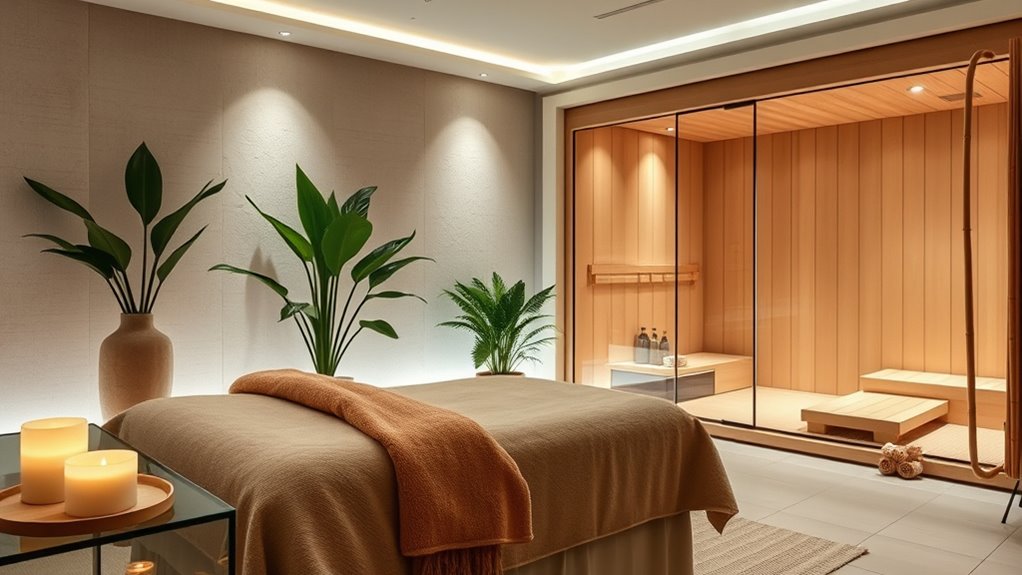
Modern spas embrace a holistic approach that integrates traditional healing methods with innovative therapies to promote overall well-being. You’ll find treatments that balance body, mind, and spirit through personalized experiences. They often combine ancient practices like Ayurveda, acupuncture, or meditation with modern techniques such as cryotherapy or infrared therapy. Incorporating advanced technology, such as color accuracy enhancements, allows for more tailored and effective treatments. Here are some contemporary trends shaping modern spas:
- Emphasis on mindfulness and stress reduction
- Use of organic, eco-friendly products
- Incorporation of technology like virtual reality for relaxation
- Focus on personalized wellness programs
- Integration of nutritional counseling and fitness
This all-encompassing mindset encourages you to look beyond just beauty or relaxation, fostering sustainable health and inner harmony. Modern spas serve as comprehensive wellness hubs, helping you achieve a healthier, more balanced life.
Cultural Influences and the Social Role of Spas Through History
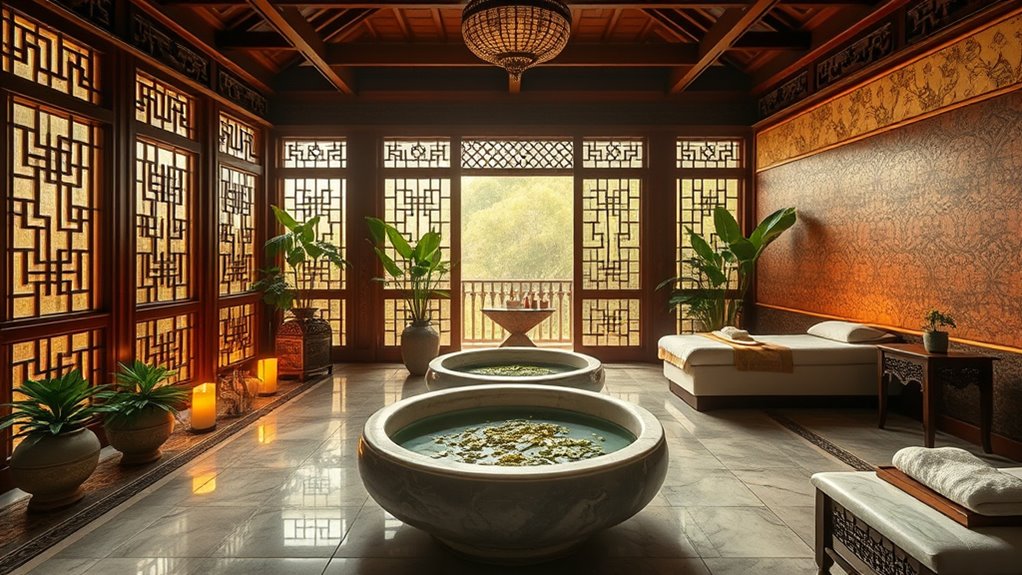
Spas have long served as more than just places for bathing; they function as vibrant centers of cultural exchange and social interaction. You can see how different societies used spas to share traditions, beliefs, and healing practices. For instance, ancient Greek philosophers emphasized wellness as harmony of body and mind, while Roman baths became bustling social hubs. These spaces often held religious or spiritual significance, blending health with spirituality. Here’s a look at their influence: | Culture | Key Role in Society | |————–|——————————————————–| | Ancient Egypt| Revered springs linked to spiritual rituals | | Greece | Philosophical focus on holistic health | | Rome | Social gatherings fostering community bonds | The design and purpose of spas reflect the cultural heritage of each society, illustrating how wellness practices evolved over time.
Frequently Asked Questions
How Did Ancient Cultures Incorporate Minerals Into Their Bathing Rituals?
You see, ancient cultures incorporated minerals into their bathing rituals by using mineral-rich mud, springs, and waters for healing and purification. Egyptians, Greeks, and Romans believed these minerals offered therapeutic benefits, helping to treat ailments and improve overall health. They often added mineral powders, mud masks, or bathed in mineral springs, trusting that these natural elements would enhance the healing properties of their baths and promote spiritual well-being.
What Specific Scientific Discoveries Influenced Renaissance Spa Treatments?
Think of the Renaissance as a detective uncovering secrets of health; scientific discoveries like mineral analysis of springs revealed their healing properties. Physicians began studying water composition, identifying beneficial minerals like sulfur, iron, and radon. These findings transformed spa treatments from folklore into evidence-based therapies. This scientific approach made treatments more targeted, boosting their credibility and popularity, much like sharpening a blade to cut through old beliefs and pave the way for modern wellness.
How Did Steam Technology Revolutionize Spa Experiences During the Industrial Revolution?
During the Industrial Revolution, steam technology transformed spa experiences by introducing steam chambers and mechanized hydrotherapy devices. You now had access to more controlled, efficient treatments that could target specific health issues. These innovations made spa services more effective and appealing, allowing you to enjoy relaxing yet scientifically advanced therapies. As a result, spa visits became more popular among broader social classes, expanding wellness beyond the elite.
What Are the Latest Technological Innovations in Modern Spa Therapies?
You see modern spa therapies incorporate advanced technology like LED light therapy, cryotherapy chambers, and virtual reality experiences to enhance your wellness journey. These innovations target specific skin concerns, boost circulation, and promote relaxation through immersive environments. You also benefit from biofeedback devices that personalize treatments based on your physiological responses. These cutting-edge tools make your spa visit more effective, personalized, and enjoyable, aligning traditional relaxation with scientific progress.
How Do Different Cultural Traditions Influence Current Global Spa Practices?
You see that different cultural traditions shape today’s global spa practices in fascinating ways. You might experience Turkish hammams, Japanese onsens, or Balinese massage techniques, each reflecting their unique origins. These traditions influence treatment styles, ambiance, and rituals, creating diverse wellness experiences. By embracing these varied practices, you gain a richer, more authentic spa journey that connects you to different cultures, promoting relaxation and cultural appreciation worldwide.
Conclusion
Throughout history, spa culture has evolved from ancient rituals to modern wellness retreats, reflecting society’s changing values. Some say that the true power of spas lies in their ability to heal both body and soul, fostering connection and self-care. Maybe it’s no coincidence that, in a world craving balance, embracing these traditions can restore harmony within you. After all, perhaps wellness isn’t just a trend—it’s a timeless gift your body and mind deserve.