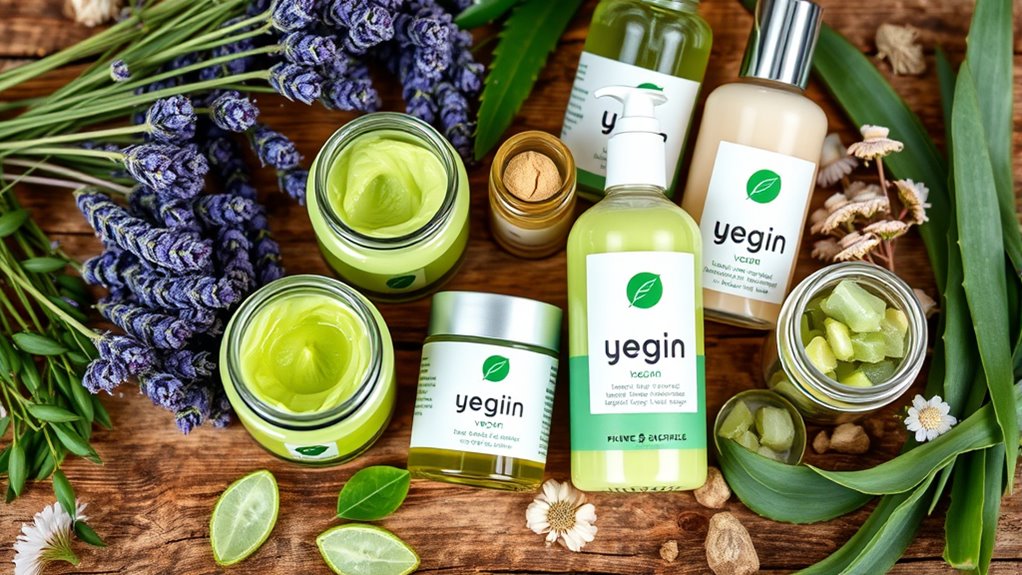

Vegan beauty products exclude animal-derived ingredients like beeswax, lanolin, and carmine, replacing them with plant-based or synthetic alternatives such as shea butter, candelilla wax, and plant pigments. Certification organizations verify these products through strict traceability, supplier audits, and clear labeling, guaranteeing no animal testing occurs. Trustworthy labels and transparency are key to making informed choices. To fully understand how brands maintain vegan standards and ensure trust, you’ll find essential insights ahead.

Get travel and outdoor gear delivered free — and shop member deals
- Fast, free delivery on millions of items
- Access to Prime Big Deal Days deals on October 6–7
- Prime Video, Amazon Music and more included
Key Takeaways
- Vegan beauty products exclude animal-derived ingredients like beeswax, lanolin, carmine, collagen, and gelatin, replacing them with plant-based or synthetic alternatives.
- Certification bodies verify vegan claims through ingredient sourcing documentation, supply chain audits, and strict adherence to cruelty-free standards.
- Transparent labeling and certification from organizations like The Vegan Society or V-Label help consumers confidently identify genuine vegan products.
- Maintaining vegan standards requires rigorous ingredient verification, supply chain transparency, and preventing cross-contamination during manufacturing.
- Ethical practices and thorough documentation are essential for brands to achieve and uphold vegan certification, building consumer trust and market credibility.
As an affiliate, we earn on qualifying purchases.
Key Animal-Derived Ingredients to Avoid in Vegan Cosmetics
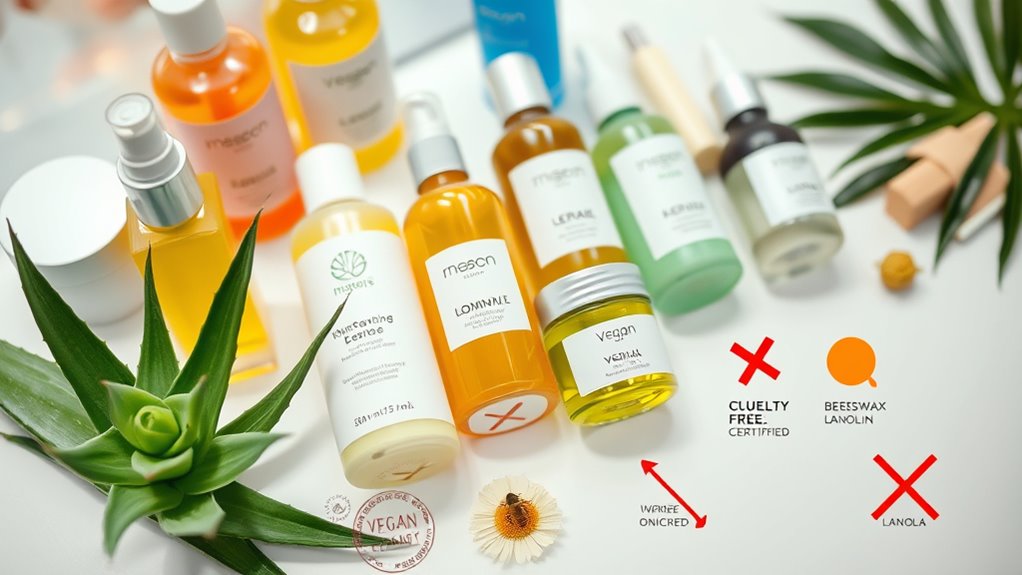
When formulating vegan cosmetics, it’s crucial to exclude all animal-derived ingredients, as they’re common in traditional products. These include beeswax, lanolin, carmine, collagen, gelatin, and squalane, which come from animals or animal by-products. You should also avoid protein derivatives like silk, keratin, and shellfish extracts such as chitosan. Food-based ingredients like honey and bone char-filtered sugar are also off-limits. Hidden animal sources can lurk in fragrances, colorants, and additives, so vigilance is necessary. Instead, opt for plant-based waxes, synthetic pigments, and alternative ingredients that perform similarly. Ensuring your formulations exclude these animal-derived components is crucial for achieving vegan certification and meeting consumer expectations for cruelty-free, ethical products. Recognizing animal-derived ingredients helps prevent unintentional contamination of vegan products.
Plant-Based and Synthetic Alternatives for Vegan Formulations
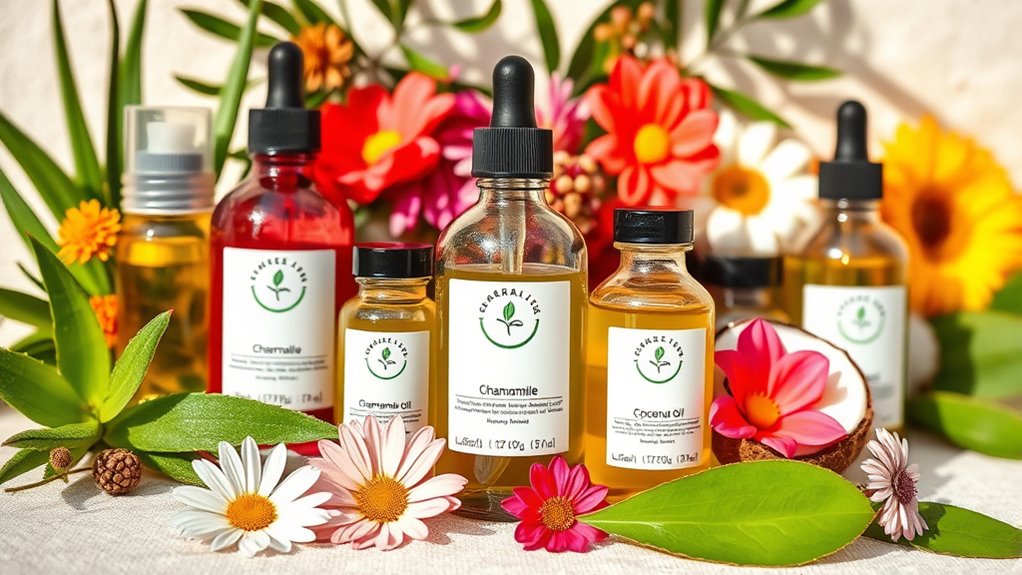
To replace animal-derived ingredients in vegan cosmetics, formulators turn to a wide range of plant-based and synthetic alternatives that deliver comparable performance. For example, plant-based waxes like candelilla, carnauba, and shea butter serve as substitutes for beeswax, providing texture and moisture. Coconut, jojoba, and argan oils offer nourishing properties similar to lanolin and squalane. Synthetic options, such as polyethylene or silicone derivatives, mimic the smoothness and spreadability of animal-derived ingredients while ensuring safety and stability. Colorants made from mineral or plant pigments replace carmine and shellac-based dyes. These alternatives must meet performance standards without compromising vegan integrity. The choice of substitutes depends on the product’s purpose, formulation stability, and consumer expectations for efficacy and ethical sourcing. Sustainable sourcing is a crucial factor when selecting ingredients to maintain vegan and eco-friendly standards.
The Role of Certification Bodies in Vegan Product Verification

Certification bodies set strict standards and criteria that you must meet to verify your product as vegan. They verify ingredient traceability and conduct inspections to make certain of compliance throughout your supply chain. Understanding their processes helps you navigate certification requirements effectively and build trust with consumers. Additionally, familiarizing yourself with regulations and safety standards ensures your products meet all legal and safety requirements for market success.
Certification Standards and Criteria
Certification bodies play a crucial role in verifying that vegan beauty products meet strict standards, ensuring consumers can trust labels. They set clear criteria based on ingredient sources, testing practices, and supply chain transparency. To achieve certification, you must provide detailed documentation and undergo inspections. Certification standards typically include:
- Complete exclusion of animal-derived ingredients and GMOs.
- No animal testing at any production stage.
- Verified ingredient traceability from sourcing to finished product.
These standards ensure products are genuinely vegan and cruelty-free. Certification bodies assess your processes, review supplier declarations, and verify sanitation protocols. Their rigorous evaluation guarantees that your products align with ethical and legal requirements, fostering consumer confidence and strengthening your brand’s credibility in the growing vegan market.
Traceability and Ingredient Verification
Ensuring the authenticity of vegan beauty products hinges on rigorous ingredient verification and traceability. You need detailed documentation that traces each ingredient back to its source, confirming it’s free from animal derivation. Certification bodies require you to provide supplier declarations, ingredient lists, and supply chain data. They also audit manufacturing processes to prevent cross-contamination. Use the table below to understand key aspects of ingredient verification:
| Aspect | Requirement |
|---|---|
| Source Transparency | Full documentation of ingredient origin |
| Ingredient Testing | Verification of vegan status |
| Supply Chain | Traceability from farm to product |
| Sanitation Protocols | Procedures to prevent cross-contamination |
| Certification Audit | Review of processes and documentation |
This process guarantees your product’s vegan integrity and builds consumer trust. Additionally, maintaining traceability throughout the entire supply chain is essential to uphold transparency and meet certification standards.
Inspection and Compliance Processes
Certification bodies play a crucial role in verifying that vegan beauty products meet strict standards through thorough inspection and adherence processes. You’ll undergo detailed reviews of ingredient lists, supplier declarations, and manufacturing practices to confirm compliance. Inspections often include on-site factory audits, where certifiers verify sanitation protocols and cross-contamination prevention measures. They also assess documentation for ingredient traceability, confirming no animal-derived substances are used at any stage. To meet certification requirements, you may need to:
- Provide extensive supply chain records and supplier certificates
- Demonstrate strict sanitation procedures and cleaning protocols
- Submit detailed reports on formulation and manufacturing processes
These steps help maintain transparency, uphold vegan standards, and build consumer trust in your products’ integrity and ethical compliance.
Navigating Label Claims and Transparency in Vegan Beauty
When you look at vegan beauty product labels, it’s essential to verify that ingredient lists are clear and accurate. Ethical labeling practices help you trust that the products truly meet vegan standards without hidden animal-derived ingredients. Staying informed about transparency claims allows you to make confident choices aligned with your values. Researching Gold IRA Rollovers can also provide insight into how transparency and proper management are crucial in investment areas, reinforcing the importance of clear and truthful labeling across industries.
Verifying Ingredient Transparency
Managing ingredient transparency in vegan beauty products requires careful scrutiny of label claims and an understanding of what truly qualifies as vegan. You need to verify that ingredients aren’t animal-derived and that claims are backed by credible certification. Look beyond buzzwords and check for detailed ingredient lists. Be aware of potential hidden animal sources like certain colorants, fragrances, or additives. To ensure transparency, consider these key points:
- Confirm ingredients match the product’s vegan certification and sourcing documentation.
- Ask for supply chain details and supplier declarations for complex ingredients.
- Be vigilant about cross-contamination protocols, especially in shared manufacturing lines.
- Recognize that reputable brands often have trustworthy certifications that verify their vegan claims.
Ethical Labeling Practices
Guiding ethical labeling in vegan beauty requires careful attention to how product claims are presented and verified. You should look beyond buzzwords like “cruelty-free” or “plant-based” and check for credible certifications from trusted bodies such as The Vegan Society or V-Label. These organizations have strict standards and require thorough documentation, including ingredient sourcing and manufacturing practices. Be cautious of vague claims like “animal-free” or “natural,” which may lack verification. Transparency is key; reputable brands openly share their sourcing, testing procedures, and certification credentials. Always read the fine print on labels and visit brand websites for detailed information. Ultimately, clear, honest labeling helps you make informed choices aligned with your ethical values. Additionally, understanding the criteria for certifications can help you better evaluate the authenticity of vegan claims on beauty products.
Challenges in Maintaining Vegan Standards During Manufacturing
Maintaining vegan standards during manufacturing presents significant challenges because ensuring that no animal-derived ingredients or cross-contamination occur requires rigorous oversight at every stage. You must implement strict sanitation protocols and document cleaning procedures to prevent shared equipment from contaminating vegan products. Verifying ingredient origin can be complex, requiring detailed supplier documentation and traceability audits. Additionally, global regulatory differences add complexity, as compliance standards vary by country. Staying updated with evolving ingredient databases is essential to avoid accidental inclusion of animal-derived components. You also need to balance product efficacy with sourcing vegan ingredients, which often demands innovative formulation. Ingredient verification processes are critical in maintaining vegan integrity throughout production.
The Impact of Vegan Certification on Market Success
Have you noticed how vegan certification can substantially boost your brand’s credibility and sales? It signals your commitment to ethical practices, resonating with conscious consumers. When your products carry recognized labels like The Vegan Society’s Vegan Trademark or V-Label, customers trust that your cosmetics meet strict standards, reducing skepticism. Certification also helps differentiate your brand in a crowded market, attracting loyal, repeat buyers who prioritize cruelty-free and plant-based options. Additionally, verified vegan status can open doors to retail partnerships and international markets with strict regulations. It streamlines your compliance process, giving consumers confidence in your transparency. Ultimately, vegan certification not only enhances your brand’s reputation but also drives growth by aligning with the increasing demand for ethical, sustainable beauty products. Incorporating plant-based ingredients can further appeal to eco-conscious shoppers and reinforce your commitment to sustainability.
Steps to Ensure Compliance and Obtain Vegan Certification

Securing vegan certification begins with a thorough understanding of the specific standards set by recognized certifying bodies. You need to guarantee your ingredients exclude all animal-derived components, avoid animal testing, and maintain full traceability of sourcing. To do this effectively, start by:
Understanding certifier standards and ensuring ingredient transparency are key to securing vegan certification.
- Reviewing the certifier’s guidelines on ingredient restrictions and testing policies.
- Establishing robust documentation for ingredient sourcing, processing, and sanitation protocols.
- Conducting internal audits to verify compliance before submitting your application.
- Incorporate practices that support self-awareness and transparency, ensuring your processes align with ethical and sustainable standards.
Frequently Asked Questions
How Can Consumers Verify if a Product Is Truly Vegan?
You can verify if a product is truly vegan by checking for trusted certification symbols like The Vegan Society’s Vegan Trademark, V-Label, or Certified Vegan by Vegan Action. Always read the ingredient list carefully, looking out for animal-derived ingredients like beeswax, lanolin, or carmine. Research the brand’s cruelty-free policies and sourcing practices. When in doubt, visit the company’s website or contact customer service to confirm their vegan standards and certifications.
Are Synthetic Ingredients Always Vegan-Friendly?
Synthetic ingredients aren’t always vegan-friendly. While they’re free from animal-derived components, some may still involve animal testing or come from sources with questionable ethics. You should check for certifications like The Vegan Society’s Vegan Trademark or V-Label, which confirm that ingredients are both synthetic and cruelty-free. Always review ingredient lists for hidden animal-derived substances and look for transparent sourcing info to guarantee the product aligns with your vegan values.
What Are Common Hidden Animal-Derived Ingredients in Cosmetics?
You should watch out for hidden animal-derived ingredients like beeswax, carmine, lanolin, gelatin, and squalane, which might be concealed in cosmetics. Also, check for animal-based proteins like keratin or silk, and additives such as bone char-filtered sugar or honey. Fragrances and colorants can sometimes include animal-derived components. Always read ingredient labels carefully and look for certifications to ascertain your products are truly vegan and free from hidden animal sources.
How Do Certification Bodies Audit Vegan Product Compliance?
You should expect certification bodies to conduct thorough audits by reviewing your ingredient list, supplier declarations, and manufacturing processes. They verify traceability to guarantee no animal-derived ingredients are used, inspect sanitation procedures to prevent cross-contamination, and may visit your facilities for inspections. You need to provide detailed documentation, including supply chain records and sanitation protocols. If your processes meet their standards, you’ll receive certification, confirming your product’s vegan compliance.
Can Vegan Certifications Be Revoked or Expire?
Yes, vegan certifications can be revoked or expire. While many certifications are valid for a set period, like one or two years, they require ongoing compliance through renewal audits. If you fail to meet standards—such as ingredient sourcing, testing, or sanitation protocols—the certifying body may rescind your certification. Staying current with certification requirements and maintaining transparency ensures your product remains certified and trustworthy for consumers.
Conclusion
By understanding ingredients, certifications, and transparency, you can confidently choose vegan beauty products that align with your values. Always verify labels and research certification bodies—don’t take claims at face value. Staying informed helps you avoid hidden animal-derived ingredients and ensures you’re supporting ethical brands. Remember, “An ounce of prevention is worth a pound of cure,” so take the time to make mindful choices and enjoy the beauty of cruelty-free, plant-based products with peace of mind.
Fall Picks
fall essentials
As an affiliate, we earn on qualifying purchases.