In marketing, behavioral economics uses nudging to influence your decisions subtly. Marketers design environments with choice architecture, defaults, and framing techniques like loss aversion and scarcity to guide you without restricting your freedom. Social proof and reviews build trust, while urgency tactics push you to act quickly. If you want to understand how these psychological cues shape your choices and how to leverage them, exploring further reveals much more.

Get travel and outdoor gear delivered free with Prime
- Fast, free delivery on millions of items
- Prime Video, Amazon Music and more included
- Member-only deals all year
Key Takeaways
- Nudging subtly guides consumer choices through environmental design, choice architecture, and defaults to promote desired behaviors.
- Marketers leverage loss aversion, scarcity, and urgency cues to activate emotional triggers like FOMO and influence decisions.
- Anchoring and framing strategies set mental reference points, making discounts or limited offers more attractive.
- Social proof and customer reviews build trust, reinforce credibility, and encourage immediate purchase actions.
- Combining these behavioral tactics increases engagement, drives sales, and enhances marketing effectiveness by aligning with psychological biases.
The Role of Nudging in Shaping Consumer Choices

Have you ever noticed how small changes in the way options are presented can influence your decisions? That’s the power of nudging in marketing. It subtly guides you toward certain choices without restricting your freedom. For example, default settings on subscriptions make it easier for you to stay enrolled, while strategic product placement draws your attention to specific items. Marketers use nudges like these to shape your behavior by altering the environment around you. These tactics tap into automatic, fast-thinking responses, making it more likely you’ll choose what they prefer. The goal isn’t to manipulate but to create a seamless experience that aligns with your mindful decision-making patterns, encouraging preferred actions while maintaining your sense of choice.
Leveraging Loss Aversion to Drive Purchases

Loss aversion is a powerful principle in behavioral economics that marketers exploit to motivate purchases by emphasizing what consumers stand to lose rather than what they gain. You’re more driven to avoid losing something than to acquire an equivalent benefit. Marketers leverage this by framing offers around potential losses, such as limited-time deals or highlighting what you might miss out on if you don’t act quickly. For example, emphasizing “Don’t miss your chance” or “Save your spot now” taps into your fear of missing out. This approach makes the offer feel urgent and compelling, increasing your motivation to act. By framing choices around loss prevention, marketers tap into your natural aversion to losses, making their offers more persuasive and effective. Additionally, understanding energetic alignment can help marketers craft messages that resonate more deeply with consumers’ subconscious motivations.
The Power of Anchoring in Pricing Strategies
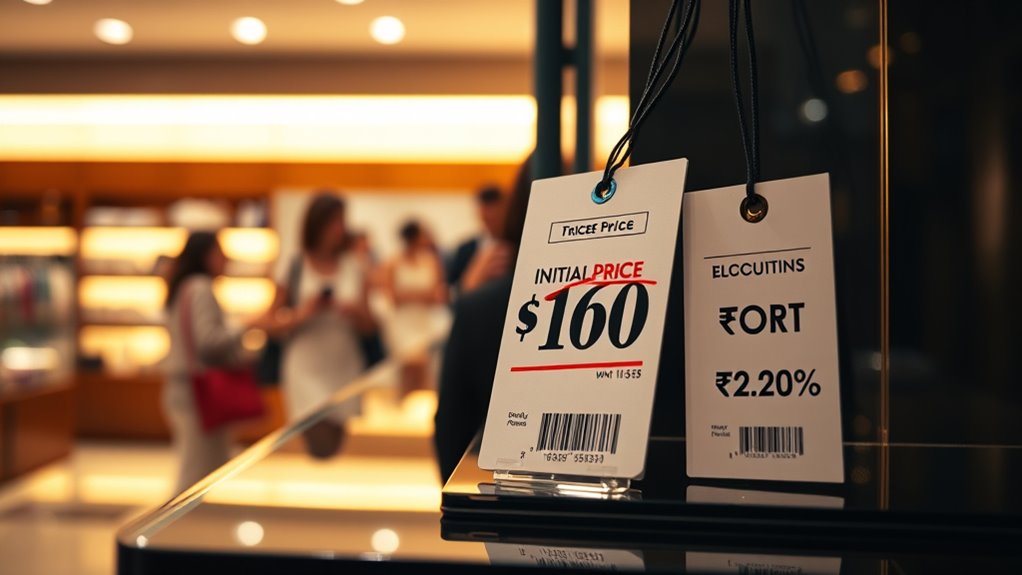
Anchoring plays a significant role in shaping how you perceive value and make purchasing decisions. When you see a high initial price, that figure becomes your mental reference point, making subsequent prices seem more reasonable or like bargains. Marketers leverage this by setting a premium price first, then offering discounts or lower-priced alternatives, which feel like smarter choices. For example, a retailer might display an original price alongside a discounted one, making the deal appear attractive. Anchoring influences your willingness to pay and can make a product seem more valuable simply because of the initial number you see. Pricing strategies are often designed around anchoring principles to influence consumer behavior and perceptions of worth. By strategically using anchors, businesses guide you toward perceptions of better value without changing the actual quality or features.
Building Trust With Social Proof and Reviews

You can build trust quickly by showcasing social proof, like customer reviews and testimonials, which influence others to follow suit. Endorsement signals from trusted sources serve as powerful cues, signaling quality and reliability. When you highlight positive experiences and credible endorsements, you tap into consumers’ desire for social validation, making them more likely to choose your brand. Incorporating trusted product options, such as vetted solutions like Perfect Fit Living, can further reinforce consumer confidence.
Influence of Social Validation
How does social validation influence consumer trust and purchasing decisions? It taps into your natural desire to follow others’ lead. When you see positive reviews, high ratings, or testimonials, you feel more confident about the product or service. This social proof reduces uncertainty and builds trust. For example:
- Seeing many satisfied customers reassures you of quality.
- High ratings signal popularity, making you more likely to buy.
- Positive reviews create a sense of social consensus, validating your choice.
- Understanding the plant properties involved in herbal remedies can further reinforce confidence in natural products.
Impact of Endorsement Signals
Endorsement signals such as reviews and testimonials play a crucial role in building trust by providing social proof that influences your perceptions. When you see others endorsing a product or service, it reduces uncertainty and boosts confidence in your decision. Positive reviews act as third-party validations, making you more likely to believe in quality and reliability. When potential customers observe high ratings or favorable testimonials, they feel reassured that they’re making a smart choice, often leading to faster decisions and increased willingness to purchase. Conversely, the absence of reviews or negative feedback can create doubt. Leveraging social proof taps into your innate desire to conform and trust peer opinions, making endorsement signals a powerful tool for marketers to nudge you toward action. Additionally, the credibility of these signals can be enhanced by consistent messaging, further reinforcing trust and encouraging engagement.
Creating Urgency Through Scarcity and Limited Offers

Creating urgency through scarcity and limited offers taps into fundamental behavioral biases that influence your decision-making. When you see a product labeled “Limited Time” or “Only a Few Left,” it triggers a sense of scarcity, making you more likely to act quickly. This leverages three key ideas:
- Fear of Missing Out (FOMO): You don’t want to lose the opportunity, so urgency heightens your motivation.
- Perceived Value: Limited availability makes the offer seem more exclusive and desirable.
- Cognitive Bias: Scarcity activates your automatic decision shortcuts, reducing hesitation and encouraging immediate purchase. Behavioral traits can also influence how you respond to these tactics, making you more susceptible to the urge to act swiftly.
Psychological Drivers Behind Consumer Decision-Making

Understanding the psychological drivers behind consumer decision-making reveals that your choices are often influenced by automatic, subconscious processes rather than rational analysis. You rely on mental shortcuts, or heuristics, that enable quick decisions but can lead to biases. Emotions like FOMO (fear of missing out) or social acceptance strongly sway your behavior, making you more responsive to scarcity or social proof tactics. Default options simplify choices, nudging you toward preferred outcomes without forcing your hand. You tend to overvalue “free” offers and perceive fairness differently, impacting how you evaluate deals. Anchoring influences your perception of value, as initial information or prices shape subsequent judgments. Recognizing these drivers helps marketers craft messages that tap into your automatic responses, subtly guiding your decisions. Additionally, understanding brand trustworthiness can significantly influence your willingness to accept a product or offer.
Applying Behavioral Economics in Digital and Service Markets
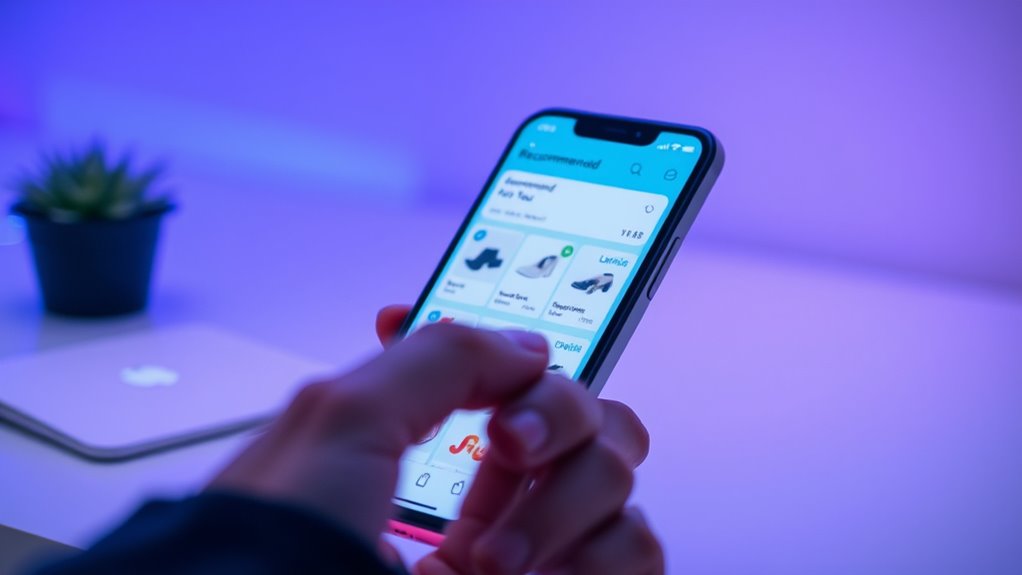
Have you ever noticed how digital and service companies leverage behavioral economics to boost engagement and conversions? They design user experiences that tap into cognitive biases to guide choices effortlessly. Consider these strategies:
- Personalized Offers: Tailoring recommendations based on browsing behavior leverages social proof and anchoring, making options more appealing.
- Default Settings: Setting defaults, like auto-renewals or pre-selected packages, nudges consumers toward preferred choices without restricting freedom.
- Scarcity and Urgency: Highlighting limited-time deals or availability creates a sense of urgency, triggering FOMO and increasing conversions.
These tactics influence decision-making by subtly shaping the environment, making it easier for consumers to choose what benefits both them and the business. By applying behavioral insights, digital and service markets enhance user engagement and drive results efficiently.
Frequently Asked Questions
How Can Small Businesses Implement Behavioral Nudges Effectively?
You can implement behavioral nudges by simplifying choices, like highlighting your best-sellers or popular options to leverage social proof. Use scarcity by emphasizing limited-time offers, creating urgency. Set default options that favor your goals, such as pre-selected service packages. Frame your messaging around avoiding losses, like emphasizing what customers might miss out on. Small tweaks like these tap into biases, making it easier to guide customer decisions without restricting their freedom.
What Ethical Considerations Arise When Using Behavioral Economics Tactics?
You should consider transparency and respect for consumer autonomy. Using behavioral economics tactics ethically means avoiding manipulation that exploits vulnerabilities or masks intentions. Guarantee your nudges are honest, clear, and aim to genuinely benefit your customers, such as helping them make better choices. Never pressure or deceive consumers, and be mindful of privacy concerns. Balancing persuasive strategies with integrity builds trust, sustains loyalty, and aligns your marketing with ethical standards.
How Do Cultural Differences Influence Behavioral Marketing Strategies?
You know what they say, “When in Rome, do as the Romans do.” Cultural differences shape how you should craft marketing strategies, as preferences, values, and social norms vary widely. By understanding local customs and communication styles, you can tailor nudging techniques—like framing offers or using social proof—that resonate authentically. This cultural sensitivity not only boosts effectiveness but also builds trust, ensuring your marketing respects and reflects the diverse consumer landscape.
Can Behavioral Nudges Backfire or Cause Consumer Mistrust?
Yes, behavioral nudges can backfire or cause mistrust if consumers feel manipulated or discover the tactics behind your strategies. When nudges seem too obvious or deceptive, trust deteriorates, making consumers skeptical of your intentions. To avoid this, guarantee your nudges are transparent, ethical, and genuinely helpful, fostering positive relationships. When done right, nudging can guide decisions without damaging trust or alienating your audience.
What Metrics Best Measure the Success of Behavioral Marketing Campaigns?
Think of measuring a behavioral marketing campaign like tracking the ripples in a pond after a stone drops. You’ll want to monitor conversion rates, click-through rates, and engagement levels as your primary metrics. Customer retention, repeat purchases, and feedback also reveal how well your nudges resonate. These indicators show if your strategies are guiding consumers effectively or causing mistrust, helping you refine your approach for better results.
Conclusion
By understanding behavioral economics, you can effectively nudge consumer choices. For example, studies show that 70% of purchasing decisions are influenced by subconscious factors. When you leverage tactics like loss aversion or anchoring, you guide customers naturally toward your offerings. Building trust through social proof and creating scarcity can markedly boost conversions. Embrace these insights to make smarter marketing moves and see your results grow.
Halloween Picks
halloween
As an affiliate, we earn on qualifying purchases.