
Last-mile delivery is evolving with innovations like drones, autonomous vehicles, and robotics that boost efficiency and reduce costs. Drones can deliver directly to your doorstep, while autonomous trucks navigate city streets for faster service. Smart logistics, route optimization, and sustainable fleets also help meet customer demands for faster, more transparent deliveries. If you keep explore, you’ll discover how these technologies are shaping the future of delivery, making it smarter and more customer-focused.
Key Takeaways
- Drones and autonomous vehicles enhance delivery speed, accessibility, and flexibility in last-mile logistics.
- Smart lockers and mobile apps improve transparency, security, and customer control over deliveries.
- Route optimization software powered by AI reduces delivery times, fuel consumption, and operational costs.
- Crowdshipping and hybrid fleets combine multiple delivery modes for increased efficiency and route density.
- Emerging technologies focus on sustainability, with electric vehicles, drones, and innovative automation solutions.
Emerging Technologies Reshaping the Last Mile

Emerging technologies are revolutionizing last-mile delivery by making it faster, more efficient, and more sustainable. You’ll notice how route optimization software uses AI and real-time data to cut delivery times and reduce fuel consumption. Smart lockers and mobile tracking apps give customers greater transparency and control over their packages, boosting satisfaction. Electric and alternative fuel vehicles help lower emissions, aligning with greener goals. Additionally, crowdshipping platforms enable flexible, on-demand deliveries that maximize route density. These innovations also decrease failed deliveries and unnecessary trips, saving costs and lowering environmental impact. As a result, logistics providers are adopting these tools to stay competitive, improve operational agility, and meet growing customer expectations for speed and reliability—all while reducing their carbon footprint. Incorporating tuning upgrades like improved routing algorithms can further optimize delivery efficiency and vehicle performance.
Autonomous Vehicles and Drone Delivery in Action
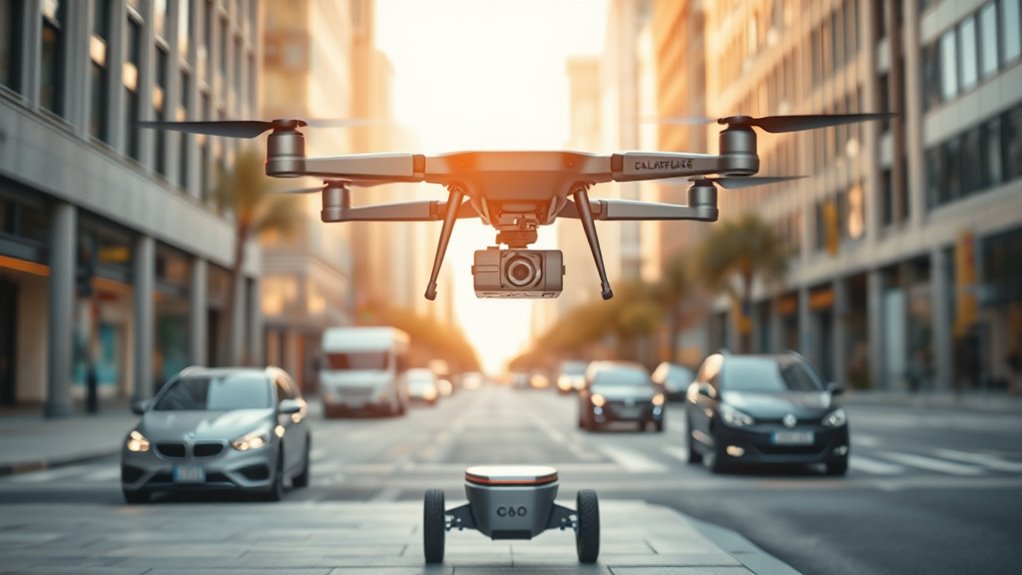
Autonomous vehicles and drone delivery are transforming the last-mile logistics landscape by providing faster and more flexible options for reaching customers. You might notice autonomous trucks maneuvering city streets or drones delivering parcels directly to your doorstep or designated landing zones. Retailers are adopting hybrid fleets that combine self-driving vehicles, drones, and third-party services to improve control and adaptability. Drones, equipped with modular smart lockers, secure parcels efficiently with minimal human interaction. Although the market is still early in adoption, projections estimate an $84.9 billion value by 2030. Companies like Amazon are piloting these technologies to reduce congestion, accelerate delivery times, and enhance overall efficiency. Robotics integration is expected to lower operational costs and streamline logistics further. These innovations are paving the way for a more responsive, cost-effective last-mile delivery system.
The Future of Logistics: Smart Solutions and Customer Expectations
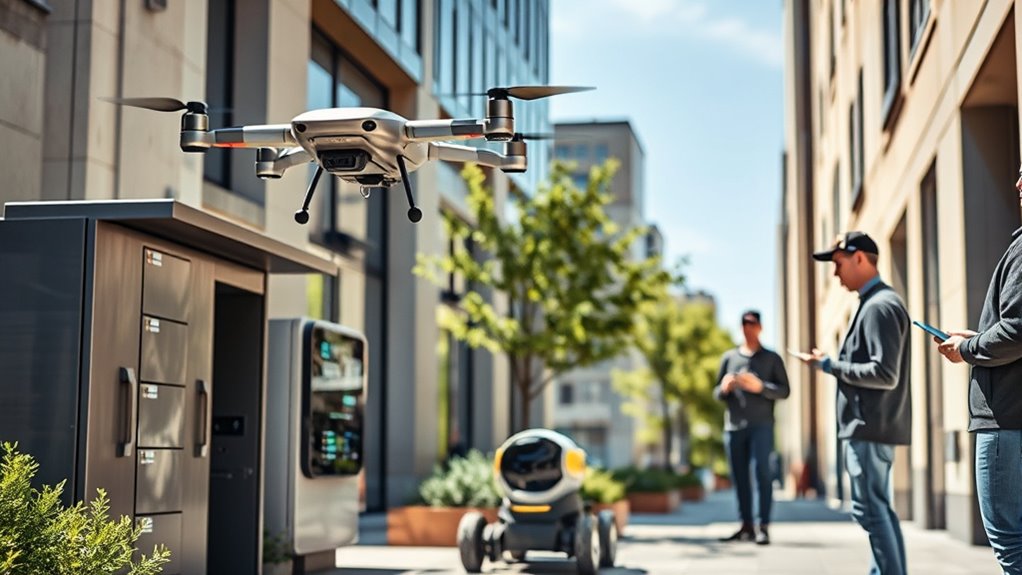
As last-mile delivery technologies like autonomous vehicles and drones become more commonplace, the focus shifts toward smarter solutions that meet evolving customer expectations. You now demand faster, more reliable deliveries, often within two days or same-day options. Transparency is key, with real-time tracking and precise delivery windows becoming standard. To keep up, logistics providers are adopting innovative practices like route optimization, flexible delivery options, and sustainable fleets. Consider this table showcasing upcoming trends:
| Trend | Impact | Example |
|---|---|---|
| Smart lockers and pickups | Secure, unattended delivery | Amazon Lockers |
| AI-driven route planning | Reduced costs, emissions | Real-time traffic adjustments |
| Customer-centric services | Faster, flexible options | In-app delivery scheduling |
These solutions align with your expectations, making logistics smarter and more responsive.
Frequently Asked Questions
How Do Regulatory Frameworks Impact Drone and Autonomous Vehicle Deployment?
Regulatory frameworks considerably impact your ability to deploy drones and autonomous vehicles by setting safety, privacy, and operational standards. These laws can either streamline or hinder your deployment process, requiring compliance with airspace rules, licensing, and data security measures. Managing these regulations demands ongoing coordination with authorities, which can delay implementation but ultimately ensures safe, legal, and responsible delivery operations. Staying updated on evolving policies helps you adapt quickly and maximize innovation benefits.
What Are the Main Challenges in Integrating New Delivery Technologies?
Think of integrating new delivery technologies like building a bridge across a turbulent river—you face many challenges. You must navigate complex regulations, guarantee safety standards, and gain public trust. Technical issues like battery life, signal interference, and integration with existing systems also pose hurdles. Plus, you need to coordinate with local authorities and adapt to evolving laws, all while keeping customer expectations high. Overcoming these obstacles is essential for smooth, efficient delivery innovations.
How Do Last-Mile Innovations Affect Overall Supply Chain Sustainability?
You see, last-mile innovations can boost supply chain sustainability by reducing emissions through electric fleets and optimized routes. They lower delivery failures and cut unnecessary mileage, saving energy and resources. Plus, integrating automation and smart lockers minimizes waste and energy use. However, you should also consider the environmental impact of manufacturing new tech and the energy consumption of data centers supporting these systems. Overall, these innovations can markedly enhance sustainability when thoughtfully implemented.
What Cybersecurity Concerns Arise With Increased Automation and Data Sharing?
They say, “An ounce of prevention is worth a pound of cure,” and that’s true with cybersecurity. As you increase automation and data sharing, you face risks like hacking, data breaches, and system disruptions. You need robust encryption, regular security updates, and strong access controls to protect sensitive info. Without these measures, your automated systems become vulnerable, risking customer trust, compliance issues, and operational shutdowns. Stay vigilant to keep your digital doors secure.
How Do Customer Preferences Influence the Adoption of Delivery Robots and Drones?
Customer preferences drive the adoption of delivery robots and drones by demanding faster, more flexible, and reliable delivery options. You want real-time tracking, same-day delivery, and convenient pickup choices, which these innovations enable. As consumers value transparency and efficiency, companies respond by deploying autonomous tech to meet these expectations. Your need for quick, accurate deliveries pushes retailers to invest in drone and robot solutions, shaping the future of last-mile logistics.
Conclusion
As you explore the future of last-mile delivery, it’s clear that innovations like drones and robots are transforming logistics. Did you know that by 2025, the drone delivery market is projected to reach $29 billion? These smart solutions not only speed up delivery times but also meet rising customer expectations for faster, more convenient service. Embracing these technologies now will help you stay competitive and meet the demands of tomorrow’s consumers.