To prepare your employees for automation, focus on reskilling and upskilling through continuous learning. Identify skills gaps using analysis and use diverse methods like online courses, microlearning, and on-the-job training. Leverage technology such as AI-driven platforms to personalize learning experiences, and promote a culture that values innovation and adaptability. By doing so, you’ll build a resilient workforce ready for change—stay tuned to discover more effective strategies to optimize this process.
Key Takeaways
- Conduct skills gap analyses to identify current deficiencies and prioritize targeted upskilling efforts.
- Utilize diverse learning methods like microlearning, online courses, and on-the-job training to facilitate flexible skill development.
- Leverage AI and digital platforms for personalized learning experiences and progress tracking.
- Offer incentives such as certifications, promotions, or salary increases to motivate continuous learning.
- Foster a culture of lifelong learning through accessible resources, leadership support, and integrating development into daily routines.
The Growing Need for Workforce Transformation

As automation and AI continue to reshape industries, the need for workforce transformation becomes more urgent. You must adapt quickly as many jobs are displaced, and new roles emerge. By 2025, millions of jobs could disappear, while almost as many new positions will appear, demanding different skills. Over 50% of employees will need reskilling to stay relevant. You’ll face a rapidly changing landscape where routine tasks are automated, and technical skills like data analysis and cybersecurity grow in importance. To thrive, you’ll need to embrace continuous learning and develop soft skills like critical thinking. Companies are investing heavily in training programs, online courses, and microlearning. Staying proactive and flexible now will help you navigate the evolution and secure your place in the future workforce. Additionally, understanding projector technology advancements can be beneficial for those involved in training or presentations, ensuring effective communication in an increasingly digital environment.
Key Skills for the Future of Work
In today’s rapidly evolving job market, developing the right set of skills can make all the difference in staying competitive. You need to focus on digital literacy, critical thinking, and technical proficiency, as these are increasingly in demand. Skills like data analysis, cybersecurity, and cloud computing are essential for adapting to new roles created by automation. Soft skills such as problem-solving, collaboration, and adaptability also hold significant value because they complement technical expertise and are harder for machines to replicate. Staying updated through continuous learning helps you keep pace with industry changes. Embracing natural elements in your skill set can foster innovation and resilience in the workplace. Prioritizing these key skills guarantees you remain relevant, resilient, and ready to seize emerging opportunities in the future workforce landscape.
Strategies for Effective Upskilling and Reskilling
To guarantee your workforce stays competitive amid rapid technological change, implementing effective upskilling and reskilling strategies is essential. First, assess your employees’ current skills and identify gaps through regular skills gap analyses. Second, leverage diverse learning methods like microlearning, on-the-job training, and online courses to cater to different learning styles. Third, create incentives such as salary increases, promotions, or certifications to motivate participation and engagement. Additionally, foster a culture of continuous learning by encouraging curiosity and experimentation. Partnering with educational institutions and online platforms can also expand access to up-to-date training. By combining targeted assessments, flexible training options, and motivating incentives, you’ll build a resilient workforce prepared for the evolving demands of automation.
Leveraging Technology to Accelerate Learning
Technology plays a pivotal role in transforming how organizations deliver training and develop their workforce. By harnessing AI and digital platforms, you can create personalized learning experiences that adapt to individual needs and skill gaps. These tools analyze employee tasks, identify automation risks, and recommend targeted upskilling pathways, making learning more relevant and efficient. Microlearning modules, short focused sessions, allow you to acquire new skills quickly without disrupting daily work. Online courses, virtual simulations, and interactive modules expand access and flexibility, enabling remote and busy employees to learn anytime, anywhere. Leveraging data analytics helps you track progress, measure effectiveness, and continuously refine training programs. Ultimately, technology accelerates learning, making reskilling more scalable, engaging, and aligned with rapid industry changes.
Overcoming Challenges in Employee Development

Overcoming challenges in employee development requires organizations to address rapid technological changes, diverse learning needs, and resource constraints proactively. You need to stay ahead of the curve by implementing targeted strategies. Acknowledging the importance of self-awareness can help organizations tailor their approaches more effectively. 1. Customize learning programs to match varied skill levels and learning preferences, ensuring engagement and effectiveness. 2. Leverage technology like AI-driven platforms and microlearning to deliver scalable, personalized training that fits busy schedules. 3. Secure leadership buy-in and allocate resources wisely, emphasizing continuous development as a core business priority.
Building a Culture of Lifelong Learning
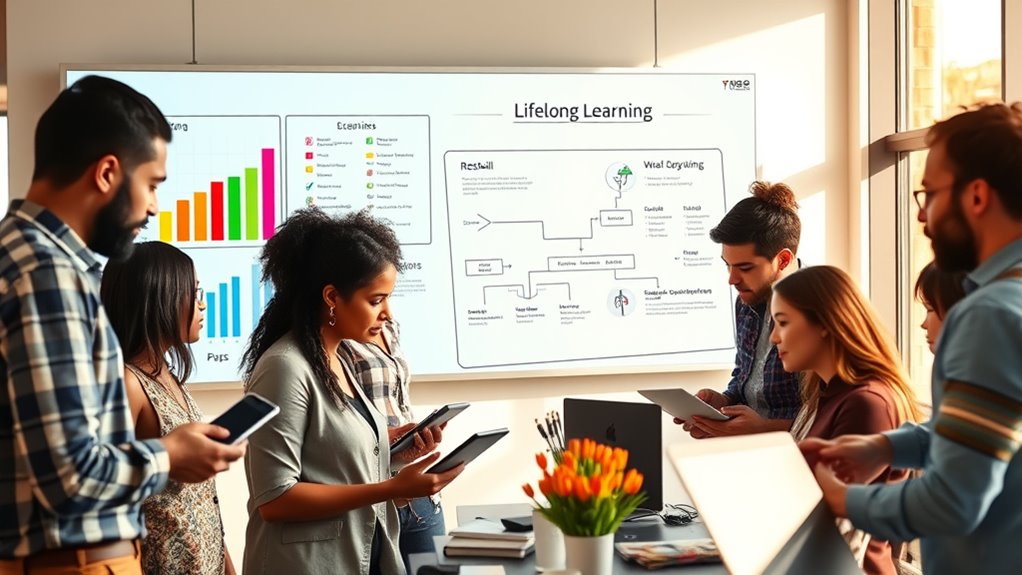
To build a culture of lifelong learning, you need to promote continuous education that keeps your team adaptable. Encouraging skill diversification helps employees stay relevant as job requirements evolve. When learning becomes embedded in your organization, you’ll foster innovation and resilience in the face of rapid change. Incorporating principles from the Law of Attraction can also enhance motivation and positivity towards ongoing development.
Promote Continuous Education
Building a culture of lifelong learning is essential in today’s rapidly changing workforce, where skills become outdated quickly. To promote continuous education, you need to create an environment that encourages ongoing development. Here are three effective strategies:
- Offer accessible learning resources, like online courses and workshops, so employees can learn at their own pace.
- Recognize and reward ongoing education through promotions, bonuses, or certifications to motivate participation.
- Integrate learning into daily routines by encouraging microlearning sessions and on-the-job training.
- Emphasize the benefits of versatile skills, such as proficiency with airless paint sprayers, to adapt to technological advancements and industry changes.
Encourage Skill Diversification
Encouraging skill diversification is essential in fostering a resilient workforce, especially as automation and AI reshape job roles. You should promote cross-training and provide opportunities for employees to explore new areas, reducing dependence on narrow expertise. This approach helps your organization adapt quickly to technological shifts and reduces skill gaps. To support this, create a culture that values continuous learning and recognizes diverse skill development. Consider the following strategies:
| Skill Area | Benefits | Implementation Examples |
|---|---|---|
| Digital literacy | Enhances agility in tech-driven roles | Workshops on cloud computing |
| Critical thinking | Improves problem-solving capabilities | Brainstorming sessions |
| Cross-functional training | Increases flexibility across teams | Job rotation programs |
| Soft skills | Strengthens teamwork and leadership | Communication skill courses |
| Lifelong Learning | Fosters adaptability and ongoing professional growth | Encouraging ongoing education and self-improvement initiatives |
Frequently Asked Questions
How Do Companies Measure the Success of Their Upskilling Programs?
You measure the success of your upskilling programs by tracking key metrics like employee engagement, skill acquisition, and performance improvements. You also look at completion rates, certification achievements, and how quickly employees apply new skills on the job. Feedback surveys and performance reviews help you assess confidence and competency. Over time, you evaluate the program’s impact on productivity, retention, and whether it meets your organization’s strategic goals.
What Are Cost-Effective Methods for Small Businesses to Reskill Employees?
Think of reskilling as planting seeds for future growth. Small businesses can save costs by leveraging free or low-cost online courses from platforms like Coursera or edX, which provide flexible learning options. Partnering with local community colleges for tailored training programs also offers affordability. Encouraging peer-to-peer learning and on-the-job cross-training enhances skills without heavy investment. These methods help you nurture your workforce’s potential while keeping expenses in check.
How Can Remote Teams Effectively Engage in Personalized Learning?
You can engage your remote team in personalized learning by leveraging AI-driven platforms that tailor content to individual needs, making training more relevant and efficient. Encourage microlearning sessions that fit into busy schedules, and use interactive tools like quizzes and discussions to keep everyone motivated. Regular check-ins and progress tracking help guarantee engagement, while collaboration tools foster peer learning. These strategies make learning adaptable, accessible, and effective for remote employees.
What Role Do Government Policies Play in Workforce Reskilling Initiatives?
A stitch in time saves nine, and government policies are essential in workforce reskilling. They set the framework for funding programs, incentivizing training, and partnering with educational institutions. By creating supportive regulations and investing in accessible education, you’re empowered to adapt quickly to technological shifts. Policies also foster collaboration between public and private sectors, ensuring workers gain the skills needed for emerging roles, ultimately strengthening the economy and your career prospects.
How Can Organizations Ensure Equitable Access to Upskilling Opportunities?
You can guarantee equitable access by implementing inclusive policies that target all employee groups, regardless of background or location. Offer flexible, affordable training options like online courses and microlearning, and partner with community organizations to reach underserved populations. Regularly assess skill gaps across your workforce and adapt programs to meet diverse needs. By fostering a culture of continuous learning, you make upskilling opportunities accessible and motivating for everyone.
Conclusion
As you navigate the future of work, remember that embracing change isn’t a new concept—think of it as your modern-day Renaissance. By continually reskilling and upskilling, you’ll stay ahead in this ever-evolving landscape. Just like Leonardo da Vinci’s boundless curiosity, foster a mindset of lifelong learning. It’s your best armor against automation’s tide, ensuring you remain relevant and resilient, no matter what the coming years bring.