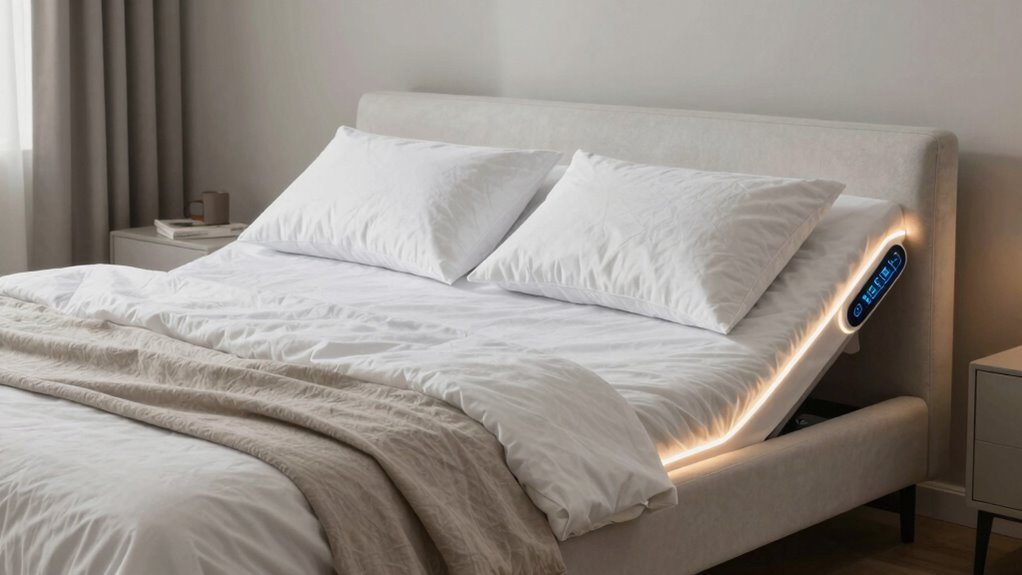

Smart beds use advanced sensors and technology to monitor your movements, heart rate, breathing, and temperature while you sleep. They adjust firmness, temperature, or position in real-time to enhance comfort and support better sleep stages. All your data is synced to an app or screen, giving you insights into your sleep quality and habits. Want to discover how these features work together to improve your rest? Keep exploring for more details.
Listen free for 30 days with Audible
Thousands of audiobooks and originals — cancel anytime.
As an affiliate, we earn on qualifying purchases.
Key Takeaways
- Smart beds use sensors to monitor sleep patterns, movements, heart rate, and temperature for detailed sleep analysis.
- They adjust firmness, temperature, or position in real-time based on sleep stages and user preferences.
- Data is collected and displayed via apps, providing insights into sleep quality and habits.
- Continuous monitoring helps personalize sleep support and improve overall sleep health.
- Integration with health apps enables users to track progress and make informed sleep habit improvements.
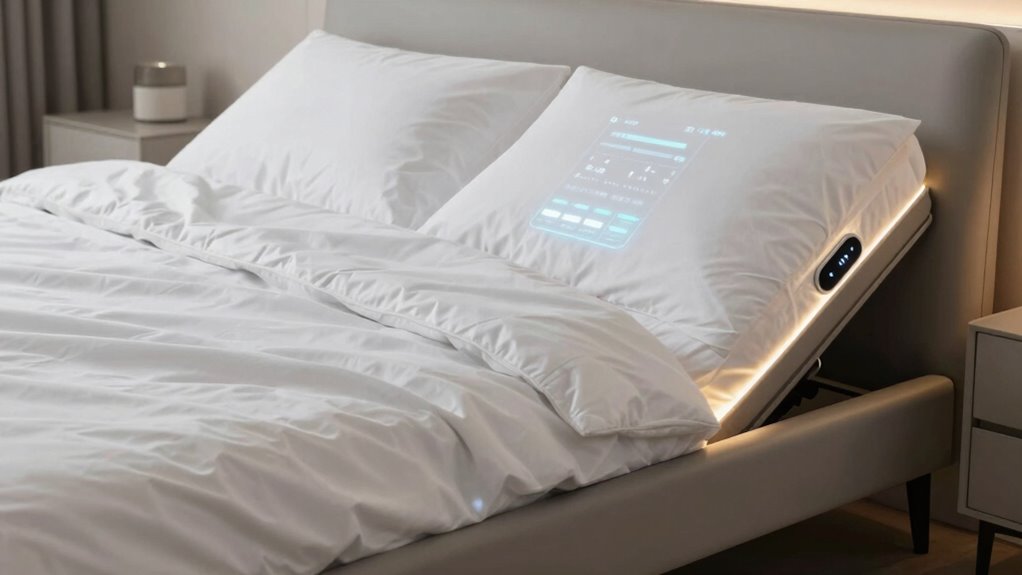
Have you ever wondered how technology is transforming your sleep experience? With the rise of smart beds, sleep technology has become more integrated into our nightly routines, offering ways to improve rest and overall health. These beds are not just about comfort anymore; they incorporate sensors, connectivity, and innovative bed design to help you understand and optimize your sleep patterns. When you lie down on a smart bed, it’s like having a personal sleep coach right in your bedroom, constantly monitoring and analyzing your sleep without intruding on your comfort.
The key to these advanced beds is their sophisticated bed design, which seamlessly blends comfort with technology. Embedded sensors detect your movements, heart rate, breathing, and even temperature changes throughout the night. Unlike traditional mattresses, which rely solely on your subjective feelings of comfort, smart beds gather real-time data, providing a detailed picture of your sleep quality. This data is then processed and presented to you via smartphone apps or integrated displays, giving you insights into how well you slept and what factors might be affecting your rest. Understanding the sleep data collection process can help users appreciate how these systems work behind the scenes.
You don’t need to be a tech expert to benefit from this technology. Many smart beds automatically adjust their firmness, temperature, or even position based on your sleep stages or preferences. For example, if the sensors detect you’re tossing and turning, the bed can subtly modify its support to help you settle down. If you tend to get too hot, the bed can regulate its cooling features to keep you comfortable. This dynamic bed design ensures that each night’s sleep is tailored specifically to your needs, something traditional beds can’t provide. Additionally, advances in bed sensor technology have made these adjustments more precise and responsive, further enhancing sleep quality. Incorporating real-time monitoring allows these beds to adapt instantaneously, improving your comfort without interruption.
Another advantage of sleep technology in smart beds is the ability to track your progress over time. As you sleep, the system collects data that can reveal patterns, such as how often you wake up or how long you spend in deep sleep. With this information, you can make informed decisions about your sleep habits, environment, or even your daily routines. Additionally, the integration of sleep monitoring sensors enhances the accuracy and usefulness of the data collected, giving you a clearer picture of your sleep health. Some smart beds also sync with health apps, giving you a thorough view of your overall well-being. Moreover, these insights can motivate you to adopt healthier sleep habits and improve your overall sleep hygiene.
As an affiliate, we earn on qualifying purchases.
Frequently Asked Questions
How Do Smart Beds Differ From Regular Mattresses?
Smart beds differ from regular mattresses by integrating technology that monitors your sleep hygiene, such as movement, heart rate, and breathing. They often feature adjustable firmness and temperature control, unlike standard mattresses made from basic materials. This advanced tech helps you optimize your sleep environment, promoting better rest and health. With smart beds, you get personalized insights and comfort, enhancing your overall sleep quality and ensuring you wake refreshed.
Are Smart Beds Suitable for All Sleep Positions?
They say, “One size doesn’t fit all,” and the same applies to sleep postures. Smart beds are designed to adapt to various sleep positions, making them suitable for most users. They adjust based on your sleep posture and bedding materials, providing support where needed. Whether you sleep on your back, side, or stomach, a smart bed can enhance comfort and promote better sleep, regardless of your preferred position.
Can Smart Beds Detect Sleep Disorders Accurately?
Yes, smart beds can detect sleep disorders like sleep apnea and improve your rest quality. They monitor your breathing patterns, movement, and heart rate, providing detailed insights. While they offer valuable data, they shouldn’t replace professional diagnosis. Use the information from your smart bed to identify irregularities in your sleep, and consult a healthcare provider if you notice signs of sleep disorders or persistent rest issues.
What Is the Cost Range of Smart Beds?
Smart beds generally cost between $1,000 and $5,000, depending on features and brand. Think of it as a middle ground—you’re investing in a high-tech bed frame with built-in sleep accessories like sensors and temperature controls. Some models come with additional gadgets, so prices can climb. Keep in mind, this is a worthwhile investment for better sleep, but weigh your options to find the best fit for your needs and budget.
How Secure Is My Sleep Data With Smart Beds?
Your sleep data with smart beds is generally secure, but you should be aware of data privacy and hacking risks. Manufacturers implement encryption and security protocols to protect your information, but no system is completely foolproof. To stay safe, update your device regularly, use strong passwords, and review privacy settings. Being cautious helps minimize hacking risks and keeps your sensitive sleep data secure.
Conclusion
With smart beds, you’re stepping into the future of sleep, where every night becomes a personalized oasis of rest. These innovative beds don’t just track your sleep—they transform your nightly rest into a symphony of comfort and insight. Imagine waking up feeling refreshed enough to conquer mountains, all thanks to technology that adapts perfectly to your needs. Embrace smart beds and turn your sleep into an unstoppable force of rejuvenation that’s as powerful as a thunderstorm!
College move-in / dorm season Picks
dorm essentials
As an affiliate, we earn on qualifying purchases.