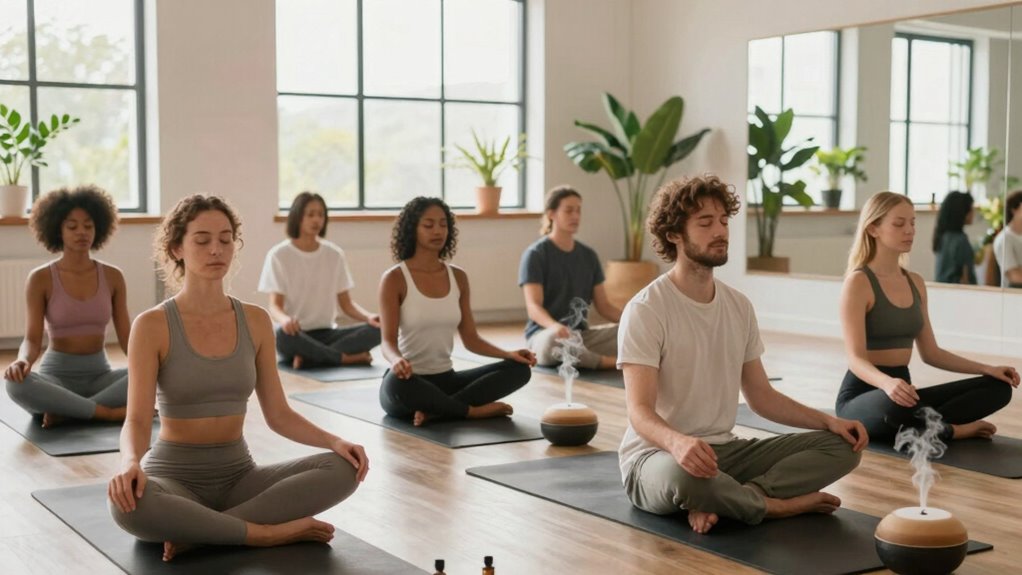

Breathwork entered mainstream wellness by blending ancient practices like pranayama and Qigong with modern science, demonstrating its benefits for relaxation, stress reduction, and emotional health. As research confirmed its ability to activate the nervous system’s calming responses, it gained popularity in gyms, therapy, and mindfulness programs. With simple techniques and accessible tools, breathwork became a trusted method for improving well-being. If you’re curious, there’s much more to discover about how it can enhance your life.

Get travel and outdoor gear delivered free with Prime
- Fast, free delivery on millions of items
- Prime Video, Amazon Music and more included
- Member-only deals all year
Key Takeaways
- Traditional practices like pranayama and Qigong were adapted for modern use, bridging ancient wisdom with contemporary wellness.
- Scientific research validated breathwork’s physiological and mental health benefits, increasing its credibility.
- Guided sessions and apps made breathwork accessible, integrating it into mainstream health, fitness, and therapy settings.
- Wellness industries incorporated breathwork into gyms, yoga studios, and mental health clinics for holistic health approaches.
- The growing evidence and ease of practice fostered widespread acceptance, cementing breathwork in modern wellness routines.

Breathwork has gained popularity as a powerful tool for enhancing overall wellness, offering a simple yet effective way to manage stress, improve mental clarity, and boost physical health. Its roots trace back to ancient practices from cultures around the world, where breath was seen as a crucial connection to spiritual and physical well-being. These practices, like pranayama in India or Qigong in China, have been used for centuries to cultivate health, balance, and mindfulness. Today, these age-old techniques are finding new relevance in modern applications, as scientific research helps explain how controlled breathing can influence our nervous system and overall health.
In recent years, breathwork has moved beyond traditional settings and entered mainstream wellness conversations. More people are discovering that techniques once reserved for spiritual or meditative traditions can be adapted into accessible practices for everyday life. Wellness communities and health professionals now incorporate breathwork into stress reduction programs, therapy sessions, and even fitness routines. This shift is driven by a growing body of evidence showing how conscious breathing can reduce cortisol levels, improve sleep, and enhance emotional regulation. As a result, breathwork has become a practical, evidence-based approach to health, appealing to those seeking holistic solutions.
You might notice breathwork popping up in gyms, yoga studios, or mental health clinics, reflecting its integration into diverse wellness fields. Its appeal lies in its simplicity—you don’t need special equipment or much space, just your own breath. The evolution from ancient to modern is seamless; practitioners adapt traditional techniques to fit contemporary lifestyles. For example, some use guided audio sessions or mobile apps that direct you through breathing exercises designed to alleviate anxiety or boost energy. This ease of access democratizes wellness, making it available to anyone interested in improving their mental or physical state.
Moreover, the scientific community has begun to validate what many cultures have known for millennia—that breath influences our mind and body profoundly. Studies reveal that specific breathing patterns can activate the parasympathetic nervous system, promoting relaxation and resilience. Biodiversity and traditional practices have played a significant role in shaping these ancient techniques, which modern science is now beginning to understand more deeply. This fusion of ancient wisdom and modern science has helped breathwork gain credibility, encouraging more mainstream adoption. As you explore these practices, you’ll find that breathwork’s journey from ancient traditions to contemporary health routines reflects a universal understanding: that controlling your breath can control your well-being.
guided breathwork meditation app
As an affiliate, we earn on qualifying purchases.
As an affiliate, we earn on qualifying purchases.
Frequently Asked Questions
Are There Any Risks Associated With Practicing Breathwork?
There are some risks associated with practicing breathwork, especially if you have mental health issues or physical health concerns. You might experience dizziness, hyperventilation, or emotional distress if you push too hard. To stay safe, listen to your body, avoid breathwork during a manic episode or severe anxiety, and consult a healthcare professional if you have underlying health conditions. Prioritize your physical safety and mental wellbeing during practice.
How Long Does It Take to See Benefits From Breathwork?
You can start noticing benefits from breathwork within a few sessions, especially with consistent practice. As you focus on breath control, you’ll likely experience emotional release, helping reduce stress and anxiety. Regular sessions enhance your ability to manage emotions better and promote relaxation. While some notice improvements quickly, others may need several weeks to see significant changes. Keep practicing regularly to maximize these mental and emotional benefits.
Can Breathwork Replace Traditional Therapy or Medication?
You can’t fully replace traditional therapy or medication with breathwork alone, but it can profoundly support your mental health. Studies show that 70% of participants find breathwork effective for stress reduction and mindfulness integration. While it’s a powerful tool for calming your mind and managing anxiety, combining breathwork with professional treatment offers the best results. Use it as a complementary practice, not a substitute, to optimize your overall well-being.
Is Breathwork Suitable for Children or Pregnant Women?
Breathwork can be suitable for children and pregnant women, but you should always prioritize child safety and pregnancy considerations. For children, gentle, age-appropriate techniques work best, and supervision is essential. During pregnancy, consult with your healthcare provider to verify specific breath practices are safe for your stage. When done carefully and with guidance, breathwork can support relaxation and emotional well-being for both children and expectant mothers.
What Are the Different Styles or Techniques of Breathwork?
You can explore various styles of breathwork, each focusing on different techniques like breath control and mindful breathing. Some popular methods include Pranayama, which emphasizes controlled breathing patterns, and Wim Hof, combining breath control with cold exposure. Holotropic breathwork involves deep, rapid breathing to access emotional states. These techniques help you enhance relaxation, focus, and overall well-being by mastering different ways to control and be mindful of your breath.
Conclusion
As you embrace breathwork, think of each breath as a key revealing your inner garden, where peace and clarity bloom. Just as the wind gently carries seeds to new places, your steady inhale and exhale carry you toward wellness and self-discovery. With every mindful breath, you plant seeds of calm and resilience, transforming your journey into a vibrant landscape of balance. In this practice, you hold the power to nurture your own growth, one breath at a time.
Halloween Picks
halloween
As an affiliate, we earn on qualifying purchases.