Spending time outdoors boosts your physical health by increasing activity levels, lowering blood pressure, and improving vitamin D levels, which strengthen your bones and immunity. It also enhances mental well-being by reducing stress, anxiety, and fatigue, while promoting relaxation and emotional resilience. Nature helps sharpen your focus, boost creativity, and support cognitive growth. Plus, outdoor activities foster social connections and community bonding. Keep exploring to discover how green spaces can transform your overall wellness.
Key Takeaways
- Engaging in outdoor activities increases physical activity levels, reducing risks of cardiovascular diseases and boosting overall fitness.
- Natural environments lower stress hormones like cortisol, promoting mental relaxation and emotional resilience.
- Exposure to sunlight during outdoor activities enhances vitamin D production, supporting bone health and immune function.
- Being outdoors improves cognitive functions such as attention, problem-solving, and creativity.
- Participating in outdoor group activities fosters social connections, reducing loneliness and strengthening community bonds.
Physical Health Advantages of Spending Time Outdoors

Spending time outdoors offers significant physical health benefits that can improve your overall well-being. When you engage in activities like walking, biking, hiking, or swimming outside, you boost your moderate-to-vigorous physical activity levels, which help lower your risk of heart disease, stroke, hypertension, and type II diabetes. Being in green spaces also helps reduce blood pressure and increases your vitamin D levels, supporting stronger bones and immune function. Regular exposure to natural environments improves sleep quality by regulating your sleep-wake cycle through sunlight. Even urban parks and gardens provide meaningful health advantages, encouraging movement and helping combat issues like childhood obesity. Incorporating outdoor activities into your routine makes it easier to stay active and healthier overall.
How Nature Enhances Mental Well-being and Emotional Resilience
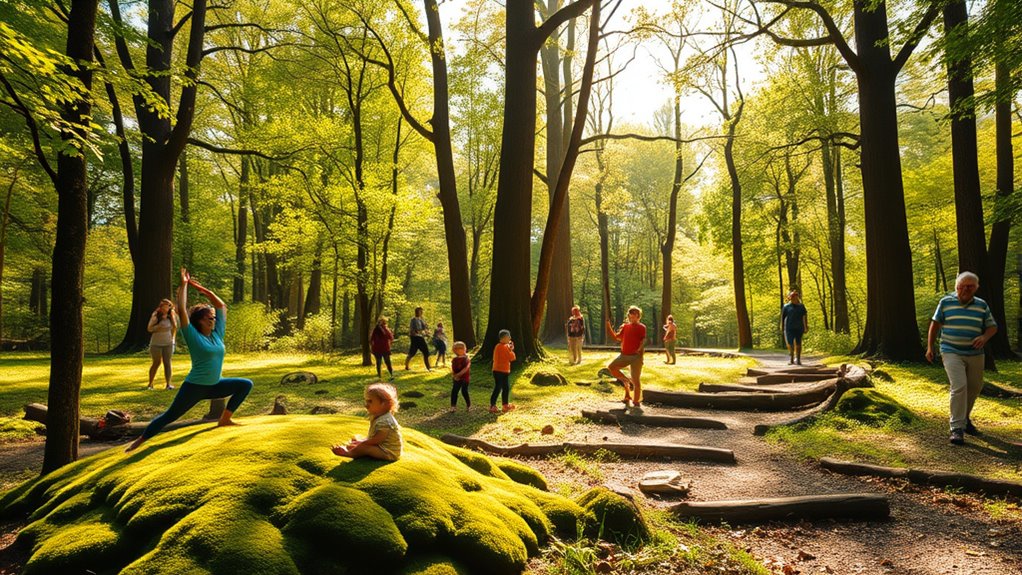
Engaging in outdoor activities not only benefits your physical health but also considerably boosts your mental well-being. Nature helps you manage emotions and build resilience by providing a calming environment. Consider these ways nature enhances your mental state:
Connecting with nature boosts mental well-being and resilience through calming environments and mindfulness.
- It lowers cortisol levels, reducing stress and anxiety, and promoting relaxation.
- Green spaces foster mindfulness, helping you stay present and decrease rumination.
- Regular exposure to natural settings strengthens emotional resilience, making it easier to handle life’s challenges.
- The presence of natural elements in outdoor environments can improve color accuracy and visual comfort, further supporting mental relaxation.
Cognitive Benefits and Developmental Growth From Natural Environments

Natural environments actively boost your cognitive abilities by enhancing attention, concentration, and problem-solving skills. When you spend time outdoors, your brain benefits from reduced mental fatigue and increased mental clarity. Green spaces encourage children to play more freely, supporting healthy cognitive and social development. For adults, outdoor activities can spark creativity and improve academic performance. The synergy of physical activity and nature helps regulate circadian rhythms, reducing fatigue and sharpening focus. Incorporating outdoor elements into your space can also enhance your mental well-being, providing ongoing cognitive benefits.
Building Social Connections and Community Through Outdoor Activities

Outdoor activities serve as powerful platforms for building social connections and strengthening community bonds. When you participate in activities like hiking, biking, or outdoor sports, you naturally engage with others, fostering relationships and a sense of belonging. These interactions help reduce loneliness and promote social cohesion. Consider these ways to enhance community ties: 1. Organize group outings or community events to encourage participation and inclusivity. 2. Join local clubs or teams that focus on outdoor recreation, building a network of shared interests. 3. Volunteer for park cleanups or outdoor initiatives, strengthening community pride and collaboration. Engaging in outdoor activities also offers the benefit of essential oils for social wellness, which can help promote relaxation and positive social interactions in group settings.
Promoting Equity and Accessibility in Green Space Engagement
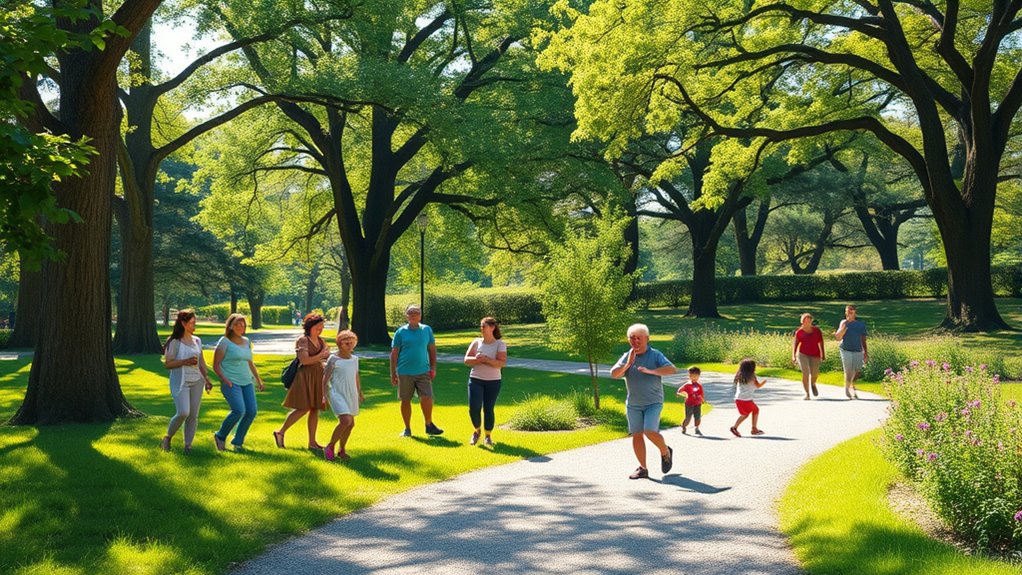
Building strong social connections through outdoor activities benefits communities, but equitable access to green spaces remains a significant challenge. Many neighborhoods lack safe, well-maintained parks, limiting opportunities for all residents. To promote fairness, communities should prioritize inclusive planning that considers diverse needs. Consider these strategies:
| Access Barriers | Solutions | Community Benefits |
|---|---|---|
| Lack of nearby parks | Develop green corridors | Improved health and social cohesion |
| Safety concerns | Enhance lighting and security | Increased outdoor participation |
| Limited transportation | Provide mobile or local green spaces | Greater engagement across demographics |
Additionally, environmental innovations can play a role in creating more accessible and efficient green spaces.
Frequently Asked Questions
How Much Outdoor Activity Is Needed for Significant Health Benefits?
You should aim for at least 150 minutes of moderate-intensity outdoor activity weekly, like brisk walking, biking, or swimming. This amount helps reduce chronic disease risks, improve sleep, and boost mental health. Even shorter daily sessions, such as 20-30 minutes, provide meaningful benefits. Incorporate outdoor activities into your routine regularly, whether at parks, gardens, or your neighborhood, to enhance your overall wellness and enjoy sustained health advantages.
Are There Risks Associated With Outdoor Activities and How Can They Be Mitigated?
Yes, outdoor activities can pose risks like injuries, sunburn, or exposure to pollution. To stay safe, wear appropriate gear, apply sunscreen, stay hydrated, and choose safe, well-maintained areas. Be mindful of weather conditions and avoid overexertion. If you have health concerns, consult a healthcare professional before engaging in strenuous activities. Taking these precautions helps you enjoy outdoor activities while minimizing potential dangers.
Can Indoor Plants or Virtual Nature Experiences Provide Similar Health Benefits?
You can feel a calming breeze and see vibrant greenery with indoor plants or virtual nature experiences. While they don’t fully replace outdoor activity, they boost mood, reduce stress, and improve air quality. Imagine sunlight filtering through leaves or a peaceful forest scene on your screen—these can enhance mental clarity and promote relaxation. Though not a complete substitute, they offer accessible ways to nurture your well-being when outdoor time isn’t possible.
How Does Outdoor Activity Impact Mental Health in Specific Populations Like Seniors?
You’ll find that outdoor activity crucially boosts seniors’ mental health by reducing depression, anxiety, and stress. When you spend time in green spaces, you lower cortisol levels and promote mental restoration. Activities like walking or gardening help maintain social connections and cognitive function, which combat loneliness and cognitive decline. Regular outdoor engagement encourages mindfulness and enhances overall emotional well-being, making it an essential part of healthy aging.
What Policies Can Best Promote Equitable Access to Outdoor Recreational Spaces?
You can promote equitable access to outdoor spaces by supporting policies that fund and maintain parks, gardens, and green corridors in underserved communities. Advocate for urban planning that integrates green infrastructure into all neighborhoods, ensuring safe, accessible, and well-maintained recreational areas. Encourage schools and workplaces to incorporate outdoor activities. Additionally, push for regulations that protect green spaces from development, making outdoor recreation a priority for everyone, regardless of socioeconomic status.
Conclusion
So, next time you’re tempted to stay glued to your screens, remember that nature’s just waiting to boost your health—no Wi-Fi needed. Whether it’s a jog in the park or a picnic under the sun, outdoor fun is basically a free, all-in-one wellness package. Who knew that stepping outside could be the ultimate life hack? So go ahead, embrace the outdoors—your body, mind, and even your social life will thank you.