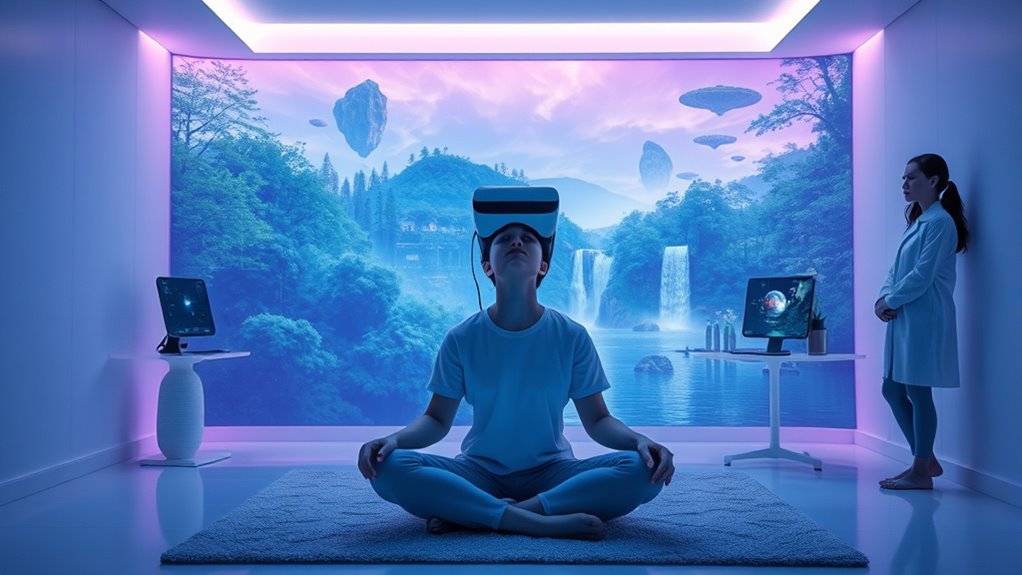
Immersive VR therapy uses virtual environments to help you manage anxiety, depression, and boost overall wellbeing. It offers engaging, personalized experiences that can reduce symptoms quickly—sometimes within a single session—while building confidence and resilience. VR provides safe space exposure and supports positive self-beliefs, making therapy more effective and motivating. Although there are costs and technical hurdles, ongoing innovations are expanding its possibilities. Keep exploring to discover how VR is reshaping mental health care for you.
Key Takeaways
- VR therapy provides immersive, controlled environments for treating anxiety, depression, PTSD, and other mental health issues effectively.
- It enhances treatment engagement, personalization, and real-time feedback, improving client motivation and therapy outcomes.
- VR experiences foster positive self-beliefs, confidence, and relaxation skills, supporting overall wellbeing and resilience.
- Practical challenges include high costs, technical issues, insurance barriers, and lack of standardized treatment protocols.
- Future developments aim to improve realism, accessibility, AI integration, and expand VR’s role in preventive mental health care.
How Virtual Reality Is Transforming Anxiety and Depression Treatment

Virtual reality is revolutionizing how we treat anxiety and depression by providing immersive, controlled environments that enhance therapy effectiveness. You can face fears or manage mood symptoms in safe, customizable settings without real-world risks. VR allows for exposure therapy that’s more engaging and tailored to your needs, leading to quicker symptom relief. Studies show VR can reduce anxiety symptoms by up to 14.5% and depression by 12.3%, with immediate post-session mood boosts averaging 7.3%. The immersive nature helps you stay engaged, making therapy sessions more impactful. Whether tackling specific phobias or general mood issues, VR offers a flexible, scalable approach. It’s transforming mental health care by making treatment more accessible, personalized, and effective for a wide range of anxiety and depression cases.
The Evidence Behind VR Therapy: What Research Shows
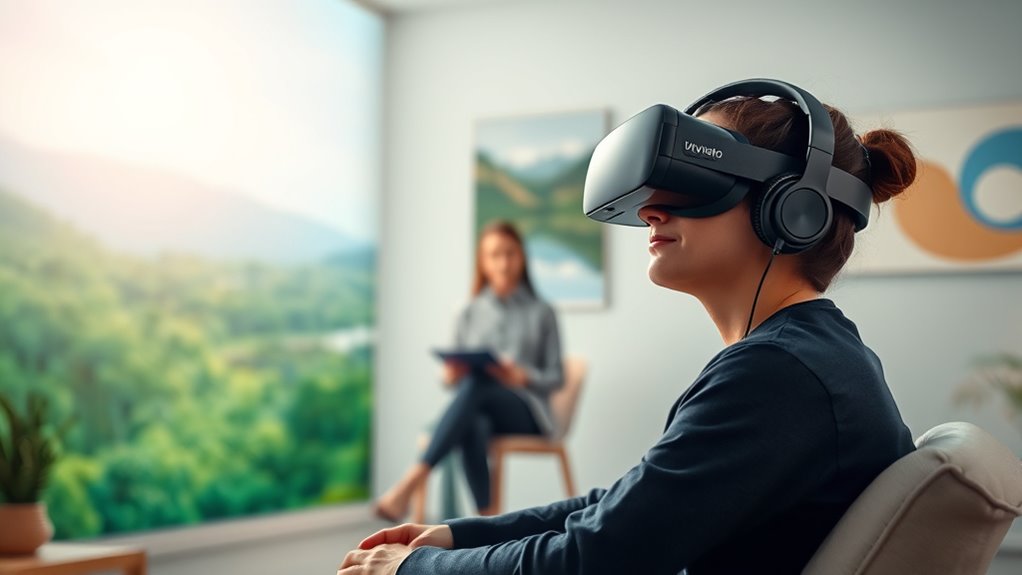
Research consistently shows that VR therapy can effectively reduce anxiety and depression symptoms, supported by a growing body of scientific evidence. Studies reveal a 14.5% decrease in anxiety and a 12.3% drop in depression after completing VR programs. Immediate sessions often lead to a 25.8% reduction in anxiety and a 7.3% improvement in mood. Here’s the impact captured in a table:
| Positive Outcomes | Emotional Impact |
|---|---|
| Anxiety reduction | Feelings of relief and hope |
| Mood improvement | Renewed optimism |
| Increased self-esteem | Confidence blossoms |
| Stress alleviation | Calmness and clarity |
| Symptom relief | Empowerment and control |
These results show VR’s potential to transform mental health treatment and inspire hope. Understanding the benefits of VR therapy can help individuals and clinicians make informed decisions about incorporating this innovative approach into mental health care.
Exploring VR’s Role in Enhancing Positive Mental Wellbeing
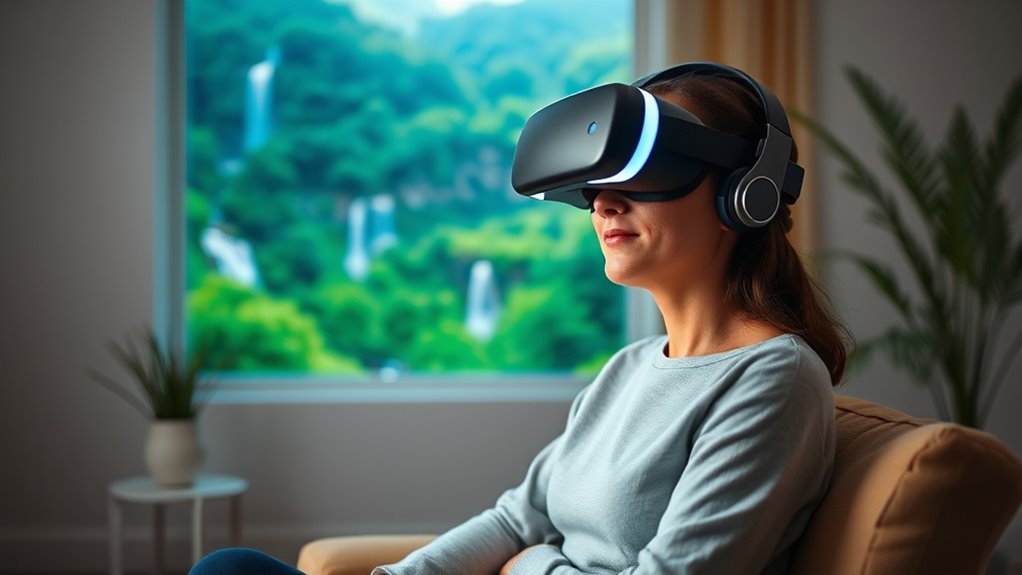
You can use VR to boost your self-esteem and improve overall mood by engaging in activities designed for relaxation and achievement. These immersive experiences help develop positive wellbeing skills that translate into daily life. Exploring VR’s potential in this area might open new ways to support lasting mental wellbeing. Incorporating evidence-based insights ensures that these practices are effective and grounded in scientific research.
Boosting Self-Esteem
Have you ever wondered how immersive experiences can boost your self-esteem and overall wellbeing? Virtual reality offers unique opportunities to practice positive self-beliefs in safe, controlled environments. You can engage in scenarios like public speaking, social interactions, or skill-building activities, which help challenge negative thoughts and reinforce confidence. VR provides immediate feedback and allows you to repeat exercises until you feel more comfortable and capable. As you gain mastery in these virtual settings, your self-perception improves, translating to real-world confidence. Additionally, VR experiences can foster relaxation and achievement, further enhancing your sense of worth. By actively participating in these tailored scenarios, you build resilience and develop a more positive outlook on yourself, supporting long-term self-esteem growth. Incorporating mindful decluttering strategies into your routine can also create a more organized environment that promotes mental clarity and confidence.
Promoting Positive Mood
Ever wondered how virtual reality can lift your spirits and boost your overall wellbeing? VR offers immersive experiences that can enhance your positive mood by engaging your senses and promoting relaxation. These virtual environments encourage feelings of joy, achievement, and calmness, helping you feel more connected and uplifted. Incorporating mindfulness practices into VR sessions can further deepen emotional benefits and foster long-term mental resilience.
Enhancing Wellbeing Skills
Virtual reality is increasingly recognized for its potential to enhance wellbeing skills by providing immersive environments that foster emotional resilience and positive mental habits. You can practice mindfulness, gratitude, and stress management in safe, controlled settings. VR experiences guide you through calming landscapes, helping you develop relaxation techniques that transfer to real life. Interactive scenarios encourage positive thinking and self-compassion, boosting your self-esteem and emotional strength. By engaging in virtual activities like virtual gardening or social interactions, you reinforce healthy habits and build confidence. These immersive tools make it easier to integrate wellbeing practices into daily routines, supporting long-term mental health. Color accuracy and contrast ratios in VR environments can significantly influence your emotional responses, making immersive experiences more effective. As a result, VR becomes a powerful complement to traditional methods, empowering you to cultivate resilience and sustain positive mental habits more effectively.
Client Experiences and Perspectives on Telehealth VR Sessions
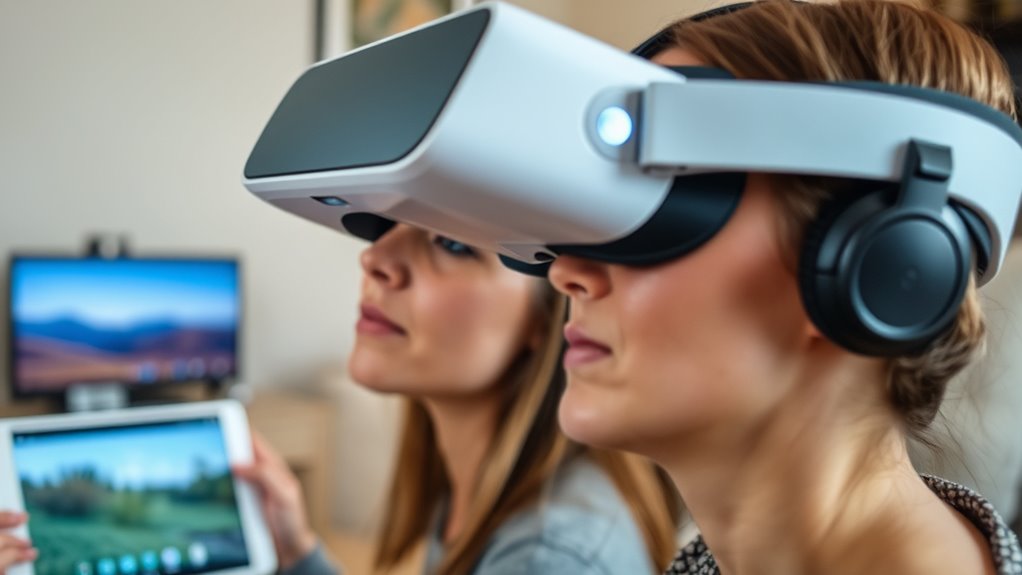
You may find telehealth VR sessions engaging and comfortable, especially when they feel personalized and easy to access. However, some clients express concerns about the realism of the experiences, cost, and whether insurance covers these services. Addressing practical challenges is essential to making VR therapy more widely available and effective for everyone. Incorporating mental health support solutions can enhance the overall effectiveness of virtual reality therapy sessions.
Engagement and Comfort Factors
Clients generally find telehealth-delivered VR sessions engaging and comfortable, appreciating how the immersive nature of VR enhances their participation in therapy. Many report feeling more involved and motivated, as VR creates a sense of presence that traditional methods lack. Comfort levels vary based on individual preferences, but most users find the technology easy to adapt to and less intimidating over time. The sense of control within virtual environments helps clients feel safe and supported during sessions. Key factors influencing engagement and comfort include:
- Realistic visuals and smooth interactions
- Personalization of virtual scenarios
- Ease of use and minimal technical barriers
- Ability to pause or exit sessions if needed
- Therapist guidance that builds trust and familiarity
These elements contribute remarkably to positive client experiences in telehealth VR therapy. Additionally, understanding the importance of fathers’ influence can help therapists tailor approaches that foster trust and emotional safety in clients, enhancing the overall effectiveness of immersive therapy.
Accessibility and Practical Challenges
While telehealth VR therapy offers promising accessibility benefits, many users encounter practical challenges that can hinder their experience. You might find the equipment expensive or difficult to operate, making consistent use a struggle. Technical issues like lag or poor graphics can break immersion, reducing therapy effectiveness. Additionally, some clients worry about the realism of virtual environments or feel uncomfortable exploring new technology. Insurance coverage and costs pose financial barriers, limiting access for some.
| Challenge | Client Impact |
|---|---|
| Equipment costs | Limits consistent participation |
| Technical difficulties | Frustration and reduced immersion |
| Realism concerns | Decreased engagement |
| Insurance coverage | Financial barriers |
Practical Applications of VR in Clinical Practice

Virtual reality has become an increasingly practical tool in clinical settings, offering immersive and controlled environments for treatment. You can use VR to simulate real-life situations safely, helping clients confront fears or practice skills. It’s effective for a range of mental health issues, including anxiety, depression, and PTSD. VR can also support self-esteem building through engaging activities that promote achievement and relaxation. Additionally, VR allows for personalized therapy experiences tailored to individual needs. You might incorporate VR into assessments to better understand client responses or monitor progress over time. The technology enhances engagement, making therapy more interactive and motivating. Its versatility and ability to create realistic scenarios make VR a valuable addition to your therapeutic toolkit. honda tuning
Challenges and Limitations of Using VR in Mental Health Care

Despite its promising potential, integrating VR into mental health care faces several significant challenges. Cost remains a major barrier, limiting access for many clinics and clients. Technical issues, such as hardware glitches and software limitations, can disrupt therapy sessions. Additionally, the lack of standardized protocols means practitioners often struggle with inconsistent results. Privacy concerns also arise, especially with remote VR sessions, risking data breaches. Here’s a quick overview:
| Challenge | Impact |
|---|---|
| High costs | Limits widespread adoption |
| Technical glitches | Interrupts therapy flow |
| Lack of standardization | Creates variability in outcomes |
| Privacy concerns | Raises confidentiality and security worries |
Furthermore, the cost of hardware and software development can be prohibitive, making it difficult for smaller clinics to adopt VR solutions. Addressing these hurdles is vital for VR’s broader, effective integration into mental health care.
Future Directions: Expanding VR’s Therapeutic Potential

Advancements in technology and growing evidence of VR’s effectiveness are opening new avenues for expanding its therapeutic applications. You’ll see innovations that target broader mental health issues and enhance personalization. Future research could integrate VR with AI to adapt treatments in real-time, making therapy more responsive. Virtual environments may become more realistic, fostering deeper engagement and emotional impact. You might also see VR used for preventative care, promoting mental resilience before issues develop. Expanding accessibility through portable, user-friendly devices will make VR therapy available outside clinics. Additionally, combining VR with biofeedback and wearable tech could optimize outcomes. Neuroplasticity is another promising area, as VR experiences may help rewire brain pathways to support recovery and resilience.
Integrating VR Into Standard Mental Health Treatment Plans

Integrating VR into standard mental health treatment plans requires careful consideration of its strengths and limitations. You should evaluate how VR enhances engagement, offers controlled exposure, and complements existing therapies. However, be aware of potential barriers like cost, technological complexity, and variable evidence quality. To guide integration, consider the following framework:
| Aspect | Benefits | Challenges |
|---|---|---|
| Clinical Use | Improves engagement and realism | Limited high-quality research |
| Accessibility | Remote delivery broadens reach | Cost and insurance barriers |
| Treatment Integration | Enhances exposure and self-esteem | Need for clinician training |
Balancing these factors helps you develop effective, personalized treatment plans that incorporate VR’s potential while addressing its limitations.
Frequently Asked Questions
How Cost-Effective Is Immersive VR Therapy Compared to Traditional Treatments?
Immersive VR therapy can be cost-effective compared to traditional treatments because it’s scalable, requires fewer in-person sessions, and potentially reduces long-term healthcare costs. You might find it more accessible and engaging, which can lead to quicker symptom improvement. While initial setup costs can be high, the overall expenses tend to decrease over time, especially with wider adoption, making it a promising option for mental health care.
What Are the Best Practices for Integrating VR Into Existing Mental Health Programs?
You should start by aligning VR integration with your existing goals, like building engagement or reducing anxiety. Train staff thoroughly to make certain they’re comfortable with VR tools, and select evidence-based protocols tailored to your clients’ needs. Collaborate with tech experts to troubleshoot issues, and gradually introduce VR to avoid overwhelming clients. Regularly evaluate outcomes to refine your approach, ensuring VR becomes a seamless, powerful addition to your mental health program.
How Do Clients’ Demographic Factors Influence VR Therapy Outcomes?
Your clients’ demographic factors, like age, gender, and socioeconomic status, influence VR therapy outcomes markedly. Younger clients often adapt more quickly to VR technology, experiencing greater engagement and benefits. Women may respond differently than men, depending on their comfort with technology or specific mental health needs. Socioeconomic factors affect access and familiarity, potentially impacting effectiveness. Tailoring VR interventions to individual demographics helps optimize results and guarantees equitable mental health care.
What Safety Concerns or Side Effects Are Associated With VR Mental Health Interventions?
You should be aware that VR mental health interventions can cause side effects like dizziness, nausea, or eye strain, especially during extended use. Some users might experience disorientation or discomfort if the VR environment isn’t well-designed. While serious safety concerns are rare, it’s important to take breaks, guarantee proper fit, and monitor for adverse reactions to make your VR therapy experience safe and comfortable.
How Can VR Therapy Be Tailored for Diverse Cultural and Individual Needs?
Think of VR therapy as a chameleon, changing its colors to blend with your unique cultural and personal landscape. You can tailor virtual environments by incorporating culturally relevant symbols, language, and scenarios, making the experience resonate deeply. Personalize visuals, narratives, and interactions to reflect individual backgrounds and preferences. This adaptive approach guarantees you feel seen and understood, transforming VR into a mirror that reflects your identity, fostering trust and engagement in your healing journey.
Conclusion
Imagine stepping into a garden where your fears fade with each breath and your hopes bloom anew. Virtual reality becomes your trusted guide, leading you through this landscape of healing. As you explore these immersive worlds, you open doors to better mental health. Embrace VR therapy as your map and compass, transforming challenges into opportunities. With each journey, you move closer to a brighter, more balanced you—ready to thrive beyond the virtual horizon.