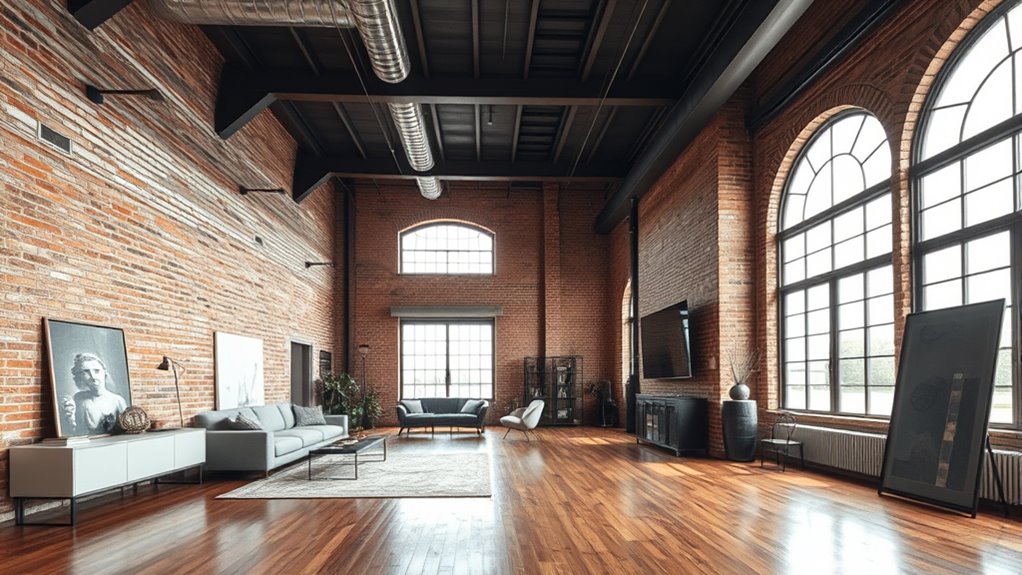

Adaptive reuse turns historic industrial buildings into stylish, functional lofts by combining preservation with innovative design. You’ll see key features like exposed brick, steel beams, and large factory windows retained to honor the building’s past. Modern upgrades, such as energy-efficient systems and open layouts, enhance comfort while preserving original charm. This approach supports sustainability and celebrates cultural heritage. If you explore further, you’ll discover how these projects create vibrant, unique living spaces that blend history with modernity.

Get travel and outdoor gear delivered free with Prime
- Fast, free delivery on millions of items
- Prime Video, Amazon Music and more included
- Member-only deals all year
Key Takeaways
- Converts industrial buildings into stylish residential lofts while preserving original architectural features like brick walls and steel beams.
- Combines historical preservation with modern renovations, including open layouts, high ceilings, and natural light.
- Incorporates energy-efficient systems and safety upgrades to meet contemporary standards without compromising character.
- Promotes sustainability by repurposing existing structures, reducing waste, and minimizing environmental impact.
- Creates vibrant living spaces that blend industrial heritage with contemporary design, attracting residents seeking unique urban environments.

Have you ever wondered how old buildings find new life? It’s a fascinating process that combines respect for the past with innovative design—an approach known as adaptive reuse. When you walk through a converted industrial space turned chic loft, you’re experiencing the result of thoughtful historical preservation blended seamlessly with modern renovation. This strategy isn’t just about aesthetics; it’s about maintaining the building’s original character while making it functional for today’s needs.
Adaptive reuse begins with a deep appreciation for the history embedded in the structure. Preserving key architectural features—like exposed brick walls, steel beams, or large factory windows—connect you to the building’s former life. These elements tell stories of the past and add unique charm that new constructions often lack. The challenge is to honor this history while updating the space to meet current safety standards, comfort levels, and lifestyle demands. That’s where modern renovation comes into play. You’ll see advanced HVAC systems, energy-efficient lighting, and modern plumbing integrated carefully so they don’t overshadow the building’s original essence.
Preserving historic features while updating safety and comfort standards through thoughtful modern renovation.
The beauty of adaptive reuse lies in its sustainability. Instead of demolishing old structures and building anew, you’re giving a second chance to something already standing. This reduces waste, minimizes environmental impact, and preserves cultural heritage. When you step into a converted industrial loft, you’re experiencing a form of environmental stewardship. It’s about valuing what’s already there and reimagining it for contemporary use. The process often involves clever design choices—like open floor plans that highlight high ceilings, large windows that flood the space with natural light, and preserved historical details that evoke nostalgia. Additionally, many projects incorporate adaptive reuse strategies to create innovative spaces that honor the building’s origins while serving modern needs.
You’ll find that these projects often become more than just living spaces; they’re vibrant community hubs that celebrate history while embracing modern living. They attract residents who appreciate the blend of old-world charm with contemporary comforts. The success of adaptive reuse projects hinges on balancing respect for the building’s original purpose with the practical needs of today’s occupants. Architects and developers work closely to ensure that the renovation respects the building’s legacy but also offers the functionality and style you desire.
Ultimately, adaptive reuse transforms forgotten industrial spaces into stunning, functional homes and commercial spaces. It’s a process rooted in historical preservation and modern renovation, creating environments that honor the past while serving the present. When you choose to live or work in one of these spaces, you’re part of a movement that values sustainability, cultural heritage, and innovative design—turning old buildings into timeless, stylish spaces for generations to come.
industrial loft lighting fixtures
As an affiliate, we earn on qualifying purchases.
As an affiliate, we earn on qualifying purchases.
Frequently Asked Questions
What Are the Main Zoning Challenges in Adaptive Reuse Projects?
When tackling adaptive reuse projects, you face zoning challenges like securing zoning variances that allow for different uses or modifications. You also need to make certain compliance with building codes, which can be strict for older structures not originally designed for modern residential or commercial purposes. Managing these requirements can be complex, but obtaining variances and updating codes are essential steps to successfully transform industrial spaces into functional, attractive lofts.
How Do Adaptive Reuse Projects Impact Local Communities?
You’ll find that adaptive reuse projects considerably impact local communities by fostering community revitalization and boosting economic development. As you transform old industrial spaces into vibrant hubs, you create new jobs, attract visitors, and enhance neighborhood appeal. This process encourages sustainable growth, preserves local history, and strengthens community identity. Your efforts can turn neglected areas into lively, desirable places, benefiting residents and the broader economy alike.
What Are the Cost Differences Between New Construction and Adaptive Reuse?
Imagine standing at a crossroads, where your decision shapes your project’s future. When you do a cost analysis, you’ll see that adaptive reuse often costs less than new construction because you leverage existing structures, reducing materials and labor. Budget planning becomes clearer because reuse projects typically have fewer surprises. While initial costs may differ, you’ll find that adaptive reuse can be a smarter, more economical choice in the long run.
How Long Does an Adaptive Reuse Project Typically Take?
You’re likely wondering about the project timeline for adaptive reuse projects. Typically, these projects take anywhere from several months to over a year, depending on the scope and complexity. You’ll go through various renovation phases, such as planning, design, and construction. You should plan for extra time to address unforeseen issues, especially when repurposing old industrial spaces, which can extend your project timeline.
Are There Specific Historic Preservation Regulations to Consider?
Did you know that over 90% of historic buildings are protected by regulations? When working on adaptive reuse projects, you need to take into account specific historic guidelines to ensure compliance. These regulations often include preservation incentives, which can help offset costs. You should research local historic preservation rules early on, so you don’t risk delays or legal issues, and leverage incentives that support maintaining the building’s character.
Conclusion
Embrace the transformation, where forgotten steel and brick breathe new life, becoming vibrant homes that whisper stories of the past. By reimagining these industrial spaces, you’re not just saving structures—you’re crafting a canvas of creativity and character. With each loft you help create, you’re turning relics into modern masterpieces, proving that beauty and purpose can rise from the ashes of yesterday’s industry. In this dance of renewal, history and innovation entwine beautifully.
Fall Picks
fall essentials
As an affiliate, we earn on qualifying purchases.