
Industrial chic blends raw materials like exposed brick walls, metal accents, and Edison bulbs to create stylish, authentic spaces. You’ll find these elements highlight building history, add texture, and foster a warm, inviting atmosphere. Metal fixtures and vintage lighting give your space an edgy yet cozy vibe. Combining these features with modern touches helps balance rugged charm with comfort. Keep exploring to discover how these timeless details can transform your interiors effortlessly.

Get travel and outdoor gear delivered free with Prime
- Fast, free delivery on millions of items
- Prime Video, Amazon Music and more included
- Member-only deals all year
Key Takeaways
- Exposed brick walls serve as authentic focal points, adding texture and warmth to industrial chic interiors.
- Metal elements like steel, iron, and brass are used for fixtures, furniture, and accents, enhancing rugged appeal.
- Edison bulbs provide warm, nostalgic lighting with visible filaments, creating cozy atmospheres and vintage charm.
- Combining raw materials with modern, comfortable furnishings balances rugged aesthetics with livability.
- Incorporating reclaimed wood, eco-friendly materials, and greenery emphasizes sustainability within industrial design.
The Origins of Industrial Style Design
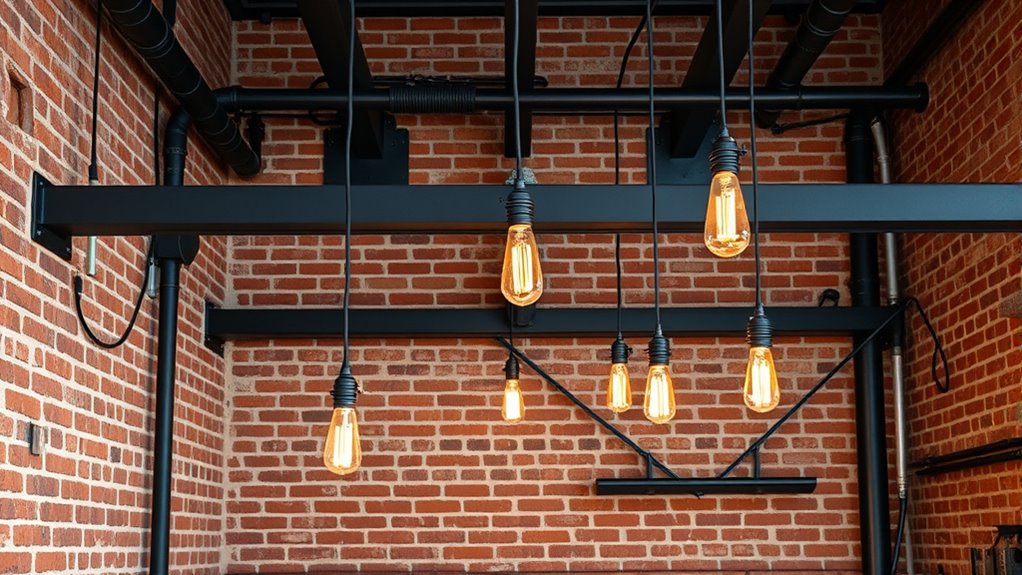
Industrial style design originated from the adaptive reuse of old factories, warehouses, and industrial buildings in urban areas. You’ll notice how this style preserves the building’s raw, honest features, like exposed brick and metal beams, celebrating their history. Originally, these spaces served as manufacturing hubs, with high ceilings, large windows, and open layouts. Over time, architects and designers adapted these structures into residential and commercial spaces, maintaining the industrial character. The core idea was to blend functionality with aesthetic appeal, highlighting materials that were once hidden or overlooked. This approach created a rugged, authentic atmosphere that’s both practical and visually striking. Today, industrial chic continues to draw inspiration from these origins, emphasizing simplicity, durability, and a sense of history. Urban transformation has played a key role in popularizing this style in contemporary interior design.
Showcasing Exposed Brick Walls
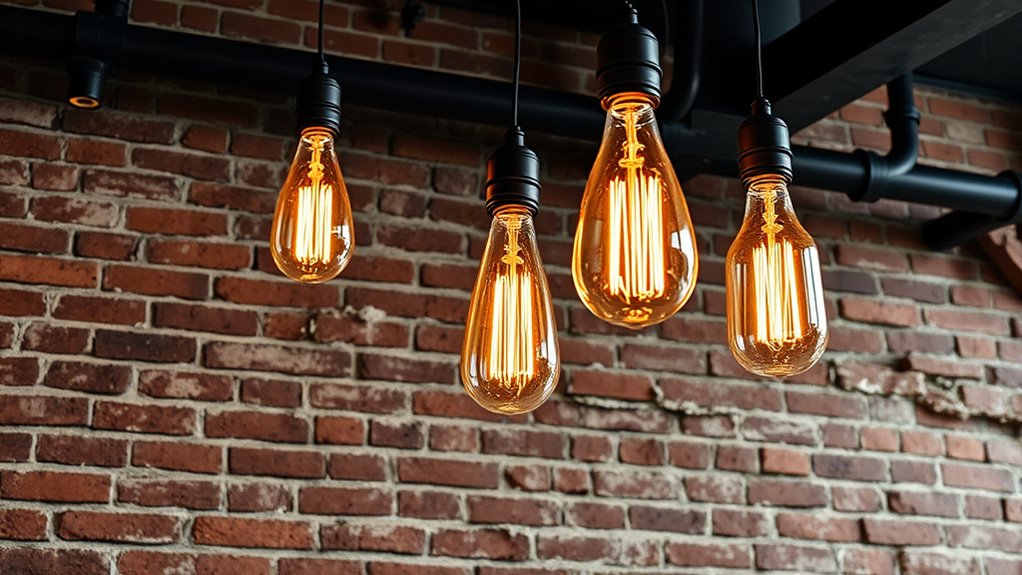
Exposed brick walls serve as a defining feature that brings authenticity and texture to industrial chic spaces. They create a striking focal point, showcasing the building’s history and craftsmanship. To highlight your brick wall, consider leaving it unpainted for a raw look or applying a clear sealant to enhance its natural color. You can also:
Exposed brick walls add authentic texture and serve as a striking focal point in industrial chic interiors.
- Incorporate contrasting furniture to make the brick stand out
- Use lighting, like Edison bulbs or wall sconces, to cast warm highlights
- Add artwork or metallic accents for visual interest
- Keep surrounding decor minimal to emphasize the wall’s texture
- Mix in natural elements like plants for a touch of softness
- Emphasizing building materials can further enhance the industrial aesthetic.
Metal Elements in Industrial Interiors
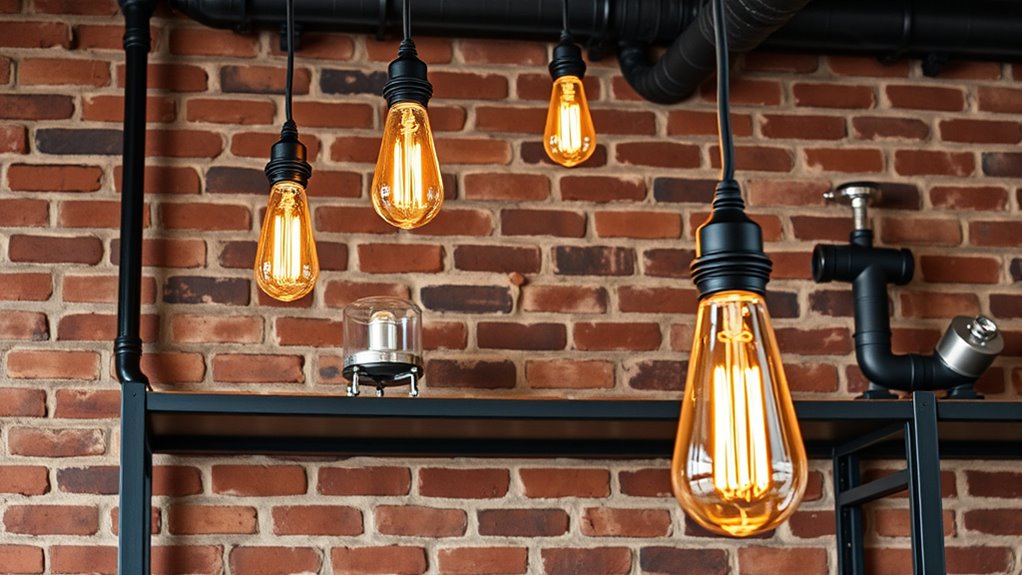
You’ll notice that different industrial metals like steel, iron, and aluminum play key roles in creating authentic industrial interiors. Metal finishes are now trending toward matte, brushed, and aged looks, giving spaces a rugged yet refined feel. By choosing the right type and finish, you can easily enhance the raw, minimalist aesthetic that defines industrial chic. Additionally, incorporating metal corrosion resistance techniques can help maintain the appearance and durability of these materials over time.
Types of Industrial Metals
Have you ever wondered which metals define the rugged yet refined look of industrial interiors? These metals bring strength, texture, and character to your space. Here are some key types:
- Steel: The backbone of industrial design, used in beams, fixtures, and furniture for durability and sleekness.
- Iron: Adds rustic charm, often seen in vintage hardware, railings, and decorative accents.
- Aluminum: Lightweight and versatile, perfect for modern lighting fixtures and furniture frames.
- Copper: Its warm hue and patina develop over time, making it ideal for fixtures and decorative details.
- Brass: Offers a polished, vintage feel in fixtures, handles, and accent pieces.
These metals combine functionality with aesthetic appeal, creating an authentic industrial vibe. Metal finishes play a crucial role in achieving the desired aesthetic and durability in industrial interiors.
Metal Finish Trends
Metal finishes play a pivotal role in defining the contemporary edge of industrial chic interiors, shifting beyond the raw materials to focus on surface treatments that enhance visual interest and durability. Matte black, brushed nickel, and weathered steel are popular choices, offering a muted, sophisticated look that complements exposed brick and wood accents. Mixed metals are trending, creating layered, textured surfaces that add depth without overwhelming the space. Oil-rubbed bronze and copper finishes bring warmth and a vintage feel, while polished or chrome surfaces introduce a sleek, modern element. These finishes are often applied to fixtures, furniture, and decorative accents, allowing you to craft a balanced, versatile aesthetic. The key is to blend different textures and tones for a curated, authentic industrial vibe that feels fresh yet timeless. Incorporating metal finish trends can significantly elevate the overall design, ensuring your space remains stylish and cohesive.
The Charm of Edison Bulb Lighting
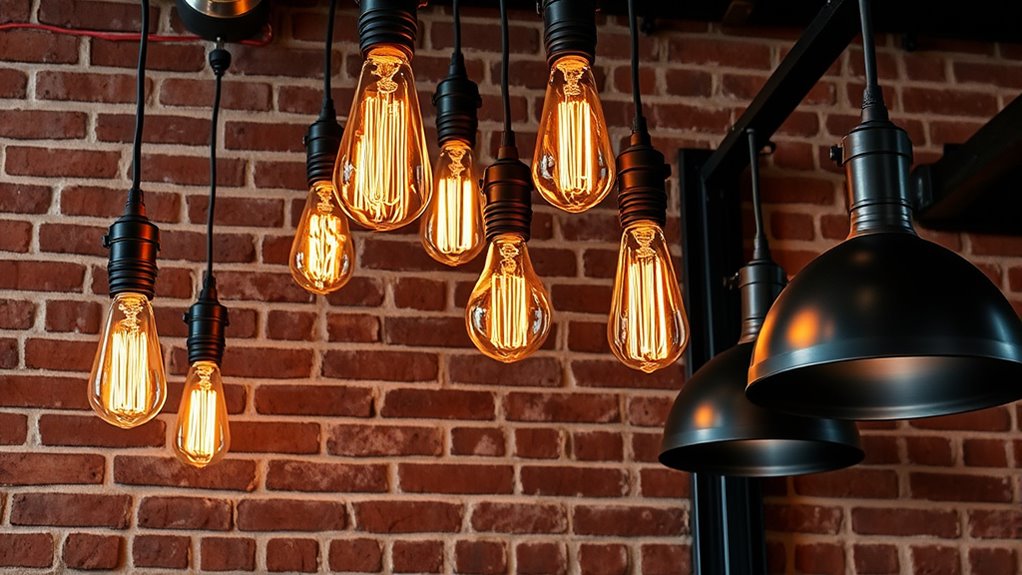
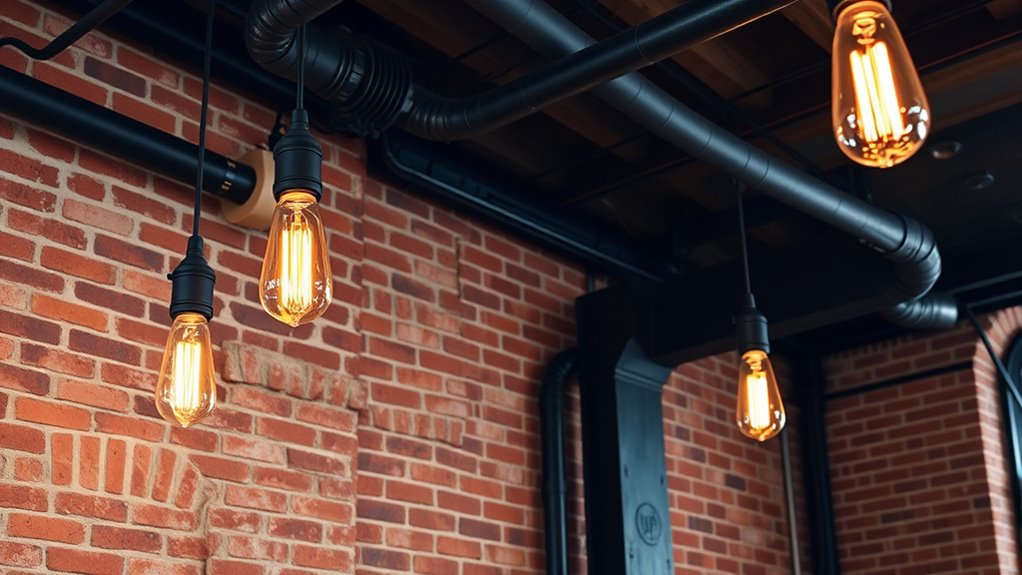
Edison bulb lighting captures the essence of industrial chic with its warm, nostalgic glow and distinctive filament design. You’re drawn to the vintage appeal that adds character to any space. These bulbs emit a soft, amber light, creating a cozy atmosphere that invites relaxation. Plus, their exposed filaments serve as eye-catching focal points in your decor. They pair perfectly with metal fixtures, exposed pipes, and reclaimed wood, enhancing the raw, unfinished look. You’ll find Edison bulbs in pendants, cages, or clustered arrangements, making a statement without overwhelming. They’re versatile enough for kitchens, living rooms, or even offices. Their timeless charm bridges past and present, transforming your space into a warm, inviting retreat with just a simple, stylish touch. Incorporating color temperature adjustments can further optimize the lighting ambiance to suit your mood and space.
Balancing Raw Materials With Modern Comfort

Achieving a harmonious balance between raw materials and modern comfort requires intentional design choices that soften industrial edges without sacrificing authenticity. You can introduce plush textiles like velvet cushions or cozy throws to add warmth and invite relaxation. Incorporate furniture with smooth, rounded shapes that contrast with exposed brick and metal, creating visual softness. Use area rugs in natural fibers or bold patterns to anchor spaces and cushion hard surfaces. Warm lighting—such as dimmable LED fixtures mimicking Edison bulbs—further enhances comfort while maintaining the industrial vibe. Additionally, integrating organic materials like leather or stone introduces tactile richness and sophistication. Employing Volkswagen Tuning techniques like ECU remapping or suspension upgrades can also subtly elevate the ambiance by enhancing the environment’s overall feel and functionality. By thoughtfully blending these elements, you create an environment that feels both stylishly raw and invitingly livable.
Color Palette and Spatial Planning
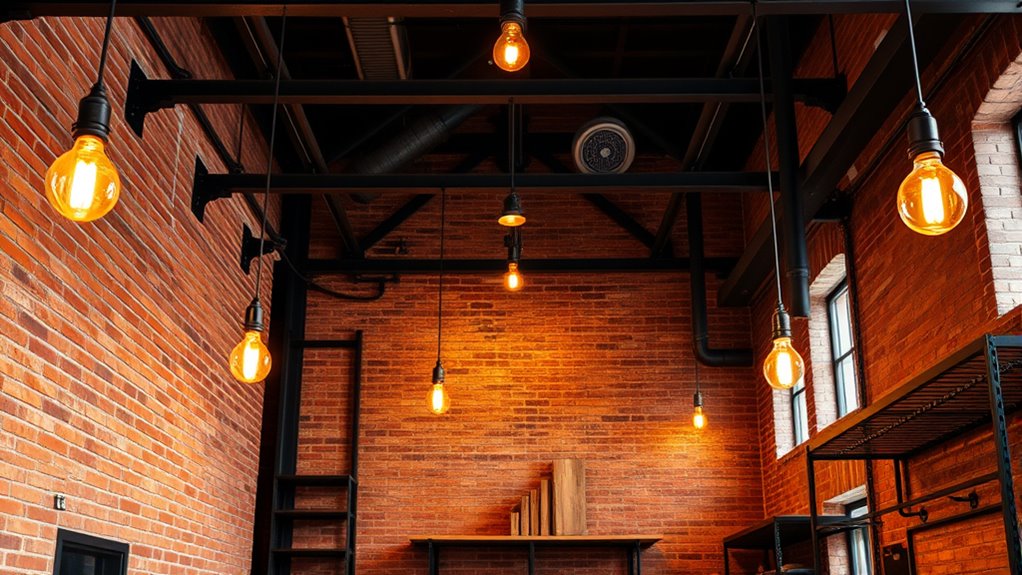
Color palette and spatial planning are essential to establishing the industrial chic vibe while maintaining a sense of openness and harmony. Your goal is to create a balanced environment that highlights raw materials without feeling cluttered. Keep the neutral base—gray, black, white, and brown—as your foundation. Add pops of color with jewel tones or metallic finishes to bring depth. Use open floor plans and minimal partitions to maximize light and space, making your space feel expansive. Incorporate natural elements like plants and organic shapes to soften the industrial edge. To make your space inviting:
Create a spacious, balanced industrial chic space with neutral tones, natural textures, and strategic pops of metallic or jewel colors.
- Stick to a neutral color scheme as your backdrop
- Use large, open layouts for a spacious feel
- Highlight pops of metallic or jewel tones sparingly
- Incorporate natural textures with textiles or greenery
- Keep clutter minimal for a clean, cohesive look
- Integrate vintage or reclaimed furniture pieces to enhance the authentic industrial aesthetic to create a cohesive look.
Furniture and Decor Choices
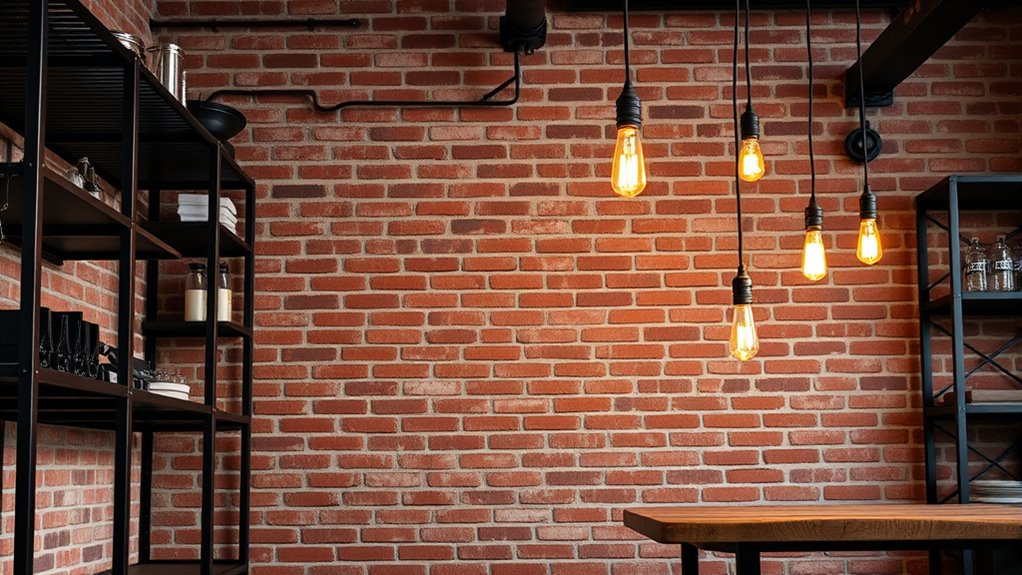
Choosing the right furniture and decor is key to amplifying the industrial chic aesthetic while ensuring your space feels functional and inviting. Focus on clean lines, minimal ornamentation, and a mix of materials like metal with wood or leather. Incorporate vintage or reproduction factory carts, lockers, and worktables as statement pieces or functional decor. Open shelving with black pipe frames and reclaimed wood adds both practicality and style. Leather sofas and chairs bring warmth and texture, balancing cool industrial elements. Modular, multifunctional furniture maximizes space in smaller settings. Keep accessories simple: metal accents, Edison bulbs, and industrial-style lighting fixtures enhance the look. Remember, the goal is to blend rugged, raw materials with thoughtful, comfortable touches for a cohesive, inviting space. Proper storage in airtight containers can help maintain the longevity and appearance of your decor elements.
Modern Trends and Sustainable Tweaks
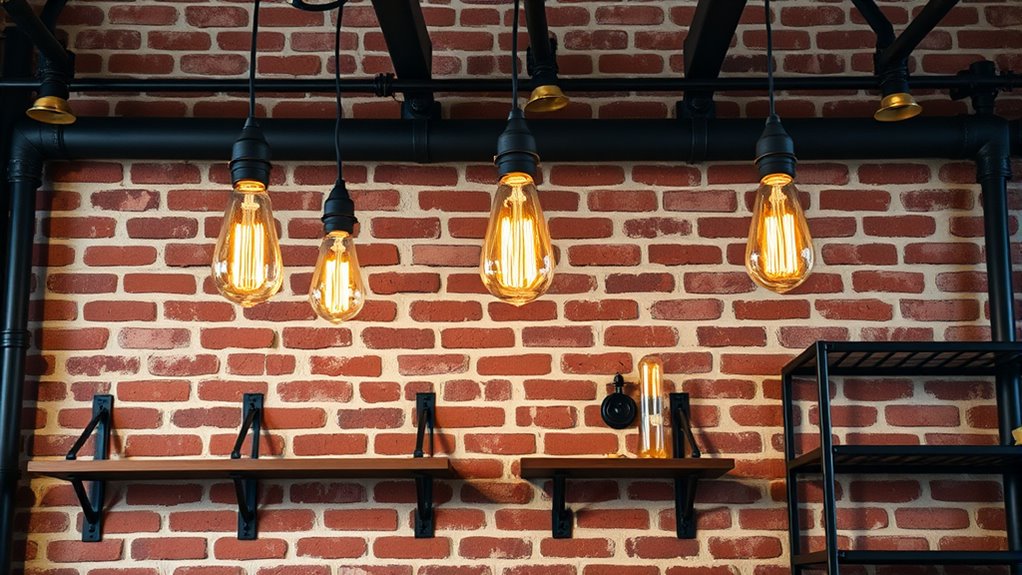
Modern industrial chic is shifting toward sustainability, with designers and homeowners prioritizing eco-friendly materials and energy-efficient solutions. You can incorporate reclaimed wood for flooring or furniture, reducing waste and adding character. Using LED Edison bulbs minimizes energy consumption while maintaining vintage charm. Choosing recycled metal fixtures and sustainably sourced textiles helps lessen environmental impact. Incorporate biophilic elements like plants and natural light to enhance wellbeing and reduce reliance on artificial lighting. Ultimately, opt for eco-conscious paint and finishes that are low in VOCs, improving indoor air quality. These tweaks not only preserve the industrial aesthetic but also make your space more environmentally responsible. Additionally, selecting sustainable materials for construction and decor further supports eco-friendly practices. Embracing sustainable practices keeps your design modern, stylish, and aligned with growing eco-conscious trends.
Frequently Asked Questions
How Can I Incorporate Industrial Style in Small or Rented Spaces?
You can easily incorporate industrial style in small or rented spaces by using lightweight, removable decor like metal and wood accents, and vintage-inspired lighting such as Edison bulbs in portable fixtures. Opt for open shelving with pipe brackets, neutral tones, and minimal furniture to maximize space. Add texture with rugs and plants, and choose versatile pieces that can be moved or repurposed, creating an industrial vibe without permanent changes.
What Are the Best Maintenance Tips for Exposed Brick and Metal Features?
Imagine your exposed brick catching the light like a weathered treasure. To keep it looking its best, regularly dust with a soft brush or vacuum with a brush attachment. Spot-clean stains with a damp cloth and mild soap. For metal features, wipe with a damp cloth, then dry thoroughly to prevent rust. Avoid harsh chemicals to preserve the patina. With gentle care, your industrial accents stay striking and timeless.
How Do I Choose the Right Edison Bulb Wattage and Color Temperature?
You should choose Edison bulbs with wattages between 40 to 60 watts for a warm, inviting glow without overwhelming your space. Opt for color temperatures around 2200K to 2700K, which produce a soft, amber light that enhances the vintage feel. Higher temps, like 3000K or more, give a cooler tone, so stick with lower Kelvin ratings to create that cozy, nostalgic ambiance typical of industrial chic interiors.
Can Industrial Design Blend With Other Styles Like Scandinavian or Mid-Century?
Yes, industrial design blends seamlessly with Scandinavian and mid-century styles, creating a balanced, eclectic look. You can soften industrial elements with Scandinavian’s light woods and clean lines or add mid-century furniture’s sleek curves and retro vibe. Mixing these styles brings warmth and personality to your space while maintaining the raw, urban edge. Just keep a cohesive color palette and balance bold textures with minimalistic pieces for a harmonious, stylish result.
What Eco-Friendly Materials Are Available for Sustainable Industrial Interiors?
You can incorporate eco-friendly materials like reclaimed wood for flooring and furniture, which reduces waste and adds warmth. Opt for recycled metal fixtures and sustainably sourced stone or glass accents. Use organic textiles like hemp or organic cotton for upholstery and rugs to minimize chemical use. Choosing LED lighting with low energy consumption further supports sustainability. These choices help you create an industrial space that’s stylish, environmentally conscious, and durable.
Conclusion
You embrace the raw beauty of exposed brick and metal, yet it’s the warmth of Edison bulbs that truly invites comfort. The rugged industrial elements might feel stark, but when balanced with modern touches, they create a space that’s both edgy and inviting. It’s the contrast between raw materials and cozy details that makes your home stand out—proving that you don’t have to sacrifice comfort for style, or vice versa.
Halloween Picks
halloween
As an affiliate, we earn on qualifying purchases.