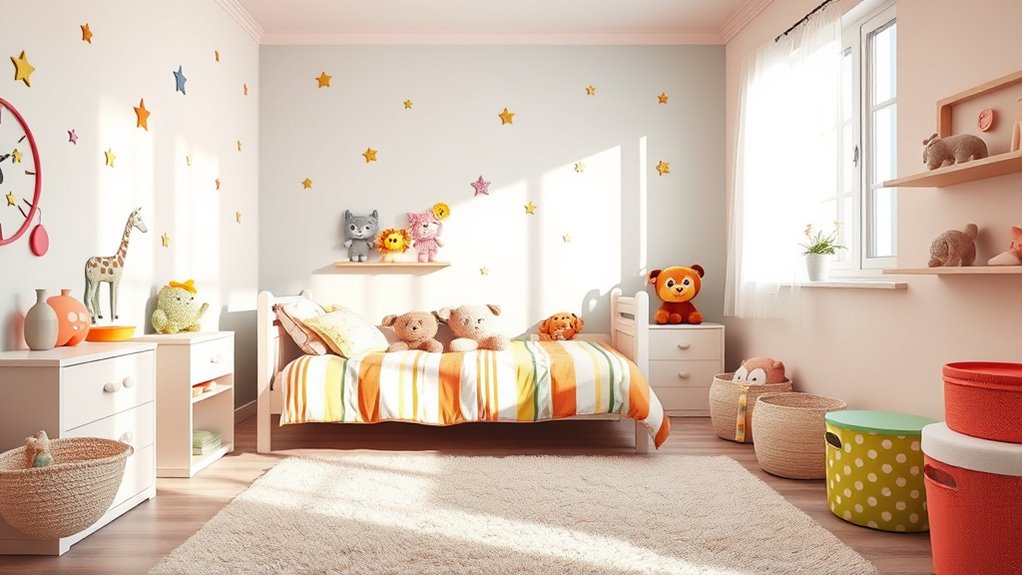

To create a safe and stylish kids’ room, prioritize furniture that’s secured and has rounded edges, keeping heavy pieces anchored and away from windows. Choose non-toxic paints and soft decor, avoiding small or fragile items that pose choking or injury risks. Manage cords and outlets with covers and shorteners, and keep spaces clutter-free with adjustable storage. By thoughtfully combining safety features with playful design, you’ll craft a cozy, secure space — and there’s more to discover to make it perfect.
Key Takeaways
- Choose furniture with rounded edges and secure heavy pieces to walls to prevent tipping.
- Opt for non-toxic paints, finishes, and soft, fabric-based decorations to ensure safety and style.
- Cover electrical outlets, use cord organizers, and keep cords out of reach to minimize electrical hazards.
- Use versatile, adjustable furniture and clear layouts that grow with your child and support safe exploration.
- Keep pathways clear, anchor furniture, and store hazardous items safely to create a safe and stylish space.

Extra Large & Super Safe Baby Corner Covers – 16 Pack Clear Corner Guards for Furniture, Super Stick, Effectively Prevent Baby from Sharp Edges, Easy Installation Child Set (Circular)
- Voted #1 by Parents: Lab-tested safety and impact absorption
- Pediatrician-Recommended: Meets US Child Safety Standards
- Safe for Pets: Tested for pet safety as well
As an affiliate, we earn on qualifying purchases.
As an affiliate, we earn on qualifying purchases.
Prioritizing Safety in Furniture Selection and Placement
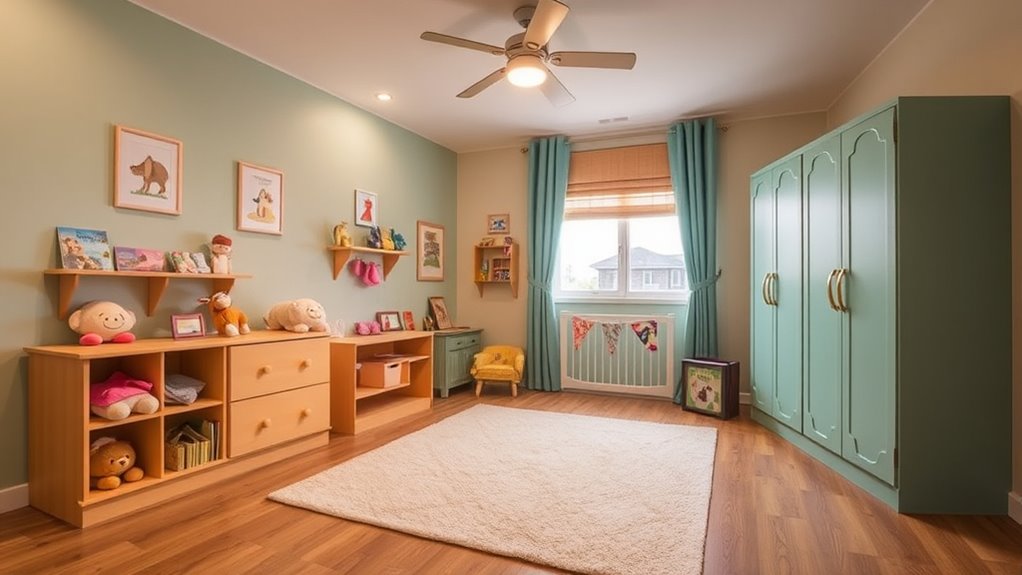
When choosing and positioning furniture in a kid-friendly space, safety should be your top priority. Secure heavy or tall furniture to the walls to prevent tipping over, especially in active rooms. Opt for pieces with smooth surfaces and rounded corners to reduce injury risks if children bump into them. Keep cribs, beds, and other furniture away from windows to avoid strangulation hazards from cords or blinds. Use corner guards on sharp edges where necessary, and select sturdy bookshelves that are securely fastened to the wall. Arranging furniture thoughtfully creates clear pathways, minimizing trip hazards. Always consider your child’s age and mobility, ensuring the layout supports safe exploration. Regularly check furniture for stability and wear, updating or repairing as needed to maintain a safe environment. Incorporating Child-friendly features like non-slip rugs and soft padding can further enhance safety and comfort in the room.
Choosing Non-Toxic Materials and Safe Decorations
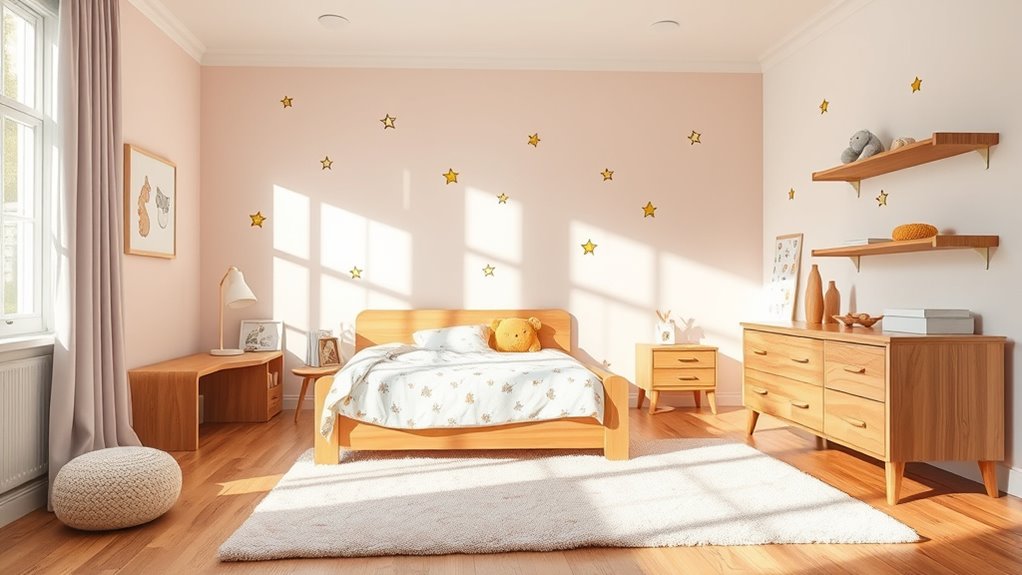
Choosing non-toxic materials and safe decorations guarantees your child’s environment remains healthy and free from harmful chemicals. Start by selecting low-VOC paints and finishes to reduce indoor air pollution. Avoid glass or fragile decorations that could break and cause injuries; instead, opt for soft plush or fabric items that are safe to touch and chew. Keep small, choking hazards like wax fruits or berries out of reach, and steer clear of traditional candles—battery-operated ones are a safer alternative. When decorating, choose items free from harsh chemicals or dyes, and ensure all materials are labeled non-toxic. By making these thoughtful choices, you create a safer, healthier space where your child can explore and grow without exposure to harmful substances.
Managing Electrical Cords and Outlet Safety
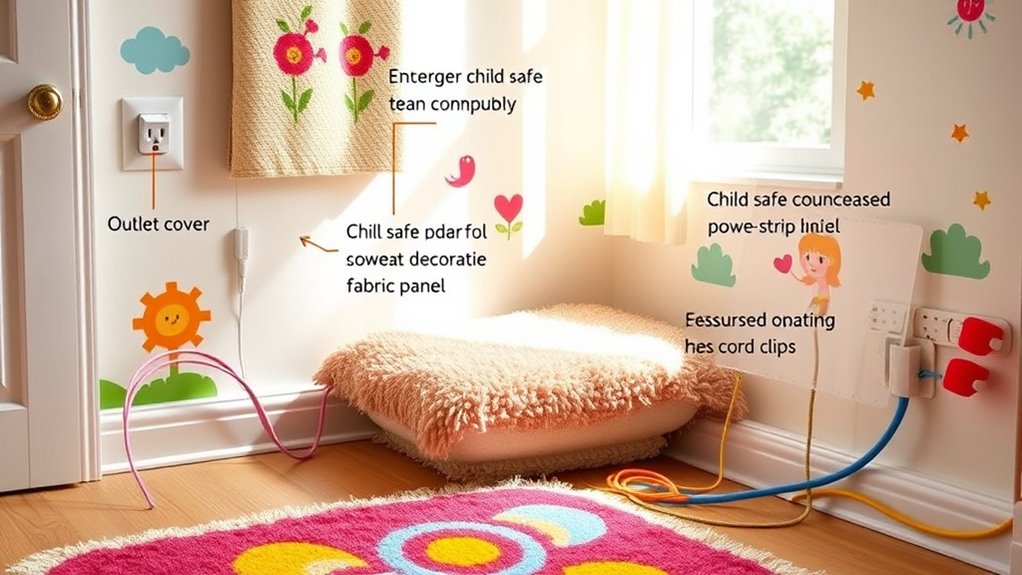
To keep your child safe from electrical hazards, it’s essential to manage cords and outlets carefully. Start by covering all unused outlets with safety caps or outlet covers to prevent shocks. Keep cords out of reach by using cord organizers or shorteners, and avoid leaving excess cord slack that children could pull or chew. Unplug devices when not in use and store cords securely to prevent accidental pulling. Never allow kids to play with electrical decorations, extension cords, or dangling cords near furniture. Be especially cautious with window covering cords—keep them out of children’s reach to prevent strangulation risks. Regularly inspect cords and outlets for damage, replacing or repairing any hazards immediately. Ensuring proper cord management can significantly reduce the risk of electrical accidents in your child’s room. These steps create a safer environment and minimize electrical risks in your child’s room.
Creating Age-Appropriate and Flexible Room Layouts
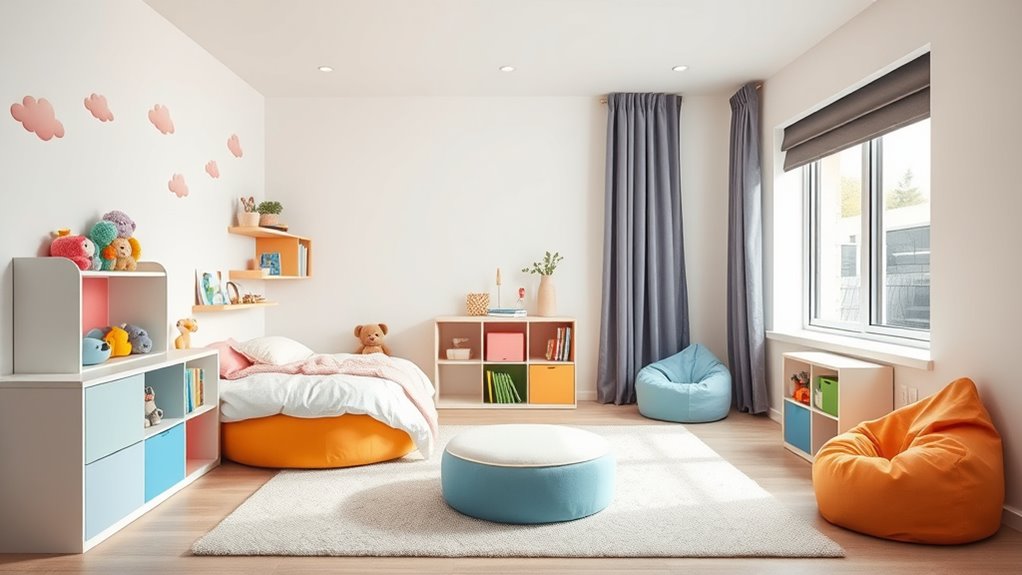
Creating a room that adapts to your child’s changing needs requires thoughtful planning and flexibility. Start by choosing versatile furniture pieces, such as beds that can convert from cribs to toddler beds or desks that grow with your child. Use adjustable storage solutions like open shelves or bins that can be reconfigured as needed. Keep the layout simple, with clear pathways to prevent accidents and make room for movement. Incorporate zones for sleeping, playing, and studying, allowing each area to evolve over time. Avoid clutter by selecting furniture that offers hidden storage. Regularly reassess the space to accommodate your child’s growth and interests, making adjustments that keep the room safe, functional, and inviting at every stage. Utilizing versatile furniture can further enhance the room’s adaptability to your child’s changing needs.
Organizing for Safety and Ease of Access
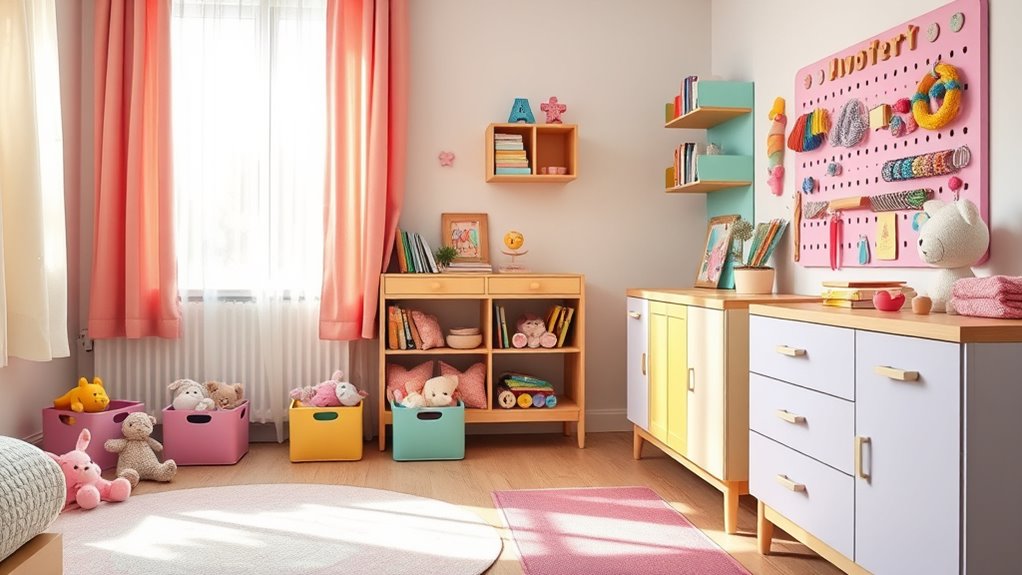
A well-organized space not only looks inviting but also keeps your child safe. Start by keeping pathways clear to prevent trips and falls. Use furniture that’s sturdy and anchored to the wall to avoid tipping hazards. Store frequently used items within your child’s reach, so they can access toys and essentials safely. Keep hazardous items like sharp tools, small objects, and cleaning supplies out of reach or behind child-proof locks. Manage cords with clips or shorteners, and always cover unused outlets with safety caps. Arrange furniture to ensure quick access in emergencies, like placing beds near the door. Regularly check for loose or damaged decor, and stay vigilant as your child grows and becomes more mobile. Clear organization supports safety without sacrificing style. Incorporating childproofing measures can further enhance safety and peace of mind in your child’s room.
Frequently Asked Questions
How Often Should I Reassess My Child’s Room for Potential Hazards?
You should reevaluate your child’s room monthly to catch new hazards as they grow and become more mobile. Every few weeks, check for loose furniture, damaged decor, or accessible hazards like cords and small objects. As your child ages, update safety measures accordingly. Regular inspections help prevent accidents and ensure the room remains a safe, stylish space that adapts to their changing needs.
What Are the Best Storage Solutions to Keep Toys and Decor Safe?
You should choose sturdy, closed storage options like toy chests with safety hinges, or bins with lids that prevent choking hazards. Use low shelves for easy access, and secure tall units to the wall to prevent tipping. Keep small, breakable, or sharp decor out of reach, and regularly check for loose or damaged items. Clear clutter, prioritize safety, and guarantee everything is stable and accessible for your child’s age.
How Can I Make Decor Appealing yet Safe for Toddlers?
To make decor appealing yet safe for toddlers, choose soft, plush items instead of small, hard decorations that could pose choking hazards. Use furniture with rounded edges and secure heavy pieces to the wall to prevent tipping. Opt for non-toxic paints and finishes, and keep cords and sharp objects out of reach. Incorporate bright colors and playful patterns to create a lively, inviting space that’s both stylish and secure for your little one.
Are There Specific Safety Standards for Furniture Anchoring?
Yes, there are specific safety standards for furniture anchoring. You should follow guidelines from organizations like the ASTM International and the Juvenile Products Manufacturers Association, which set testing and anchoring requirements. Make sure to utilize appropriate hardware and techniques for your furniture type. Regularly check that anchors remain secure and replace any worn or damaged hardware to guarantee ongoing safety. Proper anchoring reduces tipping risks and keeps your child’s space secure.
How Do I Balance Style and Safety With Themed Decor?
You weave style and safety like a tapestry, balancing themes with practicality. Choose decor that symbolizes adventure or imagination but has rounded edges, non-toxic finishes, and secure mounting. Incorporate playful patterns or motifs that align with the theme while ensuring furniture remains sturdy and free of choking hazards. Keep clutter minimal so your child’s environment feels both magical and safe, like a storybook come to life, where every element tells a purposeful, secure tale.
Conclusion
Imagine stepping into a child’s room where soft, colorful rugs invite little feet, and sturdy shelves keep toys neatly within reach. Safe, non-toxic paints brighten the walls, while rounded furniture prevents bumps. Every cord is tucked away, and outlets are covered, creating a worry-free space. With thoughtful design, you create a cozy sanctuary where your child can explore, learn, and dream safely—turning their room into a joyful, secure haven filled with endless possibilities.