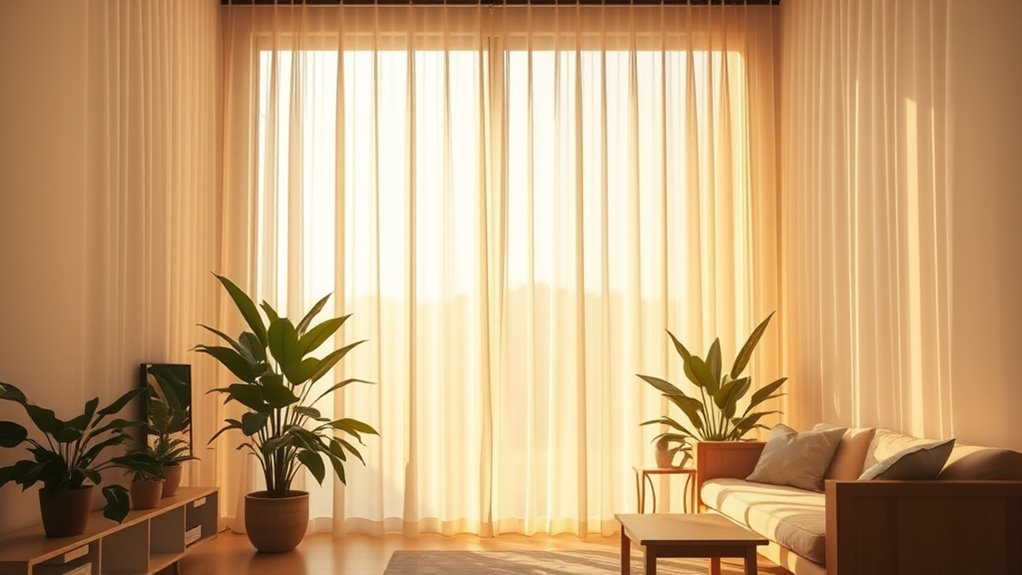

To support your well-being, adjust your lighting based on natural circadian rhythms. During the day, use bright, blue-enriched light (around 5000–6500K) to boost alertness and focus. In the evening, switch to warmer tones (2700–3000K) to promote relaxation and melatonin production. Avoid blue light close to bedtime. If you want to learn how different light wavelengths and temperatures impact your health, keep exploring this important topic.
Key Takeaways
- Bright, blue-enriched light (~5000–6500K) during the day supports alertness and aligns circadian rhythms.
- Warm, dim lighting (2700K–3000K) in the evening promotes melatonin production and prepares the body for sleep.
- Avoid blue light exposure at least three hours before bedtime to prevent circadian disruption.
- Use adjustable lighting systems to switch from energizing daytime to calming nighttime environments.
- Consistent lighting schedules with appropriate temperature changes reinforce natural circadian cycles and improve well-being.

hooga Circadian Rhythm Full Spectrum LED Light Bulb – 2700K, 2100K, 1400K, Flicker-Free, Blue Light Free Night Mode, 7W Energy Efficient Warm White for Sleep, Relaxation & Focus – 2 Pack
Circadian Rhythm Optimization – Features 2700K, 2100K, and 1400K settings to sync with your body’s natural cycles, supporting…
As an affiliate, we earn on qualifying purchases.
As an affiliate, we earn on qualifying purchases.
Understanding the Impact of Light Wavelengths on Our Internal Clocks
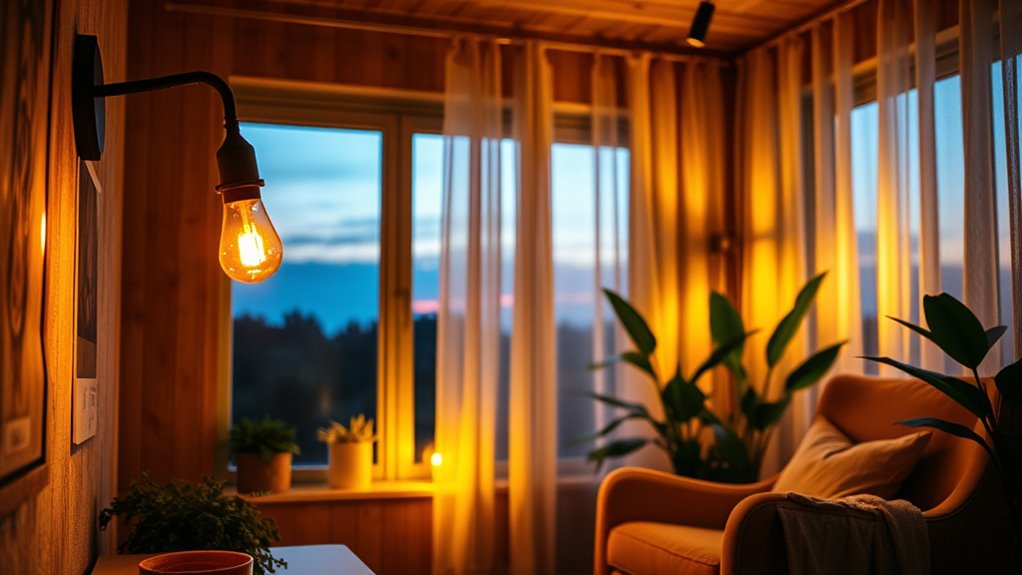
Light wavelengths play a essential role in regulating your internal biological clock, or circadian rhythm. When you’re exposed to specific wavelengths, your brain’s centers that control alertness, mood, and sleep respond accordingly. Blue light, around 480 nm, is especially influential because it activates melanopsin-containing retinal cells that signal the circadian system. Orange and yellow wavelengths, like those at sunrise and sunset, help reinforce natural rhythms by providing cues that align your internal clock with the environment. Your cone photoreceptors also respond to both short and long wavelengths, contributing to circadian regulation. Understanding how these different wavelengths affect your body helps you make smarter choices about light exposure, especially during evening hours, to support your sleep and overall well-being. Understanding light’s impact on circadian regulation can help optimize your exposure and improve your health.

livho Gaming Blue Light Blocking Glasses for Better Sleep, Premium Night Driving, Computer Blockers for Man & Woman
REDUCE EYE STRAIN: These glasses for computer eye strain limit your blue-light exposure and alleviate eye strain, headaches,…
As an affiliate, we earn on qualifying purchases.
As an affiliate, we earn on qualifying purchases.
Timing Light Exposure to Support Natural Circadian Rhythms
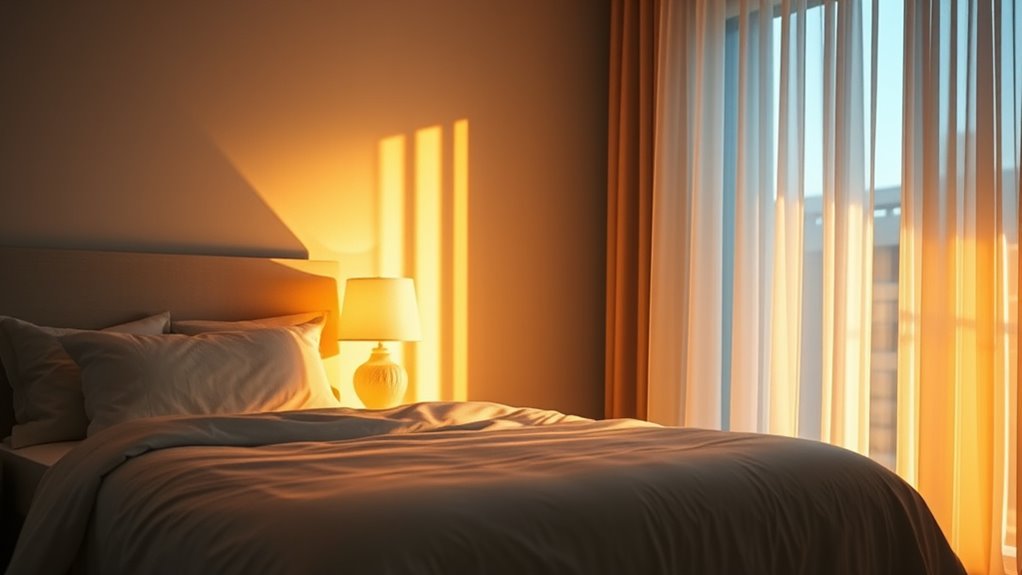
Timing your light exposure plays a pivotal role in aligning your internal clock with natural day-night cycles. When you expose yourself to bright, blue-enriched light in the morning, you can advance your circadian phase, helping you wake up feeling refreshed. Conversely, avoiding blue light in the evening prevents delays in sleep onset. To optimize your rhythm, consider these strategies:
- Get bright morning light to boost alertness and set your internal clock.
- Limit blue light exposure after sunset to support melatonin production and sleep quality.
- Use dim, warm lighting at night to minimize circadian disruption and promote restful sleep.
- Incorporating light temperature adjustments based on the time of day can further enhance your circadian alignment.

Consciot A19 LED Light Bulbs Dimmable,60W Equivalent,3000K Warm White,9W 800 Lumens,E26 Standard Base,UL Listed,Lighting for Bedroom Living Room Home Office,5 Packs
【Dimmable & Versatile】Smoothly adjust brightness with TRIAC dimmer compatibility. Tailor your lighting from soft to bright, ideal for…
As an affiliate, we earn on qualifying purchases.
As an affiliate, we earn on qualifying purchases.
Designing Lighting Environments to Enhance Mood and Productivity
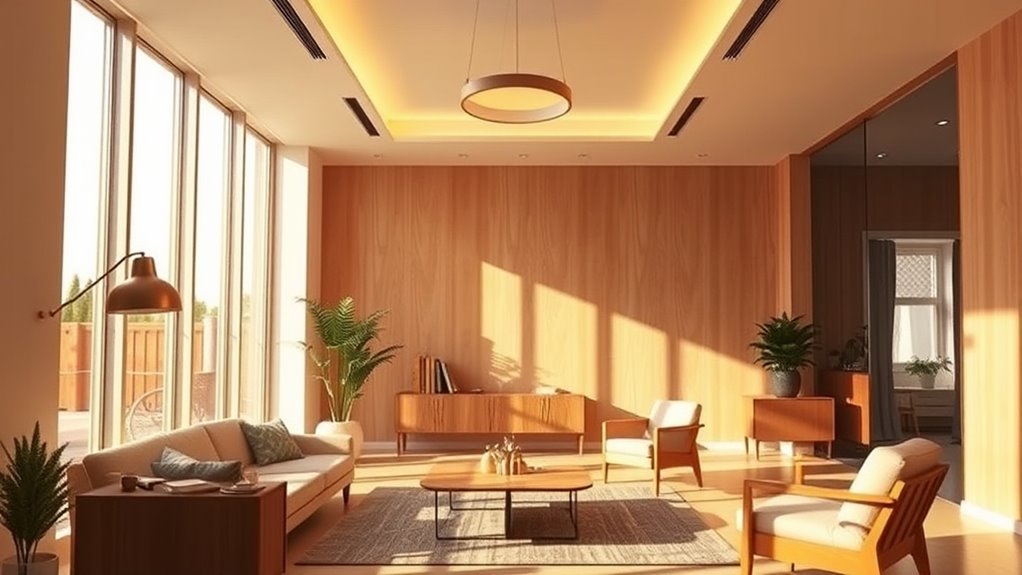
Creating an effective lighting environment can greatly boost your mood and productivity by aligning light spectra and intensity with your daily activities. During work, use bright, white or natural daylight-inspired lighting to enhance alertness and focus. Avoid overly dim or yellow-toned lights that can cause fatigue. Incorporate blue-enriched light during the day to stimulate the circadian system, promoting wakefulness and cognitive function. In contrast, reduce blue light exposure in the evening to prevent disruptions in sleep and mood. Consider adjustable lighting systems that adapt to different tasks, allowing you to switch between energizing and calming settings. Proper lighting design also involves balancing brightness and color temperature, creating an environment that supports both your productivity during the day and your relaxation at night. Using lighting solutions that enhance comfort can also prolong the lifespan of your fixtures and improve overall well-being.

Verilux HappyLight Lumi Plus – Light Therapy Lamp with 10,000 Lux, UV-Free, LED Bright White Light with Adjustable Brightness, Countdown Timer, & Detachable Stand – Boost Mood, Sleep, and Focus
Bright Light Therapy: HappyLight Lumi Plus delivers up to 10,000 Lux of UV-Free, LED, full-spectrum light for effective,…
As an affiliate, we earn on qualifying purchases.
As an affiliate, we earn on qualifying purchases.
The Role of Light Temperature During Different Times of Day
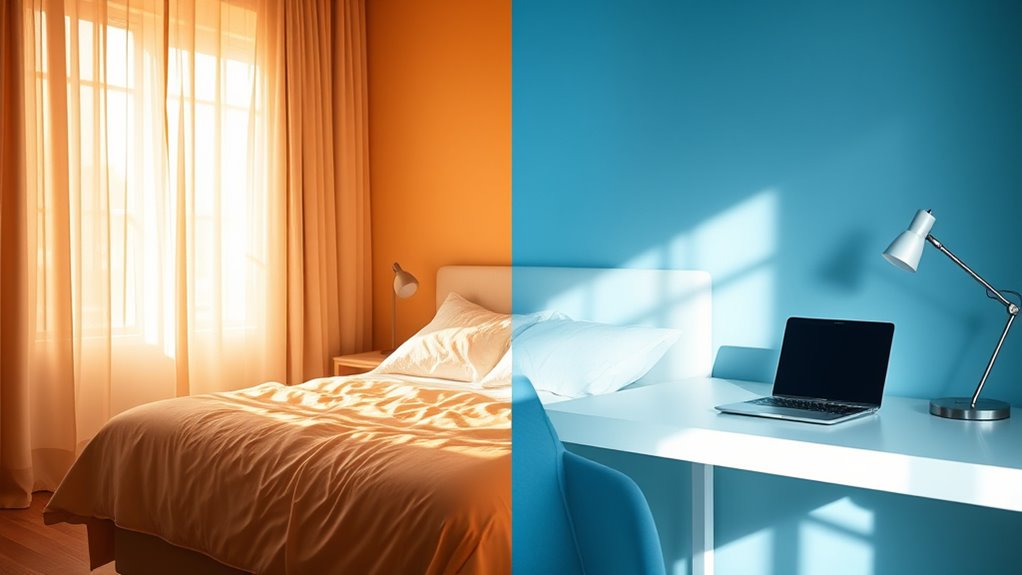
The color temperature of your lighting plays a significant role in shaping your mood and circadian rhythms throughout the day. In the morning, warm tones like soft yellows or oranges mimic sunrise, signaling your body to wake up and boosting alertness. During midday, cooler, bluish-white light (around 5000–6500K) energizes you, helping maintain focus. In the evening, shift to warmer hues—reds and deep oranges—to encourage relaxation and prepare your body for sleep. Consider these effects:
Adjust your lighting temperature throughout the day to boost alertness in the morning, focus at midday, and relax in the evening.
- Bright, cool light in the morning energizes and sharpens your focus.
- Natural, warm tones in the evening promote calmness and melatonin production.
- Dimming and warming your lights before bedtime reduces circadian disruption.
- Understanding personality traits can help tailor lighting choices to individual preferences and needs.
Adjusting light temperature according to the time of day supports your natural rhythms and well-being.
Practical Strategies for Circadian-Friendly Lighting at Home and Work
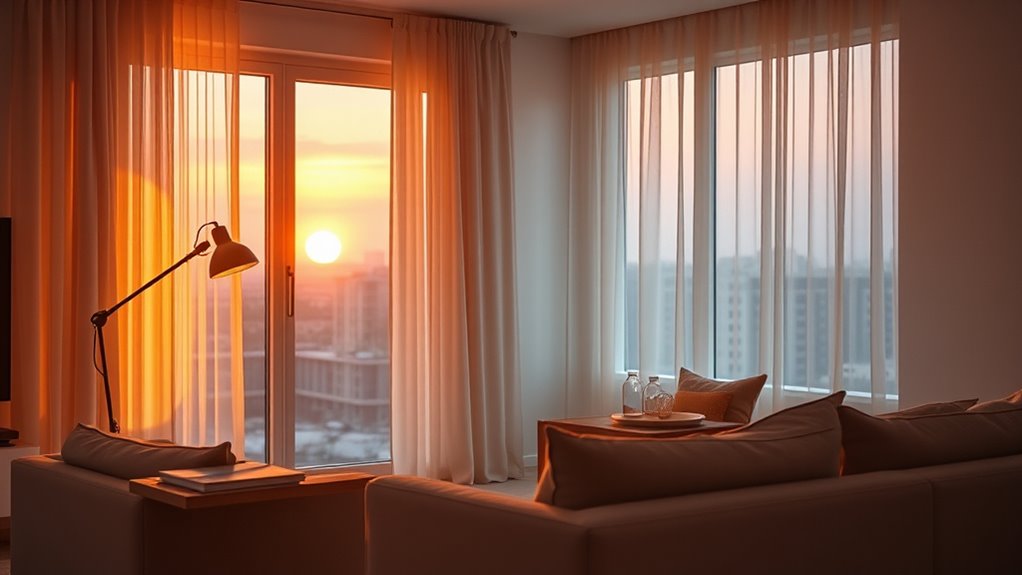
To support your circadian health with lighting, you should tailor your home and work environments to mimic natural light patterns. During the day, opt for bright, blue-enriched light to boost alertness and mood. Use daylight or high-quality LED bulbs with a color temperature around 5000K to 6500K. In the evening, switch to warmer tones (around 2700K to 3000K) to promote relaxation and prepare your body for sleep. Avoid blue light exposure at least three hours before bedtime by dimming lights or using blue light filters on screens. During night shifts or late-night work, incorporate blue-enriched lighting strategically to maintain alertness without disrupting your circadian rhythm. Consistent lighting schedules help reinforce natural rhythms, supporting better sleep and overall well-being. Understanding light temperature can help optimize your lighting choices for circadian health.
Frequently Asked Questions
How Does Light Color Influence Mood Beyond Circadian Regulation?
You can influence your mood with light color by choosing warmer tones like oranges and yellows, which promote relaxation and comfort, or cooler tones like blues, which boost alertness and energy. Bright, blue-enriched light can enhance focus and motivation, while softer, warmer lighting helps reduce stress and anxiety. By adjusting light color in your environment, you create a mood that supports your activities and emotional well-being throughout the day.
Can Individual Differences Affect Sensitivity to Different Light Wavelengths?
If you notice some nights you sleep better with dim, warm light while others you’re alert under bright blue light, individual differences matter. Your genetics, age, and even your sleep habits influence your sensitivity to specific wavelengths. For example, some people’s retinal cells respond more strongly to blue light, making them more prone to circadian disruption. Recognizing these differences helps you tailor lighting to support your unique well-being and sleep quality.
What Are the Best Lighting Practices for Shift Workers’ Health?
As a shift worker, you should use bright, blue-enriched light during your working hours to boost alertness and realign your circadian rhythm. Avoid blue light exposure 3 hours before sleep to prevent disruption. During your rest period, dim or switch to warm, low-intensity lighting to support melatonin production. Consistently following these practices helps protect your sleep quality and overall health.
How Quickly Can Lighting Changes Improve Sleep Quality?
Lighting changes can improve your sleep quality within days, especially if you reduce blue light exposure in the evening and increase bright, natural light during the day. By timing light exposure appropriately, you can shift your circadian rhythm, making it easier to fall asleep and wake feeling rested. Consistently practicing circadian-friendly lighting habits may show noticeable improvements in sleep quality in as little as 2 to 3 days.
Are There Risks Associated With Using Blue Light Filters or Glasses?
Using blue light filters or glasses generally reduces melatonin suppression and minimizes circadian disruption, making them beneficial, especially before sleep. However, if you overuse them during daytime, they might decrease alertness and impair productivity. Also, some filters may reduce overall light quality, affecting visual clarity. To stay safe, use them strategically—primarily in the evening—and make certain they don’t overly block natural or necessary light during daytime activities.
Conclusion
By thoughtfully aligning your lighting choices with your natural rhythms, you gently nurture your well-being and elevate daily comfort. Embracing the subtle nuances of light temperature and timing allows your environment to subtly support your mood and productivity. With mindful adjustments, you create a harmonious space that softly encourages balance and energy. In doing so, you subtly invite a sense of harmony, making each day feel more naturally attuned to your inner rhythms.