
To design stylish, functional outdoor living spaces, focus on blending indoor comfort with outdoor appeal. Use versatile furniture, layered lighting, and durable surfaces to maximize space. Incorporate privacy solutions like layered fencing, plants, and trellises, while adding eco-friendly plants and sustainable materials for a greener touch. Innovative techniques such as permeable pavers and natural stone elevate your design. Keep these ideas in mind to create a welcoming retreat that reflects your style—more tips to inspire await as you continue.
Key Takeaways
- Maximize functionality with versatile furniture and multi-purpose zones for dining, lounging, and entertaining.
- Incorporate seamless transitions using sliding pocket doors and layered lighting to blend indoor and outdoor spaces.
- Enhance privacy with layered fencing, strategic plant placement, and natural screening elements.
- Use eco-friendly materials like native plants, permeable pavers, and reclaimed wood to promote sustainability.
- Add ambiance through fire features, shaded areas, and thoughtful hardscaping to create inviting outdoor retreats.
As an affiliate, we earn on qualifying purchases.
Popular Trends in Balcony and Patio Design

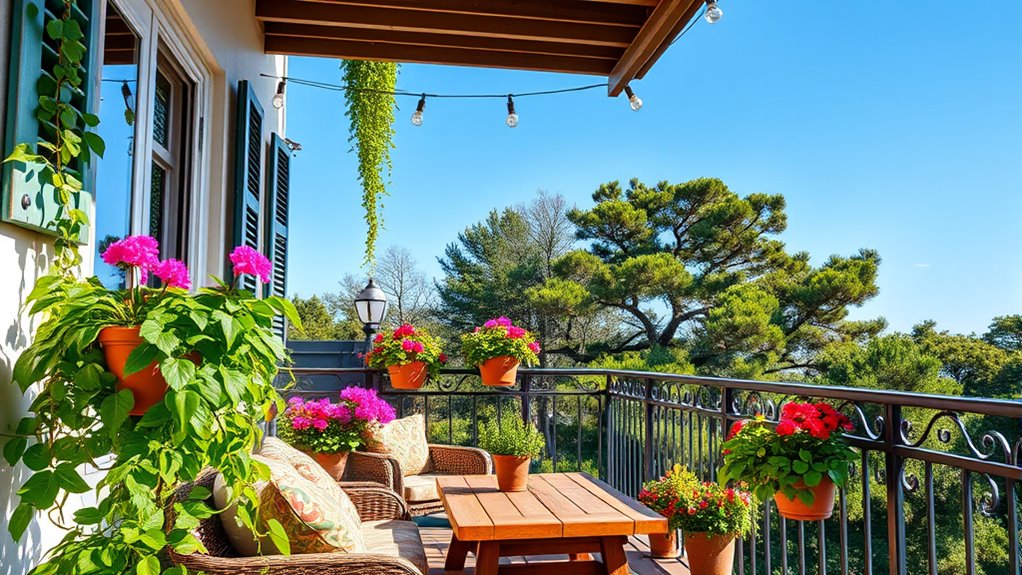
Balcony and patio designs are evolving rapidly to meet the modern homeowner’s desire for versatile, stylish outdoor spaces. You’ll notice a shift toward larger, more functional areas that blend indoor comfort with outdoor appeal. Sliding pocket doors are popular, creating seamless passages and maximizing natural light. Fire features like fire pits and tables add ambiance and encourage social gatherings. Privacy remains a priority, with layered planting, fencing, and strategic layouts creating secluded retreats. Eco-friendly materials and sustainable landscaping are gaining traction, emphasizing water conservation and natural aesthetics. You’re also seeing an increase in integrated technology, such as outdoor lighting, heaters, and smart controls, enhancing usability year-round. Creating personalized outdoor environments is now a key focus, enabling homeowners to tailor their spaces to their unique lifestyles and preferences.
Key Elements for Functional Outdoor Spaces
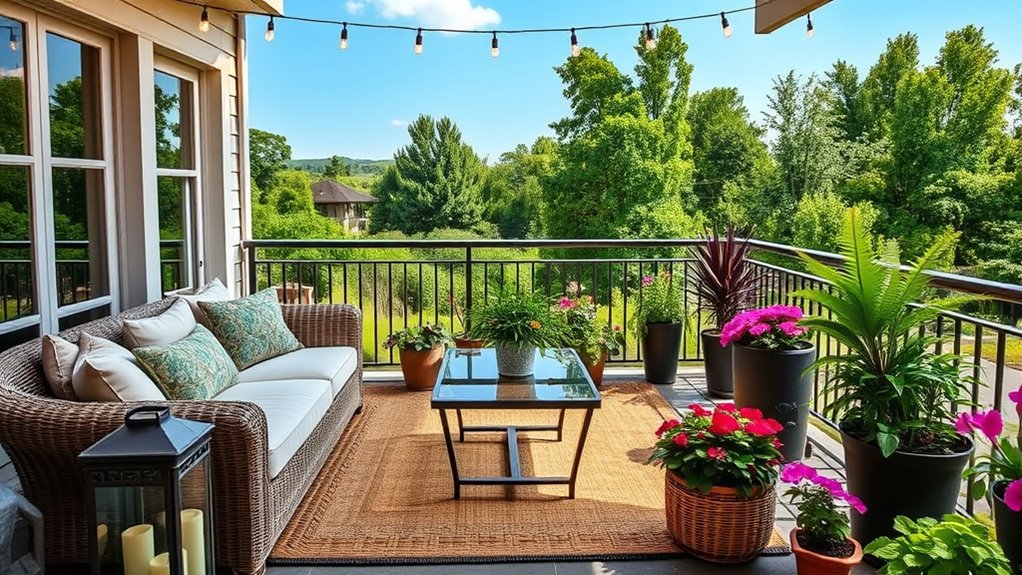
Creating a truly functional outdoor space involves carefully selecting key elements that enhance usability, comfort, and aesthetic appeal. First, prioritize versatile furniture that can accommodate various activities without clutter. Incorporate shade solutions like umbrellas or pergolas to extend usability year-round. Lighting is essential; use layered lighting to create ambiance and guarantee safety after dark. Include durable surfaces such as stone, concrete, or composite decking that withstand weather and foot traffic. Consider integrating outdoor kitchens or bar areas for convenience during gatherings. Thoughtful placement of plants adds privacy, reduces noise, and enhances beauty. Using skincare patches can also help maintain healthy skin despite outdoor exposure. Ultimately, ensure there’s enough space for movement and social interaction. By focusing on these elements, your outdoor space becomes more inviting, functional, and aligned with your lifestyle.
Enhancing Privacy and Serenity Outdoors
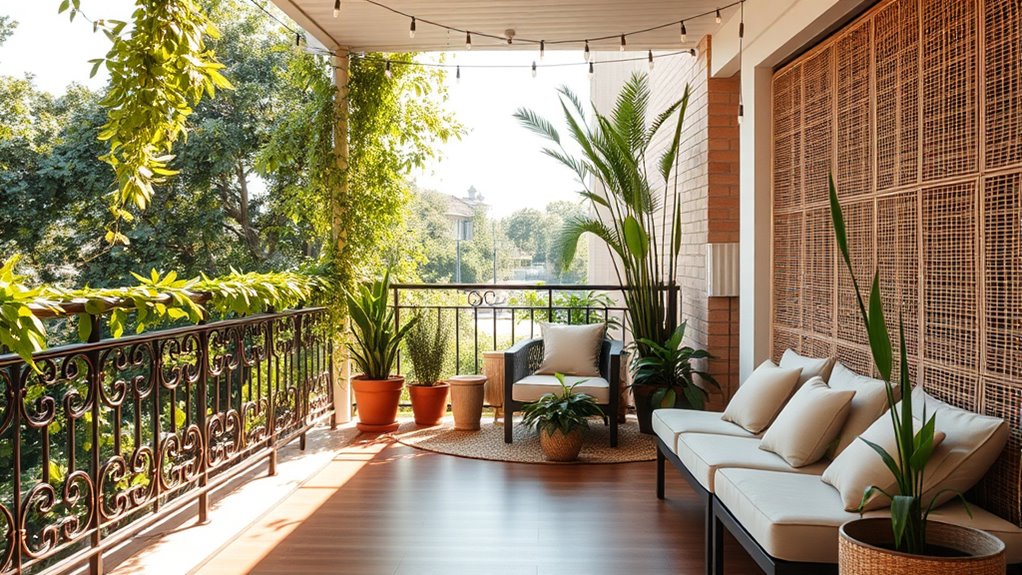
Enhancing privacy and serenity outdoors transforms your backyard into a personal retreat where you can unwind without distractions. To do this, start by adding layered fencing with wood, composite, or mixed materials, creating a visual barrier that blocks noise and prying eyes. Incorporate tall shrubs, trees, and groundcovers to form natural enclosures and soften boundaries. Use berms or angled seating areas to carve out secluded zones, perfect for reading or relaxing. Framed views and strategic plant placement help direct attention inward and eliminate unwanted sights. Installing privacy screens or trellises with climbing plants adds both aesthetic appeal and seclusion. These elements work together to create a peaceful outdoor space tailored for quiet moments and mental refreshment.
Sustainable and Eco-Friendly Landscaping Ideas
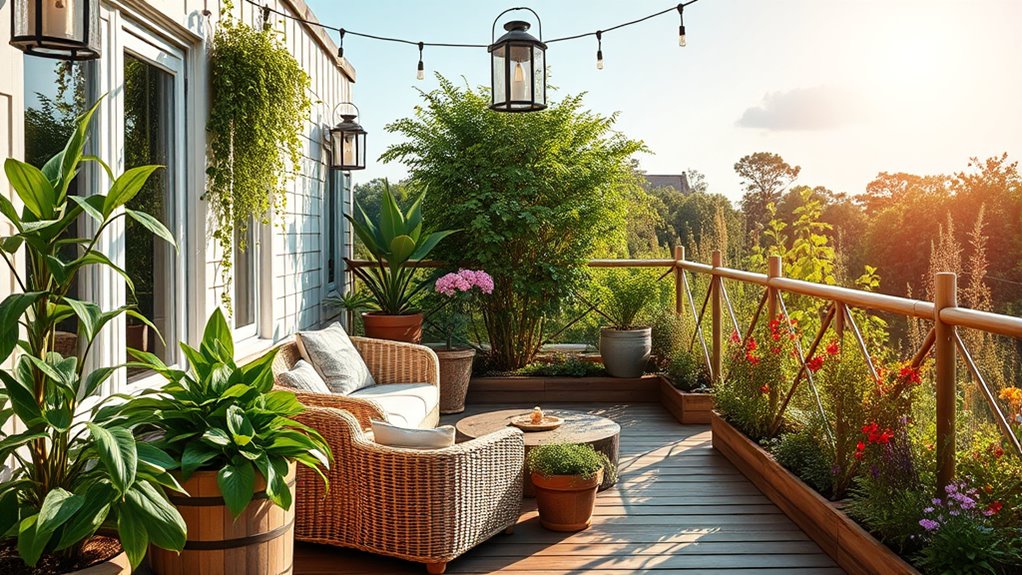
Adopting eco-friendly landscaping practices not only benefits the environment but also reduces your outdoor maintenance and water costs. You can start by incorporating native, drought-tolerant plants like purple coneflowers and little bluestem, which thrive with less water. Consider installing rain gardens with native species to absorb runoff and improve soil health. Using permeable pavers and reclaimed natural stone for patios and walkways helps manage stormwater and reduces environmental impact. Additionally, replacing traditional lawns with groundcovers like clover or ornamental grasses lowers water and fertilizer needs. Incorporating garden design principles that emphasize harmony with the natural landscape further enhances sustainability. These sustainable choices create a beautiful, low-maintenance landscape that supports local ecosystems and saves you money in the long run.
Innovative Materials and Hardscaping Techniques

Innovative materials and hardscaping techniques are transforming outdoor spaces by combining durability with visual appeal. You can now select permeable pavers that support stormwater absorption, helping prevent flooding while adding texture and color to your patio. Blended textures and soft tones create harmonious landscapes that blend seamlessly with natural surroundings. Reclaimed wood and composite materials offer eco-friendly options that resist weathering and require less maintenance. Sustainable options like natural stone and permeable pavers not only enhance aesthetics but also reduce environmental impact. Trustworthy brands and reputable suppliers ensure the quality and authenticity of these materials. Outdoor idea centers and catalogs make it easier to find inspiration and material samples for your project. These advancements allow you to craft outdoor areas that are both beautiful and resilient, elevating your space’s functionality and style while prioritizing sustainability.
Frequently Asked Questions
What Are the Best Plants for Year-Round Balcony Privacy?
You should choose evergreen plants like boxwood, holly, or arborvitae for year-round balcony privacy. They stay lush and dense throughout the year, creating a natural barrier. Consider tall grasses like pampas or bamboo for quick coverage and a modern look. Mix in potted shrubs and climbing vines like ivy or clematis to enhance privacy and add greenery. Regular trimming keeps your privacy screen healthy, vibrant, and effective all year long.
How Can I Incorporate Smart Technology Into Small Outdoor Spaces?
You can incorporate smart technology into your small outdoor space by installing weather-resistant smart lighting that adjusts based on the time or mood, adding smart speakers for music and voice control, and using automated irrigation systems to keep plants healthy. Consider adding smart screens or projectors for outdoor entertainment, and install sensors or cameras for security. These tech upgrades make your space more functional, comfortable, and enjoyable, even in limited areas.
What Safety Considerations Are Important for Rooftop Patios?
You should prioritize safety by installing sturdy, code-compliant railings that can withstand weather and weight. Make certain the structure is reinforced to handle furniture and foot traffic, and use non-slip flooring to prevent falls. Regularly inspect for damage or wear, and keep load limits in mind. Consider adding lighting for visibility at night and secure furniture to avoid accidents. These steps help create a safe, enjoyable rooftop patio experience.
How Do I Choose Eco-Friendly Materials for Outdoor Furniture?
When choosing eco-friendly outdoor furniture, look for pieces made from sustainable materials like reclaimed wood, recycled metal, or durable, recycled plastics. Avoid toxic finishes and opt for natural, non-toxic sealants. Consider furniture that’s built to last, reducing waste over time. Check for certifications like FSC or GreenGuard to guarantee environmentally responsible sourcing. By selecting these materials, you create a stylish, sustainable outdoor space that minimizes environmental impact.
What Design Tips Maximize Space in Compact Balcony Areas?
You can maximize space on a compact balcony by using multi-functional furniture, like a fold-down table and stackable chairs. Imagine a small balcony where a built-in bench with storage transforms into seating and a spot for plants. Keep it simple with vertical planters and wall-mounted lighting to free up floor space. These tips create a cozy, functional outdoor area that feels larger and more inviting.
Conclusion
Now that you know the secrets to stunning outdoor spaces, it’s your turn to transform your balcony or patio into a perfect paradise. Embrace elegance, explore eco-friendly ideas, and experiment with inventive materials. With a dash of dedication and a dash of daring, you can craft a mesmerizing, cozy corner that’s both functional and fabulous. So, seize the space, stir your creativity, and let your outdoor oasis bloom with beauty and brilliance!