Maximizing storage and functionality in small spaces means thinking vertically and creatively. Use wall-mounted shelves, multi-purpose furniture, and hidden compartments to free up floor space. Opt for eco-friendly, upcycled materials and lightweight modular units to stay sustainable. Smart organization techniques, like zones and accessible placement, make everything easy to find. Incorporate technology for efficiency, and plan for future growth. Keep exploring to discover even smarter ways to optimize your cozy space.

Get travel and outdoor gear delivered free with Prime
- Fast, free delivery on millions of items
- Prime Video, Amazon Music and more included
- Member-only deals all year
Key Takeaways
- Utilize vertical storage like wall-mounted shelves and hanging organizers to maximize limited floor space.
- Incorporate multi-purpose furniture with built-in storage, such as beds and ottomans, to save space and enhance functionality.
- Transform hidden areas like under-stair spaces or behind doors into efficient storage zones.
- Opt for eco-friendly, upcycled, and modular furniture to improve sustainability while optimizing space.
- Use smart technology and zoning techniques to improve accessibility, inventory management, and overall organization.
Understanding Small Space Challenges and Opportunities

Understanding small space challenges and opportunities begins with recognizing the limited footprint most environments offer. You’ll find that every inch counts, making efficient organization essential. Small spaces often mean sacrificing storage or functionality, but they also challenge you to think creatively. Vertical and hidden storage options become valuable tools to maximize capacity without cluttering. Downsizing or living in compact environments demands prioritizing essentials and embracing minimalism. At the same time, small spaces offer opportunities for innovative solutions like multi-purpose furniture and smart layout planning. Being mindful of potential storage limitations helps inform smarter design decisions. By understanding these constraints and possibilities, you can develop strategies that optimize your space. The goal is to create a functional and comfortable environment where every item has a purpose and nothing feels cramped.
Vertical and Multi-Functional Storage Techniques
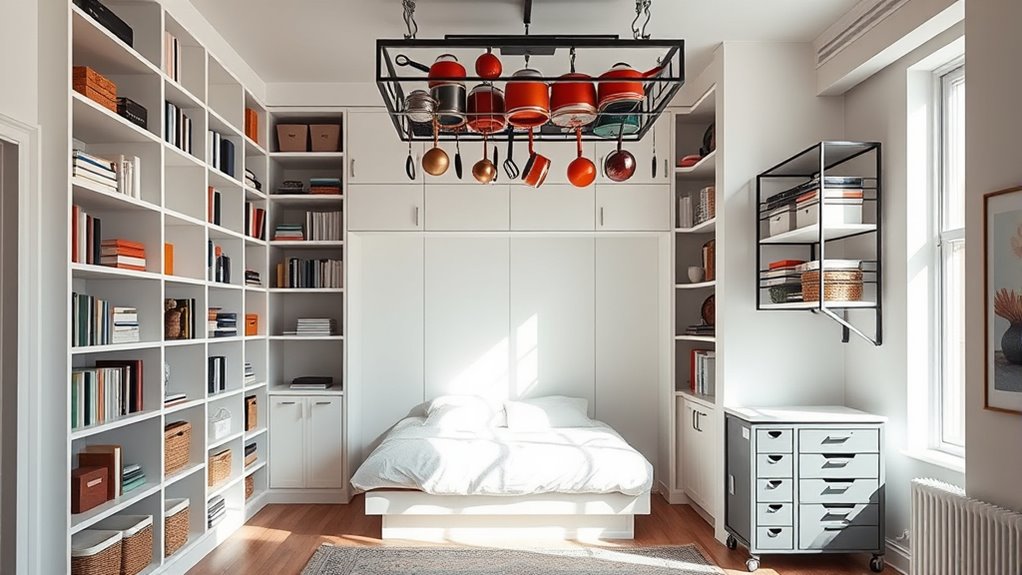
Maximizing limited space often depends on smart vertical and multi-functional storage solutions that make every inch count. You can utilize wall-mounted shelves to free up floor space and keep essentials within reach. Hanging racks and over-the-door organizers add storage without cluttering your room. Furniture with built-in compartments, like storage ottomans or beds with drawers, serve dual purposes, saving space and enhancing functionality. Additionally, incorporating elements like vintage decor can add character without sacrificing practicality. Here are three ways to optimize your space:
Maximize space with vertical shelves, multi-purpose furniture, and under-stair storage solutions.
- Install vertical shelving units to maximize wall height.
- Use multi-purpose furniture that combines seating, storage, and surface areas.
- Utilize under-stair and under-bed spaces with custom-built or modular solutions.
Creative Use of Hidden and Underutilized Areas

Hidden and underutilized areas in your home hold untapped potential for extra storage, especially when space is limited. You can turn spaces like behind doors, under stairs, or in alcoves into smart storage solutions. Installing hooks or racks on the backs of doors creates instant spots for coats, shoes, or cleaning supplies. Under-stair areas can house pull-out drawers or custom cabinetry, transforming dead space into functional storage. Ceiling-mounted shelves or hanging baskets are great for storing seasonal items or seldom-used belongings. Hollow wall sections or built-in niches can hide clutter while keeping essentials accessible. Even small gaps around windows or vents can be optimized with slim storage units. Additionally, utilizing self watering plant pots in your interior decor can help keep your plants healthy with minimal maintenance, freeing up space for other storage needs. Creative use of these often-overlooked spaces maximizes your square footage without sacrificing style or convenience.
Incorporating Sustainable Storage Solutions
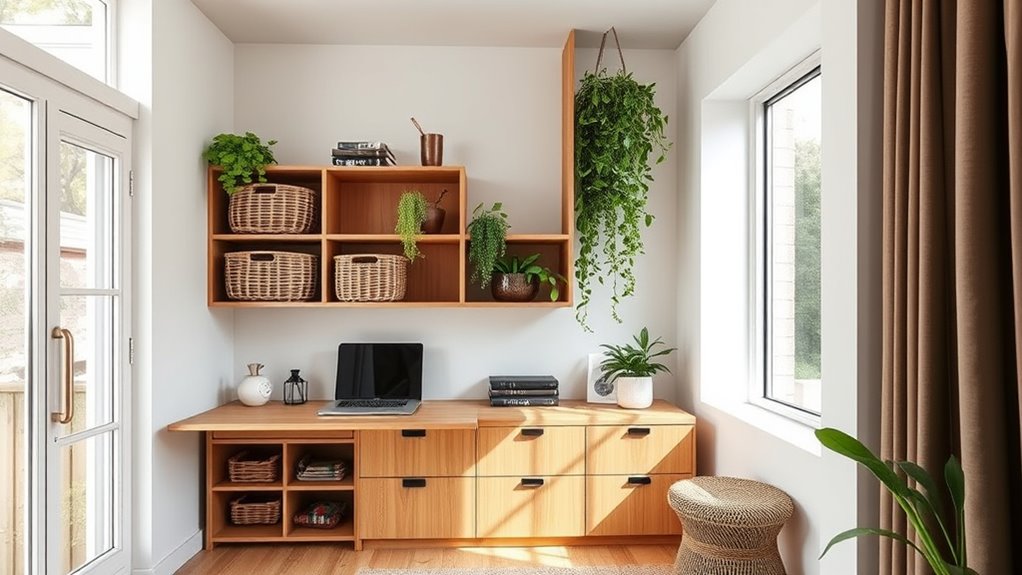
Incorporating sustainable storage solutions not only helps reduce your environmental impact but also promotes smarter use of limited space. By choosing eco-friendly materials and techniques, you can create functional storage that’s both green and space-efficient. Here are three ideas to get started:
Eco-friendly storage ideas boost space efficiency and reduce environmental impact seamlessly.
- Use upcycled furniture—convert old cabinets or shelves into new storage pieces, cutting waste and costs.
- Opt for sustainable materials like bamboo or reclaimed wood for shelving and containers, reducing your carbon footprint.
- Embrace minimalism by decluttering regularly, which lessens the need for extra storage and promotes eco-conscious living.
- Additionally, understanding currency fluctuations can help you make smarter financial decisions when managing your resources across borders, especially if you are involved in international trade or travel.
These strategies help you maximize your space while supporting environmental sustainability, making your small space both practical and eco-friendly.
Technological Tools to Enhance Space Management

You can streamline your space management by using smart inventory tracking systems that keep your items organized and easily accessible. Digital access control adds security and convenience, allowing you to manage entry remotely and reduce unauthorized access. These tools help you maximize small spaces efficiently while enhancing security and operational flow. Incorporating anti-aging effects from items like eye patches into your routine can also contribute to a more youthful and refreshed appearance, making your space feel more vibrant and well-maintained.
Smart Inventory Tracking
Smart inventory tracking tools are transforming how small storage spaces are managed by providing real-time visibility and precise control over stored items. With these tools, you can quickly locate, count, and monitor inventory, reducing waste and improving efficiency. You’ll know exactly what’s stored and where, helping you optimize space and avoid duplicates. Additionally, understanding the importance of color accuracy in projectors can help you select the right visual tools for clear and vibrant displays. Consider these options: 1. Barcode or QR code systems allow quick scanning and automatic updates of your inventory list. 2. Cloud-based software provides instant access to your inventory data from anywhere, ensuring seamless management. 3. Automated alerts notify you when stock levels are low or items are misplaced, preventing shortages or loss. Using these tools, you streamline space management, save time, and maximize storage capacity in even the smallest areas.
Digital Access Control
Digital access control systems are revolutionizing how small storage spaces are managed by providing secure, convenient, and flexible entry management. With digital locks, you can grant or revoke access instantly, improving security and reducing key management hassles. These systems often integrate with mobile apps, allowing remote entry, activity logs, and user-specific permissions. This technological advancement aligns with ongoing efforts to enhance AI security and safety measures. It also allows for better control over who enters your space and when.
Designing for Flexibility and Future Growth
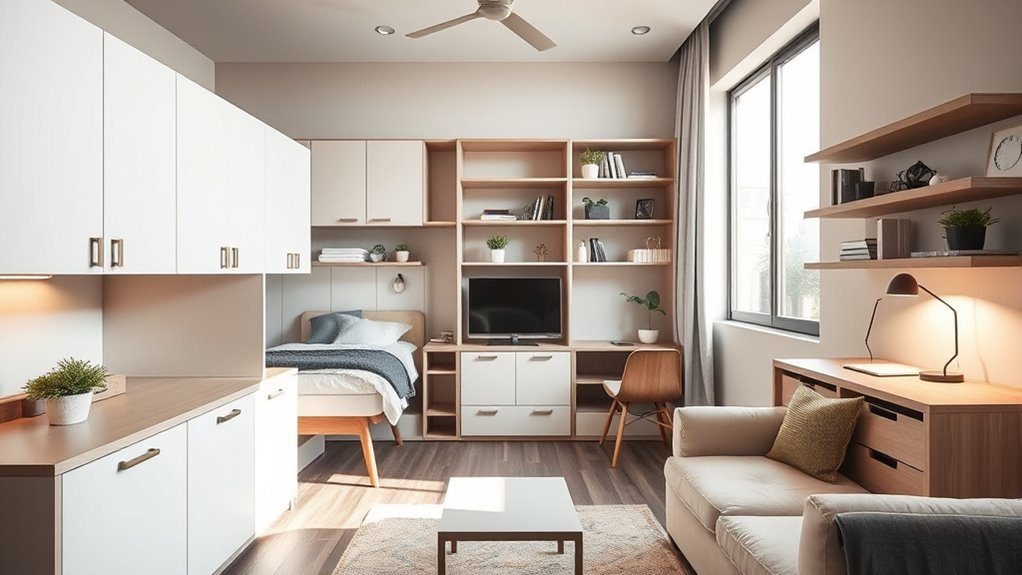
Designing storage solutions with flexibility and future growth in mind guarantees that small spaces can adapt to changing needs and evolving lifestyles. You want your storage to grow with you, not limit you. To achieve this, consider these strategies:
Flexible storage designs ensure small spaces adapt and grow with your changing needs.
- Use modular furniture that can be reconfigured or expanded as your needs change.
- Incorporate adjustable shelving and dividers to easily customize space.
- Plan for vertical storage, including ceiling-mounted racks or wall-mounted solutions, to maximize capacity without cluttering the floor.
- Understanding family dynamics can help tailor storage solutions that accommodate the needs of all household members over time.
Selecting Environmentally Friendly Materials and Practices
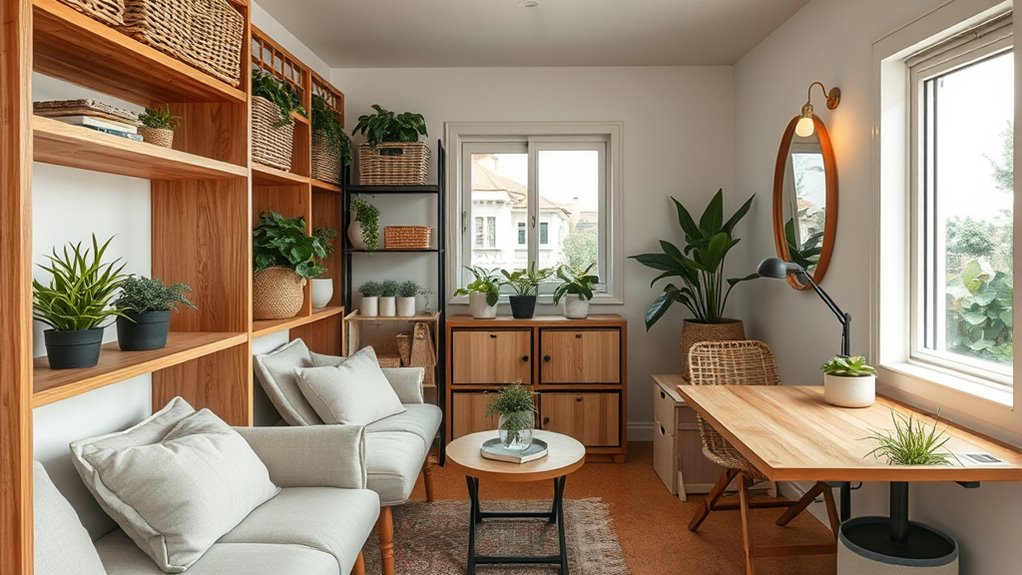
When choosing materials for your small storage space, opt for eco-friendly options like sustainably sourced wood or bamboo to reduce environmental impact. Incorporating sustainable design principles, such as modular and lightweight units, helps you maximize space while being environmentally responsible. Using environmentally friendly toilets and other water-efficient fixtures can further support sustainable practices in your home. By making conscious material and design choices, you can create functional storage that supports both your needs and the planet.
Eco-Friendly Material Choices
Have you ever contemplated how the materials you choose for storage solutions can impact the environment? Opting for eco-friendly materials is a smart way to reduce your carbon footprint. Here are three options to consider:
- Sustainably Sourced Wood – Use wood certified by FSC or PEFC to ensure responsible harvesting.
- Bamboo – A fast-growing, renewable resource that adds durability and style to your storage.
- Recycled Materials – Repurpose or choose furniture made from reclaimed wood, metal, or plastic to minimize waste.
Sustainable Storage Design
Ever considered how choosing eco-friendly materials can transform your storage solutions into sustainable practices? By selecting sustainably sourced wood, bamboo, or recycled materials, you reduce environmental impact and create durable, stylish storage options. Opt for modular, lightweight units that are easy to assemble and disassemble, promoting reuse and adaptability. Incorporate energy-efficient features like LED lighting to cut down on electricity use. Practice minimalism by decluttering and only acquiring what you truly need, reducing waste. Upcycling old furniture into storage pieces not only gives new life to materials but also minimizes landfill waste. When designing your space, prioritize eco-conscious practices that support conservation and reduce your carbon footprint, making your storage solutions both functional and environmentally responsible. Sound Recording Techniques
Balancing Accessibility With Capacity Optimization
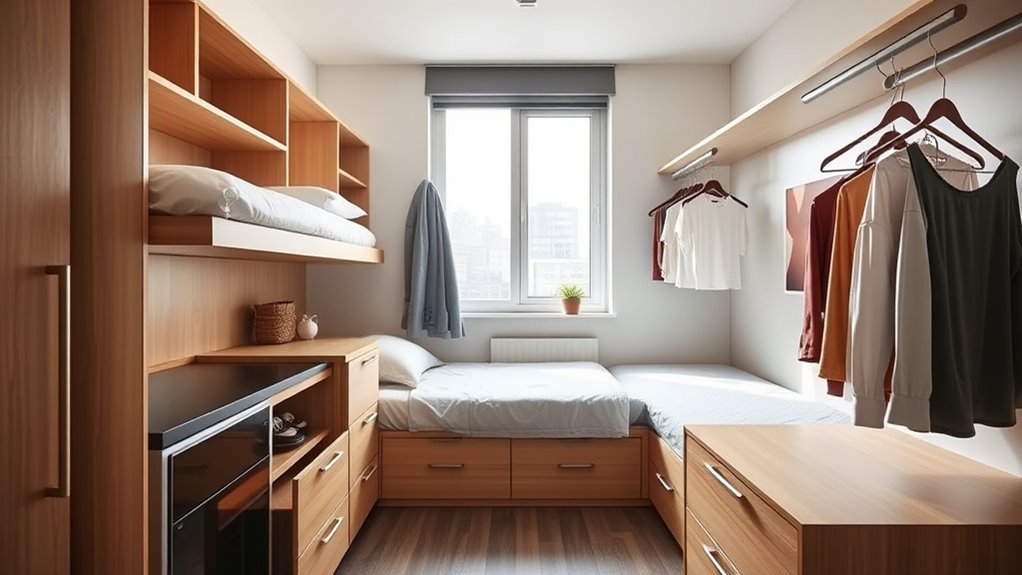
Balancing accessibility with capacity in small space storage requires careful planning to make certain you can easily reach your items without sacrificing valuable space. To do this effectively, consider these strategies:
- Prioritize frequently used items by placing them at eye level or in accessible locations, so you don’t waste time digging through clutter.
- Utilize vertical and hidden storage solutions like wall-mounted shelves or under-stair compartments, maximizing capacity without hindering access.
- Implement zones or categories for your belongings, ensuring similar items are grouped together for quick retrieval and organized storage.
Frequently Asked Questions
How Can I Organize Small Spaces Without Sacrificing Style?
You can organize small spaces without sacrificing style by choosing multifunctional furniture like ottomans with hidden storage or modular pieces that adapt to your needs. Use vertical storage such as wall-mounted shelves and hanging racks to free up floor space. Keep decor minimal and cohesive, and incorporate eco-friendly materials for a sleek look. Prioritize clean lines and colors that complement your space to maintain both function and aesthetic appeal.
What Are Cost-Effective Ways to Implement Multi-Use Furniture?
You can make the most of your budget by choosing versatile furniture pieces that serve double duty. Think of an ottoman with hidden storage or a fold-out sofa bed—these add functionality without clutter. Opt for furniture with built-in shelves or modular designs that adapt to your needs. Repurpose existing items creatively, and look for sales or secondhand options to keep costs low while transforming your space effortlessly.
How Do I Choose the Best Eco-Friendly Storage Materials?
You should look for eco-friendly storage materials like sustainably sourced wood, bamboo, or recycled plastics. These options reduce environmental impact and promote sustainability. Consider upcycling or repurposing existing furniture to create new storage solutions. Prioritize lightweight, modular units that are easy to move and adapt. Also, choose energy-efficient options like LED lighting for storage spaces to further minimize your ecological footprint.
What Technology Can Help Track and Manage Small Space Storage?
You’d think managing small space storage is simple, but tech proves otherwise. Use digital inventory systems and smart labels with QR codes to track items effortlessly. Mobile apps can alert you when storage is full or items are misplaced. Smart sensors and RFID tags provide real-time updates, making organization a breeze. Ironically, the very technology designed to simplify can turn small storage into a high-tech, well-organized haven.
How Can I Adapt Storage Solutions for Future Expansion?
To adapt your storage solutions for future expansion, you should plan flexible, modular systems that can easily scale. Use stackable, lightweight units and adjustable shelving, so you can add or reconfigure as needed. Incorporate vertical storage and multi-purpose furniture to maximize space. Keep technology in mind, like smart organization apps, to track and manage your expanding storage efficiently. Regularly reassess your needs, and stay open to upgrading your setup.
Conclusion
By mastering small space solutions, you unleash the power to transform even the tiniest areas into sprawling, organized havens. Every hidden nook and clever storage trick becomes your secret weapon against chaos, turning your space into a sanctuary of efficiency and style. Remember, with the right strategies, your small space can hold more than you ever imagined—it’s like creating an endless universe within a tiny universe. Embrace these tips and watch your space defy all limits!
Halloween Picks
halloween
As an affiliate, we earn on qualifying purchases.