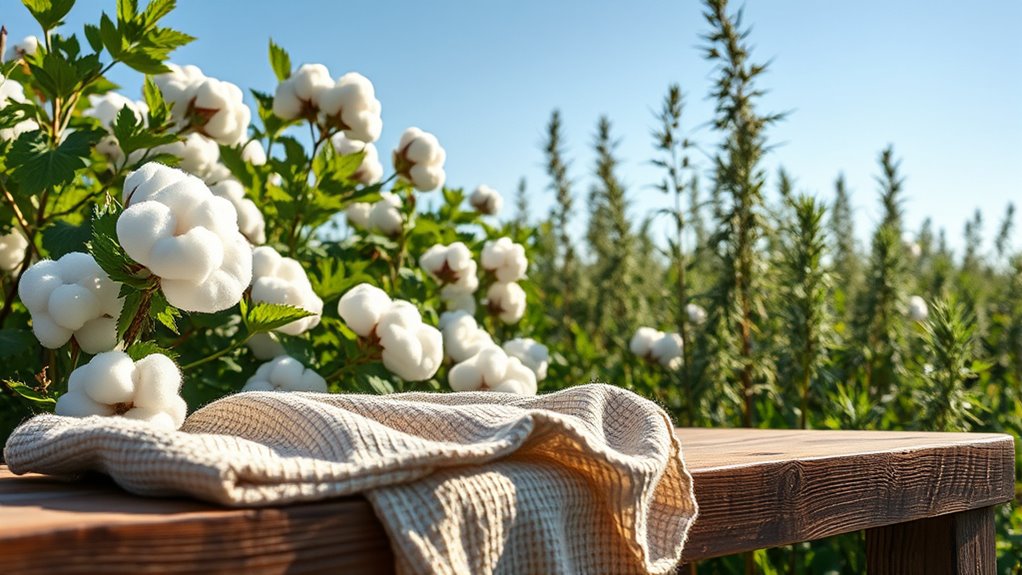

Sustainable textiles like organic cotton, linen, and hemp help you reduce your environmental impact. They absorb carbon, need less water, and require fewer chemicals during production. Hemp and linen are grown for durability, while cotton offers soft comfort, making them perfect for eco-friendly clothing and home goods. If you want to discover how these materials can benefit both you and the planet, there’s more to explore below.

Get travel and outdoor gear delivered free with Prime
- Fast, free delivery on millions of items
- Prime Video, Amazon Music and more included
- Member-only deals all year
Key Takeaways
- Hemp absorbs up to 30 tonnes of CO2 per hectare annually, making it highly effective for carbon sequestration and climate change mitigation.
- Organic cotton, linen, and hemp require significantly less water than conventional crops, reducing strain on water resources.
- Hemp fibers are extremely strong and durable, suitable for heavy-duty applications, while linen offers long-lasting, breathable textiles.
- Certifications like GOTS and Oeko-Tex ensure sustainable farming, low chemical use, and eco-friendly processing of these natural fibers.
- Growing consumer demand for eco-friendly textiles drives industry shifts toward sustainable production and higher-quality, biodegradable materials.
Environmental Benefits and Carbon Sequestration
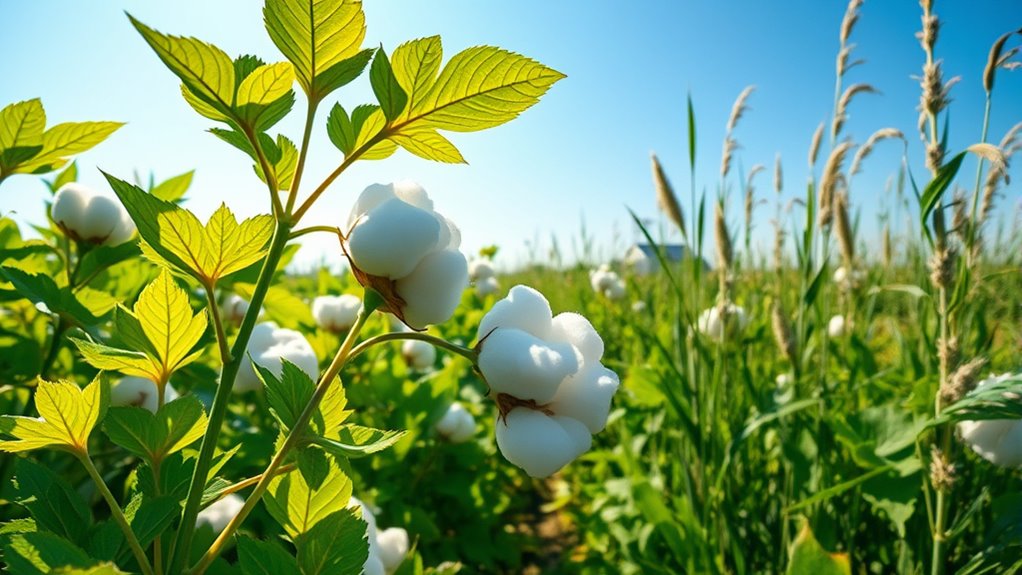
Hemp offers significant environmental benefits by actively sequestering carbon dioxide from the atmosphere. You’ll be pleased to know that hemp can absorb up to 30 tonnes of CO2 per hectare each year, far surpassing linen’s 3.7 tonnes and cotton’s release of 1.8 tonnes per tonne produced. This means that growing hemp helps combat climate change directly by removing greenhouse gases from the air. Unlike many crops, hemp grows quickly with minimal chemical input, making it an eco-friendly choice. Its robust growth also improves soil health and reduces the need for synthetic fertilizers. Additionally, energy-efficient cloud servers can help reduce overall carbon footprints by streamlining data storage and processing, aligning with sustainable practices. By choosing hemp textiles, you’re supporting a crop that not only reduces carbon footprint but also promotes sustainable land use and environmental resilience.
Water Consumption and Resource Efficiency
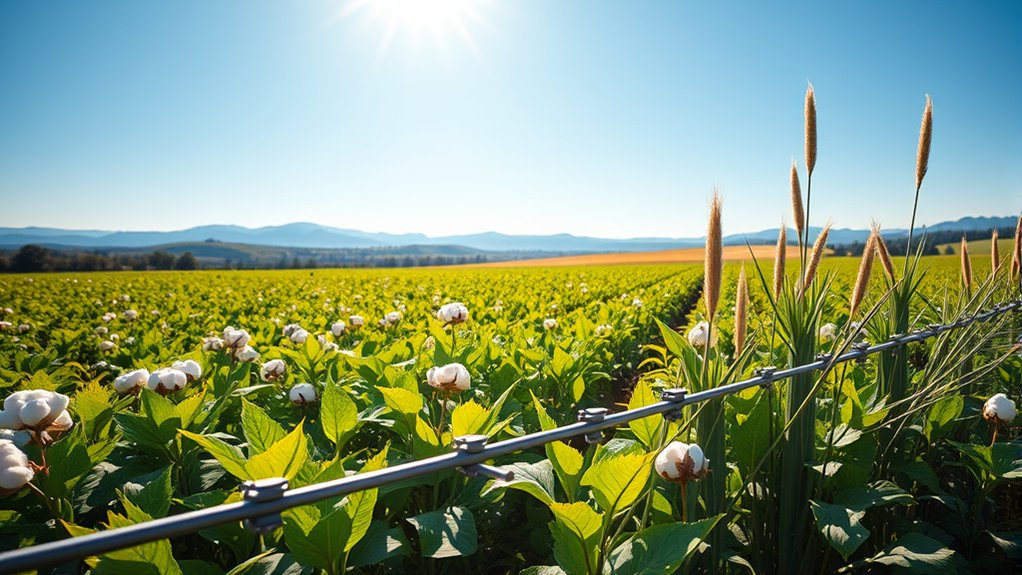
Hemp requires considerably less water than cotton, making it a more sustainable choice in water-scarce areas. Linen, derived from flax, mainly relies on rainwater, reducing its environmental impact further. By understanding these differences, you can make smarter choices for resource-efficient textiles. Additionally, choosing water-efficient materials can significantly reduce your overall water footprint in textile production.
Hemp’s Water Needs
Are you aware of how much water is needed to produce different textiles? Hemp stands out as a highly water-efficient crop, requiring only about 300–500 liters of water per kilogram of fiber. Unlike cotton, which can need 2,000 to 5,000 liters, hemp relies mostly on rainfall, reducing the need for irrigation. This lower water demand means hemp uses fewer resources and puts less strain on water supplies, especially in regions facing scarcity. Hemp’s resilience to drought and minimal irrigation needs make it a sustainable choice for fiber production. By choosing hemp, you support a textile that conserves water and promotes resource efficiency, helping to lessen environmental impact and preserve essential freshwater sources. Incorporating whole‑house water filtration systems can further ensure the purity and safety of water used in fiber processing and manufacturing.
Cotton’s Irrigation Demands
Cotton cultivation demands significant amounts of water, often requiring between 50 and 127 centimeters of rainfall per season, with many farmers relying on extensive irrigation to meet crop needs. This high water demand strains local water sources, especially in arid and semi-arid regions where water scarcity is already a concern. Conventional cotton farming consumes more water than crops like hemp or linen, leading to over-extraction from aquifers and rivers. Inefficient irrigation methods, such as flood or spray systems, waste water and increase environmental impact. Switching to rainfed cultivation or adopting water-efficient techniques can reduce water use considerably. By choosing sustainably grown, organic cotton, you support practices that minimize irrigation needs and help conserve essential freshwater resources, making your textile choices more environmentally responsible. Additionally, implementing efficient irrigation techniques can drastically lessen water consumption in cotton farming.
Linen’s Rainfed Growth
Linen’s cultivation primarily relies on rainwater, making it one of the most water-efficient textile fibers. You benefit from its low water needs, reducing environmental strain. Linen requires about 30–40 cm (12–15 inches) of rainfall per season, unlike cotton, which needs much more irrigation. This rainfed growth supports sustainable farming and conserves water resources. The table below compares water requirements:
| Fiber | Water Needed (per kg fiber) | Water Source |
|---|---|---|
| Linen | 50–80 liters | Rainwater |
| Cotton | 10,000–15,000 liters (varies) | Irrigation & rainwater |
| Hemp | 300–500 liters | Rainwater |
Furthermore, the emphasis on sustainable practices aligns with the principles of ethical sourcing, promoting environmentally friendly and resource-efficient textile production.
Durability, Strength, and Textile Performance
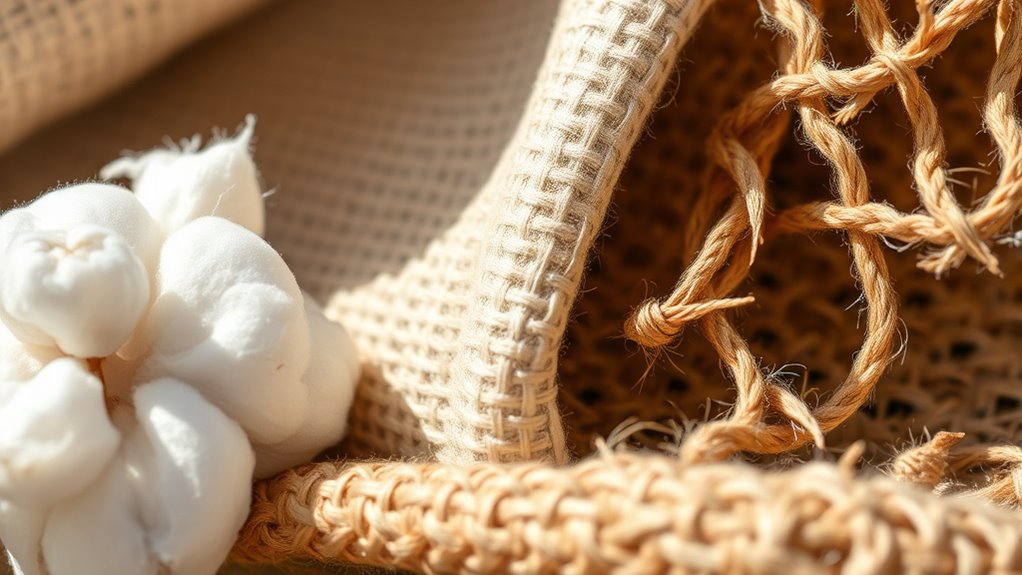
You’ll find that fiber strength directly impacts textile performance and longevity. Hemp stands out as the strongest and most durable, while linen also offers excellent resilience, unlike organic cotton, which is softer but less tough. Understanding these differences helps you choose fabrics suited for specific applications and guarantees your textiles last over time. Additionally, fiber durability plays a crucial role in the overall lifespan of textiles, especially for high-traffic or heavy-use items.
Fiber Strength Comparison
Among the three fibers, hemp stands out for its exceptional strength and durability, making it well-suited for demanding textile applications. It’s about 8 times stronger than linen and 4 times stronger than cotton, offering unmatched toughness. Linen also offers high durability and has been used for centuries in sturdy textiles, while cotton provides softness but less strength. To illustrate:
| Fiber | Relative Strength | Typical Use Cases |
|---|---|---|
| Hemp | 8x linen, 4x cotton | Ropes, heavy-duty fabrics |
| Linen | High durability | Clothing, home textiles |
| Organic Cotton | Softer, less strong | Apparel, soft furnishings |
This strength difference impacts fabric performance, longevity, and suitability for various applications.
Fabric Durability Over Time
Fabric durability over time plays a crucial role in determining how well textiles maintain their strength, appearance, and functionality after repeated use and washing. Hemp’s fibers are about eight times stronger than linen and four times stronger than cotton, making it the most resilient of the three. This strength translates into longer-lasting products that resist tearing and wear. Linen also offers high robustness and tends to become more comfortable with age, maintaining its integrity over years. Organic cotton is softer and less sturdy initially but can hold up well if properly cared for. Over time, hemp and linen fabrics naturally soften, enhancing comfort without sacrificing durability. Additionally, hemp’s superior strength makes it an excellent choice for long-lasting textiles, ensuring durability over extended use. Overall, hemp’s superior strength ensures textiles remain functional and attractive longer, making it an excellent choice for durable, sustainable applications.
Suitability for Textile Applications
Hemp’s exceptional strength and durability make it highly suitable for demanding textile applications where longevity matters. Its fibers are about 8 times stronger than linen and 4 times stronger than cotton, ensuring fabrics withstand wear and tear. Linen also offers high durability, while organic cotton provides softness but less resilience. The table below compares their suitability:
| Material | Strength | Durability | Best Use |
|---|---|---|---|
| Hemp | Very high | Excellent | Ropes, industrial textiles |
| Linen | High | Good | Apparel, home textiles |
| Organic Cotton | Moderate | Fair | Soft clothing, bedding |
Hemp’s toughness suits heavy-duty needs, while linen’s resilience supports long-lasting garments. Organic cotton excels in comfort but is less durable. Additionally, fiber strength plays a crucial role in determining the suitability of these materials for various textile applications.
Comfort, Breathability, and Skin Compatibility
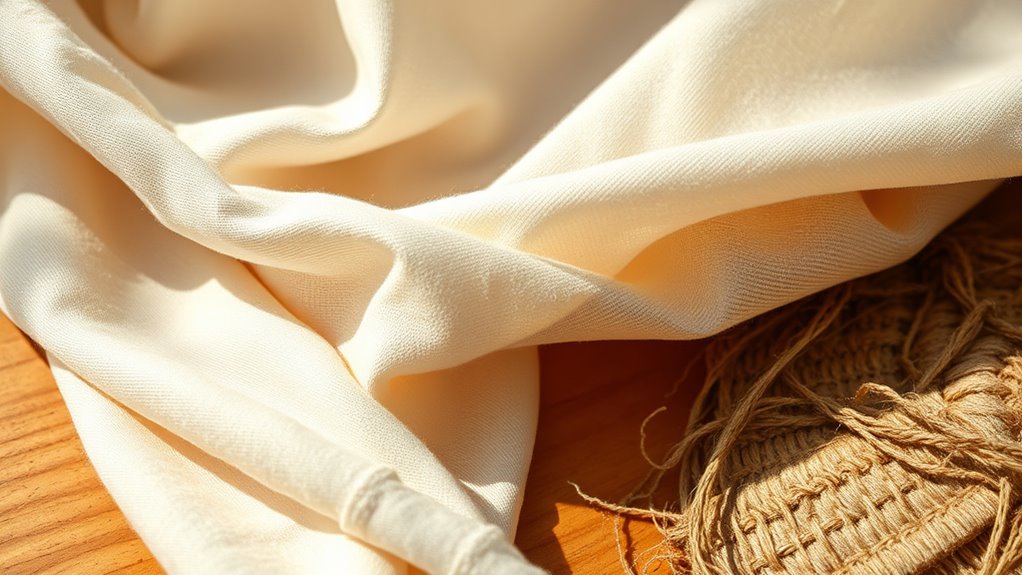
Natural fibers like hemp, linen, and organic cotton are highly valued for their comfort and breathability, making them ideal choices for clothing. Organic cotton is soft, gentle on sensitive skin, and naturally hypoallergenic, making it perfect for everyday wear. Linen offers excellent airflow, keeping you cool in warm climates, and becomes softer with each wash while maintaining its strength. Hemp is lightweight and breathable, with natural antimicrobial properties that help prevent odors. It also resists mold and moths, adding functional benefits. Although hemp starts out rougher, it softens over time. All three fibers promote skin comfort and allow moisture to escape, reducing irritation. Their natural properties guarantee you stay comfortable and fresh, especially in hot or humid environments. Additionally, these fibers are often produced with sustainable farming practices, which helps protect the environment and supports eco-friendly fashion choices.
Certification Standards and Eco-Labels

Certifications and eco-labels play an essential role in helping you identify genuinely sustainable textiles. They verify that fabrics meet strict environmental, social, and chemical standards. When shopping for organic cotton, linen, or hemp, look for trusted labels like USDA Organic, GOTS, Oeko-Tex 100, or Bluesign. These certifications guarantee responsible farming, minimal chemical use, and safe production processes. They also foster transparency and build trust in your choices. For example, self-watering plant pots often feature Reservoir System designs that promote healthy moisture levels and reduce water waste, aligning with sustainable practices.
Market Trends, Economic Factors, and Consumer Choices
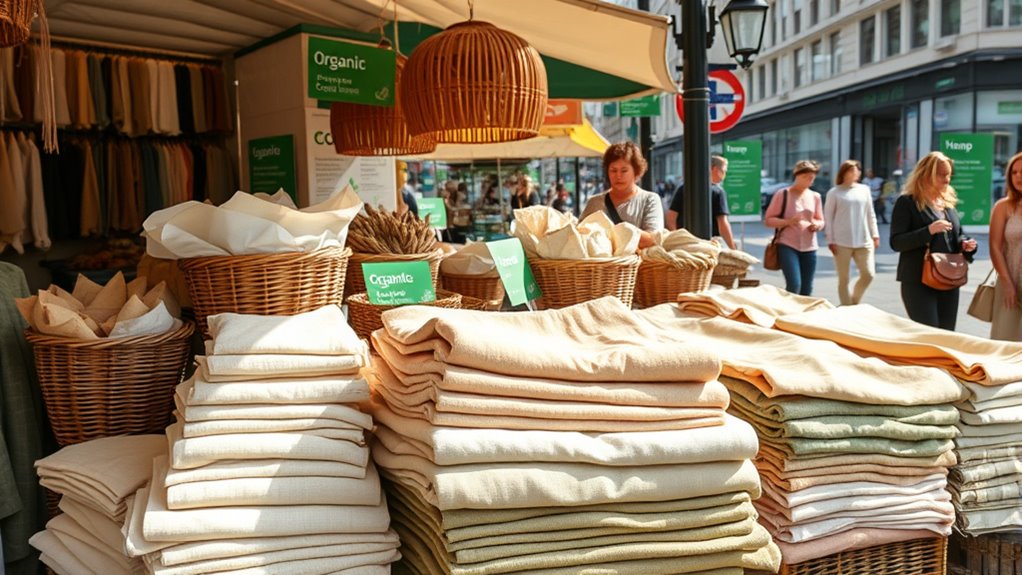
As consumer awareness of environmental issues grows, demand for sustainable textiles like hemp, organic cotton, and linen has surged across markets worldwide. You’re increasingly seeking eco-friendly options that align with your values, influencing brands to prioritize transparency and certifications. Hemp’s durability and low water use make it appealing, but its higher cost limits accessibility. Organic cotton remains popular for softness and familiarity, while linen’s timeless style attracts eco-conscious consumers. Market trends show a shift toward natural, biodegradable fabrics, despite higher prices for environmentally certified products. Economic factors, such as cultivation challenges and processing costs, affect pricing and supply. Ultimately, your choices drive industry innovation, encouraging more sustainable production methods and expanding options that balance environmental benefits with affordability.
Frequently Asked Questions
How Does Hemp Compare to Synthetic Fibers Regarding Environmental Impact?
You’ll find hemp has a much lower environmental impact than synthetic fibers. Hemp sequesters up to 30 tonnes of CO2 per hectare yearly, while synthetics release significant greenhouse gases during production and don’t decompose easily, polluting ecosystems. Hemp needs less water, uses fewer chemicals, and regenerates soil, making it more eco-friendly. Plus, hemp biodegrades quickly, unlike synthetics that persist for hundreds of years, harming wildlife and polluting water sources.
What Are the Processing Differences Among Organic Cotton, Linen, and Hemp Textiles?
Imagine choosing between a soft cotton t-shirt, a crisp linen shirt, or a rugged hemp bag. Processing hemp involves retting, decorticating, and sometimes chemical treatments, which can be more complex than linen’s simpler retting process. Organic cotton requires cleaning, spinning, and dyeing, often with eco-friendly methods. Linen’s processing is relatively straightforward, focusing on retting and bleaching. Each fiber’s processing impacts sustainability, durability, and final fabric qualities.
Are There Any Health Concerns Associated With Non-Organic Hemp or Cotton?
Yes, there are health concerns with non-organic hemp and cotton. Non-organic hemp can involve harmful fertilizers that may leave residues on fibers, potentially causing skin irritation or health issues. Non-organic cotton often uses large amounts of pesticides and chemicals, which can linger on fabrics and pose risks to your skin and overall health. Choosing certified organic textiles helps minimize exposure to these harmful substances, ensuring safer, more sustainable options for you.
How Do Certifications Influence the Actual Sustainability of These Textiles?
Certifications directly impact the sustainability of textiles by verifying eco-friendly practices, chemical use, and social responsibility. When you choose certified hemp or cotton, you guarantee the fibers meet strict standards like GOTS or Oeko-Tex, reducing environmental harm and supporting fair labor. These labels give you confidence that the product aligns with sustainability goals, minimizes toxic chemicals, and promotes healthier ecosystems and communities.
What Are the Long-Term Environmental Benefits of Choosing Hemp Over Cotton or Linen?
Choosing hemp offers significant long-term environmental benefits. You’ll help sequester up to 30 tonnes of CO2 per hectare annually, reducing greenhouse gases. Hemp needs less water and fewer pesticides, preserving water resources and ecosystems. Its strong fibers promote durability, decreasing waste. By opting for hemp, you’re supporting soil health, lowering chemical use, and reducing environmental impact over time, making it a truly sustainable choice for the planet’s future.
Conclusion
By choosing organic cotton, linen, and hemp, you’re planting seeds for a greener future. These sustainable textiles act like breathers for our planet, reducing water use and sequestering carbon. As you embrace eco-labels and market trends, remember you’re weaving a tapestry of change—one eco-friendly fiber at a time. Your choices don’t just make fabrics better; they help turn the tide toward a healthier, more sustainable world.
Fall Picks
fall essentials
As an affiliate, we earn on qualifying purchases.