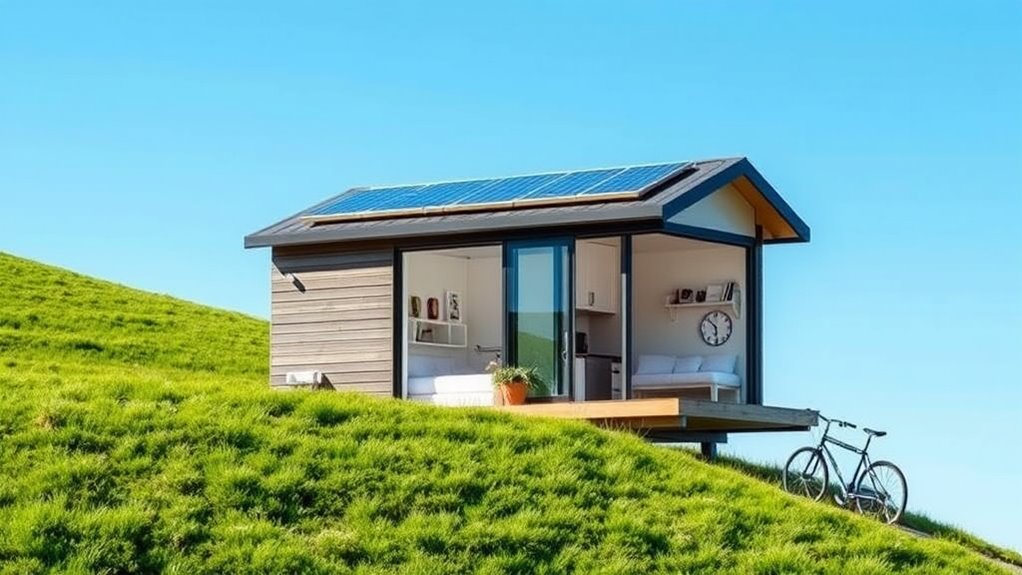

Architects swear by smart design solutions that maximize space in tiny houses. Using multi-functional furniture, vertical storage, and built-in features keeps your home open and clutter-free. Natural light and streamlined aesthetics create an airy atmosphere, making your tiny space feel larger. These innovative hacks turn small footprints into personalized sanctuaries. If you want to discover even more ideas to transform your tiny house into a spacious haven, there’s plenty more to explore below.

Get travel and outdoor gear delivered free — and shop member deals
- Fast, free delivery on millions of items
- Access to Prime Big Deal Days deals on October 6–7
- Prime Video, Amazon Music and more included
Key Takeaways
- Multi-functional furniture combines seating, sleeping, and storage to maximize limited space efficiently.
- Vertical storage solutions utilize tall cabinets and wall-mounted shelves to free up floor area.
- Built-in features like fold-away tables and recessed shelving optimize space without clutter.
- Natural lighting and streamlined design enhance openness and reduce visual clutter in tiny homes.
- Innovative solutions such as eco-friendly transportation and minimalism make small spaces highly functional.

Tiny houses are redefining what it means to live simply and sustainably. When space is limited, every inch counts, and clever design becomes your best friend. Architects and designers have developed innovative space-saving hacks that turn small footprints into functional, comfortable homes. One of the most effective strategies is incorporating multi functional furniture. Instead of bulky sofas and separate beds, you get pieces that serve multiple purposes—like a sofa bed or an ottoman with hidden storage. These items help you maximize every square inch without sacrificing comfort. You can sit, sleep, and store your belongings all with a single piece of furniture, which keeps your tiny home feeling open and uncluttered.
Maximize small spaces with multifunctional furniture for comfort and open, uncluttered tiny homes.
Vertical storage is another game-changer in tiny house design. When floor space is at a premium, looking upward becomes essential. By utilizing vertical storage solutions—such as tall cabinets, wall-mounted shelves, and hanging racks—you create more room for your essentials while keeping surfaces clear. Think about installing shelves above doorways or along unused wall spaces to store books, kitchen supplies, or decorative items. This approach not only frees up valuable floor area but also adds personality and charm to your home. You’ll find that smart vertical storage can make your tiny house feel more spacious and organized, reducing the stress that clutter often brings.
In addition to multi functional furniture and vertical storage, architects recommend integrating built-in features. Built-in desks, fold-away tables, and recessed shelving keep the look sleek and minimize unnecessary furniture. Multipurpose areas—like a dining table that folds into the wall or a bed that lifts to reveal storage underneath—are practical solutions for small spaces. These features help you changeover seamlessly between activities without feeling cramped or overwhelmed.
Lighting also plays a vital role in making your tiny house feel bigger. Using natural light through large windows and skylights enhances the sense of openness. When combined with smart storage, this creates a clean, airy environment that invites relaxation and productivity. Furthermore, choosing furniture and storage units that blend into the walls or are streamlined in design further contributes to an uncluttered, spacious feel. Additionally, some innovative tiny house designs incorporate Vetted electric bike conversion kits, allowing residents to easily add eco-friendly transportation options that save space and reduce reliance on cars.
Ultimately, designing a tiny house around these space-saving hacks transforms a small footprint into a comfortable, efficient living space. You learn to embrace minimalism and prioritize quality over quantity. Every piece, every storage solution, and every design choice is about making your home work better for you. With clever use of multi functional furniture and vertical storage, you’ll discover that less truly can be more. Your tiny house becomes not just a compact dwelling but a vibrant, personalized sanctuary that proves big ideas come in small packages.
As an affiliate, we earn on qualifying purchases.
Frequently Asked Questions
How Affordable Are Tiny House Designs Compared to Traditional Homes?
When comparing costs, tiny house designs are generally more affordable than traditional homes, mainly due to their smaller size and simpler construction. You should consider affordability factors like land costs, materials, and labor, which markedly impact overall expenses. With a better cost comparison, you’ll find that tiny homes offer a budget-friendly alternative, making them especially appealing if you’re looking to save money while enjoying functional living space.
What Permits Are Required to Build a Tiny House in Urban Areas?
Imagine your dream home, tiny yet perfect—what permits do you need? In urban areas, you’ll first check zoning regulations to ensure your project fits local land use rules. Then, review building codes for safety standards. You might need a building permit, especially if adding plumbing or electrical systems. Contact your city’s planning department early to avoid surprises. Staying informed helps turn your compact vision into a legal, livable reality.
How Do Tiny Houses Handle Insulation and Climate Control?
You’ll want to focus on effective insulation techniques to keep your tiny house comfortable year-round. Proper insulation, like spray foam or rigid foam boards, helps regulate temperature and reduce energy costs. For climate control, consider energy-efficient heating and cooling systems, such as mini-split units or portable heaters, to maintain a cozy environment. By prioritizing insulation and smart climate control, you can enjoy a comfortable tiny home regardless of outside weather conditions.
Can Tiny Houses Be Customized for Accessibility Needs?
Think of your home as a suit tailored just for you; it should fit your needs perfectly. You can customize tiny houses with universal design principles and adaptable interiors, making them accessible for everyone. These features allow for wider doorways, lower counters, and flexible layouts, ensuring ease of movement. With thoughtful planning, tiny houses become inclusive spaces that accommodate your needs without sacrificing style or functionality.
What Are the Long-Term Maintenance Costs of Tiny Houses?
You’ll find that long-term maintenance costs for tiny houses are quite manageable. Utility costs tend to stay low thanks to their smaller size and energy-efficient design. Regular upkeep includes checking roof durability to prevent leaks, which can be a significant expense if neglected. With proper maintenance, you minimize costly repairs and keep your tiny home in good shape, making it an affordable, sustainable living option over the years.
Conclusion
As you explore tiny houses, remember that over 80% of owners say their space feels just right, thanks to clever design hacks. These small wonders prove that smart use of every inch can turn limited space into a comfortable, functional home. So, whether you’re dreaming of downsizing or just craving efficiency, these space-saving ideas show you don’t need a lot to live well. Embrace the tiny house movement—big ideas start small!
Fall Picks
fall essentials
As an affiliate, we earn on qualifying purchases.