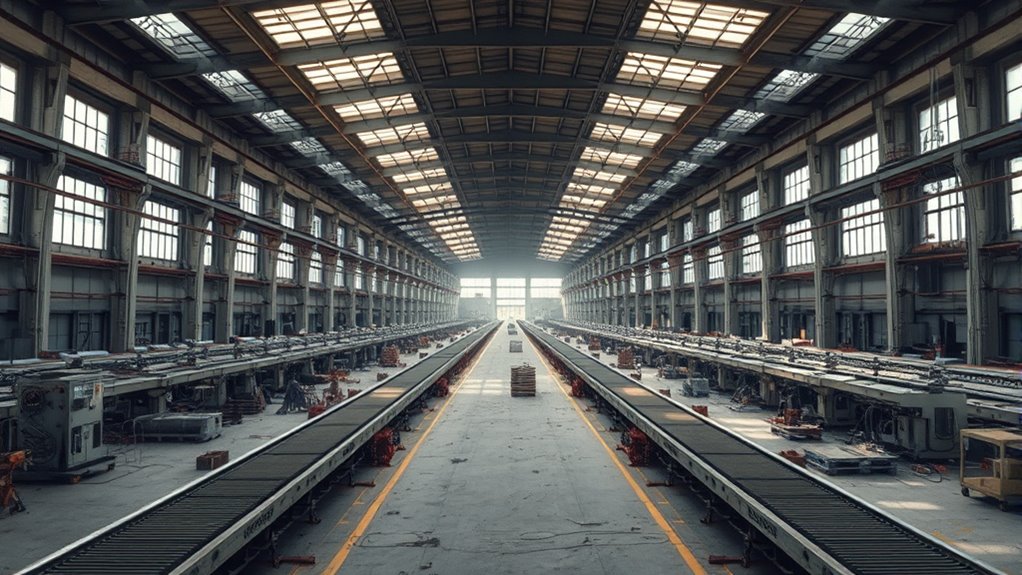

China’s economic slowdown in 2025 impacts global supply chains by causing delays, rising costs, and instability in manufacturing and trade. Reduced demand and sector challenges lead to disruptions in electronics, autos, and other industries that rely on Chinese exports. Companies are diversifying sources and adopting automation to cope with these risks. If you want to explore how ongoing trade uncertainties shape the future of global trade, there’s more to uncover below.

Get travel and outdoor gear delivered free with Prime
- Fast, free delivery on millions of items
- Prime Video, Amazon Music and more included
- Member-only deals all year
Key Takeaways
- China’s economic slowdown reduces manufacturing output, leading to supply chain disruptions and delays globally.
- Trade policy uncertainties and tariffs increase costs and complicate logistics for international companies relying on Chinese goods.
- Declining domestic demand and property sector issues weaken export growth, impacting global industries dependent on Chinese supply chains.
- Companies diversify sourcing and adopt automation to mitigate risks from China’s economic fluctuations.
- Continued growth in China’s high-tech sectors maintains some supply chain stability but shifts global dependency patterns.
Top picks for "china economic slowdown"
As an affiliate, we earn on qualifying purchases.
Overview of China’s Economic Performance in 2025

In 2025, China’s economy shows signs of slowing but remains resilient amid global uncertainties. You notice that GDP growth in the first three quarters slowed to 5.2% year-on-year, with a dip to 4.8% in the third quarter. Industrial output, however, rebounded in September, growing at 6.5%, driven by strong external demand. The primary, secondary, and tertiary sectors all expanded, with value-added increases of 3.8%, 4.9%, and 5.4%, respectively. Despite overall growth, employment growth has slowed, especially in construction, reflecting challenges in the property market. Meanwhile, hi-tech manufacturing sectors like automotive and electronics are expanding rapidly, supporting parts of the economy and hinting at future growth potential even amidst the slowdown. Additionally, the ongoing economic slowdown has prompted policymakers to focus on sustainable growth strategies and innovation-driven development.
Key Factors Contributing to the Economic Slowdown

Several factors are driving China’s recent economic slowdown, despite resilience in certain sectors like hi-tech manufacturing. You should focus on these key issues:
- Global trade uncertainty has weakened export growth, leading to reduced manufacturing investment and supply chain disruptions.
- The property sector faces ongoing challenges, especially in lower-tier cities, which impacts industries like steel and cement.
- Employment growth has slowed, particularly in construction, affecting household income and domestic consumption.
- Additionally, the decline in demand for manufactured goods from international markets further contributes to the slowdown.
These factors combine to dampen overall economic activity. While sectors like hi-tech manufacturing grow rapidly, they can’t fully offset declines elsewhere. The economy remains vulnerable to external shocks, and addressing these core issues is essential for stabilizing growth.
The Role of External Demand and Trade Uncertainties

You need to understand how external demand has supported China’s industrial growth despite ongoing trade uncertainties. Trade policy changes and tariffs directly impact export sectors, making their performance unpredictable. As global demand shifts, China’s export dynamics become vital for its economic stability. Additionally, high-quality projectors are increasingly used in international trade presentations, reflecting the importance of technological advancements in global commerce.
External Demand Resilience
External demand plays a crucial role in supporting China’s economic resilience amid ongoing trade uncertainties. You can see this in how exports, especially in hi-tech manufacturing, remain strong despite global headwinds. Here’s how this resilience manifests:
- External demand sustains industrial output growth, particularly in electronics and auto sectors.
- It buffers the impact of trade policy uncertainties, helping maintain export-driven industries’ stability.
- Companies adapt by diversifying markets and supply chains, reducing reliance on any single region.
- Supporting informational content highlights how trade uncertainties influence supply chain strategies and overall economic stability.
This external demand not only supports current growth but also encourages investment in technology and infrastructure, helping China navigate trade risks. While trade uncertainties persist, resilient external demand remains a key pillar of China’s economic stability and global supply chain continuity.
Trade Policy Impact
How substantially do trade policies shape China’s economic landscape, especially regarding external demand and trade uncertainties? Trade policies directly influence China’s export-driven sectors and global supply chains. When tariffs rise or trade restrictions tighten, you see immediate disruptions in manufacturing and exports, especially in textiles, electronics, and automotive parts. Uncertainty around trade agreements causes companies to delay investments and diversify supply sources, increasing costs and complexity. Conversely, favorable trade policies boost external demand, supporting factory activity and employment. China’s reliance on external markets makes it vulnerable to global policy shifts, which can destabilize supply chains and slow economic growth. To navigate this, China adopts strategies like diversifying markets and strengthening domestic consumption, aiming to mitigate risks from trade uncertainties.
Export Sector Dynamics
Trade policies substantially shape China’s export sector, especially as external demand fluctuates amid global uncertainties. You need to understand that these policies directly influence export volumes and competitiveness. Here’s what you should focus on:
- External demand remains a key driver, supporting industrial output despite slower economic growth.
- Trade uncertainties and tariffs cause disruptions, forcing exporters to adapt supply chains and seek diversification.
- The rise of hi-tech manufacturing exports highlights China’s shift toward resilient sectors less affected by global trade tensions.
You should monitor how these factors impact your supply chains and market strategies. While external demand supports growth, trade risks demand agility. China’s efforts to balance international engagement with domestic stability will determine the future of its export sector amidst ongoing uncertainties.
Supply Chain Disruptions and Manufacturing Challenges

You need to understand that global trade uncertainty directly impacts China’s supply chains, making manufacturing more vulnerable. As tariffs and trade policies shift, companies are increasingly diversifying their supply sources to reduce risks. This strategic move aims to strengthen resilience amid ongoing disruptions and economic fluctuations. Additionally, the rise of automation technologies is enabling manufacturers to adapt more quickly to supply chain challenges.
Global Trade Uncertainty
Global trade uncertainty has become a significant obstacle for China’s supply chains and manufacturing sector, as fluctuating trade policies and tariffs disrupt established flows of goods and materials. You face challenges like:
- Tariff and trade policy shifts that cause unpredictability, forcing you to adjust sourcing and logistics strategies.
- Export restrictions impacting key sectors like textiles and electronics, leading to delays and increased costs.
- Global demand fluctuations that create volatility in supply chain planning, making it harder to maintain steady production levels.
- The interplay of global economic factors further complicates efforts to stabilize supply chains amid ongoing uncertainties.
These factors increase risks, cause disruptions, and force you to seek new ways to manage supply chain stability. As trade tensions persist, you must navigate evolving policies and uncertainties to keep your manufacturing processes resilient and responsive.
Supply Chain Diversification
To navigate the ongoing supply chain disruptions caused by economic slowdowns and trade uncertainties, diversification has become essential. You need to reduce reliance on a single source or region to safeguard your operations. Companies are shifting toward multiple suppliers and locations, especially in high-tech manufacturing sectors. This strategy minimizes risks from tariffs, trade restrictions, and geopolitical tensions. Consider the following approaches:
| Strategy | Focus Area | Benefits |
|---|---|---|
| Supplier Diversification | Sourcing from multiple regions | Reduces dependency and risks |
| Regional Shifts | Moving manufacturing hubs | Enhances resilience |
| Technology Adoption | Automation and logistics | Improves agility and efficiency |
Furthermore, adopting supply chain transparency tools can help identify vulnerabilities and respond proactively to potential disruptions.
Impact on Global Trade and Export-Driven Industries

China’s slowing economic growth has begun to influence global trade and export-driven industries considerably. You’ll notice shifts in demand, affecting industries like electronics and autos, which still benefit from external demand. This slowdown prompts you to contemplate three key impacts:
China’s economic slowdown impacts global trade, affecting electronics, autos, and supply chains.
- Export reliance increases vulnerability to global trade fluctuations, causing supply chain disruptions.
- Trade policies and tariffs create uncertainties, leading to delays and increased costs.
- Industries rooted in high-tech manufacturing remain resilient, supported by steady external demand.
- Additionally, the nutrients in products like beetroot can influence consumer preferences and market stability.
As a result, you might see companies diversifying their supply chains and adjusting production strategies. The overall effect is a more cautious approach to global trade, with industries balancing risks amid uncertain economic conditions. This shift underscores the importance of adaptability in a slowing Chinese economy.
Strategies to Mitigate Economic and Supply Chain Risks

In response to ongoing economic and supply chain risks, companies are adopting a range of strategies to enhance resilience and stability. You can diversify your supply sources to reduce reliance on China, spreading risk across regions. Investing in technology, such as automation and digital tracking, improves supply chain transparency and flexibility. Building inventory buffers helps cushion against disruptions, while strengthening relationships with multiple suppliers ensures continuity. Emphasizing local sourcing or nearshoring can mitigate international trade uncertainties. Additionally, you might leverage China’s dual circulation strategy by focusing on domestic markets and fostering innovation in high-tech sectors. For added confidence, verifying the trustworthiness of suppliers through thorough research and certifications can further secure your supply chain. These measures enable you to adapt swiftly to changing economic conditions, safeguard your operations, and maintain competitiveness amid China’s slowdown and ongoing global trade challenges.
The Rise of Hi-tech Manufacturing and Its Global Implications

The focus on developing high-tech manufacturing sectors has accelerated as China seeks to offset broader economic slowdowns. You’ll see this shift in three key ways:
China accelerates high-tech manufacturing to offset economic slowdowns through innovation, supply chain expansion, and efficiency improvements.
- Increased investment in electronics and automotive industries, driving innovation and exports.
- Expansion of supply chains for high-tech goods, making China a critical global hub.
- Emphasis on technological advancements to improve manufacturing efficiency and quality.
- The emphasis on popular brands highlights China’s role in global high-tech supply chains and innovation.
These efforts position China as a leader in cutting-edge sectors, influencing global markets. You’ll notice that this growth boosts global supply chain resilience but also heightens dependency on Chinese high-tech exports. As China continues to invest in this sector, its global implications include reshaping trade patterns and prompting other nations to adapt their sourcing strategies. This evolution underscores China’s strategic move to maintain economic momentum despite broader slowdown pressures.
Future Outlook and Structural Challenges

As economic growth slows, maintaining momentum becomes increasingly challenging amid persistent structural issues. You’ll need to address factors like declining domestic consumption and reliance on external demand. Developing new growth drivers, such as hi-tech manufacturing, is essential for future stability. Supply chains must adapt to ongoing trade uncertainties and shifting global policies. You should focus on diversifying sources and strengthening technological capabilities to guarantee resilience. The table below highlights key challenges and strategies:
| Structural Challenges | Strategic Responses |
|---|---|
| Declining domestic demand | Boost consumer confidence and spending |
| Trade policy uncertainties | Diversify export markets and supply sources |
| Reliance on external demand | Promote domestic innovation and industry |
| Workforce skills gap | Invest in education and vocational training |
Enhancing Supply Chain Resilience Amidst Uncertainty

Amid ongoing global trade uncertainties, strengthening supply chain resilience has become essential for China’s economic stability. To do this effectively, you should consider these steps:
- Diversify suppliers and manufacturing locations to reduce dependence on specific regions, minimizing risks from trade disruptions.
- Invest in advanced logistics and digital technologies to increase transparency and responsiveness across your supply chain.
- Build strategic stockpiles of critical components and materials to buffer against sudden supply shocks.
Frequently Asked Questions
How Will China’s Slowdown Affect Global Investment Trends?
You’ll see global investment trends shift as China’s slowdown reduces opportunities for growth, especially in manufacturing and export sectors. Investors may become more cautious, diversifying their portfolios away from China to mitigate risks. You might also notice increased interest in regions with stable growth prospects. Companies will likely prioritize supply chain resilience and technological innovation to adapt, aiming to capitalize on emerging opportunities outside China’s slowed economy.
What Are the Long-Term Impacts of Trade Policy Uncertainty on Supply Chains?
Trade policy uncertainty can cause long-term disruptions to your supply chains by making it harder to plan and invest confidently. You might face delays, increased costs, and the need to diversify suppliers to reduce risks. Over time, these uncertainties push you to seek more resilient, flexible logistics solutions and develop alternative sourcing strategies, ensuring your operations remain stable despite ongoing trade fluctuations.
How Might China’s Economic Shifts Influence Emerging Markets?
Like a ripple spreading across a pond, China’s economic shifts can significantly influence emerging markets. As China’s economy slows and shifts focus to high-tech sectors, you might see increased opportunities for these markets to attract investments and diversify supply chains. However, if trade uncertainties persist, these markets could face volatility and reduced exports. Staying adaptable and diversifying your sources becomes vital to mitigate risks and capitalize on new growth avenues.
What Role Do Technological Advancements Play in Supply Chain Resilience?
Technological advancements play a vital role in strengthening supply chain resilience by improving efficiency, reducing risks, and enabling quick adaptation to disruptions. You can leverage innovations like automation, advanced logistics, and digital tracking systems to diversify sources, optimize inventory management, and respond swiftly to global shifts. These technologies help you maintain steady operations despite economic uncertainties, ensuring your supply chains stay robust and flexible in a changing world.
Can China’s Dual Circulation Strategy Fully Offset Export Declines?
Can China’s dual circulation strategy fully offset export declines? Think of it as a balancing act, where domestic growth acts as a safety net while international trade continues to support the economy. While it can cushion some impacts, it’s unlikely to fully replace lost export revenue. You should stay alert, as the strategy aims to diversify sources of growth, but global uncertainties may still challenge its effectiveness.
Conclusion
As China’s economic tide slows, you’ll feel the ripple effects wash over global supply chains like a stormy sea. Manufacturing hubs may face choppier waters, but by bolstering resilience and diversifying sources, you can navigate the turbulence. Picture a ship steadying itself amid crashing waves—your ability to adapt now determines whether you’ll weather the storm or be swept away. Stay vigilant, innovate, and steer your supply chain towards calmer waters ahead.
Columbus Day / Indigenous Peoples' Day Picks
long weekend sales
As an affiliate, we earn on qualifying purchases.