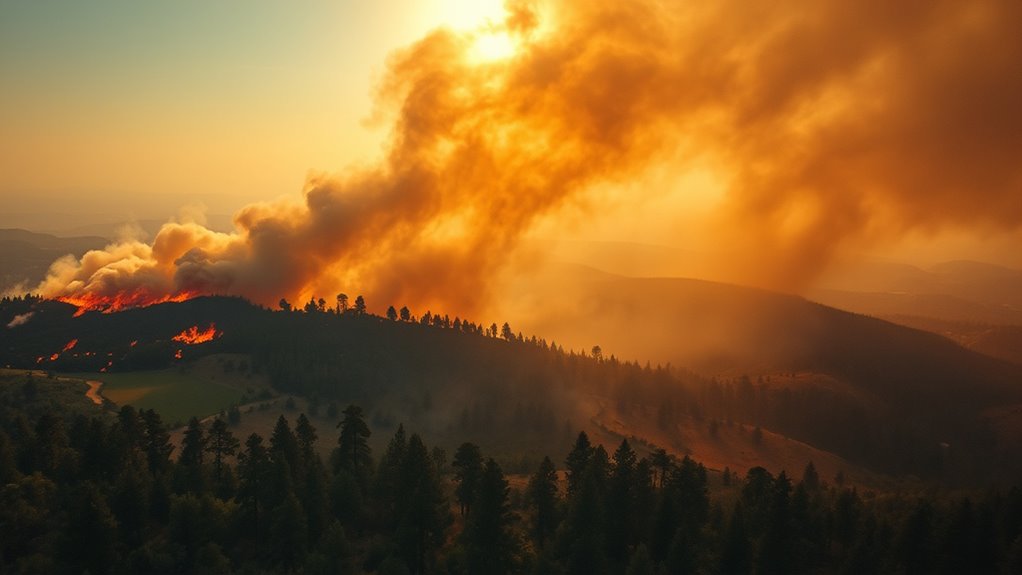

In 2025, Europe faces its worst wildfire and heatwave season yet, with over a million hectares burned and temperatures soaring. Droughts and dried vegetation, driven by climate change, make fires more frequent, intense, and destructive, threatening homes, forests, and wildlife. Human lives are at risk, and ecosystems suffer lasting damage. Advanced firefighting tech helps fight the flames, but the challenges grow. To understand how these climate shifts shape Europe’s future, keep exploring this critical issue.

Get travel and outdoor gear delivered free with Prime
- Fast, free delivery on millions of items
- Prime Video, Amazon Music and more included
- Member-only deals all year
Key Takeaways
- Climate change has increased heatwaves and droughts, intensifying wildfire risks across Europe in 2025.
- Southern regions like Spain, Portugal, and Greece face more frequent, severe wildfires due to drier, hotter conditions.
- Advanced technologies such as drones, satellites, and AI are being used to improve wildfire detection and response.
- Extended droughts weaken natural fire barriers, making vegetation more combustible and fires harder to control.
- Rising temperatures and prolonged heatwaves threaten ecosystems, human safety, and regional stability across the continent.
As an affiliate, we earn on qualifying purchases.
The Escalating Impact of Wildfires Across Europe
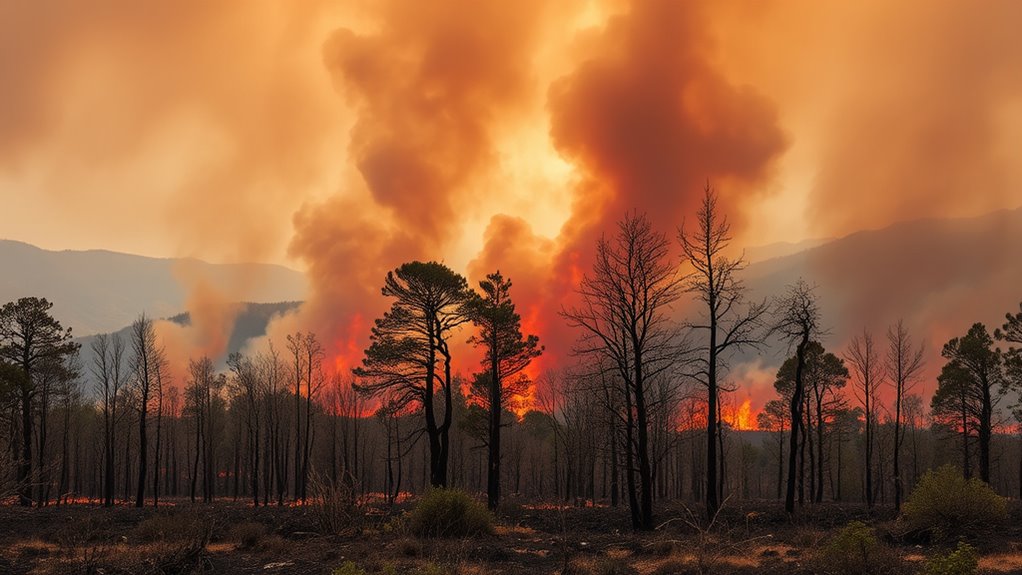
Why are wildfires becoming more devastating across Europe? The answer lies in the increasing frequency, size, and intensity of fires. Over 1 million hectares have already burned this year, with countries like Spain, Portugal, and France experiencing record-breaking incidents. You’ll notice more homes, forests, and protected areas like Spain’s Picos de Europa National Park are under threat. The human toll is rising, with at least 30 fatalities and hundreds injured, leading to mass evacuations. Fire suppression efforts involve nearly 400,000 firefighters, cross-border aid, and advanced technology like drones and aircraft. As droughts and high temperatures persist, vegetation dries out and fuels fires more easily. These combined factors make wildfires more destructive, threatening ecosystems, economies, and communities across Europe. Additionally, the climate crisis is accelerating these dangerous conditions, making future wildfires even more unpredictable and severe.
Climate Change as a Catalyst for Increasing Fire Risks
Climate change directly fuels the rise in wildfire risks across Europe by raising temperatures and intensifying drought conditions. As temperatures climb, vegetation becomes drier and more combustible, creating ideal conditions for fires to ignite and spread rapidly. Extended drought periods weaken plant and soil moisture, reducing natural barriers that normally slow fires down. These climate shifts increase the frequency and severity of heatwaves, leading to more extreme wildfire seasons. Models forecast that such patterns will continue, making fires harder to control and more destructive. You’ll notice that regions experiencing persistent heat and drought are now facing unprecedented wildfire activity. Climate change acts as a catalyst, amplifying existing risks and pushing wildfire seasons to new extremes across Europe. Additionally, the drying of plant material due to red lentils and other crops can contribute to more readily ignitable landscapes.
Human and Ecological Consequences of the 2025 Wildfire Season
The intensifying wildfire season of 2025 has led to profound human and ecological consequences across Europe. People face loss of homes, with over 100,000 evacuated and 30 lives lost. Smoke inhalation and injuries are widespread, straining healthcare systems. Forests and protected areas, like Spain’s Picos de Europa, are decimated, destroying habitats and threatening endangered species. The ecological balance shifts as species flee or perish, disrupting local ecosystems. Self-watering plant pots can serve as a metaphor for how ecosystems need sustainable support to recover from such crises. The ecological balance shifts as species flee or perish, disrupting local ecosystems.
| Human Impact | Ecological Impact |
|---|---|
| Displacement of thousands | Loss of biodiversity |
| Injuries and fatalities | Habitat destruction |
| Emotional trauma | Ecosystem imbalance |
| Strain on health services | Long-term environmental damage |
These consequences deepen the crisis, emphasizing the urgent need for effective fire management and climate action.
The Role of Advanced Technologies in Firefighting Efforts

Advanced technologies have become essential in firefighting efforts, substantially enhancing the ability to detect, monitor, and suppress wildfires more effectively. You now rely on cutting-edge tools to stay ahead of flames and protect communities.
- Drones survey large areas quickly, providing real-time imagery and identifying hotspots.
- Satellites monitor fire spread and temperature changes, offering early warnings.
- AI algorithms analyze data, predicting fire behavior and optimizing resource deployment.
- Automated systems coordinate cross-border firefighting efforts, ensuring swift responses.
These innovations allow you to act faster, allocate resources more precisely, and reduce risks for firefighters. As wildfires grow more frequent and intense, advanced technology becomes your critical partner in safeguarding ecosystems and lives.
Regional Variations and Future Outlook for Europe’s Climate Challenges
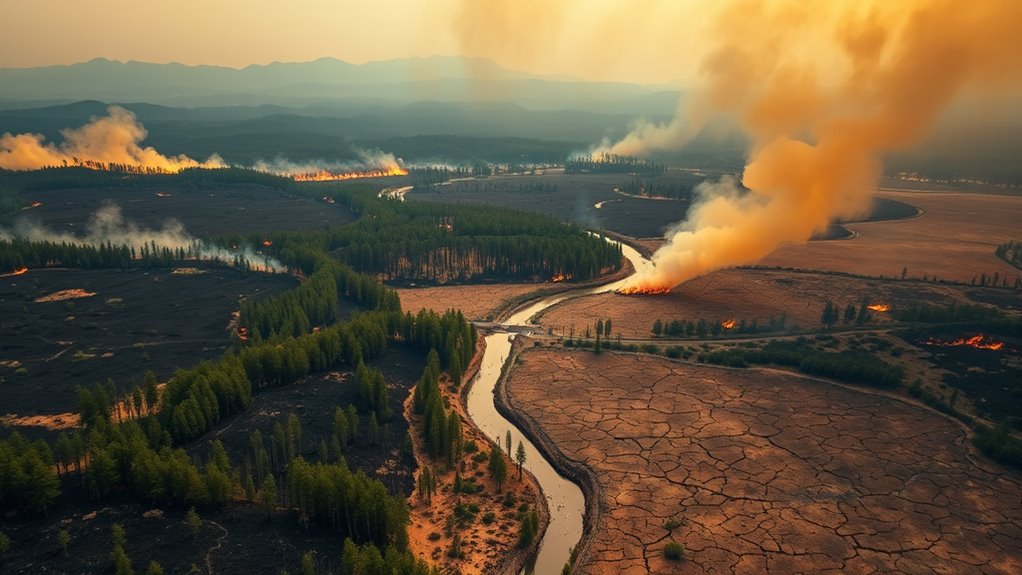
Regional differences across Europe markedly influence how wildfires and heatwaves unfold, shaping both immediate impacts and future risks. Southern regions like Spain, Portugal, and Greece face more frequent, intense wildfires due to drier climates and higher temperatures. Central and eastern Europe experience less severe but increasingly frequent fires influenced by droughts and heatwaves. Northern Europe’s cooler, wetter climate offers some protection, but rising temperatures threaten future stability.
| Region | Typical Wildfire Activity | Future Risk Factors |
|---|---|---|
| Southern EU | Frequent, intense fires | Drier summers, higher temperatures |
| Central EU | Moderate, increasing fires | Drought, climate change acceleration |
| Northern EU | Rare, localized fires | Rising temperatures, droughts |
Frequently Asked Questions
How Are Wildfire Prevention Strategies Adapting to Increased Fire Frequency?
You’re noticing that wildfire prevention strategies are evolving to address increased fire frequency. Authorities are deploying more advanced tools like drones and satellites for early detection, enhancing cross-border cooperation for rapid response, and updating land management practices to reduce fuel loads. Public awareness campaigns promote fire safety, while investments in firefighting equipment and training improve preparedness. These adaptive measures aim to minimize damage and protect communities amidst rising wildfire threats.
What Long-Term Ecological Recovery Efforts Are in Place Post-Wildfire?
You’re leading the charge in ecological recovery efforts that aim to restore ecosystems after wildfires, and it’s nothing short of monumental. You implement reforestation projects, sometimes planting thousands of trees in a single day, and introduce innovative soil restoration techniques to combat erosion. You protect and reestablish endangered habitats, monitor biodiversity recovery, and promote natural regeneration. These relentless efforts seek to heal scars left by fire, turning devastated landscapes into thriving, resilient ecosystems once again.
How Does Wildland-Urban Interface Expansion Influence Fire Damage?
When you expand the wildland-urban interface, you increase the risk of fire damage to homes and infrastructure. More buildings are at risk, and firefighting becomes harder due to dense vegetation and limited access. You may also face higher evacuation rates and property losses. To reduce this, you should adopt fire-resistant landscaping, enforce stricter building codes, and create defensible zones around communities, helping to protect lives and property during wildfires.
What Psychological Impacts Do Wildfires Have on Affected Communities?
You might feel overwhelmed or anxious after a wildfire, as the destruction reminds you of loss and vulnerability. While some find strength in community support, others grapple with post-traumatic stress or grief. The chaos contrasts with moments of relief during evacuations or safety rescues. These psychological impacts can linger, affecting your mental health long after the flames are gone, shaping how you view safety, resilience, and recovery.
Are There Specific Policies Addressing Cross-Border Wildfire Management?
Yes, there are specific policies for cross-border wildfire management. You’re encouraged to participate in EU agreements that promote cooperation, resource sharing, and joint firefighting efforts. These policies facilitate rapid response, data exchange, and coordinated prevention strategies among member states. By working together, you help strengthen resilience across borders, reduce damage, and protect communities more effectively during wildfire emergencies.
Conclusion
As Europe’s climate warms, wildfires rage like an unchained beast, threatening your forests, homes, and future. You hold the power to turn the tide—embracing advanced technology and collective action can be your shield against this fiery storm. The flames may dance fiercely now, but with awareness and effort, you can help tame the inferno, guiding Europe’s landscape back to safety and hope before the fire consumes everything.
Halloween Picks
halloween
As an affiliate, we earn on qualifying purchases.