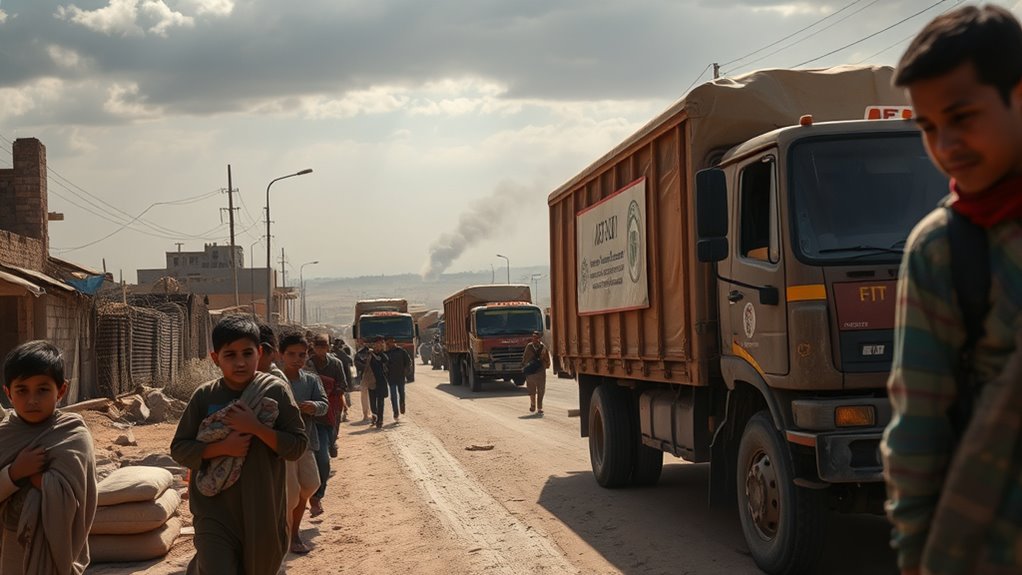

The Gaza ceasefire aims to pause violence and allow humanitarian aid, but many debate whether it can be sustained amid ongoing security concerns and political tensions. Challenges such as ensuring safe corridors, delivering aid efficiently, and managing internal divisions threaten its effectiveness. International efforts focus on monitoring, negotiations, and long-term stability plans. If you’re curious about how these complex issues might unfold and impact future peace efforts, there’s much more to explore.
Key Takeaways
- Humanitarian corridors are vital for delivering aid but are frequently disrupted by security incidents and political disagreements.
- Fuel shortages and checkpoints hinder the functioning of hospitals and essential infrastructure amid the ceasefire.
- International actors are actively coordinating to ensure safe, unrestricted access for food, medicine, and fuel supplies.
- Disagreements over aid logistics and security measures delay the opening and operation of humanitarian corridors.
- Ongoing violence and factional tensions threaten the stability and effectiveness of the ceasefire and aid delivery efforts.

Aquatabs Water Purification Tablets (397mg, 100 Pack). Water Filtration System for Camping, Boating, Emergency Water, Survival Kit, and Marine. Easy-to-Use Water Purifier Treatment.
TRUSTED WATER PURIFICATION TABLETS – Aquatabs are the world's leading water purification tablets for drinking; the ultimate choice…
As an affiliate, we earn on qualifying purchases.
As an affiliate, we earn on qualifying purchases.
Overview of the Ceasefire Agreement and Its Stages

The ceasefire agreement signed by Israel and Hamas on January 15, 2025, marks a significant step toward reducing hostilities in Gaza, taking effect two days later. The ceasefire is structured into three stages, each lasting 42 days, focusing on key areas like hostage exchanges, prisoner releases, and de-escalation. In the first stage, Hamas will release 33 Israeli captives, prioritizing children, women, the elderly, and injured men, while Israel will free up to 1,904 Palestinian prisoners. Humanitarian aid is set at 600 trucks daily, including 50 fuel trucks critical for hospitals and power plants. Israel will limit overflights and allow partial troop withdrawals, creating space for displaced Palestinians to return and easing some restrictions. The process emphasizes conflict resolution through step-by-step negotiations and mutual trust-building measures.

Scepter Duramax Flo ’N Go 14 Gallon Gas Caddy, 53 Liter Portable Fuel Tank and Fuel Transfer Pump with 10-Foot Hose for Lawn Mower, Farm, Marine, Commercial, and Home Use, Red
14-GALLON (53L) FUEL CADDY: The Scepter Flo 'N Go Fueling Station is a fuel tank on wheels for…
As an affiliate, we earn on qualifying purchases.
As an affiliate, we earn on qualifying purchases.
Key Provisions and Expectations for Hostage and Prisoner Exchanges

Key provisions for hostage and prisoner exchanges are central to the ceasefire agreement, aiming to build trust and reduce tensions between Israel and Hamas. You’ll see that Hamas has committed to releasing 33 Israeli captives, prioritizing women, children, the elderly, and injured individuals. In return, Israel is expected to release up to 1,904 Palestinian prisoners, including some who are long-held or previously detained. These exchanges are scheduled to happen in phases, with the first stage focusing on the initial releases. Both sides aim to ensure transparency and security during the process, hoping to foster confidence for future negotiations. The agreements also emphasize the importance of verifying identities and safeguarding the well-being of all captives, facilitating a step toward de-escalation and long-term peace efforts. Ensuring proper material handling and adherence to safety protocols during these exchanges is crucial to prevent accidents or misunderstandings.

MFASCO Complete Emergency Response First Aid Kit Trauma Bag – 415 Piece Fully Stocked Supplies for Disaster Preparedness | for Business, Schools, Organizations, Groups, Home Safety (Reflective – Red)
COMPLETE EMERGENCY RESPONSE KIT – Prepare yourself for any unforeseen disaster with the MFASCO First Responder Kit. This…
As an affiliate, we earn on qualifying purchases.
As an affiliate, we earn on qualifying purchases.
Challenges in Implementing Humanitarian Aid Delivery

Implementing humanitarian aid delivery in Gaza faces significant obstacles despite the ceasefire agreement. Security incidents, clashes, and political disagreements frequently halt aid shipments, worsening the humanitarian crisis. Both sides accuse each other of violations, creating mistrust and delays. Restrictions on truck entry, especially fuel trucks essential for hospitals and power plants, limit aid effectiveness. Displaced civilians struggle to return home due to ongoing violence and checkpoints. The following table highlights key challenges:
| Challenge | Impact | Solution Focus |
|---|---|---|
| Security incidents | Halt aid deliveries | Enhance coordination and monitoring |
| Political disagreements | Delay truck approvals | Diplomatic negotiations |
| Fuel shortages | Disrupt hospital and infrastructure | Prioritize fuel access |
These issues require combined efforts to ensure aid reaches those in need and stabilizes Gaza’s humanitarian situation. Addressing logistical barriers is crucial to overcoming these challenges effectively.

3 Panels Safety Barricade,5.8FT Foldable Security Barrier Gate with Heavy Duty PVC Frame,High Visibility Black Color,Crowd Control Restricted Area Pedestrian Barricade Traffic Fence
【𝟱.𝟴𝗙𝗧 𝗶𝗻 𝗟𝗲𝗻𝗴𝘁𝗵 𝗮𝗻𝗱 𝟯.𝟮𝗙𝗧 𝗶𝗻 𝗛𝗲𝗶𝗴𝗵𝘁】Our safety barricade comes with 3 removable panels, each panel is 23…
As an affiliate, we earn on qualifying purchases.
As an affiliate, we earn on qualifying purchases.
The Role of the International Community in Facilitating Aid and Stability

You play a vital role in ensuring aid reaches Gaza by pressing for unrestricted access and strict monitoring of ceasefire compliance. Your efforts can help hold parties accountable and prevent violations that threaten stability. Supporting long-term peace requires sustained international engagement and coordinated strategies to rebuild trust and infrastructure. Additionally, emphasizing the importance of effective oversight can enhance the transparency and success of aid delivery efforts.
Ensuring Aid Delivery Access
The international community plays a essential role in guaranteeing aid delivery access in Gaza, especially amid ongoing hostilities and security challenges. Your efforts focus on maintaining a safe corridor for essential supplies like food, medicine, and fuel. To improve aid flow, you can:
- Coordinate with local authorities to establish secure routes.
- Pressure parties to respect the humanitarian ceasefire.
- Deploy monitoring teams to oversee aid shipments.
- Facilitate negotiations between conflicting sides.
- Provide logistical support and funding for aid operations.
- Recognize the importance of secure supply routes to prevent disruptions and ensure continuous aid flow.
Your involvement is fundamental to prevent blockages and ensure aid reaches vulnerable populations. The success of these efforts directly impacts civilians’ survival and stability in Gaza. Maintaining open, protected corridors remains a top priority for the international community’s ongoing humanitarian response.
Monitoring Ceasefire Compliance
Monitoring ceasefire compliance is vital to sustaining the fragile peace and guaranteeing aid reaches those in need. You play a key role in observing violations and reporting them to international bodies like the UN and the OSCE. By deploying monitoring teams on the ground, you help document breaches, such as unapproved military movements or blockades that hinder humanitarian aid. You also facilitate communication between Israel, Hamas, and international mediators to prevent misunderstandings. Accurate, real-time information helps coordinate responses, hold parties accountable, and reinforce commitments. Your efforts support the deployment of neutral observers or peacekeepers, which bolster trust and deter violations. Ultimately, consistent monitoring helps maintain the ceasefire, protects civilians, and guarantees that aid delivery remains unobstructed, fostering stability in Gaza.
Supporting Long-Term Stability
Supporting long-term stability in Gaza requires a proactive international effort to guarantee sustained aid delivery, rebuild infrastructure, and foster governance reforms. You can play a role by advocating for consistent aid flow, ensuring delivery of essentials like fuel and medical supplies, and supporting initiatives that restore power, water, and health services. The international community must also push for transparent governance reforms and training Palestinian authorities to manage reconstruction and security effectively. Key actions include:
- Securing continuous humanitarian aid and rebuilding supplies
- Supporting governance reforms for accountable Palestinian leadership
- Promoting infrastructure repair, including hospitals and energy systems
- Facilitating economic development and job creation
- Strengthening security arrangements to prevent renewed violence
- Ensuring compliance with affiliate disclosure and privacy policies to maintain transparency and build trust with aid recipients.
Your involvement can help create a stable environment, reducing the risk of future conflict and ensuring a sustainable peace in Gaza.
Political Dynamics and Domestic Pressures Influencing the Ceasefire

You see how domestic politics in Israel shape the push for a ceasefire, with public opinion and hostage families demanding action. International diplomatic efforts also influence leaders, balancing pressure from allies and global actors. These factors create a complex environment where political decisions directly impact the fragile peace process, and cookie management policies can play a role in informing public opinion and transparency.
Israeli Domestic Politics
Israeli domestic politics play a crucial role in shaping the ceasefire’s stability, as internal pressures from various factions influence government decisions. You see, right-wing parties push for tough security measures and oppose concessions, making diplomatic progress difficult. Public opinion is divided: many families of hostages demand a hardline stance, while others favor ending the conflict. Political leaders face balancing act, trying to satisfy diverse constituencies. Key points include:
- Hardliners resisting ceasefire negotiations
- Pressure from families of hostages advocating for quick resolution
- Electoral considerations influencing policy shifts
- Military leadership calling for continued security operations
- Media narratives shaping public perception and political will
- The influence of public opinion significantly impacts government strategies and decisions.
These factors create a complex environment where domestic pressures often challenge diplomatic efforts, risking instability and potential setbacks in peace initiatives.
International Diplomatic Influence
International diplomatic efforts are considerably shaping the trajectory of the Gaza ceasefire, as global actors actively engage to influence both sides’ commitments. Countries like the US, Egypt, and Qatar push for increased humanitarian access and adherence to negotiated terms, while the UN urges compliance to prevent escalation. Diplomatic pressure also comes from regional allies recognizing Palestinian statehood, adding complexity to negotiations. You’ll notice that international actors work to balance aid delivery, security concerns, and political stability, often mediating between Israeli and Palestinian interests. Domestic pressures in various nations influence diplomatic strategies as well—Israeli public opinion favors ending the conflict, while international bodies push for a sustainable peace process. These diplomatic influences are central to maintaining the fragile ceasefire and shaping Gaza’s future stability. Effective communication strategies are crucial for mediators to facilitate agreements and ensure commitments are upheld.
Security Concerns and the Fragility of the Current Truce

The fragile nature of the current ceasefire becomes evident as sporadic violence and mutual accusations continue to undermine stability. You must recognize that both sides remain on edge, ready for renewed conflict. The risks include:
- Ongoing small-scale clashes between Israeli forces and Palestinian factions
- Internal divisions within Hamas weakening overall control
- Israeli military operations along the “yellow line,” risking escalation
- Reprisals against suspected collaborators fueling tensions
- External pressures that could destabilize negotiations further
These factors keep the ceasefire vulnerable, with neither side fully committed. You may see temporary calm, but underlying mistrust and unresolved issues threaten to reignite violence at any moment. The situation demands constant vigilance, making lasting peace difficult to achieve in the near term. Additionally, the ongoing violence hampers efforts to establish humanitarian corridors, which are crucial for delivering aid to civilians caught in the conflict.
Internal Palestinian and Israeli Factional Tensions and Their Impact

Internal factional tensions within both Palestinian and Israeli communities considerably undermine efforts to maintain the ceasefire. You’ll find that divisions among Palestinian groups, especially between Hamas and other factions, make unified control difficult, leading to sporadic violence and mistrust. Hamas’s internal struggles to control militias and prevent attacks complicate compliance with ceasefire terms. On the Israeli side, ideological rifts and political pressures from right-wing factions hinder full adherence to agreements, fueling unilateral actions and setbacks. These internal conflicts cause delays, weaken diplomatic momentum, and foster suspicion, making it harder to build long-term stability. As factions vie for influence, their disagreements threaten the ceasefire’s sustainability, risking renewed violence and further destabilization in Gaza and beyond.
Long-term Governance and Security Plans for Gaza

Long-term governance and security plans for Gaza aim to establish stability by gradually replacing Israeli military control with international-led oversight and vetted Palestinian authorities. You’ll see efforts to create a sustainable political framework that promotes peace and rebuilds trust. Key elements include:
Gaza’s future relies on international oversight, Palestinian governance, and gradual security reforms for lasting peace.
- Progressing authority to an international Palestinian-led committee
- Deploying an International Stabilization Force (ISF) to oversee security
- Training and empowering Palestinian police for internal order
- Phasing out Israeli military presence step-by-step
- Implementing reforms to strengthen Palestinian governance structures
These measures focus on reducing violence, promoting reconstruction, and fostering a sense of sovereignty. The goal is to develop a resilient, accountable governance system that can manage security without external military dominance, ensuring Gaza’s long-term stability and peace.
Prospects for Future Peace and the Potential for Resumption of Conflict
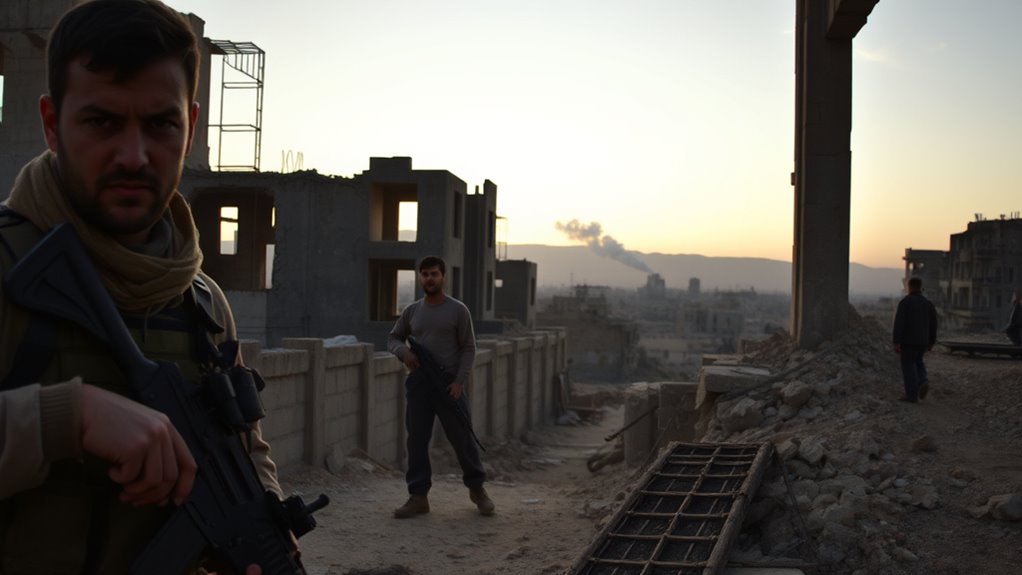
While recent efforts aim to establish a more stable governance framework in Gaza, the path to lasting peace remains uncertain. Both sides continue to face internal and external pressures that threaten to ignite renewed conflict. Trust remains fragile, with frequent violations and unfulfilled commitments risking escalation. Political factions, especially within Hamas and Israeli leadership, may pursue divergent goals, making a sustainable peace difficult to achieve. The table below highlights key factors influencing future prospects:
| Factor | Impact on Peace |
|---|---|
| Ceasefire compliance | Critical for stability |
| International support | Essential for enforcement |
| Internal faction control | Determines authority legitimacy |
| Regional influences | Can either stabilize or destabilize |
Without full commitment and trust, the risk of resumption remains high, and peace remains fragile.
Frequently Asked Questions
What Are the Main Obstacles to Fully Implementing the Ceasefire Terms?
You face obstacles like Israel blocking some humanitarian aid trucks despite agreements, which worsens Gaza’s crisis. Political pressures within Israel, especially from hardliners, hinder full compliance. Hamas struggles to control factions, leading to intermittent violence and ceasefire violations. Both sides accuse each other, creating mistrust and instability. Security concerns, ongoing clashes, and internal divisions make it tough to fully implement and sustain the ceasefire terms, risking renewed conflict.
How Do Internal Palestinian Factions Affect the Ceasefire’s Stability?
Internal Palestinian factions considerably impact the ceasefire’s stability because they often challenge Hamas’s authority and control. You might see factions refusing to abide by agreements, engaging in violence, or resisting disarmament efforts. This internal division creates unpredictable security situations, making it harder to maintain trust and enforce ceasefire terms. You need to understand that these factions’ actions can trigger renewed clashes, jeopardizing the fragile peace process and humanitarian efforts.
What Are the Long-Term Security Arrangements Proposed for Gaza?
Imagine the future of Gaza as a delicate dance of peace and security. The long-term plans include phased demilitarization, where Hamas and other factions gradually disarm, and an international stabilization force takes the lead. This force will train Palestinian police and oversee governance, replacing Israeli military presence. These steps aim to transform Gaza into a terror-free zone, ensuring lasting security while balancing sovereignty and regional stability—hopeful steps toward peace.
How Might International Pressures Influence Future Peace Negotiations?
International pressures can markedly shape future peace negotiations by pushing both Israel and Hamas toward compromise. As you see global leaders and organizations demand humanitarian access and diplomatic solutions, they create leverage that encourages parties to prioritize stability. These pressures also foster international involvement in governance and security arrangements, making it harder for either side to pursue unilateral actions. Ultimately, sustained global engagement helps build an environment conducive to lasting peace talks.
What Could Trigger a Return to Full-Scale Conflict Despite the Ceasefire?
You could see a return to full-scale conflict if ceasefire violations escalate, if negotiations falter, or if internal factions break their commitments. If violence resumes, if mutual distrust deepens, or if international pressure wanes, the fragile peace could collapse. You might also witness renewed hostilities driven by political shifts, unresolved grievances, or external influences reigniting tensions, ultimately plunging the region back into renewed war.
Conclusion
As you follow the Gaza ceasefire, remember that nearly 2 million people rely on humanitarian aid, yet deliveries face constant hurdles. With fragile agreements and ongoing tensions, your awareness can help shape support for lasting peace. While the current truce offers hope, history shows conflicts often resume; understanding these dynamics is key. Stay informed and engaged—your voice can influence efforts toward stability and a sustainable resolution for Gaza.