
As global fertility rates decline, you’ll notice populations aging and workforce numbers shrinking, which can slow economic growth, raise costs for social services, and lead to labor shortages. Regions vary, with some countries experiencing rapid demographic shifts, prompting governments to adopt policies like incentives or immigration to counteract these effects. Environmental benefits emerge as population decline eases resource pressures. To understand how these trends shape our future, explore how policymakers respond and adapt to these changes.
Key Takeaways
- Declining fertility rates lead to aging populations, reducing workforce size and increasing dependency ratios worldwide.
- Lower fertility can cause population stabilization or decline, impacting economic growth and consumer markets.
- Workforce shortages from demographic shifts threaten productivity, innovation, and strain social security and pension systems.
- Regional variations influence policy responses, including incentives for higher birth rates and adjustments to immigration policies.
- Environmental benefits emerge from reduced resource demand and emissions, but long-term demographic changes require strategic planning.
Top picks for "global fertility rate"
Open Amazon search results for this keyword.
As an affiliate, we earn on qualifying purchases.
Global Trends in Fertility Rate Decline

Have you noticed how global fertility rates have been steadily decreasing over the past several decades? This decline is a clear trend worldwide, dropping from about 4.7 children per woman in 1950 to roughly 2.3 in 2022. In some regions, rates have fallen below the replacement level of 2.1 children, especially in Europe and North America, where rates hover around 1.4 to 1.6. Meanwhile, Africa remains an outlier, with a current rate around 4.0, though even this is expected to decline. Developing countries have seen rapid decreases, with nations like South Korea dropping from six children per woman in the 1950s to below one by 2023. Projections suggest this downward trend will continue in most regions, shaping the future of global population dynamics. As fertility rates decline, demographic shifts such as aging populations and shrinking workforces are becoming increasingly evident.
Demographic Shifts and Population Aging

As global fertility rates continue their downward trajectory, populations are experiencing significant demographic shifts, particularly in aging. You’ll notice more people over 65, changing the age structure drastically. This shift leads to higher dependency ratios, meaning fewer working-age individuals support more elders, straining social systems. Countries like Japan and Italy are already facing these challenges, with aging populations reshaping societies. Here’s a quick look:
| Population Segment | Change Expected by Mid-Century |
|---|---|
| Elderly (65+) | Nearly double, 17% to 31% |
| Working-age (15-64) | Slight decline |
| Youth (0-14) | Decline in most regions |
These shifts influence healthcare, pensions, and societal priorities, marking a profound transformation in global demographics. Additionally, the demographic transition process plays a crucial role in understanding these evolving trends.
Economic Impacts of a Shrinking Workforce
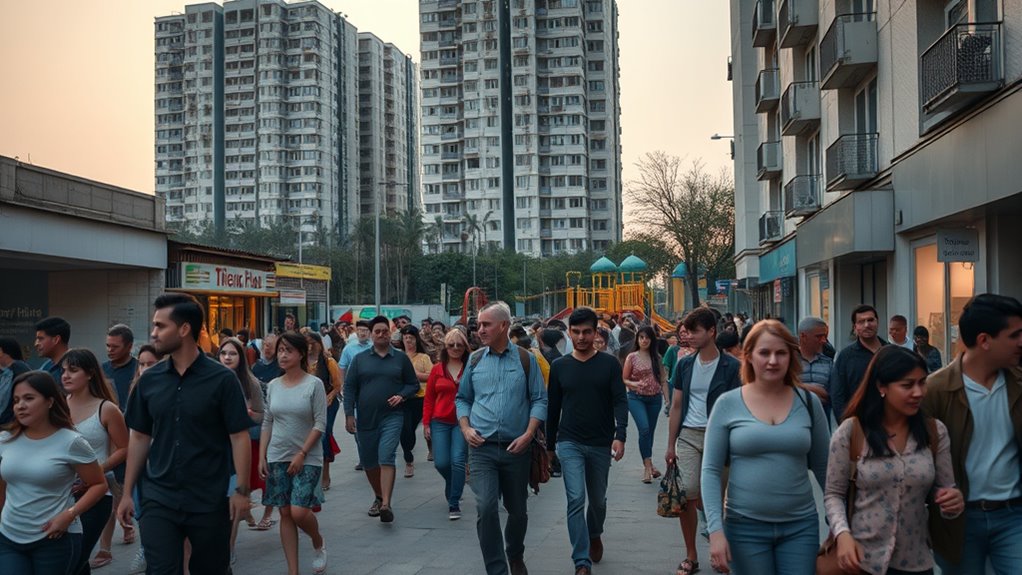
A shrinking workforce directly threatens economic growth by reducing the number of available workers to produce goods and services. This decline can lead to several challenges:
- Slower productivity growth as fewer workers handle increasing demand
- Higher labor costs due to shortages, raising prices for consumers
- Reduced innovation, as fewer young workers drive technological advances
- Increased pressure on social security and pension systems with more retirees supported by fewer workers
- Potential decline in global competitiveness as countries lose economic influence
- The demographic shift resulting from declining fertility rates further exacerbates workforce shortages and economic challenges.
As the workforce shrinks, you’ll see economic expansion slow down, wages rise, and governments face tougher choices about funding social programs. Without significant policy adjustments, these issues could hamper economic stability and long-term prosperity.
Social and Political Changes Driven by Population Decline

Population decline reshapes societies and governments in profound ways. As your country’s population shrinks, you may notice a decrease in political influence globally and domestically, with less economic power and military capacity. Societal priorities shift, leading to increased focus on elder care, healthcare, and social services for aging populations. Family structures evolve, with fewer children affecting education, childcare, and workforce participation, especially among women. Governments might implement policies to boost birth rates through financial incentives, parental leave, or immigration adjustments. However, immigration debates intensify as countries balance demographic needs with cultural integration challenges. These changes influence social cohesion, political stability, and policy-making, requiring you to adapt to a society where demographic shifts redefine national identity, resource allocation, and future development. Additionally, understanding the demographic trends behind these shifts can help policymakers develop more effective strategies to address the evolving needs of their populations.
Environmental Consequences of Reduced Fertility

Reduced fertility rates can lead to significant environmental benefits by slowing population growth and easing pressure on natural resources. With fewer people, you’ll see less strain on water supplies, reduced deforestation, and lower greenhouse gas emissions. This shift can help combat climate change and preserve ecosystems. As populations decline, urban congestion and pollution decrease, improving air and water quality. Additionally, less demand for land reduces habitat destruction and biodiversity loss. A decline in population can also lead to increased opportunities for urban green spaces and conservation efforts, supporting healthier ecosystems. However, slower growth might also mean less investment in green technologies and renewable energy. Overall, reduced fertility can promote sustainability, but it requires balancing environmental gains with economic and social needs.
Regional Variations and Future Projections
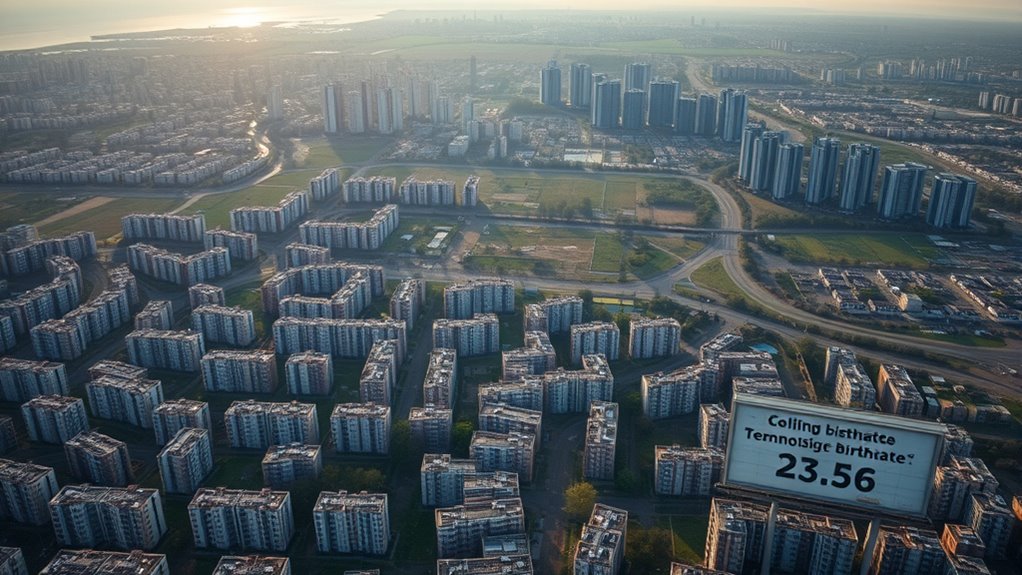
Regional variations in fertility decline reveal diverse demographic futures that will shape global trends. In Africa, fertility rates remain above replacement, around 4.0, but are dropping rapidly from 6.5 in 1950. This suggests a potential slowdown in population growth but sustained expansion if current trends continue. Latin America has experienced a sharp decline from 5.8 to 1.8, indicating a transition toward stabilization or slight decline. Asia’s fertility is forecasted to fall from 1.9 to 1.7 by 2100, risking significant population decreases in countries like China and India. Europe and North America already face low fertility levels—around 1.4 to 1.6—leading to aging populations and shrinking workforces. Oceania’s rates are expected to decline modestly, influenced by urbanization and development. Additionally, pilot shirts for men aviator are gaining popularity among professionals and enthusiasts, reflecting the diverse interests that accompany demographic shifts. Future projections highlight stark contrasts across regions, shaping global demographic and economic landscapes.
Policy Responses and Adaptation Strategies

As fertility rates continue to decline globally, governments are actively implementing policies to counteract potential demographic and economic challenges. You might see efforts to encourage higher birth rates through various measures, such as:
- Offering paid parental leave and child allowances to reduce the financial burden of raising children
- Implementing family-friendly workplace policies to support work-life balance
- Providing affordable childcare and education services
- Promoting public awareness campaigns emphasizing the value of larger families
- Facilitating immigration to offset population decline and sustain workforce levels
These strategies aim to boost fertility, stabilize populations, and maintain economic growth. While some countries focus on incentivizing families, others adapt by reforming pension systems or attracting skilled immigrants. Your engagement with these policies influences their success and the future demographic landscape. Additionally, ongoing research into vetted fertility solutions emphasizes the importance of comprehensive approaches to address demographic shifts effectively.
Frequently Asked Questions
How Will Declining Fertility Rates Influence Global Migration Patterns Long-Term?
You’ll see long-term migration patterns shift as declining fertility rates in many countries create labor shortages and aging populations. Countries with low fertility may increase immigration to fill workforce gaps and sustain economic growth. Conversely, some nations might tighten borders to protect their resources, leading to more regional migration flows. Overall, migration will become a critical tool for balancing demographic challenges and supporting economic stability worldwide.
What Are the Potential Impacts of Population Decline on Cultural Diversity?
Imagine a vast garden where each flower represents a culture. As some flowers fade due to fewer new blooms, the garden’s diversity diminishes. You might see fewer vibrant, unique blooms, leading to a more uniform landscape. Population decline can cause cultural homogenization, eroding traditions and languages. This loss of diversity weakens the rich tapestry of human history, making the global cultural garden less vibrant and resilient over time.
How Might Declining Populations Affect Technological Innovation and Research?
You might find that declining populations slow down technological innovation and research because there are fewer young, skilled workers to bring fresh ideas and drive progress. With smaller workforces, companies and institutions may prioritize maintaining existing technology over developing new solutions. Additionally, reduced economic growth from shrinking populations can limit investments in research and development, making it harder to sustain breakthroughs and advancements in various fields.
Will Aging Societies Lead to Changes in Global Geopolitical Influence?
Aging societies will likely shift global geopolitical influence, making countries with younger populations more dominant. You’ll see older nations lose some power economically and politically as their populations decline, while younger countries may gain influence through growing markets and military strength. This change could reshape international alliances, trade, and diplomacy, as nations with vibrant, youthful populations become key players on the world stage, while aging countries focus more on internal stability and social services.
How Can Countries Balance Demographic Challenges With Economic Growth Needs?
You can balance demographic challenges with economic growth by implementing policies that encourage higher birth rates, such as parental leave, childcare support, and financial incentives. Additionally, investing in workforce productivity and embracing immigration can offset declining populations. Promoting lifelong learning and technological innovation also sustains economic growth despite demographic shifts. These strategies help maintain a healthy economy while addressing aging populations and declining fertility rates effectively.
Conclusion
As you witness the world’s shifting tides of fertility decline, remember it’s not just numbers, but the story of societies evolving. Like a river carving new paths, these demographic changes reshape economies, politics, and the environment. Embrace the challenge, for within this transformation lies an opportunity to innovate and adapt. The question isn’t whether these changes will come, but how you’ll navigate them—turning potential obstacles into pathways of progress.