Water conflicts are increasing worldwide as countries struggle over shared resources, driven by climate change, population growth, and limited supplies. Border disputes occur along the India-Pakistan border over the Indus River, while countries like Kyrgyzstan, Tajikistan, and China fight for access to essential waterways. These tensions threaten food security, economies, and regional stability. To better understand how these conflicts unfold and what is being done to prevent them, keep exploring the details behind these water disputes.
Key Takeaways
- Many territorial disputes, such as between Kyrgyzstan and Tajikistan or India and Pakistan, revolve around access to shared water sources.
- Climate change and increasing water scarcity intensify conflicts over transboundary rivers and water rights.
- Major infrastructure projects like dams (e.g., China’s Mekong dams) can disrupt downstream water flow, fueling tensions.
- Diplomatic efforts and international treaties are essential for managing water rights and preventing conflicts.
- Water disputes threaten regional stability, agriculture, and economic development, often escalating into violence or instability.

Fielda 8/10/12 Inch Self Watering Pots for Indoor/Outdoor Plants
- Self-Watering System with Water Level Indicator: Automatically waters plants for up to 10 days
- Transparent Water Level Window: Monitor hydration easily with measurement markings
- Removable Saucer Tray and Drainage Holes: Promotes healthy roots and prevents overwatering
As an affiliate, we earn on qualifying purchases.
As an affiliate, we earn on qualifying purchases.
Global Trends in Water-Related Conflicts
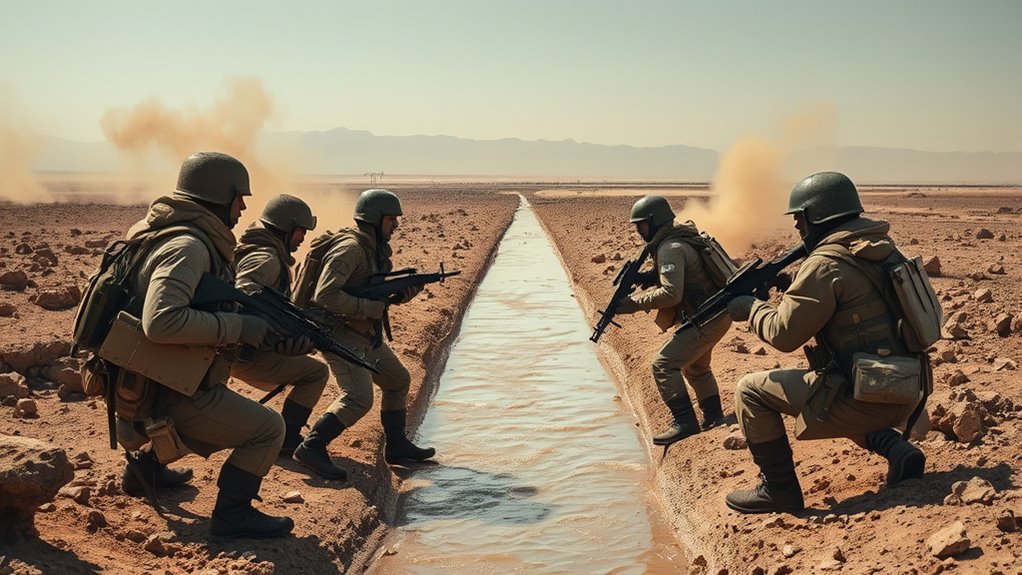
Water-related conflicts have been increasing sharply since the start of the 21st century, with nearly 90% of recorded incidents occurring after 2000. You’ll notice tensions rising across regions, driven by growing water scarcity and competition. Climate change worsens the situation, shrinking water supplies and fueling disputes. Historically, water wars aren’t new; ancient civilizations like Sumer fought over water resources as early as 2400 BCE. Today, over 1,900 instances of water-related violence have been documented globally, highlighting a troubling trend. As populations grow and demand surges, conflicts over shared water sources become more frequent and intense. These disputes threaten regional stability, economic development, and environmental health, emphasizing the urgent need for effective management and cooperation to prevent future crises. Implementing sustainable self-watering plant pots and other water conservation methods can help mitigate some of these pressures.
Key International Border Disputes Over Water
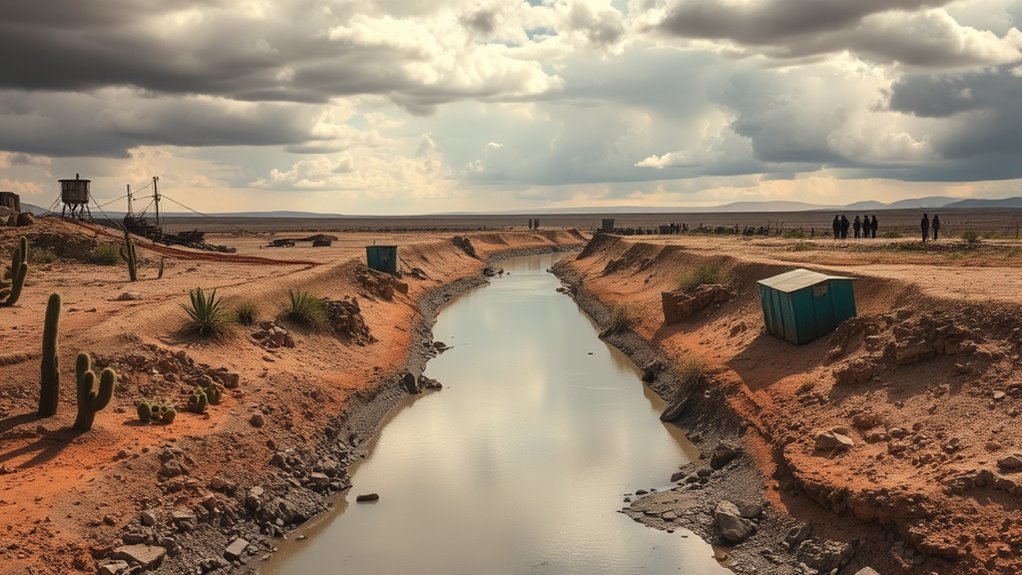
International border disputes over water resources are among the most persistent and complex conflicts in the world. These disagreements often escalate tensions between nations sharing essential water sources. You should be aware of major disputes like:
- Kyrgyzstan and Tajikistan clashes over water access and border security
- India and Pakistan conflicts over the Indus River, especially after the 1960 treaty’s strain
- China’s dams on the Mekong affecting downstream countries like Cambodia and Vietnam
- Turkey’s Ilisu Dam on the Tigris, threatening Iraq’s water supply
- Iran and Afghanistan skirmishes along the Helmand River over water rights
These disputes stem from competing needs, political differences, and environmental pressures. Resolving them requires diplomatic cooperation, international agreements, and sustainable management to prevent further conflict. Notably, technological advancements and accurate data on water flow and usage are essential for effective dispute resolution and establishing trust between parties.
The Economic and Agricultural Impact of Water Disputes
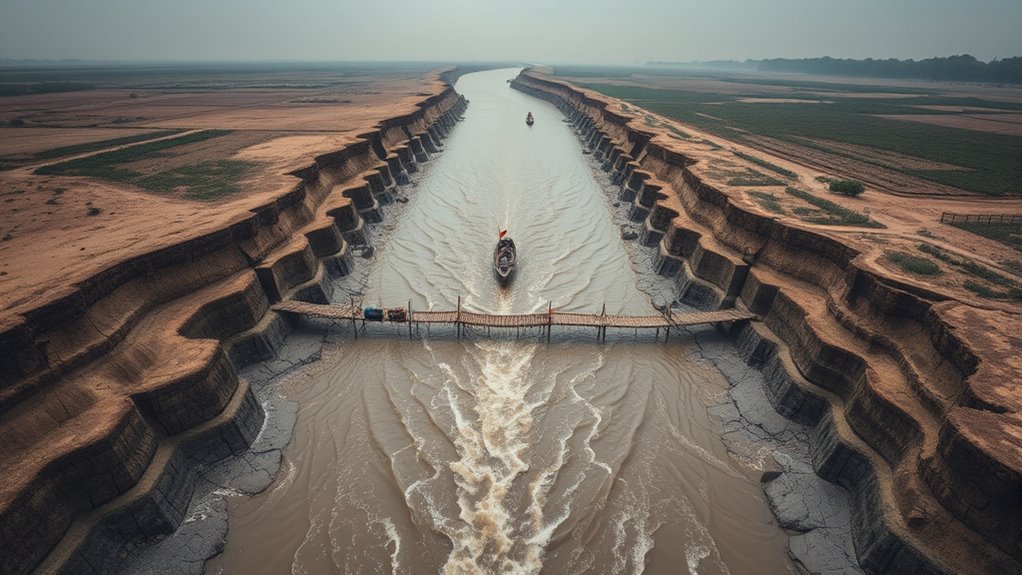
Disputes over water resources have far-reaching consequences for agriculture and the economy in affected regions. When water becomes scarce or access is restricted, farming suffers, leading to lower crop yields and reduced food security. You might see farmers forced to abandon fields or switch to less productive crops, which impacts local economies that depend on agriculture. Water shortages also hinder industrial activities, causing job losses and slowing economic growth. In some cases, the destruction of water infrastructure during conflicts further damages livelihoods and hampers recovery efforts. Additionally, reduced water flow can decrease hydroelectric power generation, increasing energy costs. Furthermore, flexible operating hours at local facilities may be affected, complicating recovery and resource management. Overall, water disputes threaten regional stability by destabilizing economies and undermining agricultural productivity, which are essential for long-term development and the well-being of communities.
Climate Change and Its Role in Escalating Tensions
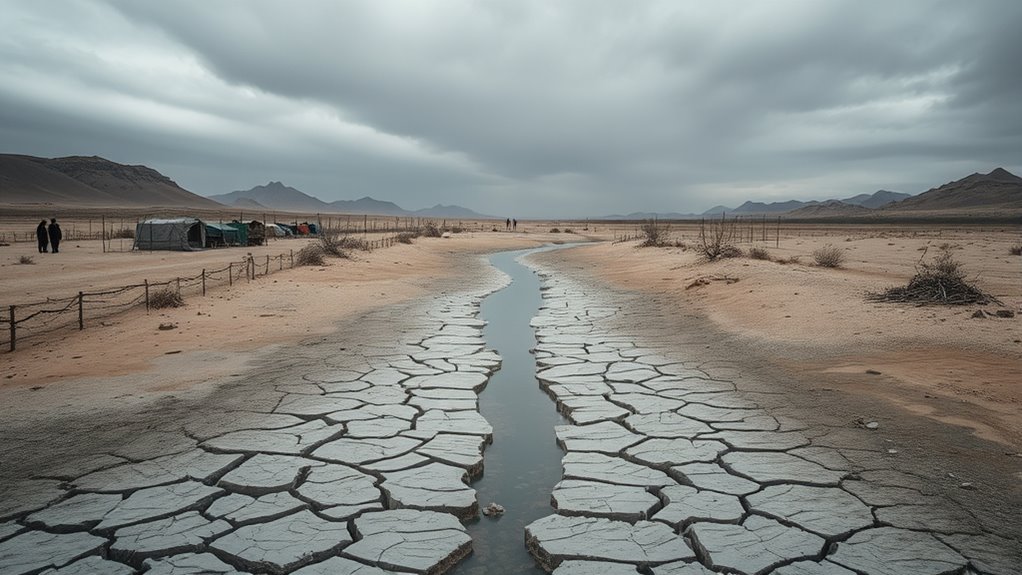
Climate change plays a critical role in escalating water tensions by reducing the availability of fresh water and making existing resources more unpredictable. As temperatures rise, glaciers melt faster, shrinking essential water sources like the Himalayan glaciers that feed major rivers. Droughts become more frequent and severe, straining communities and governments. Altered rainfall patterns disrupt ecosystems and agricultural output, fueling conflicts over scarce resources. You should also note that climate change worsens water quality, increasing health risks.
- Melting glaciers threaten long-term water supplies
- More frequent droughts lead to crop failures
- Unpredictable rainfall causes water management challenges
- Rising temperatures impact aquatic ecosystems
- Future climate models predict increased water scarcity
Strategies for Managing and Preventing Water Conflicts

Effective management and prevention of water conflicts require proactive strategies that foster cooperation and sustainable use of shared resources. You should prioritize international agreements, like treaties that define water rights and responsibilities, ensuring all parties adhere to fair terms. Diplomatic efforts are essential; regular dialogue and confidence-building measures help resolve disputes before they escalate. Investing in climate-resilient infrastructure, such as drought-resistant irrigation systems and efficient water storage, reduces vulnerability. Promoting water conservation through public awareness campaigns and efficient technologies can decrease demand. Economic incentives, like shared revenue from water projects, motivate cooperation. You must also encourage transparent data sharing to build trust among stakeholders. Additionally, integrating water management practices that incorporate scientific research and adaptive strategies can significantly enhance conflict resolution and resource sustainability. When everyone works together, conflicts diminish, and water resources are managed sustainably for future generations.
Frequently Asked Questions
How Do Water Conflicts Influence Local Communities’ Social Cohesion?
Water conflicts can strain your community’s social cohesion by creating divisions and competition over limited resources. When access to water becomes uncertain, people may blame each other or authorities, leading to mistrust and conflict. These disputes can weaken community bonds, reduce cooperation, and escalate tensions, making it harder to work together for shared solutions. Ultimately, ongoing water disputes threaten the social fabric that keeps communities united and resilient.
What Role Do International Organizations Play in Resolving Water Disputes?
International organizations step in like water police, trying to tame the wild disputes over water rights. They mediate negotiations, craft treaties, and offer technical expertise to prevent conflicts from bubbling over. Sometimes, they even threaten sanctions or leverage aid, all in a bid to keep the peace flowing. You might say they’re the referees of a game where water is the prize—and everyone’s thirsty for victory.
How Effective Are Current Treaties in Preventing Water-Related Violence?
Current treaties can be quite effective if they’re well-designed and actively enforced. You’ll find that they help establish clear water-sharing agreements, reduce misunderstandings, and promote cooperation among nations. However, their success depends on political will and ongoing dialogue. When countries honor these treaties and adapt them to changing circumstances, they can substantially lower the risk of water-related violence. Still, unresolved tensions and climate impacts can challenge even the best agreements.
What Innovative Technologies Are Being Developed for Water Conflict Management?
You won’t believe the groundbreaking technologies transforming water conflict management! Smart sensors and AI-powered data analysis predict shortages before they happen, while blockchain creates transparent water-sharing agreements that are virtually unbreakable. Satellite imagery monitors water use in real-time, and IoT devices automate efficient distribution. These innovations are revolutionizing how nations cooperate, making water disputes nearly impossible by providing precise, real-time solutions that guarantee fair, sustainable access for everyone.
How Does Urbanization Impact Regional Water Resource Disputes?
Urbanization increases demand for water, putting pressure on regional resources and heightening disputes. You’ll notice that as cities expand, water supplies become more strained, leading to conflicts over access and rights. Inefficient infrastructure and pollution worsen the situation, causing tensions between communities and countries. To manage this, you should promote sustainable urban planning, improve water conservation, and invest in advanced infrastructure to reduce conflicts and guarantee equitable distribution.
Conclusion
As you navigate the complexities of water disputes, remember that water is a rising tide that can lift all boats or sink them. By understanding global trends and fostering cooperation, you can help prevent conflicts before they reach boiling point. It’s clear that proactive strategies and international collaboration are key. Don’t wait for the storm to hit—address water tensions now, or risk paying the piper later. Water peace is within your grasp if you act wisely.