When selecting an AV receiver, the main goal is to balance sound quality, connectivity, and ease of use within your budget. The Denon AVR-X1700H stands out as the best overall for its versatile features and reliable performance, while the Yamaha RX-A2A offers premium 8K support for those seeking future-proofing. Budget-conscious buyers may prefer the Sony STRDH590, which provides solid surround sound at an accessible price. However, tradeoffs often involve choosing between power, compatibility, and advanced features, making it vital to match your needs precisely. Continue reading for a detailed breakdown of each top pick and how they compare.

Get travel and outdoor gear delivered free with Prime
- Fast, free delivery on millions of items
- Prime Video, Amazon Music and more included
- Member-only deals all year
Complete the kit



Key Takeaways
- The best AV receivers balance power, connectivity, and future-proofing features like 8K support.
- Premium models tend to include advanced sound formats and more HDMI inputs, but at a higher cost.
- Entry-level options can deliver solid sound but may lack advanced features or multi-room capabilities.
- Design and user interface vary greatly; some receivers prioritize simplicity, others offer extensive customization.
- Compatibility with smart home systems and streaming services is a key consideration for modern setups.
| Sony STRDH190 2-Ch Home Stereo Receiver with Bluetooth and Phono Inputs – Black |  | Best for Compact, Simple Stereo Setups | Maximum Output Power: 100 watts x 2 (8 ohms, 1 KHz) | Connector Type: Bluetooth, Phono input, 4 stereo RCA inputs, 3.5mm input, RCA output | Speaker Impedance: 6–16 ohms | VIEW ON AMAZON | See Our Full Breakdown |
| Denon AVR-X1700H 7.2 Channel AV Receiver – 80W/Channel, Built-in HEOS |  | Best for Mid-Range Home Theater with 8K Support | Channels: 7.2 | Power per channel: 80W | HDMI Inputs: 6 | VIEW ON AMAZON | See Our Full Breakdown |
| Yamaha RX-A2A AVENTAGE 7.2-Channel AV Receiver with 8K HDMI, Dolby Atmos, DTS:X, Wi-Fi, Bluetooth, MusicCast | 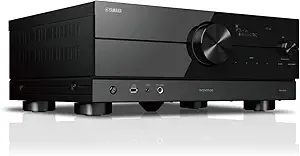 | Best for High-End, Future-Ready Home Theater | Channels: 7.2 | HDMI Inputs: 7-in/1-out with HDCP 2.3 and eARC | Supports: 8K60B, 4K120AB, Dolby Atmos, DTS:X | VIEW ON AMAZON | See Our Full Breakdown |
| Onkyo TX-NR6100 7.2 Channel THX Certified Network AV Receiver – Black |  | Best for High-Power, THX-Certified Home Theater | Power: 210 W/Ch | Channels: 7.2 | Certification: THX Certified | VIEW ON AMAZON | See Our Full Breakdown |
| Onkyo TX-RZ50 9.2-Channel THX Certified AV Receiver |  | Best for Maximum Channels and High-Fidelity Sound | Channels: 11.2 | Supported Internet Services: Amazon Music, Deezer, Pandora, Spotify, TIDAL, TuneIn | HDMI Ports: 8 | VIEW ON AMAZON | See Our Full Breakdown |
| Sony STRDH590 5.2 Channel Surround Sound Home Theater Receiver |  | Best Budget-Friendly AV Receiver for Basic Home Theater | Channel Configuration: 5.2 channels | Power Output: 725W | Supported Video: 4K HDR, HDCP 2.2 | VIEW ON AMAZON | See Our Full Breakdown |
| Yamaha RX-V4A 5.2-Channel AV Receiver with MusicCast |  | Best for Tech-Savvy Users Wanting Latest HDMI and Streaming | HDMI Version: HDMI 2.1 | HDMI Ports: 4 in / 1 out | Supported Resolutions: 4K60, 4K120AB, 8K60B | VIEW ON AMAZON | See Our Full Breakdown |
| Yamaha RX300A 5.2-Channel Home Theater AV Receiver with Dolby Atmos, 4K120/8K HDMI, Bluetooth Multipoint |  | Best for Dolby Atmos Enthusiasts Seeking Easy Setup | Channels: 5.2 | Power: 70W | HDMI Support: 4K120/8K60, HDMI eARC/ARC | VIEW ON AMAZON | See Our Full Breakdown |
| Denon AVR-S570BT 5.2 Channel AV Receiver – 8K Ultra HD Audio & Video |  | Best for 8K and HDR Support on a Budget | Channels: 5.2 | Power: 70W x 5 | HDMI Inputs: 4 HDMI 2.1 8K inputs | VIEW ON AMAZON | See Our Full Breakdown |
| Denon AVR-S670H 5.2 Channel Home Theater Receiver, 8K UHD HDMI, 75W x 5 |  | Best for Future-Proof 8K Home Theater with Voice Control | Channels: 5.2 | Power Output: 75W x 5 | Video Support: 8K UHD, HDR10+, Dolby Vision | VIEW ON AMAZON | See Our Full Breakdown |
More Details on Our Top Picks
Sony STRDH190 2-Ch Home Stereo Receiver with Bluetooth and Phono Inputs – Black
The Sony STRDH190 stands out for its straightforward design and excellent sound quality for a stereo system, especially considering its low profile. Compared to multi-channel options like the Denon AVR-X1700H, it sacrifices surround sound and advanced video features but excels in delivering high-resolution audio with minimal complexity. This makes it ideal for music lovers who prioritize sound clarity and vinyl playback, without the need for home theater features. Its Bluetooth connectivity and phono input cater specifically to those who want a versatile, space-efficient stereo that can handle both digital and analog sources. However, it’s limited to 2-channel stereo, lacks Wi-Fi, and offers a basic interface, which can be a drawback for users seeking future expansion or smart home integration.
Pros:- Wireless streaming via built-in Bluetooth
- Supports multiple audio sources including vinyl and digital music
- Compact, low-profile design fits easily into standard AV cabinets
Cons:- Limited to 2-channel stereo output
- No Wi-Fi connectivity and basic interface
Best for: Music enthusiasts wanting a simple, high-quality stereo system with vinyl support.
Not ideal for: Home theater enthusiasts seeking surround sound and advanced video features.
- Maximum Output Power:100 watts x 2 (8 ohms, 1 KHz)
- Connector Type:Bluetooth, Phono input, 4 stereo RCA inputs, 3.5mm input, RCA output
- Speaker Impedance:6–16 ohms
- Dimensions:Low profile (5 ¼ Inch tall)
- Frequency Band:2,400 MHz – 2,483.5 MHz
- Power Requirement:AC 120 V 60 Hz
Our verdict“This receiver is perfect for those who want a straightforward, space-saving stereo with excellent sound quality for music playback.”
Denon AVR-X1700H 7.2 Channel AV Receiver – 80W/Channel, Built-in HEOS
The Denon AVR-X1700H offers a compelling balance of advanced features and user-friendly design, making it a versatile choice for those upgrading from basic models like the Sony STRDH190 or Yamaha RX-V4A. Its support for 8K/60Hz and 4K/120Hz pass-through ensures future-proof video quality, while Dolby Atmos and DTS:X create immersive sound experiences. Built-in HEOS streaming and voice control compatibility with Alexa, Google Assistant, and Siri simplify multi-room setups and smart home integration. However, its setup can be complex for beginners, and the higher price reflects its premium features. Compared to the Yamaha RX-A2A, it is less feature-rich in room calibration but offers a solid, reliable user interface for most users.
Pros:- Supports latest 8K and 4K/120Hz video standards
- Immersive Dolby Atmos and DTS:X surround sound
- Built-in HEOS for multi-room streaming and voice control
Cons:- Complex setup may challenge beginners
- Relatively high price for the feature set
Best for: Home theater enthusiasts seeking 8K support and multi-room streaming with moderate technical skills.
Not ideal for: Beginners or those with tight budgets who prefer a plug-and-play experience without complex setup.
- Channels:7.2
- Power per channel:80W
- HDMI Inputs:6
- Supports:8K/60Hz, 4K/120Hz, Dolby Atmos, DTS:X
- Built-in:HEOS, Wi-Fi, AirPlay 2, Bluetooth
- Dimensions:Not specified
Our verdict“Ideal for users wanting a future-proof home theater receiver with multi-room and voice control, despite a steeper learning curve.”
Yamaha RX-A2A AVENTAGE 7.2-Channel AV Receiver with 8K HDMI, Dolby Atmos, DTS:X, Wi-Fi, Bluetooth, MusicCast
The Yamaha RX-A2A AVENTAGE earns its spot for delivering top-tier audio and video performance with 8K HDMI support, Dolby Atmos, and DTS:X. Its advanced room calibration with YPAO R.S.C. and Surround:AI helps optimize sound for any space, making it perfect for dedicated home theater setups. Compared to the Denon AVR-X1700H, it offers more refined calibration and a richer feature set for audiophiles, though at a higher cost and with a more complex setup process. Its seamless integration with streaming services and voice control makes it an excellent choice for those who want a premium, all-in-one solution. However, the setup complexity and price may deter casual users or those new to AV equipment.
Pros:- Supports 8K and 4K/120 HDMI for future-proofing
- Immersive Dolby Atmos and DTS:X support
- Excellent room calibration with YPAO R.S.C. and Surround:AI
Cons:- Complex setup requiring some technical knowledge
- Premium price point may be prohibitive
Best for: Audiophiles and home theater aficionados seeking premium sound and future-proof video support.
Not ideal for: Casual users or newcomers who prefer simple plug-and-play solutions without extensive calibration.
- Channels:7.2
- HDMI Inputs:7-in/1-out with HDCP 2.3 and eARC
- Supports:8K60B, 4K120AB, Dolby Atmos, DTS:X
- Connectivity:Wi-Fi, Bluetooth, AirPlay 2, MusicCast
- Voice Control:Amazon Alexa, Siri, Google Assistant
Our verdict“This receiver is designed for serious home theater enthusiasts wanting the best sound and video quality with advanced room calibration features.”
Onkyo TX-NR6100 7.2 Channel THX Certified Network AV Receiver – Black
The Onkyo TX-NR6100 stands out for its robust power output of 210W per channel and THX certification, making it suitable for large rooms or demanding setups. Its support for 8K HDMI 2.1 with 40Gbps bandwidth ensures compatibility with the latest high-definition content. While its high power and THX certification promise superior sound clarity and cinematic impact, the setup may be challenging for those unfamiliar with advanced AV equipment. Compared to the Onkyo TX-RZ50, it offers slightly less processing flexibility but emphasizes raw power and certification. Its large size and absence of detailed specs may be a concern for space-constrained environments.
Pros:- High power output of 210W per channel
- Supports Dolby Atmos and DTS:X
- 8K HDMI 2.1 with 40Gbps bandwidth for future content
Cons:- Complex setup requiring technical knowledge
- No price details available, possibly expensive
Best for: Home theater users needing high power and certified audio quality for large spaces.
Not ideal for: Casual users or those with limited space, due to its size and complexity.
- Power:210 W/Ch
- Channels:7.2
- Certification:THX Certified
- HDMI:8K with HDMI 2.1 40Gbps
- Audio Formats:Dolby Atmos, DTS:X
Our verdict“This receiver is best suited for large rooms where power and THX certification can shine, but setup complexity is a consideration.”
Onkyo TX-RZ50 9.2-Channel THX Certified AV Receiver
The Onkyo TX-RZ50 offers a substantial 11.2 processing channels, making it the most expansive option in this lineup. Its support for 8K/4K transfer at 40 Gbps and THX certification suggest it’s built for high-fidelity home theater and gaming setups. The inclusion of DIRAC Live Room Correction technology enhances sound clarity, especially in challenging spaces, while multiple HDMI-out options provide versatile configurations. Although its size and complexity might be intimidating for casual users, it delivers a level of surround sound and video support that surpasses most, including the Yamaha RX-A2A. The lack of detailed pricing information could be a barrier for budget-conscious buyers, but its feature set is unmatched for enthusiasts demanding the best.
Pros:- High-fidelity 11.2 channel processing with THX certification
- Supports 8K/4K HDMI transfer at 40 Gbps
- DIRAC Live Room Correction for superior sound clarity
Cons:- Setup may require technical expertise
- Heavy and large, demanding ample space
Best for: Home theater enthusiasts seeking maximum channels, advanced room calibration, and future-proof HDMI support.
Not ideal for: Users who prefer plug-and-play or have space constraints, due to its size and setup complexity.
- Channels:11.2
- Supported Internet Services:Amazon Music, Deezer, Pandora, Spotify, TIDAL, TuneIn
- HDMI Ports:8
- Power:250 watts
- Control Method:Remote
Our verdict“This receiver excels for serious home theater setups demanding maximum channels and high-quality calibration, with a tradeoff in complexity and size.”
Sony STRDH590 5.2 Channel Surround Sound Home Theater Receiver
The Sony STRDH590 stands out as a reliable entry-level option that delivers solid 5.2-channel surround sound with cinematic quality, especially suited for those new to home theater setups. Its support for 4K HDR and HDCP 2.2 ensures high-quality video, matching the capabilities of more expensive models like the Yamaha RX-V4A, but without the advanced features or streaming options. The Bluetooth connectivity allows for easy wireless streaming, yet it lacks built-in Wi-Fi or smart home integrations, making it less versatile for tech-savvy users. This receiver requires external speakers to complete the surround sound experience, which can add to the total cost. Compared with the Yamaha RX300A, it is more straightforward but less feature-rich, making it ideal for budget-conscious buyers who prioritize basic performance over smart features. The tradeoff is limited future-proofing and fewer customization options.
Pros:- Supports 4K HDR and HDCP 2.2 for high-quality video
- Bluetooth connectivity for wireless streaming
- Multiple HDMI inputs for various devices
Cons:- Limited detailed review information available
- No built-in Wi-Fi or smart features
- Requires external speakers for full surround sound
Best for: First-time home theater buyers or those seeking an affordable upgrade for basic audio needs
Not ideal for: Homeowners wanting integrated Wi-Fi, smart features, or future-proofing for 8K content
- Channel Configuration:5.2 channels
- Power Output:725W
- Supported Video:4K HDR, HDCP 2.2
- HDMI Ports:4 in / 1 out
- Connectivity:Bluetooth, HDMI
- Frequency Band:2.4 GHz
Our verdict“This model makes the most sense for budget-conscious buyers seeking reliable 4K support and simple setup without smart features.”
Yamaha RX-V4A 5.2-Channel AV Receiver with MusicCast
The Yamaha RX-V4A elevates home theater experiences with HDMI 2.1 support, enabling 4K/8K resolutions and high frame rates that surpass the Sony STRDH590’s capabilities. Its integrated Wi-Fi and MusicCast system make streaming and multi-room audio seamless, ideal for users who want a connected, versatile setup. While its complex configuration may challenge newcomers, the extensive feature set justifies the learning curve for enthusiasts. Compared to the Yamaha RX300A, it offers more advanced processing and smart features, though at a higher price. This receiver is better suited to those who prioritize future-proofing and rich streaming options over simplicity. The main tradeoff involves setup complexity and a premium price point, which could deter casual users.
Pros:- Supports HDMI 2.1 for 4K/8K high-quality video
- Built-in Wi-Fi and streaming service compatibility
- Voice control with Alexa, Google Assistant, and Siri via AirPlay 2
Cons:- Complex setup for non-technical users
- Premium price point
Best for: Tech enthusiasts and users who value the latest HDMI features and integrated streaming
Not ideal for: Less experienced users preferring plug-and-play simplicity or those on a tight budget
- HDMI Version:HDMI 2.1
- HDMI Ports:4 in / 1 out
- Supported Resolutions:4K60, 4K120AB, 8K60B
- Wi-Fi:2.4 GHz/5 GHz
- Voice Control:Alexa, Google Assistant, Siri
- Streaming Services:Multiple including Spotify, TIDAL, Amazon Music
Our verdict“This pick makes the most sense for those seeking advanced video features and rich streaming integration, despite its setup complexity.”
Yamaha RX300A 5.2-Channel Home Theater AV Receiver with Dolby Atmos, 4K120/8K HDMI, Bluetooth Multipoint
The Yamaha RX300A offers immersive Dolby Atmos and DTS Virtual:X sound, making it a compelling choice for those who want a cinematic experience without the complexity of larger systems. Its support for 4K120 and 8K HDMI makes it somewhat future-proof, although limited to 5.2 channels, unlike higher-channel systems. The on-screen setup and room correction features simplify installation, making it suitable for users unfamiliar with AV receivers. Compared with the Denon AVR-S570BT, it provides superior surround sound immersion but lacks the latest HDMI 2.1 ports. This model is best for users prioritizing Atmos sound quality and easy installation over extensive customization or multi-channel expansion. The main compromise involves its 5.2 configuration and limited advanced features, which might restrict scalability.
Pros:- Immersive Dolby Atmos and DTS Virtual:X sound
- Supports 4K120/8K HDMI with advanced features
- Easy setup with on-screen menu and room correction
Cons:- Limited to 5.2 channels, not expandable to 7.2 or higher
- No mention of voice control compatibility
Best for: Home theater enthusiasts who want Dolby Atmos and straightforward setup
Not ideal for: Power users needing larger channel configurations or extensive multi-room audio options
- Channels:5.2
- Power:70W
- HDMI Support:4K120/8K60, HDMI eARC/ARC
- Dolby Atmos:Yes
- DTS Virtual:X:Yes
- Bluetooth:Multipoint
Our verdict“Ideal for Atmos lovers seeking straightforward installation and immersive sound, but not suited for large multi-channel setups.”
Denon AVR-S570BT 5.2 Channel AV Receiver – 8K Ultra HD Audio & Video
The Denon AVR-S570BT provides a balanced mix of modern features and affordability, supporting 8K HDMI inputs and HDR formats like Dolby Vision. Its 70W per channel output is sufficient for smaller to medium rooms, offering Dolby TrueHD and DTS-HD Master Audio for immersive sound. While it lacks built-in Wi-Fi, its Bluetooth streaming supports multiple devices, and its straightforward setup makes it accessible for most users. Compared to the Yamaha RX-V4A, it places a stronger emphasis on 8K support, but without integrated streaming services or smart home features. This receiver is well-suited for buyers who want high-quality video and audio without the premium price tag, though it might fall short for those seeking multi-room or voice control capabilities.
Pros:- Supports 8K HDMI and latest HDR formats
- Immersive Dolby TrueHD and DTS-HD Master Audio
- Built-in Bluetooth for wireless streaming
Cons:- Limited to 70W per channel, may not fill large rooms
- No built-in Wi-Fi or multi-room audio beyond Bluetooth
Best for: Budget-conscious users wanting 8K compatibility and solid audio performance
Not ideal for: Users seeking integrated Wi-Fi, multi-room streaming, or larger channel configurations
- Channels:5.2
- Power:70W x 5
- HDMI Inputs:4 HDMI 2.1 8K inputs
- HDR Support:HDR, Dolby Vision, HDR10+
- Audio Formats:Dolby TrueHD, DTS-HD Master
- Standby Power:0.1 W
Our verdict“Great for those wanting 8K support and Dolby sound on a budget, but not for users needing extensive smart features.”
Denon AVR-S670H 5.2 Channel Home Theater Receiver, 8K UHD HDMI, 75W x 5
The Denon AVR-S670H is geared toward users seeking a future-proof setup with 8K support and multi-room capabilities. Its 75W per channel output provides ample power for most home environments, and its support for HDMI 8K/60Hz along with HDR10+ and Dolby Vision ensures compatibility with the latest video standards. The inclusion of HEOS multi-room audio streaming and voice control options makes it a flexible, connected choice. Compared with the Denon AVR-S570BT, it offers more power and detailed connectivity options, including Wi-Fi. However, its setup can be complex for those unfamiliar with home theater configurations, and it consumes more power due to its advanced features. This model is best for users who want integrated voice control, multi-room audio, and high-end video support in one package.
Pros:- Supports 8K UHD, HDR10+, Dolby Vision, HDR
- Multi-room audio via HEOS, Wi-Fi, and Bluetooth
- Full voice control compatibility with Alexa and other assistants
Cons:- Complex setup for users unfamiliar with AV systems
- High power consumption due to advanced features
Best for: Homeowners seeking a comprehensive, future-ready AV receiver with multi-room and voice control
Not ideal for: Casual users or those with limited technical experience who prefer plug-and-play solutions
- Channels:5.2
- Power Output:75W x 5
- Video Support:8K UHD, HDR10+, Dolby Vision
- Connectivity:HDMI, eARC, Wi-Fi, Bluetooth
- Voice Control:Alexa, other major assistants
- Additional Features:HDCP 2.3, VRR, ALLM, QFT
Our verdict“Ideal for tech-savvy users looking for a fully integrated, future-ready home theater experience with multi-room capabilities.”

How We Picked
These AV receivers were selected based on a combination of performance, connectivity options, build quality, and value for money. We prioritized models that offer a good balance of power, user-friendliness, and future-proofing features like 8K HDMI support. Reliability and user reviews also played a role in our evaluation, ensuring each pick represents a dependable choice for different needs. The ranking reflects overall versatility and how well each model meets common buyer expectations, from beginners to audiophiles seeking advanced features.Factors to Consider When Choosing Av Receiver
Choosing the right AV receiver involves understanding several key factors that influence your home theater experience. Beyond raw power, considerations such as connectivity options, future-proofing, and ease of setup can dramatically affect satisfaction. Avoiding common pitfalls, such as underestimating the number of HDMI inputs needed or overlooking compatibility with existing devices, helps ensure a smooth purchase. Here are the main factors to consider when selecting an AV receiver to match your specific needs.Power and Amplification
The power output of an AV receiver determines how loud and dynamic your sound system can get. While more wattage can mean better performance for larger rooms, it’s not the only factor—sound quality and speaker matching are equally important. Overestimating wattage can lead to unnecessary expense, so consider your room size and speaker capabilities. A receiver with 75-100W per channel often suffices for most home theaters, but larger spaces or demanding speakers may require more power.
Connectivity and Inputs
Modern AV receivers should support multiple HDMI inputs, with some offering 8K support for future compatibility. Check the number and type of inputs to match your devices—gaming consoles, streaming boxes, Blu-ray players, etc. Additionally, consider audio connections like optical, coaxial, and legacy inputs if you still use older equipment. USB and Ethernet ports can enhance streaming and smart home integration, but overloading on ports you won’t use can add unnecessary cost.
Future-Proofing Features
Features like 8K HDMI, Dolby Atmos, and DTS:X support are critical for keeping your system up-to-date. While investing in the latest technology might seem costly now, it prevents needing a full upgrade in just a few years. Also, look for firmware update support and compatibility with smart home systems, which can extend device lifespan and functionality. However, be mindful that these features can increase the price and complexity of setup.
Ease of Use and Setup
An intuitive interface and straightforward setup process save time and frustration. Some receivers include calibration tools that automatically optimize sound based on your room acoustics, which is highly beneficial for beginners. Conversely, models with extensive customization options may appeal to audiophiles but require more technical knowledge. Balance your comfort with technology against your desire for detailed control.
Build Quality and Design
Durability and aesthetic appeal matter if your AV receiver is a visible part of your living space. Look for well-ventilated chassis and quality materials to ensure longevity. Compact designs can fit better into tight spaces but might limit ports and upgrade options. Consider the overall size and whether the design complements your existing home theater setup to avoid mismatched aesthetics.
Frequently Asked Questions
How many HDMI inputs do I really need?
The number of HDMI inputs depends on how many devices you plan to connect simultaneously. Most users find 4 to 6 inputs sufficient for a gaming console, streaming device, Blu-ray player, and a few extras like a soundbar or media server. If you have multiple gaming systems or plan to add more devices, opting for a receiver with more inputs or a model with HDMI switching can save hassle. Always consider future expansion to avoid needing a new receiver soon after purchase.
Is 8K support necessary now or can I wait?
While 8K support offers future-proofing, most current content is still in 4K, making 8K less urgent today. However, if you plan to keep your system for many years or want to ensure compatibility with upcoming devices, choosing an 8K-capable receiver makes sense. Keep in mind that 8K features often come at a premium, so weigh the cost against your current needs and future plans.
Should I prioritize power or features?
For most home theaters, features like Dolby Atmos, multiple zones, and smart integration are more impactful than raw power. Power becomes more critical in very large rooms or with demanding speakers, but for typical setups, an adequately powered receiver with good sound processing is sufficient. It’s better to get a receiver with the right features and enough power than to overspend on wattage you won’t fully utilize.
How important is wireless connectivity?
Wireless features like Wi-Fi, Bluetooth, and streaming support enhance convenience and reduce cable clutter. They enable easy integration with smart home systems, voice control, and multi-room audio. However, relying solely on wireless can sometimes introduce latency or stability issues, so a model with both wired and wireless options provides more reliable performance. Consider your setup’s complexity and how much you value wireless streaming.
Are premium models worth the extra cost?
Premium AV receivers generally include higher power, more HDMI inputs, advanced audio formats, and better build quality. They are beneficial if you have a large, complex system or want the latest features and best sound quality. However, for smaller setups or casual use, mid-range models often deliver excellent performance without the hefty price tag. Carefully evaluate your needs and budget to decide if the added features justify the expense.
Conclusion
The best overall AV receiver for most users in 2026 is the Denon AVR-X1700H, offering a well-rounded mix of features, performance, and value. If you’re seeking premium quality and future-proofing, the Yamaha RX-A2A stands out, especially for those with larger or more advanced setups. Beginners or casual viewers will find the Sony STRDH590 provides solid sound without complexity, while power users or large rooms may prefer the Onkyo TX-RZ50 for its high wattage and comprehensive features. Matching your specific needs—whether budget, performance, or ease of use—will help you choose the right AV receiver for your home theater.
As an affiliate, we earn on qualifying purchases.Halloween Picks
halloween