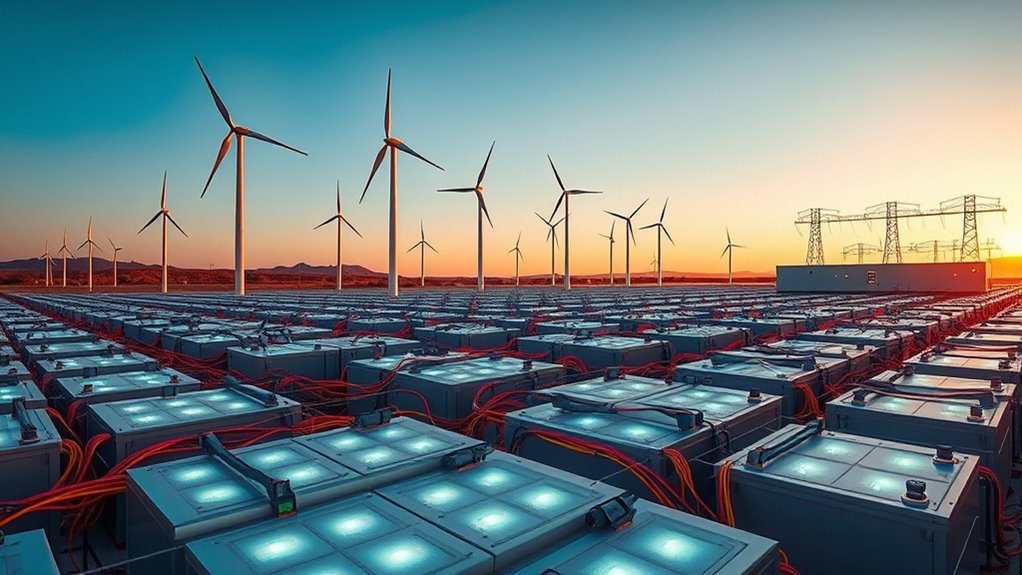

Innovations in renewable energy storage and grid integration are transforming how you generate and manage clean power. Advanced technologies like solid-state batteries, flow batteries, and thermal storage boost capacity, safety, and efficiency, making renewable sources more reliable. Policies and regional projects are supporting widespread deployment, while declining costs strengthen economic viability. These developments help maximize renewable use, stabilize grids, and promote a sustainable energy future. Exploring further reveals how these cutting-edge solutions shape the energy landscape and your future.

Get travel and outdoor gear delivered free — and shop member deals
- Fast, free delivery on millions of items
- Access to Prime Big Deal Days deals on October 6–7
- Prime Video, Amazon Music and more included
Key Takeaways
- Advanced battery chemistries like solid-state and flow batteries enhance safety, capacity, and long-duration storage for renewable integration.
- Emerging chemistries such as sodium-ion and lithium-sulfur reduce costs and resource dependence, improving sustainability.
- Grid integration benefits from thermal and electrochemical storage solutions that smooth renewable energy supply and support stability.
- Policy updates and streamlined permitting are crucial for accelerating storage deployment and optimizing market participation.
- Regional innovations, including real-time dashboards and large-scale deployment in China, improve grid management and renewable integration worldwide.
solid-state batteries for energy storage
As an affiliate, we earn on qualifying purchases.
As an affiliate, we earn on qualifying purchases.
Global Market Trends and Growth Projections for Energy Storage

The global energy storage market is poised for rapid growth over the next decade, driven by increasing renewable energy deployment and declining battery costs. You can expect over 92 GW of storage added in 2025, a 22.7% rise from 2024, with projections reaching 123 GW by 2026. Long-term, cumulative additions could hit 2 TW within ten years, marking a 12-fold increase from today. Annual growth rates are expected to stay around 23%, with China and the U.S. leading the charge despite trade and policy uncertainties. Meanwhile, battery costs have plummeted by 93% since 2010, making storage more economically feasible. This trend signals a robust, expanding market essential for supporting renewable energy integration and grid stability worldwide. Understanding energy storage technologies is key to grasping their role in modern power systems.
Advances in Battery Technologies: Solid-State, Flow, and Beyond

You’ll find that solid-state batteries offer higher energy density, longer lifespan, and safer operation than traditional lithium-ion options. Flow batteries excel in large-scale storage thanks to their reliable, long-duration discharge capabilities using liquid electrolytes. Meanwhile, emerging chemistries like sodium-ion are exploring lower costs and improved safety, shaping the future of energy storage innovation. Legalities and Zoning play a crucial role in the deployment of these technologies, especially when integrating new storage solutions into existing power grids.
Solid-State Battery Benefits
Have you ever wondered why solid-state batteries are considered a game-changer in energy storage? They offer several key benefits that set them apart from traditional lithium-ion batteries. First, their higher energy density means you can store more power in a smaller, lighter package. Second, their longer lifespan reduces replacement costs and waste. Third, they enhance safety by eliminating flammable liquid electrolytes, lowering fire risks. Finally, solid-state batteries charge faster and perform better at extreme temperatures. These advantages make them ideal for both electric vehicles and grid-scale storage, helping you achieve more efficient, reliable, and safer energy solutions. As technology advances, solid-state batteries are poised to transform how we store and use renewable energy. Additionally, the development of world clock tools can assist in coordinating global renewable energy projects across different time zones.
Flow Battery Advantages
Ever wondered why flow batteries are gaining attention for large-scale energy storage? These systems stand out because they offer long-duration discharge capabilities, making them ideal for grid stability and renewable integration. Unlike traditional batteries, flow batteries store energy in liquid electrolytes, which can be easily scaled by increasing electrolyte volume. This flexibility allows you to tailor capacity without overhauling the entire system. They also boast exceptional cycle life, often lasting thousands of cycles, reducing replacement costs over time. Additionally, flow batteries operate safely at ambient temperatures, minimizing fire risks. Their modular design means you can expand or retrofit storage capacity as needed. Overall, flow batteries combine reliability, scalability, and safety, making them a smart choice for supporting large-scale renewable energy projects and grid resilience. This adaptability further enhances their appeal for diverse energy storage needs.
Emerging Chemistries Trends
Emerging chemistries are driving significant advances in battery technologies, addressing key challenges like cost, safety, and resource availability. These new chemistries open possibilities for more efficient, affordable, and safer energy storage solutions. You can expect innovations such as:
- Solid-state batteries: Offer higher energy density, longer life, and improved safety over traditional lithium-ion cells.
- Flow batteries: Provide scalable, long-duration storage ideal for grid applications with liquid electrolytes.
- Sodium-ion batteries: Use abundant, low-cost materials, promising safer and cheaper alternatives.
- Beyond lithium: Researchers explore alternatives like lithium-sulfur and zinc-air to reduce reliance on limited resources.
These trends push storage tech toward more sustainable, resilient, and versatile solutions, enabling broader renewable integration and grid stability.
Thermal and Sodium-Ion Storage Solutions for Renewable Integration
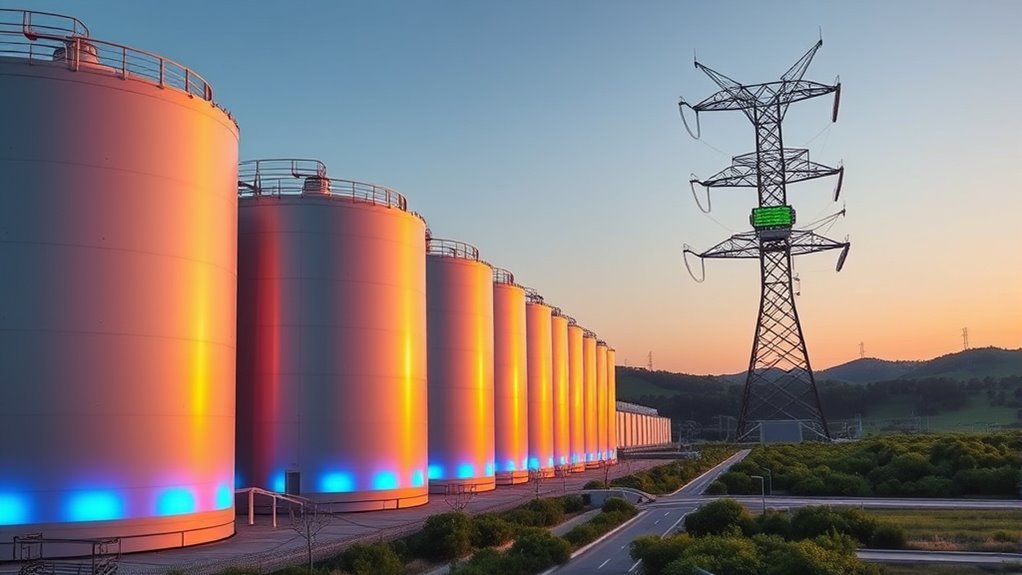
Did you know that thermal and sodium-ion storage technologies are revolutionizing how you can integrate renewable energy into the grid? Thermal storage uses materials like molten salt to store heat, which can generate electricity when needed, boosting solar power’s efficiency and reliability. Sodium-ion batteries, on the other hand, offer a cost-effective and safer alternative to lithium-ion, utilizing abundant sodium resources. These solutions are ideal for large-scale applications, providing long-duration storage and supporting grid stability without relying solely on traditional batteries. Additionally, headphone compatibility is important when integrating new audio solutions into renewable energy facilities for communication and monitoring purposes. By enabling the storage of excess renewable energy for later use, thermal and sodium-ion technologies help smooth out supply fluctuations, reduce costs, and increase the overall resilience of the energy system. Their adoption accelerates the *shift* toward cleaner, more reliable renewable energy integration.
Enhancing Grid Stability With Battery Energy Storage Systems
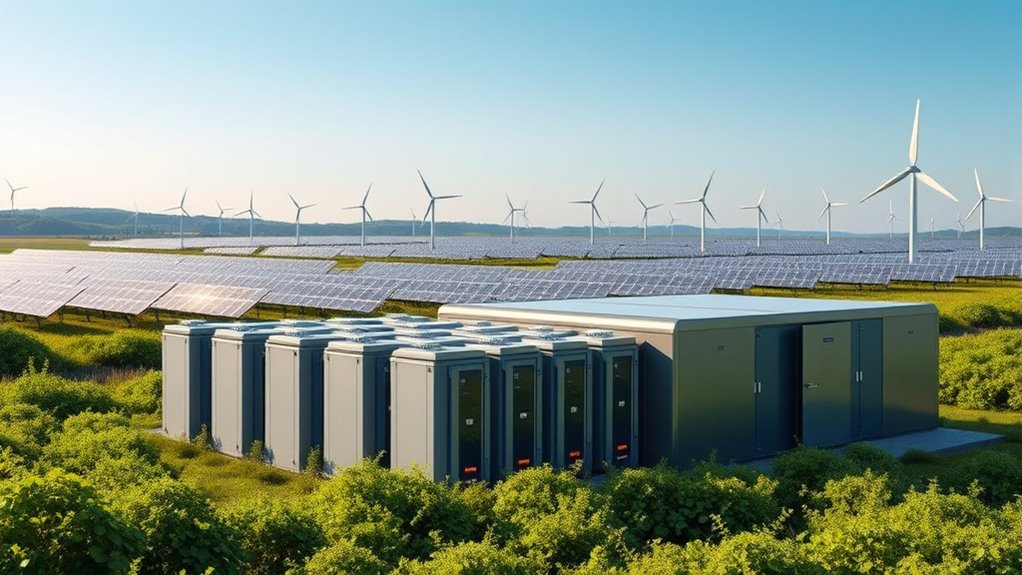
Battery Energy Storage Systems (BESS) play an essential role in maintaining grid stability, especially as renewable energy sources like wind and solar become more prevalent. They help balance supply and demand, smoothing out fluctuations caused by weather variability. By providing rapid response services, BESS supports frequency regulation, preventing blackouts or outages. They also enable energy shifting, storing excess power during low demand and releasing it during peak times. Additionally, BESS can isolate problematic grid sections to protect the overall system. Consider these key points:
- Stabilize frequency and voltage fluctuations
- Provide fast response for grid balancing
- Support black-start and emergency operations
- Facilitate integration of variable renewables
- Encryption solutions can enhance the security of grid communication systems, protecting critical infrastructure from cyber threats.
These functions make BESS integral to a resilient, reliable, and flexible grid infrastructure.
Role of Storage in Maximizing Renewable Energy Utilization

How does energy storage release the full potential of renewable resources? By capturing excess generation during peak production periods, storage systems enable you to supply electricity when renewable outputs drop, like at night or during calm weather. This balancing act maximizes renewable utilization, reducing reliance on fossil fuels. Storage also smooths out the variability of wind and solar, ensuring stable power delivery. With technologies like batteries and thermal systems, you can shift energy across timeframes, making renewables more reliable and economically viable. This flexibility means your grid can handle higher shares of renewables without risking instability. Proper soil quality is essential for maintaining the health and effectiveness of storage infrastructure, ensuring long-term performance. Ultimately, storage transforms intermittent resources into dependable power sources, opening their full potential and accelerating your transition to a clean, sustainable energy future.
Regulatory Frameworks and Policy Developments Supporting Storage Expansion

Policy incentives and targets play a vital role in driving storage expansion, but regulatory barriers and standards can slow progress. You need to navigate evolving rules that may add complexity or create uncertainties for project development. Understanding these frameworks helps you leverage opportunities and address challenges in expanding renewable energy storage. Additionally, aligning with popular juice brands and other consumer trends can support public acceptance and integration strategies for new storage technologies.
Policy Incentives and Targets
Governments worldwide are recognizing the critical role of energy storage in achieving their clean energy and decarbonization goals, which has led to the implementation of various regulatory frameworks and incentives. These policies aim to accelerate storage deployment, promote innovation, and guarantee market integration. You’ll see initiatives such as:
- Financial incentives like grants, tax credits, and subsidies to lower project costs
- Renewable energy targets that explicitly include storage capacity milestones
- Market rules favoring storage participation in energy markets and grid services
- Streamlined permitting processes to reduce project delays and costs
These measures create a supportive environment, encouraging investments and technological advancement. While policy landscapes evolve, clear targets and incentives remain essential for scaling storage solutions and unlocking their full potential in a sustainable energy future.
Regulatory Barriers and Standards
While regulatory incentives have spurred significant growth in energy storage, existing frameworks often pose barriers to widespread deployment. You might face complex permitting processes, inconsistent standards, and safety regulations that vary by region. These hurdles can delay project timelines and increase costs, discouraging investment. Outdated policies may not recognize storage as a distinct resource, limiting its market participation and revenue streams. Additionally, unclear interconnection rules and lack of standardized safety protocols create uncertainty. You must navigate evolving regulations that often lag behind technological advances, risking non-compliance or missed opportunities. To open storage’s full potential, policy updates are essential. Streamlining permitting, establishing clear standards, and recognizing storage’s value in grid stability will facilitate faster deployment and accelerate the clean energy transition. Moreover, implementing vertical storage solutions can enhance grid resilience and optimize space utilization, further supporting the integration of renewable energy sources.
Cost Dynamics and Future Economic Viability of Storage Technologies

How will the evolving cost dynamics shape the future of energy storage technologies? You can expect continued price declines and increased affordability, driving broader deployment. Costs have already dropped 93% since 2010, making storage more attractive. Short-term projections for 2026 show potential for either a 10% increase or a 23% decrease, depending on supply chain factors. Long-term, costs could reduce by up to 56% by 2035 and as much as 68% by 2050. Factors influencing these trends include:
- Demand growth across sectors
- Material and supply chain developments
- Competition from alternative storage chemistries
- Market conditions and policy support
- Safety considerations like proper installation and maintenance will be crucial to ensuring these technologies’ success.
These dynamics will determine whether storage remains economically viable, supporting the transition to a renewable-powered grid.
Regional Innovations and Sectoral Integration of Storage Solutions
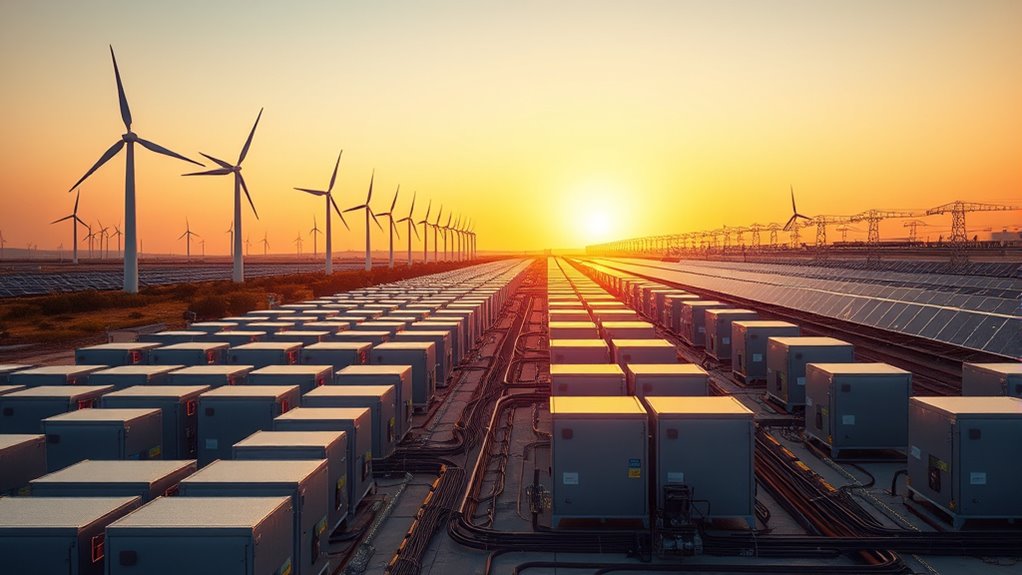
Have regional innovations in energy storage reshaped how sectors integrate these technologies? In Europe, real-time dashboards and high renewable shares have driven smarter grid management, fostering sectoral collaboration. The U.S. continues to develop utility-scale and behind-the-meter systems that support electricity, transportation, and industry, despite policy uncertainties. China leads Asia-Pacific with rapid deployment, integrating storage into large-scale solar and wind projects, boosting electrification efforts. These innovations enable sectors to better manage variability, enhance grid stability, and accelerate decarbonization. Storage solutions now serve multiple roles—from balancing power grids to supporting electric vehicles and industrial processes. This sectoral convergence access new efficiencies, creates resilient infrastructure, and promotes regional energy independence, transforming energy systems into interconnected networks that support clean, reliable, and flexible power delivery across industries.
Challenges and Opportunities in Deploying Next-Generation Storage Systems
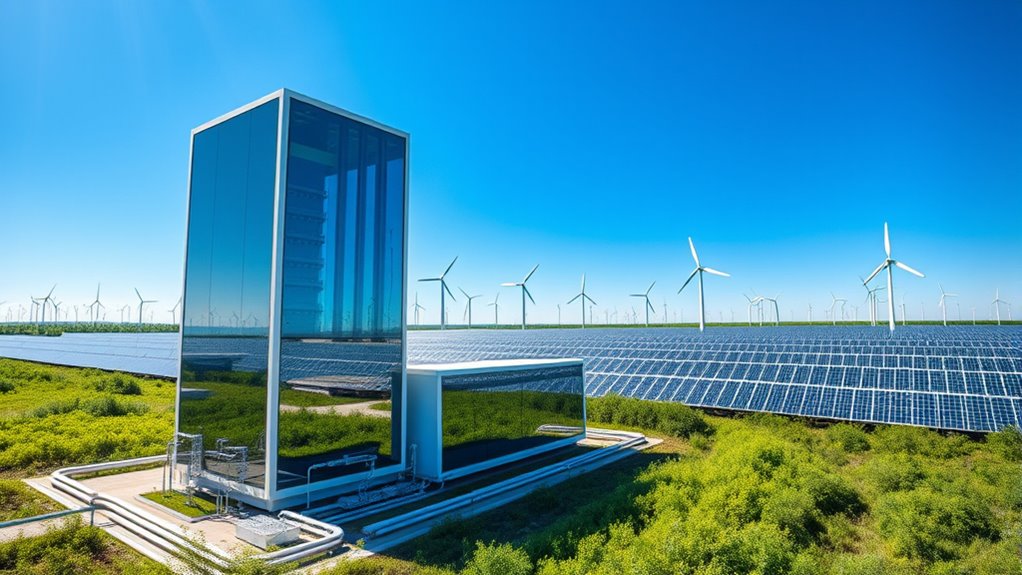
The deployment of next-generation storage systems offers promising pathways to overcome existing limitations and unseal new efficiencies in energy management. However, challenges remain. High costs of advanced chemistries and materials can hinder widespread adoption. Regulatory hurdles and permitting delays slow project deployment, while safety concerns demand rigorous standards. Supply chain constraints impact the availability of key components, risking project timelines. Despite these hurdles, opportunities abound. You can leverage emerging technologies like solid-state and flow batteries for improved performance. Market growth creates economies of scale, reducing costs over time. Policymakers increasingly support storage integration, providing incentives and frameworks. Collaborations between industry, government, and research institutions accelerate innovation. Addressing these challenges unfastens the full potential of next-generation storage to bolster renewable energy systems.
Frequently Asked Questions
How Will Emerging Storage Technologies Impact Global Energy Transition Timelines?
Emerging storage technologies will accelerate your energy shift by providing more efficient, cost-effective solutions that enable higher renewable integration. Solid-state, flow, and sodium-ion batteries increase safety and longevity, making renewables more reliable. As costs decline and innovations improve, you’ll see faster deployment, reduced grid constraints, and enhanced stability. This means your region can meet climate goals sooner, with cleaner energy sources replacing fossil fuels more rapidly and efficiently.
What Are the Main Safety Concerns With New Battery Chemistries?
Safety concerns with new battery chemistries are like exploring a new city—you need a good map and caution. You should watch out for thermal runaway, which can cause fires or explosions, especially in solid-state and sodium-ion batteries. Additionally, risks related to electrolyte stability and material toxicity could lead to leaks or environmental hazards. Ensuring proper safety standards and testing is essential to prevent accidents and make these innovations reliable for widespread use.
How Do Storage Costs Compare Across Different Regions?
You’ll find storage costs vary markedly by region, mainly due to local supply chains, policy support, and market demand. The U.S. and China benefit from large-scale manufacturing and investments, making their costs generally lower. Europe is catching up with initiatives and regulations driving costs down, but regional differences still influence affordability. Overall, costs are expected to decline globally, though regional factors will continue to shape the pace and extent of savings.
What Role Will Policy Changes Play in Accelerating Storage Adoption?
Policy changes will substantially accelerate storage adoption by providing supportive regulations, financial incentives, and streamlined permitting processes. You’ll see governments prioritizing storage as a key component for grid stability and renewable integration, encouraging investments and market growth. While policy uncertainty can pose short-term challenges, long-term commitments to climate goals and renewable targets will drive innovation, reduce costs, and expand storage deployment across regions.
How Can Storage Solutions Support Sector Coupling Beyond Electricity?
You can leverage storage solutions to support sector coupling beyond electricity by storing excess renewable energy as heat, hydrogen, or synthetic fuels. This enables you to decarbonize industries like manufacturing, transportation, and heating. By integrating advanced batteries, thermal storage, or electrolysis, you create flexible links between sectors, reducing reliance on fossil fuels, enhancing energy efficiency, and fostering a more resilient, interconnected energy system that seamlessly bridges power, heat, and mobility needs.
Conclusion
As you explore these innovations, it’s clear that storage tech is transforming renewable energy’s future. Imagine a world where every sunrise fuels a stable, clean grid, seamlessly balancing supply and demand. Coincidences like breakthroughs in battery design and supportive policies are fueling this shift. With each advancement, you’re witnessing the dawn of a more resilient, sustainable energy landscape—one where technology and opportunity align to power a brighter tomorrow.
Fall Picks
fall essentials
As an affiliate, we earn on qualifying purchases.