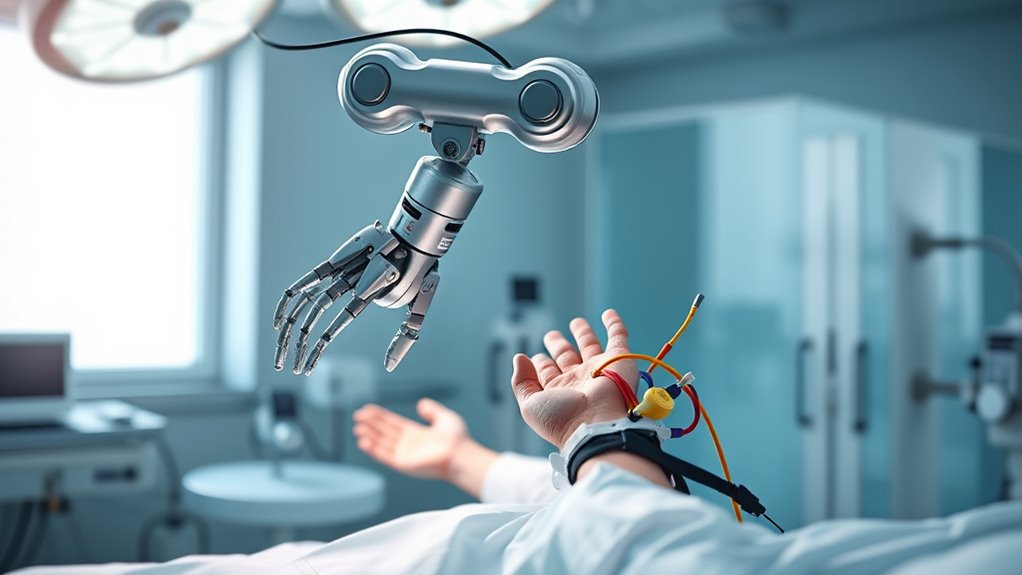

Robotics are transforming healthcare by enhancing surgical precision and enabling advanced rehabilitation therapies. Surgical robots now perform minimally invasive procedures across many specialties, improving outcomes and speeding recovery. In rehab, robotic devices offer personalized and efficient treatments that help patients regain movement and strength. Driven by technological advances and AI, the market is growing rapidly worldwide. Stay with us to explore how these innovations can shape the future of your healthcare journey.

Get travel and outdoor gear delivered free — and shop member deals
- Fast, free delivery on millions of items
- Access to Prime Big Deal Days deals on October 6–7
- Prime Video, Amazon Music and more included
Key Takeaways
- Surgical robots enhance precision, minimally invasive procedures, and patient outcomes across specialties like urology, gynecology, and orthopedics.
- AI integration improves real-time navigation, decision support, and reduces errors during robotic surgeries.
- Rehabilitation robotics offer personalized therapies, real-time feedback, and facilitate faster recovery for various motor impairments.
- Market growth driven by technological innovations, increased adoption globally, and expanding applications in hospitals of all sizes.
- Challenges include high costs and complexity, but opportunities arise from modular, AI-powered systems and strategic industry collaborations.
As an affiliate, we earn on qualifying purchases.
The Expanding Market of Surgical Robotics
The market for surgical robotics is experiencing rapid growth driven by technological advancements and increasing adoption across healthcare facilities worldwide. You’ll notice this expansion as more hospitals incorporate robotic systems into their surgical offerings, especially teaching hospitals where over 84.9% have already adopted these techniques. The global market, valued at around USD 65 billion in 2022, is projected to nearly double by 2030, reaching USD 119.7 billion. Usage rates continue to rise, with about 20 to 30% of general surgeries in the U.S. now performed robotically. This growth reflects a shift toward minimally invasive procedures, improved patient outcomes, and the adoption of innovative robotic systems. As technology advances, expect the market to see even faster expansion, driven by new systems and broader global adoption. Understanding AI’s role in healthcare innovation will be crucial as these technologies evolve and reshape medical practices.
Key Trends Shaping Surgical Robotics Technology
Advancements in surgical robotics are driven by innovative trends that enhance flexibility, precision, and efficiency. You’ll see key developments shaping the future, including:
Surgical robotics are advancing through innovative trends that improve flexibility, precision, and efficiency for better patient outcomes.
- Modular Systems — These systems like Hugo and Versius offer adaptable configurations with smaller footprints, making them suitable for diverse surgical environments.
- AI Integration — New robots incorporate artificial intelligence for better navigation, real-time target tracking, and intraoperative decision support.
- Global Expansion — Adoption is accelerating beyond the U.S., especially in Asia, Latin America, and Eastern Europe, broadening access to advanced surgical care.
- Projector Technology — The integration of advanced imaging and visualization tools in surgical robots improves image fidelity, leading to more precise surgical interventions.
These trends are pushing surgical robots toward greater versatility and smarter operation, ultimately transforming surgical procedures worldwide. The focus on innovation guarantees ongoing improvements in patient outcomes and operational efficiency.
Main Applications Across Medical Specialties

Robotics are transforming a variety of medical specialties by improving surgical precision and expanding their reach. You’ll see these technologies in urology, gynecology, orthopedics, and even neurology, making complex procedures safer and more effective. As innovations continue, rehabilitation also benefits from personalized, AI-driven robotic therapies that enhance recovery outcomes. The integration of Pimple Patch technology exemplifies how targeted, minimally invasive solutions are becoming more prevalent in healthcare settings.
Surgical Precision Enhancements
Surgical precision enhancements through robotic systems are transforming how you perform procedures across various specialties. These technologies enable you to operate with unmatched accuracy, reducing risks and improving patient outcomes. Robotic systems utilize advanced features such as:
- High-definition 3D visualization – providing clear, magnified views of the surgical field for precise movements.
- Enhanced instrument dexterity – allowing you to execute complex maneuvers beyond natural hand capabilities.
- Real-time data integration – facilitating intraoperative decision-making with AI-driven analytics and navigation.
Expanding Specialty Use
As robotic technology continues to evolve, its applications are broadening across various medical specialties, transforming how procedures are performed. You’ll see robots increasingly used in cardiology for minimally invasive interventions, offering enhanced precision and reduced recovery times. In orthopedics, robotic systems assist in joint replacements, improving implant accuracy and longevity. In neurology, robots help with delicate brain and spine surgeries, reducing risks and improving outcomes. Gynecology benefits from robotics through less invasive procedures with quicker recovery. Even in ENT and plastic surgery, robots provide enhanced dexterity and precision in complex reconstructions. This expansion allows specialists to perform more complex, accurate, and less invasive procedures, ultimately improving patient care. As technology advances, expect even more specialties to adopt robotics, broadening its impact across the healthcare landscape.
Rehabilitation Innovation Trends
How are advancements in robotics transforming rehabilitation across medical specialties? They’re revolutionizing recovery by offering personalized, efficient, and adaptive therapies. Robotics enable precise movement analysis and real-time feedback, accelerating patient progress. You’ll see innovation in several key areas:
- Customized Therapy Programs: Robots tailor exercises based on individual needs, improving outcomes.
- AI-Enhanced Feedback: Real-time data guides adjustments, ensuring ideal recovery paths.
- Cost-Effective Solutions: Automation reduces therapy costs while increasing access, especially in underserved regions.
- Evidence-Based Approaches are increasingly integrated into robotic rehabilitation to ensure therapies are grounded in scientific research and proven efficacy.
These trends amplify the effectiveness of rehabilitation, making treatments faster and more targeted. As robotics integrate deeper into rehab protocols, they’ll continue to improve patient outcomes, reduce recovery times, and expand access across medical specialties. Your role in adopting these innovations will shape the future of personalized, tech-driven healthcare.
Adoption Patterns in Healthcare Facilities
Have you ever wondered which healthcare facilities are leading the way in adopting robotic surgery? Teaching hospitals top the list, with over 84.9% integrating robotic techniques to train surgeons and improve patient outcomes. Larger hospitals, especially those with more than 500 beds, are also more likely to adopt these technologies, though the percentage is lower at 15.1%. Smaller hospitals, with fewer than 200 beds, are catching up, with about 42.5% embracing robotic surgery to expand their capabilities. You’ll find that urban hospitals lead adoption, driven by access to advanced tech and specialized staff. Overall, the trend shows increasing integration across various facility types, with a focus on improving minimally invasive procedures and surgical precision. This pattern reflects the growing recognition of robotics’ value in healthcare. Additionally, hospitals are implementing space optimization techniques to accommodate new equipment and enhance workflow efficiency.
The Future Trajectory of Surgical Robotics
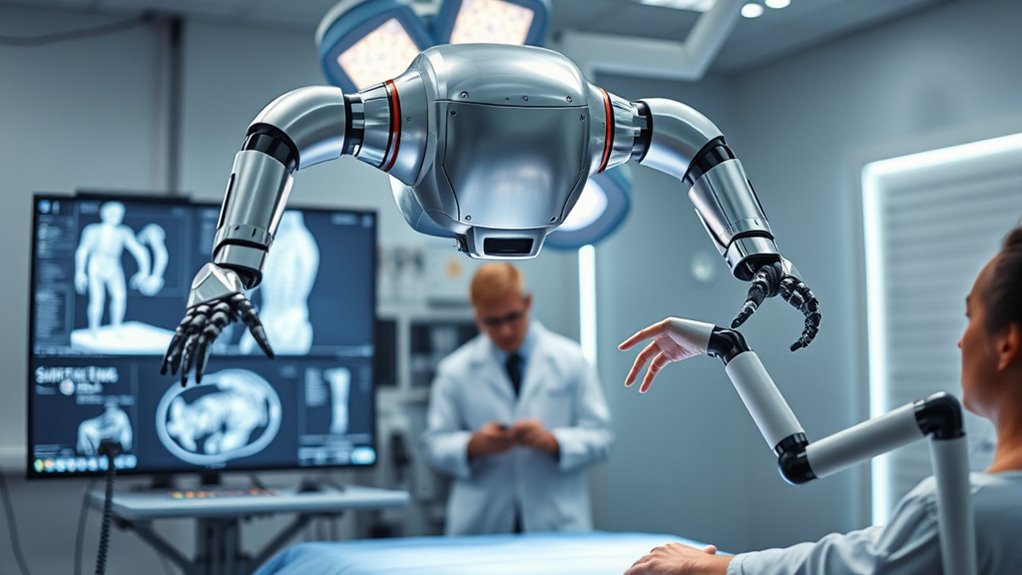
AI advancements are fueling rapid improvements in surgical robotics, making procedures more precise and smarter. The market continues to expand as new players enter and existing companies innovate, driven by high demand and technological progress. These trends suggest a future where surgical robots become more integrated, efficient, and accessible worldwide. Renewable energy innovations in related fields demonstrate how technological progress can revolutionize healthcare solutions and improve sustainability.
AI Advancements Accelerate
Advancements in artificial intelligence are propelling the future of surgical robotics at a rapid pace. You’ll see AI driving smarter, more autonomous systems that enhance precision and safety. For example:
- Enhanced Navigation: AI algorithms improve real-time navigation, allowing robots to adapt dynamically during procedures.
- Target Tracking: Machine learning enables precise identification and tracking of tissues, reducing errors.
- Decision Support: AI offers intraoperative insights, assisting surgeons in making faster, data-driven choices.
- Vibrational Alignment: Incorporating principles of vibrational energy can help optimize the interaction between robotic systems and human physiology, potentially improving outcomes.
These innovations lead to more efficient surgeries with fewer complications. By integrating AI, surgical robots become increasingly autonomous, reducing the reliance on manual control. As AI continues to evolve, expect even more sophisticated systems that push the boundaries of what’s possible in surgical care.
Market Expansion Continues
The future of surgical robotics is marked by ongoing market expansion driven by technological innovation and increasing adoption worldwide. You’ll see the market grow substantially, projected to reach nearly USD 120 billion by 2030, with a steady annual growth rate of around 2.1%. More hospitals, even smaller ones, are adopting robotic systems, making these technologies more accessible. North America remains the dominant market, but rapid expansion occurs in Asia, Latin America, and Eastern Europe. As new players enter and existing companies innovate, the competition intensifies, fueling further growth. You’ll also notice the market’s shift toward more integrated, versatile systems that support a broader range of procedures. This expansion not only improves surgical outcomes but also paves the way for more widespread adoption in diverse healthcare settings.
Additionally, the emotional support provided to healthcare professionals working with these advanced technologies can help manage stress and foster resilience, ensuring better implementation and patient care.
Technological Innovation Drives
Technological innovation is propelling surgical robotics toward a transformative future, with new developments enhancing precision, flexibility, and user-friendliness. You can expect AI integration to refine navigation and decision-making, making surgeries safer and more efficient. Additionally, modular systems like Hugo and Versius offer adaptable platforms that fit various surgical needs and environments. The industry is also advancing with real-time data analytics, enabling surgeons to monitor outcomes and improve techniques continuously. Incorporating comfort and support solutions such as ergonomic designs can also improve operator performance and reduce fatigue during complex procedures.
- AI-powered systems optimize surgical accuracy and reduce errors.
- Modular designs increase flexibility, lowering setup time and footprint.
- Data analytics provide insights that drive ongoing improvements.
These innovations promise to reshape surgical procedures, expanding access and elevating patient care globally.
Role of Robotics in Rehabilitation Settings
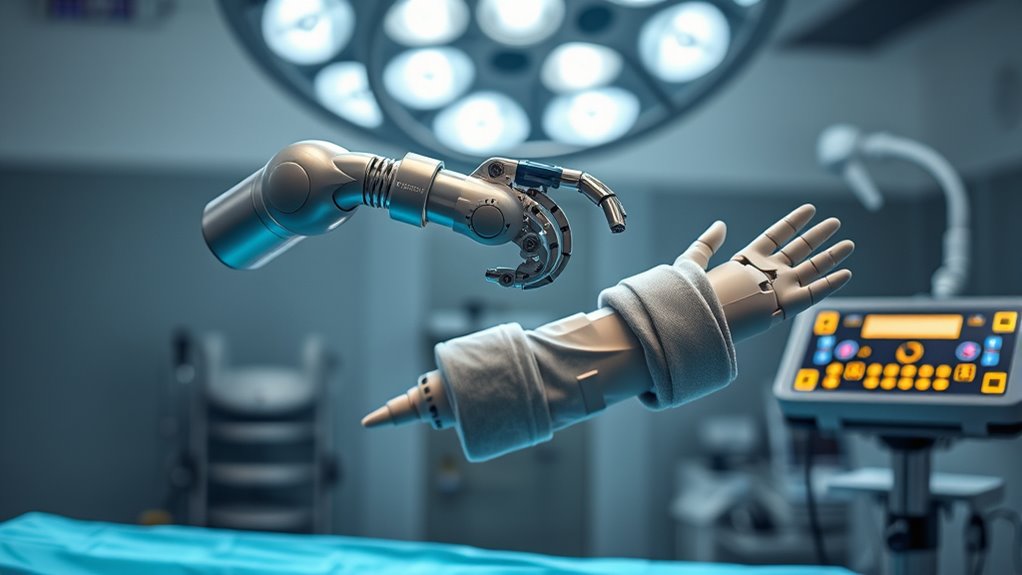
Robotics play an increasingly essential role in rehabilitation by enhancing patient recovery and personalized care. With robotic devices, you can receive tailored therapy sessions that adapt to your progress, ensuring the most effective outcomes. These systems assist in retraining movement, improving strength, and restoring function, especially after strokes or injuries. AI-driven feedback helps you understand your performance in real-time, motivating you and guiding adjustments. Robotics can also make therapy more consistent, precise, and less physically demanding for clinicians. Cost-effective and efficient, these tools enable more frequent sessions and better tracking of your progress over time. As technology advances, robots will become even more capable of delivering personalized, adaptive rehabilitation, helping you regain independence faster and with greater confidence. AI safety measures are crucial to ensure these increasingly sophisticated systems operate reliably and securely as their capabilities expand.
Advancements in AI-Driven Surgical Systems
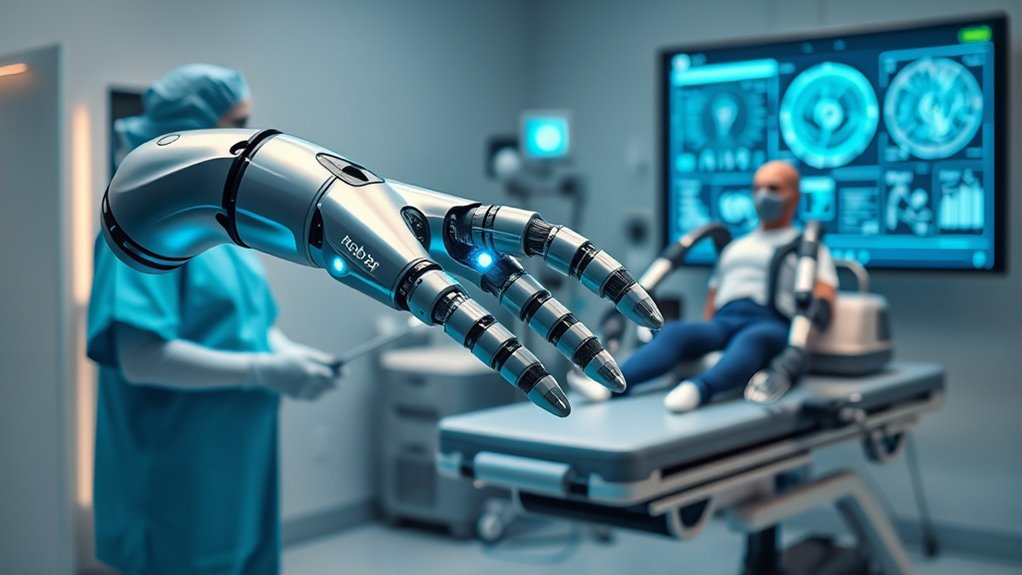
AI integration is transforming surgical systems by enhancing precision, decision-making, and real-time adaptability during procedures. You’ll notice how AI algorithms enable systems to navigate complex anatomy, track targets accurately, and adjust to unexpected movements instantly. This improves outcomes, reduces complications, and shortens recovery times. To deepen this impact, focus on three key advancements:
- Predictive Analytics: AI models forecast potential complications before they occur, allowing proactive adjustments.
- Enhanced Imaging: AI processes real-time imaging data, providing clearer visuals and better spatial awareness for surgeons.
- Autonomous Assistance: AI-powered systems now assist in executing precise movements, supporting surgeons during delicate tasks.
These innovations create safer, more efficient surgeries, pushing the boundaries of what robotic systems can achieve. The future of AI-driven surgery promises even greater integration and capabilities.
Challenges and Opportunities in Robotics Integration

Have you ever wondered what stands in the way of fully integrating robotics into healthcare? Several challenges exist, including high costs, technical complexity, and resistance to change among staff. Training demands and adapting workflows can slow implementation, while regulatory hurdles delay approvals. However, these obstacles also present opportunities. By investing in cost-effective modular systems and AI-driven solutions, you can enhance efficiency and outcomes. Embracing collaboration among developers, clinicians, and policymakers accelerates progress.
| Challenges | Opportunities |
|---|---|
| High initial costs | Reduced long-term expenses |
| Technical complexity and reliability | Enhanced precision and safety |
| Resistance to change among staff | Improved training and adoption |
| Regulatory delays | Accelerated innovation through partnerships |
Global Expansion and Market Leaders
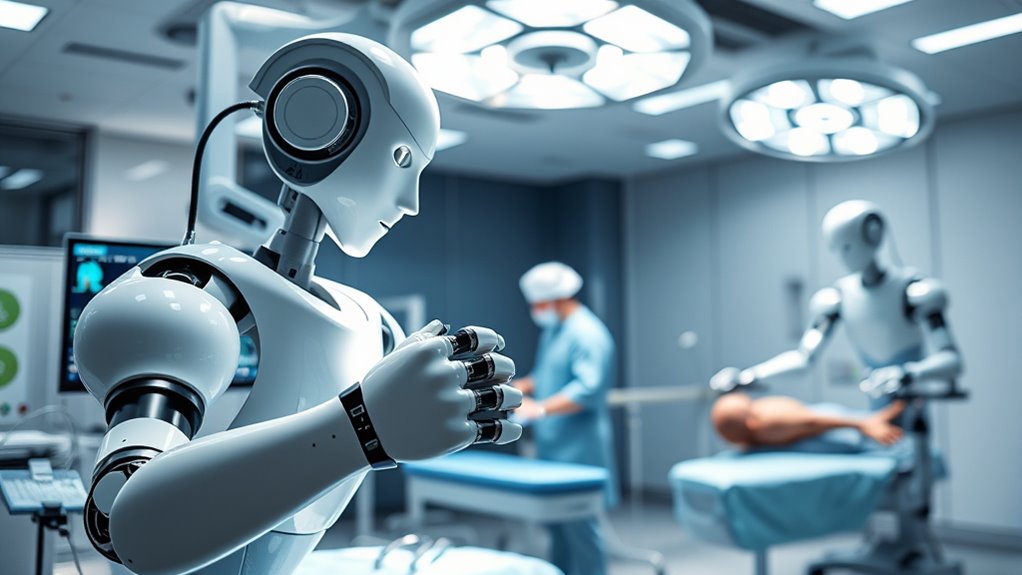
The global expansion of surgical robotics is gaining momentum as more countries adopt these advanced technologies. You’ll see rapid growth outside North America, especially in Asia, Latin America, and Eastern Europe. Leading companies like Intuitive Surgical, Medtronic, and CMR Surgical dominate the market, driving innovation and market share. Their strategies include expanding into emerging markets, forming strategic partnerships, and developing modular, AI-integrated systems that appeal to diverse healthcare settings.
Global surgical robotics grow rapidly, led by major players expanding into emerging markets with innovative, AI-enabled systems.
- Market Penetration: These companies focus on increasing adoption in developing regions through cost-effective solutions.
- Technological Innovation: They invest heavily in AI, miniaturization, and user-friendly interfaces.
- Strategic Alliances: Collaborations with hospitals and governments accelerate deployment and training programs.
This global push shapes a competitive landscape with significant growth potential.
Impact of Robotics on Patient Outcomes

Robotics improve patient outcomes by allowing for enhanced surgical precision, which reduces the risk of complications. They also help shorten recovery times, so patients can return to normal activities faster. Additionally, robotics increase treatment accuracy, leading to better overall health results.
Enhanced Surgical Precision
How exactly do robotic systems enhance surgical precision, and what does this mean for patient outcomes? You benefit from improved accuracy and control during procedures, reducing the risk of complications. Robotics utilize advanced features such as tremor filtration, precise articulation, and 3D visualization. This results in cleaner incisions, less tissue damage, and better targeting of affected areas. Consider these key impacts:
- Enhanced visualization: High-definition, magnified 3D images improve surgeon awareness.
- Superior articulation: Robotic arms mimic human movements with greater range and steadiness.
- Real-time feedback: AI integration offers immediate data, guiding precise actions.
Together, these advancements lead to fewer errors, minimized trauma, and improved overall patient outcomes.
Reduced Recovery Times
Advancements in surgical robotics considerably shorten patient recovery times by enabling minimally invasive procedures that cause less tissue trauma. With smaller incisions, you experience reduced pain and lower risk of infection, leading to faster healing. Robotic systems improve surgical precision, decreasing chances of complications and the need for extended hospitalization. As a result, you can return to daily activities sooner, minimizing disruptions to your life. Additionally, robotic-assisted surgeries often involve less blood loss and tissue damage, which further accelerates recovery. Hospitals benefit too, as shorter stays reduce costs and free up resources. Overall, robotic technology not only enhances surgical outcomes but also helps you recover more quickly, making procedures safer and more efficient.
Improved Treatment Accuracy
When robotic systems assist in surgeries, they considerably enhance treatment accuracy, leading to better patient outcomes. You benefit from precise movements, reduced human error, and enhanced visualization during procedures. This results in fewer complications and more successful results. To deepen your understanding:
- Robots deliver highly accurate, tremor-free movements, improving surgical precision.
- Advanced imaging integration allows for real-time navigation and targeted interventions.
- AI-enhanced systems aid in intraoperative decision-making, reducing the risk of errors.
Frequently Asked Questions
How Do Robotic Surgeries Compare to Traditional Procedures in Terms of Safety?
Robotic surgeries are generally safer than traditional procedures because they offer greater precision, smaller incisions, and reduced risk of complications. You benefit from enhanced visualization and stability, which helps in avoiding damage to surrounding tissues. Plus, robotic systems often lead to quicker recovery times and less pain. As you adopt this technology, you’ll find it improves surgical outcomes and minimizes risks, making procedures safer for both patients and surgeons.
What Are the Training Requirements for Surgeons Using Robotic Systems?
You need to complete specialized training to use robotic systems effectively. This includes hands-on simulation exercises, technical skill courses, and proctored surgeries. Many programs also require surgeons to observe procedures, practice in controlled environments, and demonstrate proficiency before performing independent surgeries. Continuous education and staying updated with new technology are essential. This training guarantees your safety and confidence, ultimately improving patient outcomes during robotic procedures.
How Is Data Privacy Maintained With Ai-Integrated Surgical Platforms?
Imagine a vault guarding precious secrets—this is how data privacy is maintained with AI-integrated surgical platforms. You, as a user, rely on encryption, secure access controls, and anonymization to safeguard patient info. Regular audits and compliance with privacy standards act as vigilant guards, ensuring that sensitive data remains locked away from prying eyes. This layered approach keeps the digital fortress strong, protecting patient trust and safety.
What Are the Cost Implications for Hospitals Adopting Robotic Technologies?
When you adopt robotic technologies, expect significant costs upfront for equipment, training, and maintenance. Ongoing expenses include software updates and system repairs, which can add up over time. However, these investments may lead to reduced hospital stays, fewer complications, and increased surgical precision, potentially saving money in the long run. Careful planning and evaluation of cost-benefit ratios help make sure your hospital maximizes value from these advanced tools.
How Do Robotic Systems Adapt to Complex or Rare Surgical Cases?
You’ll find that robotic systems adapt to complex or rare cases through AI-driven algorithms, advanced imaging, and customizable tools. These features enable precise navigation, better visualization, and tailored interventions, even in unusual situations. Surgeons can also program specific protocols, and modular designs allow flexibility. As a result, you benefit from increased accuracy, reduced risks, and improved outcomes, making robotic systems increasingly capable of handling challenging and atypical surgeries.
Conclusion
As you explore the world of surgical robotics, you’ll see how this tech is transforming healthcare—boosting precision, reducing recovery times, and improving patient outcomes. Did you know that the global surgical robot market is expected to grow at a CAGR of over 20% through 2028? This rapid expansion highlights just how essential robotics are becoming. Embracing these innovations now positions you at the forefront of a future where healthcare is more efficient, personalized, and accessible for all.
Fall Picks
fall essentials
As an affiliate, we earn on qualifying purchases.