Self-driving cars are advancing rapidly with breakthroughs in AI, sensor technology, and vehicle connectivity, making them safer and more reliable. Technologies like V2X communication, 5G, and enhanced sensors support smarter urban infrastructure and better safety features. Regulations are evolving to make certain safety standards and certification processes keep pace with innovation while public trust grows. If you explore further, you’ll discover how these developments are shaping the future of autonomous mobility and safety.
Key Takeaways
- Rapid market growth driven by investments from tech giants and expanding robotaxi services enhances autonomous vehicle adoption.
- Advances in AI, sensor technology, and data processing improve safety, reliability, and environment perception in self-driving cars.
- Connectivity via V2X, 5G, and DSRC enables real-time communication, supporting smarter traffic management and urban infrastructure integration.
- Industry standards and safety regulations are evolving to certify autonomous systems, ensuring safety and transparency across different regions.
- Most vehicles currently feature Level 2+ automation, with ongoing development toward full Level 5 autonomy and associated safety protocols.
Global Production Trends and Market Expansion

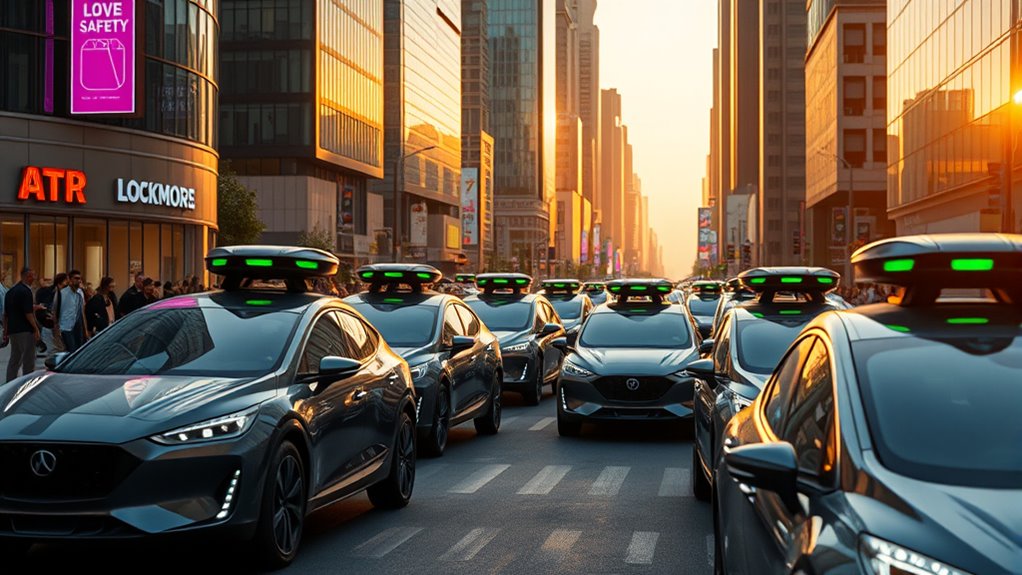
Have you noticed how rapidly the self-driving car market is expanding? By 2025, global production is expected to hit 14.5 million units annually, a huge jump from just a few thousand in 2020. This growth is driven by massive investments from tech giants like Google Waymo, Tesla, Uber, Amazon Zoox, and Baidu, fueling innovation and market confidence. You’ll see more robotaxi services in cities like Austin and Atlanta, as companies expand autonomous taxi operations. While full automation remains costly and regulated, you’ll likely see incremental features, like Level 2 and Level 2+ systems, become common in personal vehicles through 2030. The market’s expansion is a clear sign that autonomous vehicles are moving from experimental to mainstream transportation options. Market growth continues to attract new entrants and technological advancements, further accelerating adoption.
Breakthroughs in Artificial Intelligence and Machine Learning
Recent advances in AI have revolutionized how self-driving cars process sensor data, making real-time decisions safer and more reliable. Synthetic data generation plays a key role by creating diverse training datasets that improve system robustness, especially in complex or rare scenarios. These breakthroughs are accelerating the development and deployment of autonomous vehicles, bringing us closer to safer, more capable self-driving technology. Additionally, Mazda Tuning techniques are increasingly being integrated into vehicle systems to optimize performance and safety features.
Enhanced Sensor Data Processing
Advancements in artificial intelligence and machine learning have revolutionized sensor data processing in autonomous vehicles, enabling them to interpret complex environments with remarkable speed and accuracy. You now benefit from sophisticated algorithms that fuse data from LiDAR, radar, and cameras into a cohesive understanding of your surroundings. These systems quickly identify objects, predict movements, and assess risks in real time, even in challenging conditions like heavy rain or fog. Machine learning models continuously improve through exposure to vast datasets, enhancing decision-making and safety. High-performance processors, such as NVIDIA’s DRIVE Thor, handle massive sensor inputs efficiently, reducing latency. This rapid, precise processing forms the backbone of safe autonomous driving, allowing your vehicle to respond swiftly to dynamic road scenarios. Contrast ratio plays a crucial role in ensuring the clarity of images and sensor data interpretation in various lighting conditions, further improving the reliability of autonomous systems.
Synthetic Data Generation
Synthetic data generation leverages artificial intelligence and machine learning to create realistic, diverse datasets that enhance autonomous vehicle training. It allows you to simulate rare or dangerous scenarios, such as extreme weather or sudden obstacles, without real-world risks. This accelerates development by providing abundant, varied data for AI models to learn from. Here’s a visual overview:
| Scenario Type | Data Focus | Benefit |
|---|---|---|
| Edge Cases | Uncommon events | Improved safety and robustness |
| Weather Conditions | Rain, snow, fog | Better performance in adverse conditions |
| Traffic Patterns | Congestion, accidents | Enhanced decision-making |
Using synthetic data, you improve your vehicle’s ability to handle real-world complexities safely and efficiently. Additionally, data privacy considerations are essential when generating and utilizing synthetic datasets to ensure compliance with regulations and protect user information.
Advancements in Vehicle Connectivity and Communication Systems
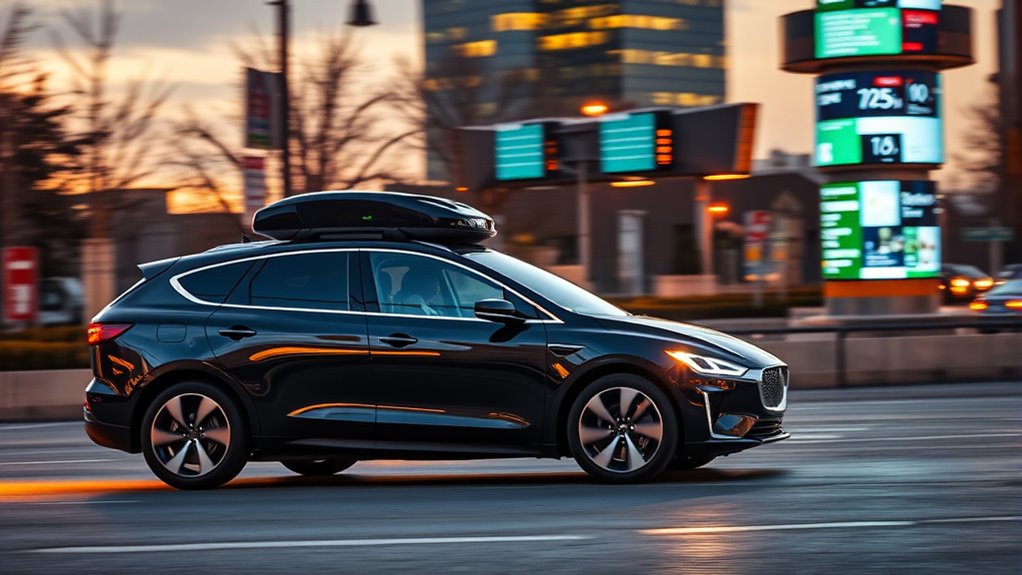
By 2025, V2X communication will be widely integrated, enabling vehicles to interact seamlessly with infrastructure and other road users. Advanced sensors like LiDAR, radar, and cameras work together to provide real-time data, enhancing situational awareness and safety. These connectivity and sensor innovations are key to creating smarter, more efficient autonomous driving systems. Additionally, dynamic communication exercises for couples can serve as a metaphor for the importance of proactive information exchange in vehicle networks, emphasizing the need for continuous and adaptive data sharing to ensure safety and efficiency.
V2X Integration Progress
Vehicle-to-everything (V2X) communication is rapidly progressing, transforming how autonomous vehicles interact with their environment. By 2025, widespread V2X deployment will enable cars to exchange real-time data with infrastructure, other vehicles, and pedestrians. This connectivity improves situational awareness, helping you anticipate hazards and optimize routes. Advanced V2X systems leverage 5G networks and dedicated short-range communication (DSRC), providing low-latency, reliable data transfer. As a result, traffic flow becomes smoother, and accidents decrease. You’ll experience more coordinated driving, with vehicles responding collectively to traffic signals, construction zones, or emergency vehicles. V2X also supports smart city infrastructure, enabling better traffic management and safer urban mobility. This progress signifies a vital step toward fully connected and autonomous transportation ecosystems.
Enhanced Sensor Collaboration
Enhanced sensor collaboration is transforming how autonomous vehicles perceive their surroundings. You’ll notice that combining data from LiDAR, radar, and cameras provides a thorough view of the environment in real-time. Vehicle connectivity amplifies this by enabling seamless communication with other cars, infrastructure, and traffic systems. This integration allows your vehicle to anticipate hazards, optimize routes, and coordinate movements more effectively. For example, sensors share information about sudden obstacles or changing weather conditions instantly across the network. Connectivity also supports cooperative driving strategies, reducing traffic congestion and preventing accidents. As these systems evolve, they’ll become more robust, ensuring safer, smoother journeys. Vetted sensor systems are also designed to improve durability and maintain accuracy over time, further enhancing safety and reliability. Enhanced sensor collaboration is a key driver in advancing autonomous technology toward greater reliability and wider adoption.
Emerging Safety Features and Regulatory Frameworks

How are safety features evolving alongside regulatory frameworks to support autonomous vehicles? You’ll notice that automakers are integrating advanced safety systems like driver monitoring, collision avoidance, and improved sensor fusion to enhance reliability. These features help prevent accidents and ensure safer operation, even in complex environments. Additionally, the development of indexed annuities with features such as built-in inflation adjustments demonstrates how financial products are adapting to ensure long-term stability. Meanwhile, regulators are updating standards to keep pace, establishing testing protocols, and creating clear guidelines for deployment. Some regions are adopting safety certifications for autonomous systems, giving you confidence in their dependability. Companies like GM and Tesla are pushing boundaries with features like eyes-off driving and continuous driver attention monitoring. As safety tech advances, regulations become more adaptable, encouraging innovation while prioritizing public safety, ultimately fostering trust in autonomous vehicle technology.
Levels of Automation and Enhanced Driving Assistance
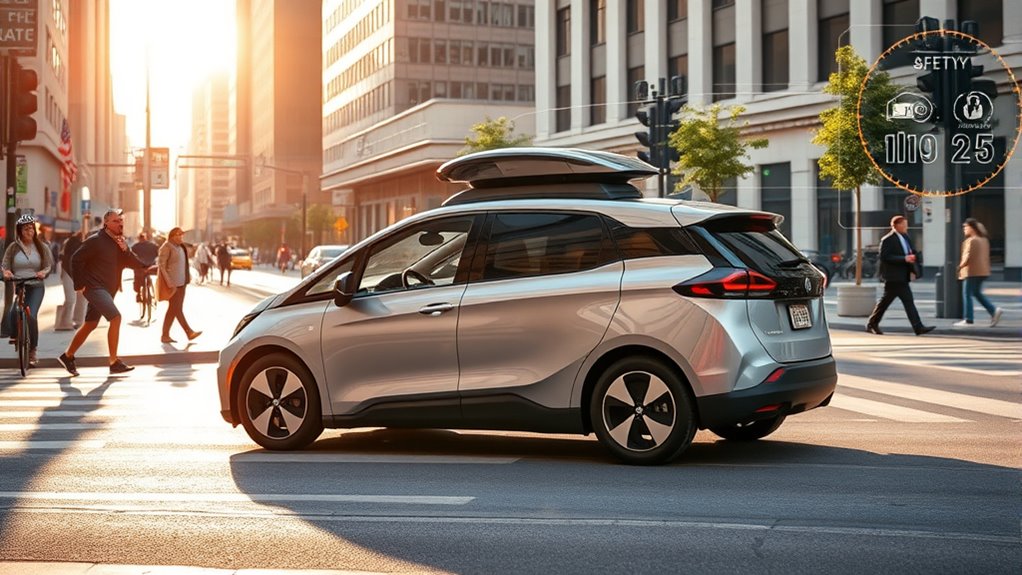
As autonomous vehicle technology advances, different levels of automation are shaping how cars assist and eventually take over driving tasks. You’ll notice that automation is classified from Level 1, offering basic driver assistance like cruise control, to Level 5, where the car drives entirely without human input. Most current vehicles feature Level 2 or Level 2+ systems, which combine adaptive cruise control, lane keeping, and collision warnings to reduce driver workload. These systems actively monitor your surroundings and can handle certain maneuvers but still require your attention. Higher levels, such as Level 3 and above, enable the car to manage driving in specific conditions, allowing you to disengage temporarily. As technology progresses, you’ll see more advanced assistance features gradually evolving toward full autonomy. Incorporating comfort solutions for vehicle seating can further enhance passenger experience as vehicles become more automated.
Impact of Autonomous Vehicles on Urban Infrastructure
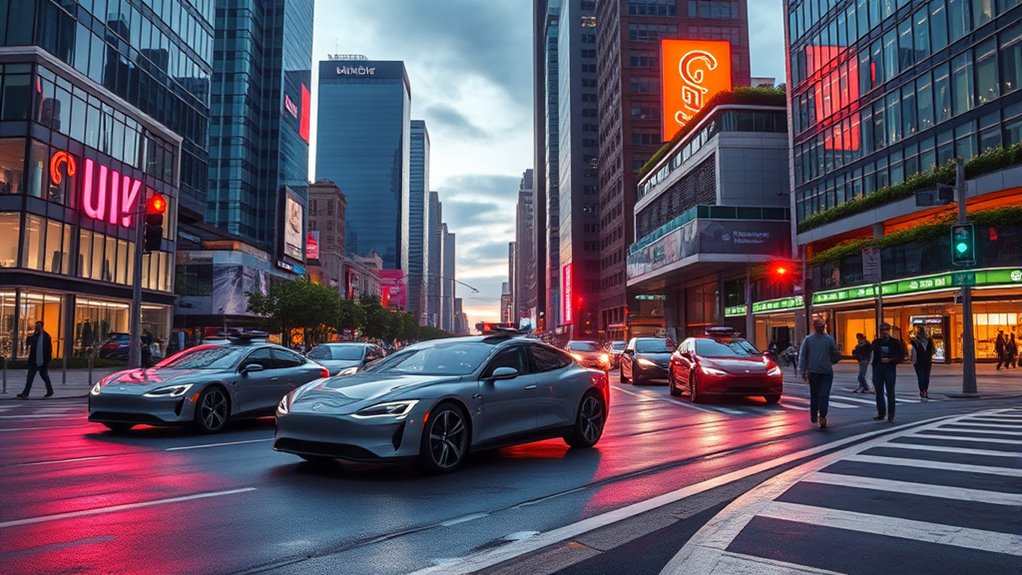
Autonomous vehicles are poised to reshape urban infrastructure by altering the way cities allocate space and manage traffic. With fewer parking needs, you’ll see a decline in parking lots, freeing up land for parks, housing, or commercial use. Traffic flow should improve as self-driving cars coordinate more efficiently, reducing congestion and travel times. You’ll notice smoother traffic patterns and fewer accidents, thanks to advanced sensors and communication systems that enable cooperative driving. Public transportation integration may create seamless, multimodal mobility options, making commutes more flexible. Cities might also redesign streets to prioritize pedestrians and cyclists, as autonomous vehicles handle most driving tasks. Additionally, the deployment of low light office plants can enhance indoor environments for workers in these evolving urban spaces. Overall, your urban environment will become more dynamic, efficient, and safer, as infrastructure adapts to the evolving capabilities of autonomous technology.
Innovations in Sensor Technology and Data Processing
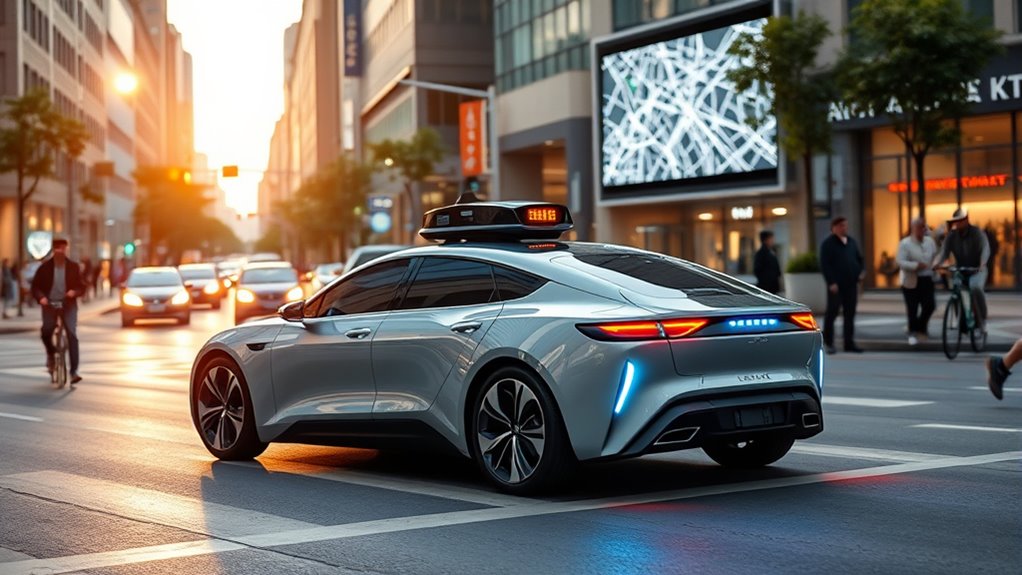
Recent innovations in sensor technology and data processing are transforming the capabilities of self-driving cars. You’ll notice how advanced sensors like LiDAR, radar, and high-resolution cameras work together to create a detailed, real-time picture of your surroundings. These sensors gather vast amounts of data, which are processed by powerful chips like NVIDIA’s DRIVE Thor, enabling quick, accurate decision-making. Machine learning models analyze this data to detect objects, predict behaviors, and plan safe routes. Generative AI enhances training with synthetic scenarios, improving the vehicle’s ability to handle rare or extreme conditions. Connectivity features such as V2X communication allow vehicles to share data with infrastructure and other cars, creating a more integrated and responsive driving environment. These innovations drive safer, more reliable autonomous driving experiences.
Challenges and Opportunities in Autonomous Vehicle Deployment
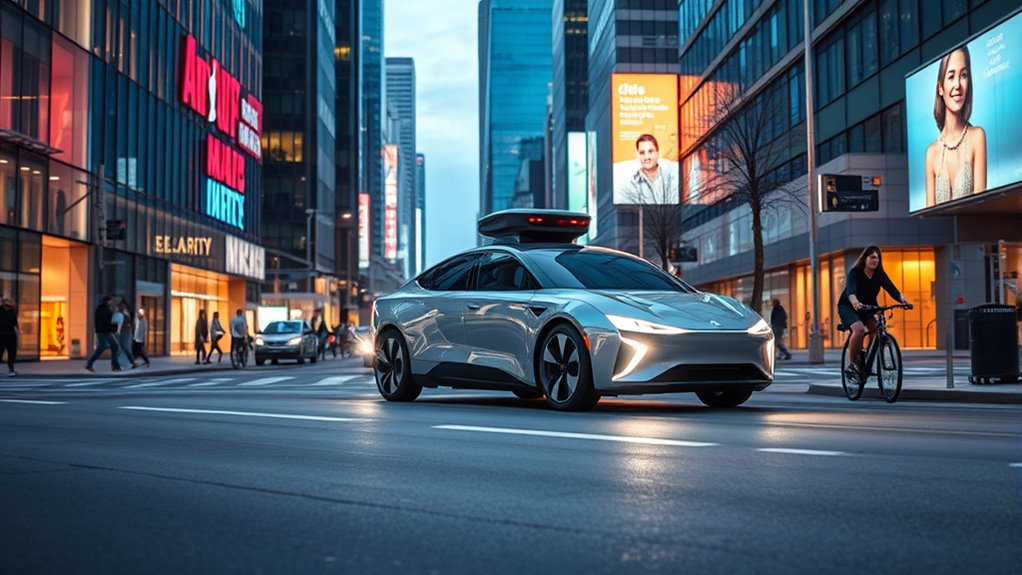
While innovations in sensor technology and data processing have markedly advanced self-driving cars, deploying these systems at scale presents complex challenges. You’ll face hurdles like ensuring consistent safety standards across diverse environments and regulatory landscapes that vary by region. Infrastructure readiness is another obstacle; many cities lack the connected systems needed for seamless autonomous operation. Cost remains a barrier, limiting access to fully autonomous features for most consumers. Additionally, you must address public trust issues, as some people remain wary of trusting machines with their safety. Opportunities still exist in refining AI algorithms, expanding connectivity, and developing scalable infrastructure to overcome these challenges. Regular appliance maintenance plans can play a role in ensuring the safety and reliability of connected devices within autonomous systems. Successful deployment depends on collaborative efforts among industry, regulators, and communities to create safer, more reliable autonomous vehicle ecosystems.
Future Outlook for Self-Driving Car Safety and Regulations
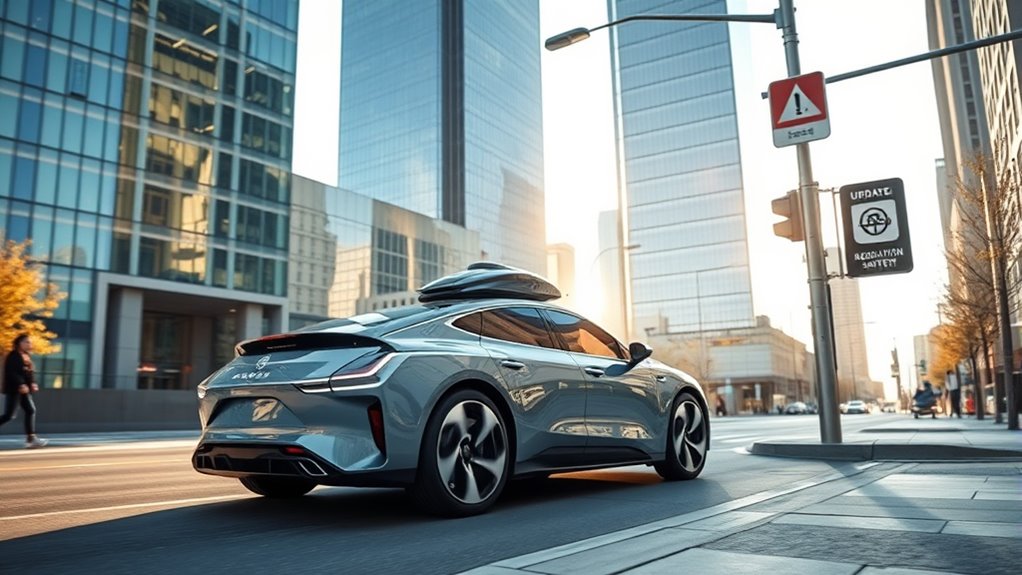
As self-driving cars become more prevalent, the future of safety and regulations will depend on how effectively industry stakeholders and policymakers work together to establish standards that guarantee reliability and public trust. You’ll see regulators updating frameworks to address new challenges, balancing innovation with safety requirements. Industry players will need to prioritize transparent testing, data sharing, and safety verification to ease public concerns. Expect increased collaboration on technical standards for AI systems, vehicle connectivity, and cybersecurity. As technology advances, regulations will evolve to support deployment while safeguarding users. Continuous monitoring, real-world testing, and adaptive policies will be essential to keep pace with innovation. Ultimately, fostering trust through clear, consistent safety guidelines will shape the future landscape of autonomous vehicle adoption.
Frequently Asked Questions
How Do Autonomous Vehicles Handle Unpredictable Road Conditions?
You might be surprised at how autonomous vehicles handle unpredictable road conditions. They rely on advanced AI, real-time sensor data, and connectivity technologies to detect obstacles, weather changes, and unexpected events. With high processing power like NVIDIA’s DRIVE Thor, they quickly interpret complex situations. These vehicles adapt their driving strategies, communicate with infrastructure, and use synthetic data to improve their responses, ensuring safety even in unpredictable scenarios.
What Are the Ethical Considerations in Self-Driving Car Decision-Making?
Think of autonomous cars as chess masters facing moral dilemmas. You should know that ethical considerations revolve around programming decisions in crash scenarios, prioritizing passenger safety versus pedestrian lives, and ensuring fairness. You’re responsible for balancing these dilemmas transparently, respecting privacy, and avoiding bias. Developers must embed ethical guidelines into AI, making sure the vehicle’s choices align with societal values and legal standards, ultimately trusting technology to act morally in complex situations.
How Secure Are Vehicle Communication Networks Against Cyber Threats?
You should know that vehicle communication networks are increasingly secure, but cyber threats remain a concern. Manufacturers and cybersecurity experts constantly update encryption and authentication protocols to protect data exchanges between vehicles, infrastructure, and users. However, vulnerabilities still exist, especially with sophisticated hacking techniques. Staying vigilant, ensuring regular software updates, and supporting robust security standards are essential to keep these networks safe from cyberattacks.
What Measures Are in Place to Ensure Passenger Privacy and Data Security?
You’re in the driver’s seat when it comes to privacy and data security. Industry standards enforce strong encryption, regular security audits, and strict access controls to keep your data safe. Manufacturers also anonymize data and give you control over what information you share. While it’s a tight ship, staying informed about privacy policies and updates guarantees you’re not left holding the bag if something goes awry.
How Will Autonomous Vehicles Impact Employment in Transportation Industries?
You’ll see autonomous vehicles reshape transportation employment by automating driving jobs like taxi, delivery, and trucking roles. While some positions may decline, new jobs in AI maintenance, vehicle monitoring, and infrastructure support will emerge. Prepare for a shift in skills required, emphasizing technical expertise. Overall, this changeover could lead to safer roads and more efficient logistics, but it’ll also require workers to adapt to evolving industry demands.
Conclusion
As self-driving cars become more advanced, safety remains a top priority. Did you know that by 2030, autonomous vehicles could reduce accidents by up to 90%? With ongoing innovations in AI, sensor tech, and connectivity, the industry is poised for rapid growth. While challenges exist, embracing these advancements promises safer, more efficient roads. Staying informed about evolving regulations will help you navigate this exciting future confidently.