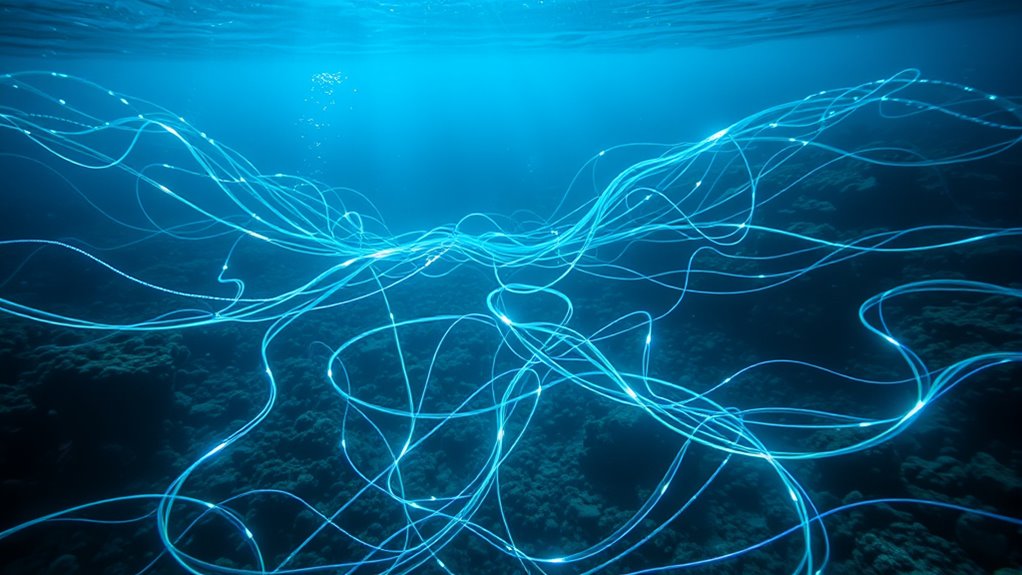

Underwater internet cables form the invisible backbone of global connectivity, carrying over 95% of your digital data—like emails, streaming, and online transactions. These hidden cables span thousands of miles beneath the ocean, connecting continents and supporting the vast digital economy. They require constant maintenance, security, and strategic planning to prevent damage from natural events or human activities. If you want to discover how these critical cables keep the world connected and protected, there’s more to explore below.

Get travel and outdoor gear delivered free — and shop member deals
- Fast, free delivery on millions of items
- Access to Prime Big Deal Days deals on October 6–7
- Prime Video, Amazon Music and more included
Key Takeaways
- Underwater internet cables carry the majority of global internet traffic, forming the essential infrastructure for worldwide connectivity.
- They span thousands of miles beneath the ocean, linking continents and supporting communication, commerce, and daily online activities.
- Regular maintenance, including inspections and repairs, ensures uninterrupted data flow and adapts to increasing digital demands.
- Security measures protect these cables from natural and human threats, safeguarding sensitive information and global infrastructure.
- Proper routing, protective armoring, and international cooperation help minimize risks and ensure the resilience of this invisible backbone.
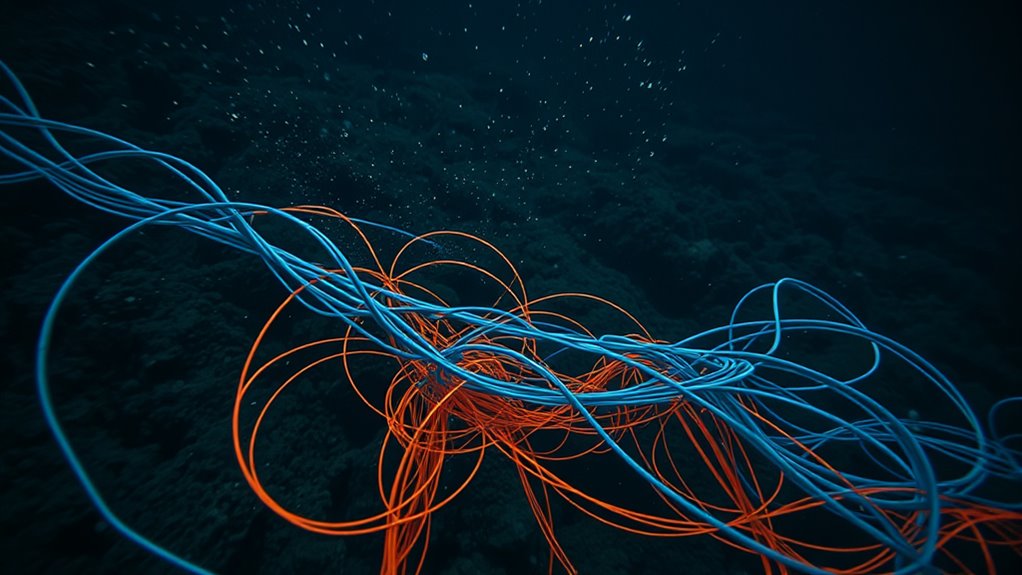
Beneath the ocean’s surface lie thousands of miles of underwater internet cables that form the backbone of global communication. These cables carry the majority of our internet traffic, connecting continents and enabling everything from emails to streaming services. Because they are so essential, cable maintenance is critical to keep them functioning smoothly. You might not see it, but specialized teams regularly inspect and repair these cables to prevent disruptions. When a cable is damaged—whether by natural events like earthquakes or human activities such as fishing and anchoring—timely maintenance ensures that data flow remains uninterrupted. This involves deploying remotely operated vehicles (ROVs) or divers to locate and fix faults swiftly, minimizing downtime and maintaining the integrity of the network. Additionally, advances in cable monitoring technology allow for more precise detection of issues before they cause major disruptions. Cable security is equally crucial. Since these cables transmit sensitive data, they are prime targets for sabotage or espionage. Ensuring their security means implementing measures to protect them from intentional harm or interference. Many cables are monitored continuously using sophisticated systems that detect anomalies, such as unusual signal loss or physical disturbances. Countries and companies also work together to keep these cables secure by establishing protocols and surveillance to prevent sabotage. In some cases, military or intelligence agencies may deploy specialized patrols or equipment to guard key segments, especially those near strategic locations. By safeguarding these underwater pathways, you’re helping secure the global infrastructure that supports your daily digital activities. The process of cable maintenance involves not just fixing physical damage, but also upgrading and replacing aging sections to keep up with increasing data demands. As internet use expands, so does the load on these cables, making regular maintenance and security checks essential. You might wonder how these cables are protected from accidental damage; the answer is through careful planning of routes, avoiding high-risk areas, and using protective armoring. Moreover, international cooperation plays a key role, as many cables cross multiple jurisdictions, requiring shared responsibility for their upkeep and security. Ultimately, underwater internet cables are quietly working behind the scenes, but their importance can’t be overstated. Without diligent maintenance and robust security measures, the global digital economy could face serious setbacks. Your everyday online activities depend on these invisible links, reminding you of the complex, delicate infrastructure beneath the waves that keeps you connected every second of the day.
underwater cable inspection robot
As an affiliate, we earn on qualifying purchases.
As an affiliate, we earn on qualifying purchases.
Frequently Asked Questions
How Long Do Underwater Cables Typically Last Before Replacement?
You might wonder how long underwater cables last before needing replacement. Typically, their cable lifespan ranges from 15 to 25 years, depending on factors like material durability and environmental conditions. Modern cables are built with advanced materials that resist corrosion and physical damage, helping extend their operational life. Regular inspections and maintenance are essential to guarantee these critical connections remain functional, but eventually, age and wear lead to their replacement.
What Are the Main Risks Threatening Underwater Cable Integrity?
Think of underwater cables as the nervous system beneath the ocean’s surface, vulnerable yet essential. Your main risks include cable sabotage, where malicious actors cut or damage the lines, and natural disasters like earthquakes or tsunamis, which can crush or dislocate them. These threats threaten cable integrity, risking widespread communication outages. Staying vigilant and reinforcing cable protection helps guarantee these crucial links remain resilient against such unpredictable hazards.
How Are Underwater Cables Inspected and Maintained?
You inspect and maintain underwater cables by using specialized techniques. Deep sea robotics play a crucial role, allowing you to examine cable insulation and identify damage without diving. ROVs (remotely operated vehicles) and autonomous drones navigate the seafloor, capturing high-resolution images and data. This technology helps you quickly locate issues, perform repairs, and guarantee the cables stay protected from threats like corrosion or physical damage, maintaining global connectivity efficiently.
Who Owns and Operates the Majority of These Cables?
You might think only big tech companies own these cables, but ownership structures are more diverse. Major players include telecom giants, governments, and consortia formed through international collaborations. These groups operate and maintain most underwater cables, ensuring global connectivity. By pooling resources and expertise, they manage the complex network beneath the ocean, making sure you stay connected worldwide without interruption.
How Is Data Secured Across Underwater Internet Cables?
You might wonder how data stays secure across underwater internet cables. You’re protected by encryption protocols that scramble your information, making it unreadable to cyber threats. These cables have advanced security measures, including physical protections and monitoring systems, to prevent tampering or interception. While cyber threats are a concern, ongoing encryption updates and security practices help guarantee your data remains safe as it travels through this hidden global network.
Conclusion
You might think these cables are just hidden beneath the ocean, but they’re actually the invisible backbone supporting your daily online life. Without them, streaming, browsing, and communicating across borders would be impossible. Don’t worry—these cables are built to last and monitored constantly, ensuring your connection stays reliable. So, next time you’re online, remember the incredible infrastructure beneath the waves making it all happen—it’s worth appreciating, even if you can’t see it.
Fall Picks
fall essentials
As an affiliate, we earn on qualifying purchases.