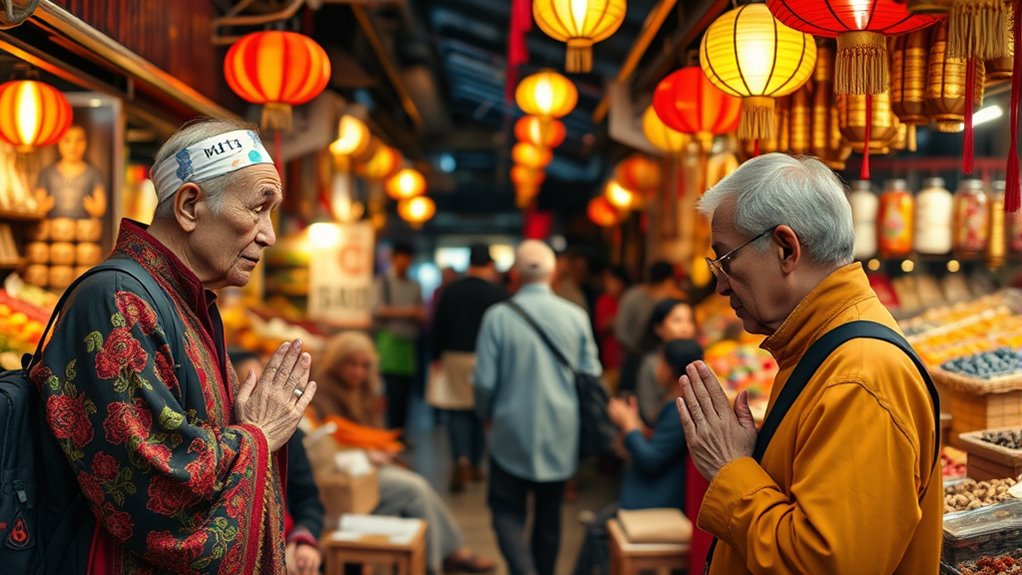

When traveling abroad, showing respect through cultural etiquette is key. Learn local greetings, gestures, and dress codes to avoid misunderstandings. Be mindful of religious customs, such as removing shoes or dressing modestly, and follow rules at sacred sites. Respect personal space and communication styles to build trust. Small gestures of awareness demonstrate respect and kindness. Continuing your exploration will reveal helpful tips to navigate diverse customs confidently and respectfully.

Get travel and outdoor gear delivered free with Prime
- Fast, free delivery on millions of items
- Prime Video, Amazon Music and more included
- Member-only deals all year
Key Takeaways
- Research and follow local dress codes, especially in religious or sacred sites, to show respect and avoid offense.
- Observe and adapt to nonverbal cues like gestures, greetings, and personal space norms specific to each culture.
- Practice proper dining etiquette, including utensil use, tipping customs, and noise levels, to demonstrate cultural sensitivity.
- Respect religious traditions by adhering to rules about clothing, photography, and behavior in sacred spaces.
- Engage with locals, ask questions if unsure, and show genuine interest to foster respectful and meaningful interactions.
As an affiliate, we earn on qualifying purchases.
Greetings and Gestures Around the World
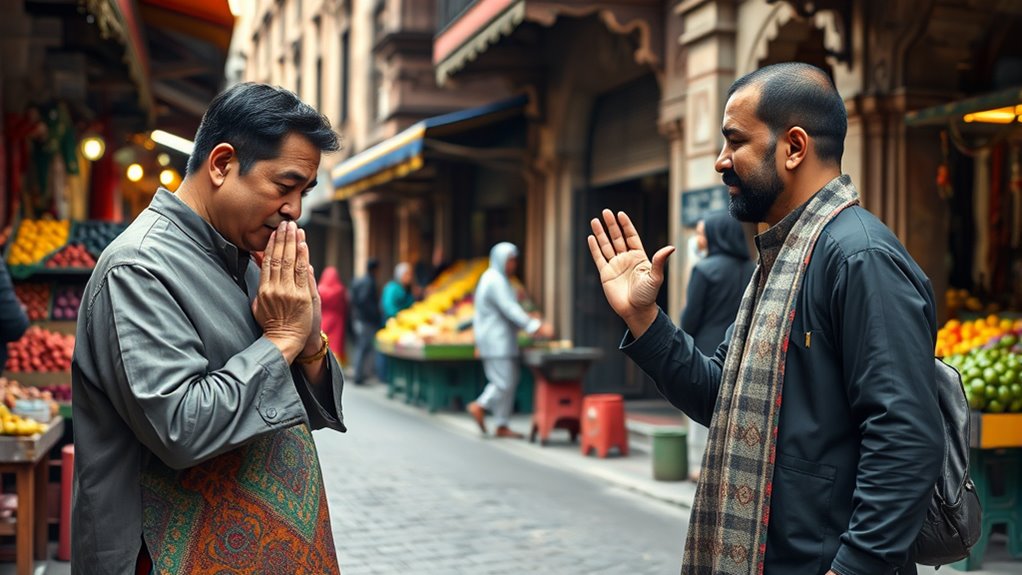
Greetings and gestures vary widely across cultures, and understanding these differences can help you avoid misunderstandings. In Japan, bowing shows respect, while in Europe, a firm handshake is common. A simple smile and nod can work well in many places. Be cautious with nodding—its meaning changes: in Bulgaria and Albania, it can mean “no,” not “yes.” Hand gestures also differ: a thumbs-up is positive in the U.S., but offensive in Iran. Pointing or beckoning with one finger is considered rude in many cultures; use two fingers or a full hand instead. Avoid political symbols or gestures with political implications, like the three-finger salute in Thailand. Being aware of these variations helps you communicate respectfully and avoid unintended offense. Additionally, understanding cultural etiquette can enhance your interactions and demonstrate respect for local customs.
Dressing Respectfully in Different Cultures

Dressing appropriately in different cultures shows respect for local customs and helps you avoid unintended offenses. Before traveling, research dress codes for religious sites, traditional events, and everyday settings. In many Middle Eastern and Asian countries, conservative attire is essential; women might need to cover shoulders and knees, and men should avoid shorts in public. When visiting temples, mosques, or shrines, remove shoes and wear modest clothing. In some places, wearing revealing or tight clothing can be seen as disrespectful or attract unwanted attention. Always consider cultural norms around color, fit, and accessories. Dressing thoughtfully demonstrates your respect for local traditions and fosters positive interactions. It also helps you blend in, making your experience smoother and more respectful abroad. Recognizing cultural norms can greatly enhance your travel experience and prevent misunderstandings.
Dining Etiquette and Tipping Customs

When dining in different cultures, you’ll notice that proper table manners and tipping customs can vary widely. In some places, tipping is expected and shows appreciation, while in others, it might be considered rude or unnecessary. Paying attention to local practices helps you avoid misunderstandings and shows respect during meals. Being aware of cultural etiquette related to dining can also enhance your overall travel experience.
Proper Table Manners
Understanding proper table manners is essential for respectful dining in different cultures. When you eat abroad, pay attention to local customs to avoid offending others. For example, in many Asian countries, don’t stick chopsticks upright in rice, as it resembles funeral rituals. In Italy, avoid cutting pasta with a knife; use your fork instead. Use your right hand for eating and greeting in several African nations, since the left is considered unclean. Tipping customs vary: in the U.S., 15-20% is expected, but tipping may be unnecessary or even rude elsewhere. Always observe how locals handle utensils and how they behave during meals. Showing awareness and adapting your manners demonstrates respect and helps foster positive social interactions. Incorporating cultural sensitivities into your dining behavior can greatly enhance your travel experience.
Tipping Norms and Practices
Tipping customs vary widely around the world, and knowing the local expectations can help you avoid awkward situations or unintentional offense. In some countries, tipping is expected and appreciated, while in others, it’s unnecessary or even rude. For example, in the U.S., tipping 15-20% at restaurants is standard, but in Japan, service charges are included, and tipping can be seen as impolite. Always observe local practices to show respect and ensure smooth social interactions. Being aware of cultural etiquette can make your travel experience more respectful and enjoyable.
Honoring Religious and Sacred Traditions

Honoring religious and sacred traditions requires respecting local customs and practices, which often involve specific behaviors and attire. You should observe how locals dress, act, and follow rules when visiting sacred sites. This shows respect and helps you avoid offending residents or breaking laws. Being aware of self watering plant pots can also teach you about the importance of understanding and adapting to local methods and tools in different cultures.
Respect local customs and attire to honor sacred traditions and avoid causing offense.
- Remove shoes before entering temples, mosques, or shrines.
- Cover your head if required, especially in places like mosques or Hindu temples.
- Dress modestly—avoid revealing clothing in religious settings.
- Refrain from photographing religious ceremonies or people without permission.
- Keep a respectful distance during rituals and avoid disruptive behavior.
Personal Space and Physical Interaction Norms

Personal space and physical interaction norms vary widely across cultures, making it essential to adapt your behavior when traveling. In some countries, like the U.S., people prefer more distance, while in Mediterranean regions, closer contact and tactile gestures like cheek kisses are common. When greeting, pay attention to local customs—some cultures favor a handshake, others a bow or a cheek kiss. Be mindful of touch during conversations; in Nordic countries, touch is minimal, whereas in Latin cultures, it’s more frequent. Avoid unnecessary physical contact or gestures that could be misinterpreted. Maintain appropriate personal space, especially in formal settings. Watching how locals interact provides valuable cues, and adjusting your behavior shows respect, helping you build better connections and avoid discomfort.
Navigating Local Laws and Cultural Sensitivities
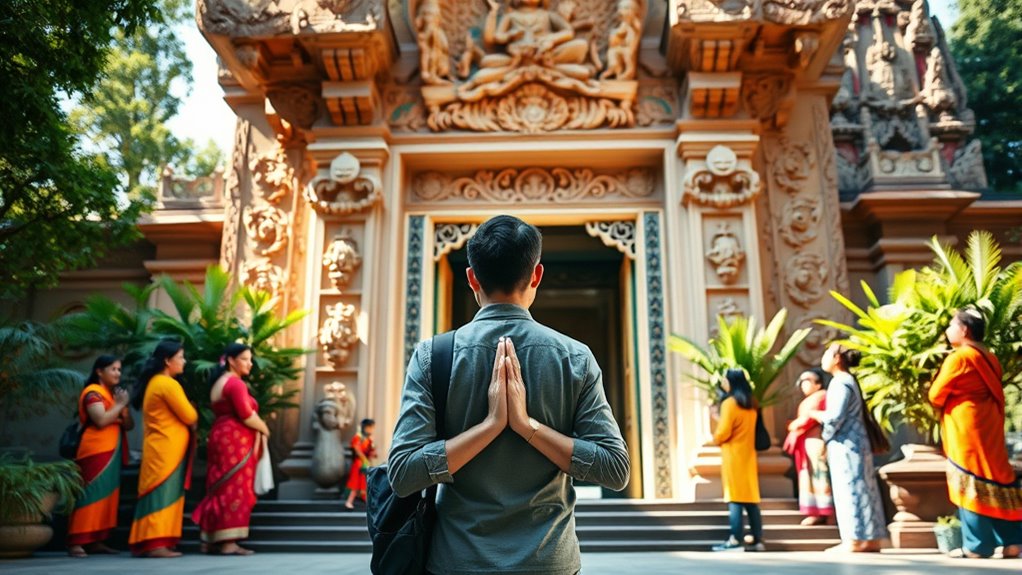
Adapting your behavior to local laws and cultural sensitivities can prevent serious misunderstandings or legal issues while traveling. Respect the rules, dress codes, and customs specific to each destination. Research laws about alcohol, photography, and political expressions beforehand. Be cautious with gestures or actions that could be interpreted differently or are illegal. Understand that what’s acceptable in one country may be offensive elsewhere. Respect religious sites and avoid public discussions on sensitive topics like religion or politics. Follow local regulations to stay out of trouble and show respect for the culture. Cultural perceptions can influence how certain behaviors are received, so being aware of local attitudes can enhance respectful interactions.
Understanding Nonverbal Communication Variations

Understanding nonverbal communication is essential because gestures, facial expressions, and body language can have very different meanings across cultures. You might think a thumbs-up is positive, but in Iran, it’s offensive. A simple nod can mean “yes” in most places, but in Bulgaria or Albania, it might signal “no.” Pointing with one finger can be rude in many countries, including the U.S., where two fingers are preferred. Beckoning with a finger or touching someone’s head might offend locals. Facial expressions like frowning can mean attention or disapproval, depending on the culture. Recognizing these differences helps you avoid misunderstandings and shows respect. Pay attention to regional cues and ask locals if you’re unsure about the appropriate gestures, body language, or facial expressions. Additionally, understanding cultural etiquette related to nonverbal cues can greatly enhance your respectful interactions abroad.
Tips for Respectful Behavior in Public and Sacred Spaces

Respectful behavior in public and sacred spaces shows your appreciation for local customs and helps you avoid offending others. To guarantee you’re respectful, observe these tips:
Showing respect in public and sacred spaces honors local customs and prevents unintended offense.
- Dress modestly and appropriately for religious and cultural sites.
- Keep noise levels down and avoid disruptive behavior.
- Follow signage and instructions, especially regarding photography or entry rules.
- Refrain from touching religious artifacts or statues unless permitted.
- Be mindful of your body language, avoiding gestures that could be offensive.
- Understanding cultural sensitivities ensures your actions remain respectful and considerate.
Frequently Asked Questions
How Should I Handle Language Barriers During Interactions Abroad?
When you face language barriers abroad, speak slowly and clearly, using simple words to help understanding. Use gestures, facial expressions, or visual aids to support your message. Carry a translation app or phrasebook for tricky situations. Be patient and polite, and don’t be afraid to ask for help. Remember, showing genuine respect and effort often bridges language gaps more effectively than words alone.
What Are the Best Ways to Show Respect in Traditional Ceremonies?
You show respect in traditional ceremonies by actively observing and following customs, even if they seem unfamiliar. While you might feel out of place, participating with genuine interest and humility makes a difference. Bow, dress appropriately, and listen carefully. Avoid taking photos without permission, and refrain from loud behavior. Your willingness to honor local traditions demonstrates deep respect, bridging cultural gaps and enriching your experience with authentic connection.
How Can I Avoid Accidental Cultural Offenses in Unfamiliar Settings?
To avoid accidental cultural offenses, you should research local customs before you travel. Observe how locals behave, especially in greetings, dress, and gestures, and mimic their actions respectfully. Be cautious with physical contact, avoid sensitive topics like politics or religion, and follow rules around sacred sites. When in doubt, ask a local or guide for guidance—showing humility and willingness to learn helps prevent missteps and demonstrates respect.
What Should I Do if I Make a Cultural Mistake?
If you make a cultural mistake, apologize sincerely and show genuine respect. Keep a humble attitude, and avoid making excuses or drawing attention to the error. Observe local reactions and adapt quickly, showing you’re willing to learn. Asking politely for guidance demonstrates humility and respect. Remember, most people appreciate your effort to understand their culture, and your respectful response can help smooth over any awkward moments.
How Do I Learn Local Etiquette Quickly When Traveling?
You learn local etiquette quickly by observing and mimicking locals’ behavior. Pay close attention to greetings, gestures, and dress codes. Don’t hesitate to ask politely if you’re unsure about certain customs. Reading travel guides, cultural blogs, or apps can provide quick tips. Watching videos or joining local tours helps you see etiquette in action. Stay respectful, adaptable, and open-minded, and you’ll pick up customs faster.
Conclusion
Traveling abroad is like stepping into a vibrant tapestry of traditions—each thread telling a unique story. By embracing respectful customs, you become a gentle breeze that honors the rich cultural landscape. Remember, your actions are the keys to opening hearts and creating meaningful connections. With mindful gestures and open-minded curiosity, you transform every journey into a beautiful dance of understanding—turning fleeting moments into lifelong memories woven with respect.
Halloween Picks
halloween
As an affiliate, we earn on qualifying purchases.