
TL;DR

Get travel and outdoor gear delivered free with Prime
- Fast, free delivery on millions of items
- Prime Video, Amazon Music and more included
- Member-only deals all year
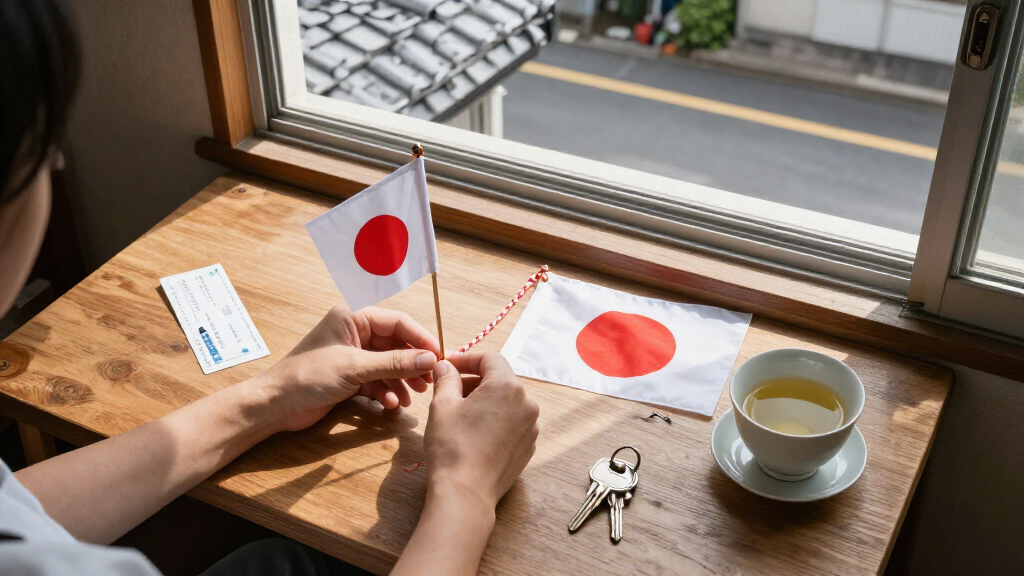
An American living in Japan shared an account of becoming a Japanese citizen, describing a document-heavy naturalization process that he said took at least a year and involved official review. He urges prospective applicants to consult their local Legal Affairs Bureau, because requirements vary by case and his account is anecdotal.
An American who says he became a Japanese citizen has published an account of the naturalization process, describing a lengthy application that required extensive records about his family, residence, work, finances and tax payments. The account is a personal experience, not an official guide, and the writer advises prospective applicants to consult the Legal Affairs Bureau rather than rely on information online.
The writer says he first visited the naturalization department at a Legal Affairs Bureau in 2012, when he was there for another reason and decided to ask about applying. He describes a preliminary consultation with a Ministry of Justice bureaucrat, who asked about his nationality, time in Japan, marriage and family. The writer says he had expected his Japanese fluency, local activities and work in Japanese politics to distinguish his case, but was instead given an account of the process and its demands.
Among the records he recalls gathering were birth and marriage certificates for relatives, a statement from his mother confirming his birth, his wife’s family register, and information about his wife’s relatives and their views on his naturalization. He also lists a timeline of every address where he had lived, his academic and employment histories, and copies of current and expired passports. English-language documents, he says, had to be submitted in their original form with Japanese translations and certifications of accuracy.
The account also describes financial and administrative documentation covering the applicant and his wife, including tax returns, proof of tax and insurance payments, pension records, household income and spending, loans and bank accounts. Because the writer had a company, he says he was asked for company financial statements, tax-payment records, registration documents and information about the business. He also recalls having to provide a driving record and family photographs. These are the writer’s recollections; he does not present the list as a standard checklist for all applicants.
Naturalization · Personal account
I Became a Citizen of Japan
One American resident’s account describes a document-heavy process, official review, and a journey he understood to take at least a year. His central advice: ask the local Legal Affairs Bureau for current, case-specific guidance.
At a glance
01 / What the account describes
A file built across a life
The writer recalls requests reaching well beyond identity papers. This is a summary of his recollection, not a standard checklist for applicants.
01 · Identity & family
Origins and relationships
Birth and marriage records for relatives, a statement from his mother, his wife’s family register, and information about relatives’ views.
02 · Life history
Where he lived and worked
A timeline of addresses, education and employment histories, plus current and expired passports.
03 · Translations
Documents in English
He says English-language records needed to be submitted in original form with Japanese translations and accuracy certifications.
04 · Household finances
Income, taxes and accounts
His recollection includes tax returns, proof of tax and insurance payments, pension records, spending, loans and bank accounts.
05 · Business records
Company documentation
Because he owned a company, he says he was asked for financial statements, tax records, registration papers and business details.
06 · Other records
Driving and photographs
He also recalls providing a driving record and family photographs. Some requested time periods were remembered approximately.
02 / His account of the process
From first questions to official review
The post describes an early consultation and the scale of preparation. It does not give the full application timeline or approval date.
2012
Initial visit
He visited the naturalization department while in the area for another reason and asked about applying.
Consultation
Background questions
A Ministry of Justice bureaucrat asked about nationality, time in Japan, marriage and family.
Preparation
Extensive records
He recalls assembling personal, household and business documents, including translated records.
Review
Individual judgment
He characterizes the process as lengthy and individually assessed. That is his description, not official guidance.
What the post does not establish: an approval date, the date citizenship took effect, or a complete timeline after the first consultation.
03 / In the writer’s words
Why individual advice matters
His account illustrates the administrative burden he encountered, while emphasizing that one applicant’s experience cannot define another’s requirements.
“They treat every application individually.”
The writer · Hacker News post
“The bureaucrat had seen plenty of people like me.”
On his early consultation
“The horse’s mouth is that of the Ministry of Justice, not me.”
The writer · Hacker News post
04 / Limits & next steps
Anecdote, not an official checklist
The writer says his post mixes personal recollection, opinion and factual detail without labeling each sentence.
Several details remain unconfirmed by this account. It does not include an official decision notice or a Ministry of Justice response. Some record periods are recalled approximately, and the post may not reflect current office practices.
The exact documents needed today, the timing of a particular application and whether these steps apply to another person depend on current official instructions and individual circumstances.
05 / Key questions
What readers should know
Clear answers, with the limits of the source kept in view.
What happened?
An American writer said he became a Japanese citizen and described records he recalls being asked to provide.
Is this an official document list?
No. It is the writer’s recollection of his own case. He says applications are assessed individually.
When did he start?
He says his initial visit to the naturalization department was in 2012. He does not state the approval or effective date.
How long does naturalization take?
He describes the process as taking at least a year, but does not provide his full application timeline. Ask the relevant bureau about current timing.
Where can applicants get current requirements?
Consult the local Legal Affairs Bureau and follow its guidance. The post may not reflect current procedures or another applicant’s case.
What should readers take from the account?
Use it as one person’s perspective on a complex process, not as a substitute for official, case-specific instructions.
The responsible route
From online account to official guidance
Use the story to understand one experience. Let the authority handling your case explain your next steps.
Why Individual Advice Matters
The account offers a ground-level view of the administrative burden a naturalization applicant may encounter, including the work of locating records across different countries and translating documents. It also illustrates why a case can involve more than the applicant’s own identity and residence history: the writer says officials sought information about family relationships, household finances and, in his case, a business.
For readers considering naturalization, the practical takeaway is limited but clear: this is one person’s experience, not a reliable substitute for current official instructions. Requirements can depend on an applicant’s circumstances, and the writer says the bureau evaluates cases individually. His recommendation is to make an appointment with the local Legal Affairs Bureau and follow the advice given there.
Japanese translation certification service
As an affiliate, we earn on qualifying purchases.
As an affiliate, we earn on qualifying purchases.
The Writer’s 2012 Consultation
The writer says he had considered naturalizing for a long time before visiting the bureau in 2012. At the time, he was living in the Hachioji area and describes the office as being in Minami Osawa, a location he says was inconvenient to reach. He writes that the bureau later moved back near the courthouse in the main part of town.
He characterizes the system as designed to require substantial documentation and to take at least a year, with decisions involving official judgment. Those descriptions reflect his assessment, not a cited statement from the Ministry of Justice. The post also says that appointments and demand may have changed since his first visit; the writer cautions that his experience should not be treated as a current account of every office’s practice.
““The horse’s mouth is that of the Ministry of Justice, not me.””
— The writer, in his Hacker News post
Approval Details Not Provided
The post’s headline says the writer became a Japanese citizen, but the supplied account does not give the approval date, the date citizenship took effect, or a timeline of the application after the initial 2012 consultation. It also does not provide an official decision notice or a response from the Ministry of Justice.
The writer explicitly says his account mixes personal recollection, opinion and factual detail, without labeling each sentence. Some requirements are remembered approximately, including the number of years of tax records and driving history requested. The exact documentation required today, how long a particular application takes, and whether the described procedures apply to another applicant remain unconfirmed by this account.
Applicants Should Contact Their Bureau
The writer’s stated advice is for anyone considering naturalization to consult the local Legal Affairs Bureau and follow the instructions provided there. Prospective applicants should confirm current requirements directly with the relevant bureau or the Ministry of Justice before gathering documents or making plans based on an online account.
The post does not identify a further application milestone, provide an official update on procedures, or say whether the writer plans to publish more details. Any next steps for readers depend on their own circumstances and guidance from the authorities handling their case.
Key Questions
What happened?
An American writer said he became a Japanese citizen and described his naturalization experience, including a large set of documents he recalls being asked to provide.
Is the document list an official checklist?
No. It is the writer’s recollection of his own case. He says applicants are treated individually and advises people to get instructions from their local Legal Affairs Bureau.
When did the writer start the process?
He says he made an initial visit to the naturalization department in 2012. The account does not state when his application was approved or when he became a citizen.
How long does Japanese naturalization take?
The writer says the process took at least a year as he understood it, but his post does not give his own full application timeline. Applicants should ask the relevant bureau about current procedures and timing.
Where should prospective applicants get current requirements?
The writer recommends consulting the local Legal Affairs Bureau and following its guidance. His account is anecdotal and may not reflect current requirements or another person’s case.
Source: Hacker News
Halloween Picks
halloween
As an affiliate, we earn on qualifying purchases.