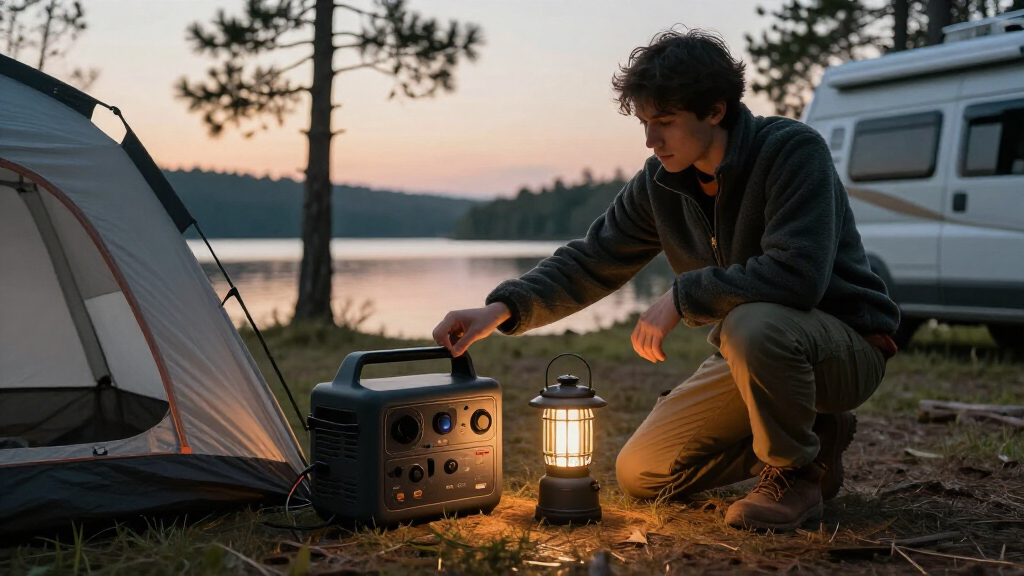

Portable camping power stations range from pocket-sized 88Wh units that top off a phone to 1152Wh giants capable of running a portable fridge all weekend, and the biggest mistake campers make is buying capacity they will never haul out of the car. My best overall pick is the Jackery Explorer 1000 v2, which balances serious capacity, fast charging, and proven reliability better than anything else in this lineup. If your camping trips are car-based but weight-conscious, the GRECELL 500W (519Wh) delivers the best capacity-per-dollar ratio, while the MARBERO 88Wh is the lightest option worth buying for minimalist overnight trips. The core tradeoffs in this category come down to weight versus runtime, lithium-ion versus LiFePO4 battery chemistry, and whether a bundled solar panel justifies a higher price. Keep reading for the full breakdown of all 15 models and which one fits your style of camping.

Get travel and outdoor gear delivered free — and shop member deals
- Fast, free delivery on millions of items
- Access to Prime Big Deal Days deals on October 6–7
- Prime Video, Amazon Music and more included
Complete the kit


Key Takeaways
- The 288Wh class is the most crowded segment in this lineup — the Anker SOLIX C300, DARAN 288Wh, and BLUETTI Elite 30 V2 all compete directly — and LiFePO4 chemistry was the deciding factor separating them from older lithium-ion rivals like the Jackery Explorer 300.
- Bundled solar packages (the ZeroKor 300W with its 60W panel) only make sense for campers who genuinely camp off-grid; for weekend car campers, buying panels separately usually gets you better hardware.
- Weight gap is enormous: the sub-90Wh units (MARBERO, HOWEASY, ZeroKor 97.6Wh) weigh a fraction of the BLUETTI AC180 — capacity you cannot carry is capacity you wasted money on.
- Surge ratings are the most misleading spec in the category: the DARAN’s 1200W surge on a 288Wh battery looks great on paper but cannot change how little energy the battery actually stores.
- The BLUETTI AC180 exists in a different class entirely from the rest of this list — it is a home-backup-capable unit that happens to be portable, not a true camping companion for anyone hiking more than a few hundred feet.




| portable camping power station | Weight | Capacity |
|---|---|---|
| GRECELL Portable Power Station | — | 230.88Wh |
| ZeroKor 120W Portable Power St | 2.2 lb | 97.6Wh / 26,400mAh |
| ZeroKor 300W Portable Power St | — | — |
| ALLWEI Portable Power Station | 6.4 lb | 256Wh |
| HOWEASY 88Wh Portable Power St | 2.3 lb | 88Wh |
| Jackery Explorer 1000 v2 Porta | 23.8 lbs | — |
| Anker SOLIX C300 DC Portable P | — | 288Wh (90,000mAh) |
| DARAN Portable Power Station 1 | 8.86 lbs | 288Wh |
| Jackery Explorer 300 Portable | 7.1 lbs | 292Wh |
| DaranEner Portable Power Stati | 5.73 lbs | 192Wh |
| Westinghouse iGen400s 400W 183 | — | — |
| BLUETTI Elite 30 V2 Portable P | 9.4 lbs | — |
| MARBERO Portable Power Station | 3.2 lbs | — |
| GRECELL 500W Portable Power St | — | — |
| BLUETTI AC180 Portable Power S | — | — |
More Details on Our Top Picks
GRECELL Portable Power Station 330W, 230.88Wh Solar Generator
Pure sine wave output and a 330W running limit make this GRECELL a practical campsite backup for a CPAP, laptop, lights, and phones, provided their combined demand stays within its capacity. Its 60W USB-C port can charge a compatible laptop directly, while AC, solar, and car recharging give campers options between trips and at camp. Compared with the smaller ZeroKor 120W model, it has more headroom for AC devices and a larger battery; the ALLWEI 256Wh offers slightly more stored energy and a LiFePO4 battery, though. The GRECELL’s tradeoff is its modest 230.88Wh capacity: it suits short trips and essentials better than extended off-grid use. Higher-draw appliances also exceed its output limit.
Pros:- Pure sine wave AC output is suited to sensitive electronics
- 60W USB-C PD port supports compatible laptop charging
- AC, solar, and car recharging offer flexible ways to replenish it
- Overload, overcharge, and short-circuit protections are built in
Cons:- 230.88Wh capacity limits runtime for multi-day or high-demand use
- 330W continuous output rules out many heating and cooking appliances
Best for: Campers who need to power a CPAP or charge a laptop and several small devices during short trips
Not ideal for: Groups planning extended off-grid stays or needing to run appliances above 330W
- Capacity:230.88Wh
- Continuous output:330W
- Surge output:600W
- AC waveform:Pure sine wave
- USB-C:1 × PD 60W; 1 × PD 18W
- USB-A:2 × Quick Charge 3.0, 18W
- Recharge methods:AC outlet, solar panel, or car outlet
- Solar charging:Built-in MPPT controller
Our verdict“Choose this GRECELL for short camping trips where clean power for a CPAP or laptop matters more than long runtime.”
ZeroKor 120W Portable Power Station with AC Outlet, 97.6Wh Battery Bank
At 2.2 pounds and 97.6Wh, this ZeroKor is the easiest pick here to carry when every pound and inch matter. Its two AC outlets and USB ports can handle small electronics, while the status display and SOS flashlight add useful campsite functions. Compared with the HOWEASY 88Wh, it stores a little more energy and lists a DC output alongside its AC and USB connections; the GRECELL 330W, by contrast, is a better fit for a CPAP or other device needing more output. This ZeroKor is limited to 120W, so outlet count should not be mistaken for appliance capacity. Its solar panel is also sold separately, and the modest battery makes it better for topping up essentials than powering a busy camp for days.
Pros:- Light 2.2-pound design is easy to pack and carry
- Two AC outlets plus USB and DC ports support several small devices
- Can recharge by USB-C, car connection, or a separately purchased solar panel
- Battery display and SOS flashlight are useful away from the car
Cons:- 120W output cannot run many common camping appliances
- 97.6Wh capacity offers limited runtime for multiple devices
- Solar panel is not included
Best for: Backpackers and solo campers who want a light battery for phones, lights, and other low-draw devices
Not ideal for: Campers who need to run a CPAP, refrigerator, or appliance drawing more than 120W
- Capacity:97.6Wh / 26,400mAh
- Maximum output:120W
- Weight:2.2 lb
- AC outlets:2 × 120W maximum
- Total outlets:6
- USB-C:5V/3.1A, 9V/2A, or 12V/1.5A
- Recharge methods:Solar panel (not included), USB-C adapter, or car port
- Safety:BMS protections for short circuit, over-current, over-voltage, overload, and overheating
Our verdict“Pick this ZeroKor when low weight matters most and your campsite power needs are limited to small electronics.”
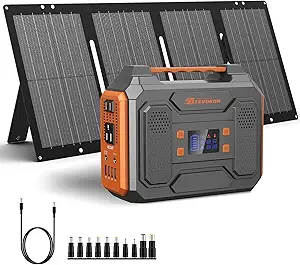
ZeroKor 300W Portable Power Station with 60W Foldable Solar Panel
This ZeroKor pairs a 300W power station with a 60W foldable solar panel, so campers can start with a charging setup in the box instead of sourcing a compatible panel separately. That makes it more self-contained for sunny, low-demand trips than the ALLWEI 300W, whose panel is sold separately. The GRECELL 330W has a slightly higher output ceiling and more specified USB-C charging capability, but it does not include a panel in the supplied product details. The ZeroKor’s 300W limit still confines it to small electronics and modest campsite loads; the panel also cannot guarantee steady charging when sunlight is weak. Its junction box is not waterproof, so the solar setup needs care around moisture. Treat it as a starter kit for daylight replenishment, not a solution for power-hungry appliances.
Pros:- Includes a 60W foldable monocrystalline solar panel
- Offers AC, USB, quick-charge USB, and DC outputs
- Can recharge from an AC outlet, solar panel, or 12V car port
- Built-in BMS includes several electrical and temperature protections
Cons:- 300W maximum output excludes many cooking and heating appliances
- Solar panel junction box is not waterproof
- Long-term storage without charge cycling may trigger its protection state
Best for: First-time solar campers who want a bundled panel to recharge a small station for phones, lights, and other modest loads
Not ideal for: Campers who need weatherproof solar hardware or dependable power for high-draw appliances
- Maximum output:300W
- AC outlets:2
- DC port:9V–12.6V, 10A maximum
- USB ports:3 × 5V/3A maximum
- Quick-charge USB:5V/3A, 9V/2A maximum
- Included solar panel:60W monocrystalline, 20.5% stated conversion efficiency
- Solar panel outputs:USB-A, USB-C, and DC; DC up to 18V/3.3A
- Recharge methods:AC outlet, solar panel, or 12V car port
Our verdict“Choose this kit to get a modest station and matching solar panel together for sunny trips with low-power gear.”
ALLWEI Portable Power Station 300W, 256Wh Solar Generator with LiFePO4 Battery
The ALLWEI stands out for campers who expect to recharge and reuse a station often: its 256Wh LiFePO4 battery is rated for 3,000 charge cycles, and the product includes a five-year warranty. Its 300W pure sine wave AC output covers small electronics and compatible medical devices, while dual AC and solar charging can shorten the stated recharge time when both sources are available. Compared with the GRECELL 330W, the ALLWEI has a little more capacity and a longer cycle-life rating, but its lower continuous output gives it less headroom for loads near that limit. Unlike the ZeroKor solar kit, it does not include a panel. At 6.4 pounds it remains portable for car camping, though it is less compelling for backpackers seeking the lightest option.
Pros:- LiFePO4 battery is rated for 3,000 charge cycles
- Pure sine wave AC output supports sensitive electronics
- AC, car, solar, and dual AC-plus-solar charging options
- Five-year warranty and built-in three-level LED light
Cons:- 300W continuous output limits the appliances it can run
- Solar panel is sold separately
- At 6.4 pounds, it is heavier than the small 88–97.6Wh options
Best for: Frequent car campers who want a reusable LiFePO4 battery for small electronics, lights, and compatible CPAP devices
Not ideal for: Backpackers prioritizing minimum weight or campers who need more than 300W of continuous output
- Capacity:256Wh
- Battery type:LiFePO4 (LFP)
- Continuous output:300W
- Peak surge:600W
- Weight:6.4 lb
- USB-C:1 × PD 60W
- Recharge time:AC: 3.5–4 hours; 100W solar: 4–5 hours; dual AC and solar: 2–2.5 hours
- Warranty:5 years
Our verdict“Choose the ALLWEI for frequent car-camping use when battery cycle life matters more than high output or minimum weight.”
HOWEASY 88Wh Portable Power Station, 120W
For a compact station to keep in a car-camping kit, the HOWEASY offers eight output ports and weighs 2.3 pounds. Its 88Wh capacity and 120W running output suit phones, lights, and other small electronics, while the LED’s steady, flash, and SOS modes add a basic camp and emergency light. Compared with the ZeroKor 120W, it is slightly lighter on paper only if the listed weights are interpreted closely—the ZeroKor is actually 2.2 pounds—and has one additional stated output port, while the ZeroKor lists a slightly larger 97.6Wh battery. The HOWEASY instead specifies a USB-C output of 18W and a cycle-life rating above 1,500 cycles. Neither compact model can replace the higher-output GRECELL or ALLWEI for demanding loads. Its solar panel is sold separately, and the supplied dimensions are inconsistent.
Pros:- Eight ports provide several ways to connect small devices
- Compact 2.3-pound body has a hidden handle
- Recharges from AC, a compatible solar panel, or a car socket
- LED light includes steady, flash, and SOS modes
Cons:- 88Wh capacity and 120W output restrict runtime and appliance choice
- Solar panel is not included
- Product data lists conflicting dimensions
Best for: Car campers who want a small backup for phones, lights, and low-draw gear with multiple connection options
Not ideal for: Campers relying on AC appliances above 120W or seeking a solar kit ready to use out of the box
- Capacity:88Wh
- Running output:120W
- Peak output:240W
- AC outlets:2 × 110V
- USB-C output:18W
- Total output ports:8
- Recharge methods:AC outlet, solar panel (15–24V), or 12V/24V car socket
- Weight:2.3 lb
Our verdict“Pick the HOWEASY as a compact backup for small electronics when its port selection matters more than battery capacity.”
Jackery Explorer 1000 v2 Portable Power Station
When your camping trip involves a mini-fridge, drone batteries, and a laptop, the small 300Wh units in this roundup run dry by dinner. The Explorer 1000 v2 changes the math: 1,070Wh of capacity and 1,500W of AC output means it can run gear the Jackery Explorer 300 or DARAN 288Wh simply can’t touch. The LFP battery rated for 4,000+ cycles means this unit stays useful for a decade of trips, not a couple of seasons. The foldable handle keeps it manageable at 23.8 lbs, but that weight is real — this is car-camping gear, not backpacking equipment. The tradeoffs are an ecosystem lock-in (solar charging works only with Jackery panels, sold separately) and a default 1.7-hour recharge that only drops to one hour if you enable emergency charging in the app.
Pros:- 1,070Wh capacity and 1,500W output handle high-draw appliances most compact units can’t run
- LFP battery chemistry rated for 4,000+ cycles for years of heavy use
- Seven ports including three AC outlets and 100W USB-C PD
- App-controlled charging modes with optional one-hour emergency recharge
Cons:- Solar panel not included, and compatibility is limited to Jackery panels only
- At 23.8 lbs, it’s the heaviest option in this lineup by a wide margin
- One-hour charging requires manually enabling emergency mode in the app
Best for: Car campers and overlanders who need weekend-long power for fridges, laptops, and multiple devices at once
Not ideal for: Backpackers and weight-conscious travelers — at 23.8 lbs it’s far too heavy to carry far from the vehicle
- Battery capacity:1,070Wh
- AC output:1,500W (3,000W surge)
- Battery type:LFP, 4,000+ cycles
- Weight:23.8 lbs
- Ports:3 AC, 2 USB-C, 1 USB-A, 1 DC car port
- Charge time:1.7 hours default; 1 hour with app emergency mode
- Solar:Jackery panels only, sold separately
Our verdict“If you camp out of a car and want one station that powers everything for a full weekend, this is the pick that justifies its size and price.”
Anker SOLIX C300 DC Portable Power Station, 288Wh, 300W
Most power stations in this size class treat USB-C as an afterthought. The SOLIX C300 DC flips that: with two 140W two-way USB-C ports, it can fast-charge modern laptops, cameras, and drones at full speed — and recharge itself to 80% in about an hour over the same cable. Compared with the DARAN 288Wh, which matches capacity but leans on AC outlets, the Anker is built for a camera bag rather than a cooler. It’s 30% smaller than comparable stations, with a LiFePO4 battery backed by a 3-year guarantee. The catch: no wall charger ships in the box, the shoulder strap costs extra, and solar compatibility is limited to Anker 60W or 100W panels — the PS30, PS200, and PS400 won’t work with it.
Pros:- Dual 140W two-way USB-C ports charge laptops at full speed and recharge the unit itself quickly
- 80% recharge in about an hour via USB-C
- Compact, 30% smaller than similar-capacity stations
- LiFePO4 battery with smart temperature control and a 3-year guarantee
Cons:- No wall charger or shoulder strap included in the box
- Incompatible with Anker’s PS30, PS200, and PS400 solar panels
- No AC outlets, so anything with a standard plug is off the table
Best for: Photographers, drone pilots, and remote workers whose gear charges over USB-C and who value fast two-way charging
Not ideal for: Anyone expecting to run AC appliances — with no AC outlets and a 300W ceiling, this is a DC-only tool
- Capacity:288Wh (90,000mAh)
- Output:300W
- Ports:2x 140W USB-C, 1x 100W USB-C, 1x 15W USB-C, 2x USB-A, 120W car socket
- Battery type:LiFePO4
- Recharge time:80% in 1 hour via dual USB-C
- Solar:Compatible with Anker 60W/100W panels
- Warranty:3-year guarantee
Our verdict“This is the station for people whose camping kit is a camera bag and a laptop sleeve rather than an extension cord.”
DARAN Portable Power Station 1200W Surge, 288Wh LiFePO4 Solar Generator
Most 288Wh stations cap output at 300W, which is fine for phones but risky for medical devices with specific power-quality needs. The DARAN steps up to 600W of pure sine wave output with a 1,200W surge — enough headroom to start a mini-fridge or run a CPAP machine cleanly overnight. That double output is what separates it from the similarly sized Anker SOLIX C300 and Jackery Explorer 300, both of which are limited to 300W. At 8.86 lbs it’s light enough for tent camping, and silent operation makes it safe inside a tent or RV. Be aware of the fine print: you must run two full charge/discharge cycles before first use, and solar panels plus charging cables are all sold separately. A 1-year warranty is shorter than Anker’s 3-year coverage.
Pros:- 600W pure sine wave output, double the power of most 288Wh competitors
- Lightweight 8.86 lb build with shock-resistant casing
- Silent, fume-free operation safe for tent and indoor use
- Six devices can charge simultaneously across AC, USB, and car ports
Cons:- Solar panel, solar cable, and car charging cable all sold separately
- Requires two full charge/discharge cycles before first use
- Only a 1-year warranty, versus 3 years on the Anker SOLIX C300
Best for: CPAP users and campers who need clean sine-wave power for sensitive medical or electronic devices off-grid
Not ideal for: Buyers wanting a complete out-of-box kit — panel, solar cable, and car cable all cost extra, and the 600W ceiling rules out kettles or heaters
- Capacity:288Wh
- Continuous output:600W pure sine wave
- Surge output:1,200W
- Battery type:LiFePO4
- Weight:8.86 lbs
- Charge time:2 hours to 80% via AC
- Solar input:100W panel recommended, not included
Our verdict“For campers whose priority is safely running a CPAP or sensitive device rather than raw capacity, this delivers the cleanest power per pound in the lineup.”
Jackery Explorer 300 Portable Power Station, 292Wh
At 7.1 lbs with an integrated handle, the Explorer 300 is the easiest station in this batch to grab on the way to the trailhead. Unlike the Anker SOLIX C300, it includes two AC outlets alongside its USB ports, so you can plug in a fan, lamp, or camera charger without adapters. That AC capability costs you charging speed: 4 hours on wall power versus Anker’s one-hour USB-C recharge to 80%. The newer LiFePO4 chemistry rated for 4,000+ cycles brings it in line with current-generation units rather than older NMC designs. Drawbacks are familiar Jackery ecosystem friction — solar panels sold separately and only Jackery panels supported — and the product listing carries conflicting weight figures (7.1 and 7.5 lbs), which is a small but telling sloppiness.
Pros:- Featherweight 7.1 lb design with integrated carry handle
- Two AC outlets plus USB-C PD and car port for up to six devices
- LiFePO4 battery rated for over 4,000 charge cycles
- Solar recharge to 80% in about 2.8 hours with a 100W panel
Cons:- 4-hour wall charge time is slow compared with USB-C-based rivals like the Anker SOLIX C300
- Solar panel sold separately and limited to Jackery-compatible panels
- Conflicting weight specs (7.1 vs 7.5 lbs) in product details
Best for: Weekend car campers and van lifers who want AC outlets in a sub-8 lb package they can carry one-handed
Not ideal for: Anyone planning heavy solar recharging or high-wattage appliances — 300W output and proprietary panel compatibility are limiting
- Capacity:292Wh
- Output:300W (600W surge)
- Battery chemistry:LiFePO4, 4,000+ cycles
- Weight:7.1 lbs
- Ports:2 AC, 100W USB-C PD, 2 USB-A, 120W car port
- Charge time:4 hours wall; 80% in ~2.8 hours solar
Our verdict“The Explorer 300 makes the most sense for campers who prioritize grab-and-go portability with real AC outlets over fast recharging.”
DaranEner Portable Power Station 192Wh LiFePO4 Solar Generator with 2x 300W AC Outlets
For a first power station — or a second unit for the kids’ tent — the DaranEner 192Wh keeps things simple and affordable without cutting corners on safety. You get pure sine wave output, a LiFePO4 battery rated for 3,500+ cycles, and a built-in MPPT solar controller, a feature bigger brands often reserve for pricier models. Compared with the Jackery Explorer 300, it gives up 100Wh of capacity and USB-C speed (60W vs 100W PD), but weighs nearly a pound and a half less at 5.73 lbs. The 300W ceiling is the real limit: that’s phones, lights, fans, and a laptop — not a kettle, hair dryer, or anything with a heating element. Panels and car cables ship separately, so budget for those if off-grid recharging is part of the plan.
Pros:- Pure sine wave output safe for laptops and sensitive electronics
- Built-in MPPT controller for efficient solar recharging
- Very light at 5.73 lbs with four-mode LED flashlight including SOS
- LiFePO4 cells rated for 3,500+ cycles
Cons:- 192Wh capacity drains quickly when running AC devices
- 300W output ceiling rules out most kitchen appliances
- Solar panels and car charging cables not included
Best for: First-time buyers and light campers who want safe, sine-wave power for phones, lights, and laptops at an entry-level size
Not ideal for: Anyone running heating appliances or high-wattage gear — 300W output and 192Wh capacity won’t sustain them
- Capacity:192Wh
- AC output:2x 300W (600W peak), pure sine wave
- Battery type:LiFePO4, 3,500+ cycles
- Weight:5.73 lbs
- Ports:2 AC, 1x 60W USB-C, 2x 18W USB-A QC3.0, 12V DC
- Recharging:AC (max 100W), car charger, or solar (max 60W) with MPPT
Our verdict“A sensible, low-commitment entry point for campers who need lights and device charging, not appliance power.”
Westinghouse iGen400s 400W 183Wh Portable Power Station and Solar Generator
The iGen400s suits campers who need many charging connections in a compact unit. Its nine outlets include four USB-C ports and two AC outlets, so a group can top up phones and other small electronics without swapping cables constantly. Compared with the MARBERO 88Wh, it has more than twice the battery capacity and a higher 200W running limit, giving it room for a broader set of campsite essentials. That output still rules out larger appliances, and the 183Wh battery is better for short trips than extended off-grid stays. Westinghouse lists a two-hour charge to 80% from a wall outlet, but an AC power adapter is not included; solar charging also requires a separate panel. It makes the most sense when port variety matters more than long runtimes.
Pros:- Nine outlets, including four USB-C ports, support several devices at once
- Quiet, fume-free operation suits a campsite or indoor backup use
- Reaches 80% charge in two hours from a 120V outlet
- Includes protections against overcharging, overloading, and overheating
Cons:- 200W running output cannot support many larger appliances
- AC power adapter is not included
- Solar panel is sold separately
Best for: Small camping groups who want to charge several phones, lights, and other low-wattage devices from one compact station
Not ideal for: Campers planning to run larger appliances or stay off-grid for several days, because output is limited to 200W and capacity is 183Wh
- Battery capacity:183Wh
- Running power:200W
- Peak power:400W
- AC outlets:2 x 120V
- USB-C ports:3 x 30W; 1 x 100W
- USB-A ports:2
- DC outlet:1 x 12V
- Wall charge time:80% in 2 hours
- Warranty:2-year limited
Our verdict“Choose the iGen400s for a compact campsite charging hub when plentiful ports matter more than high output or long runtime.”
BLUETTI Elite 30 V2 Portable Power Station, 288Wh 600W LFP Solar Generator
The Elite 30 V2 stands out for campers who value short stops and quick turnarounds. Its 288Wh battery reaches 80% in 45 minutes on the stated 380W AC setting, which can make a lunch break or a brief stay near an outlet more useful than it would be with slower-charging compact stations. At 9.4 pounds, it is also easier to carry than the much larger BLUETTI AC180, while offering 600W continuous output for more demanding small appliances than the 200W Westinghouse iGen400s. The tradeoff is capacity: 288Wh will not stretch far with sustained high-draw use, and the 1500W Power Lifting Mode does not change the battery’s limited energy supply. Solar panels are separate, too. I’d pick it for portable power between charging opportunities, not a long, appliance-heavy camp.
Pros:- 9.4-pound weight is manageable for a station with 600W continuous output
- Reaches 80% charge in 45 minutes using 380W AC charging
- LFP battery chemistry
- 10ms UPS switching can keep compatible critical devices powered during an outage
Cons:- 288Wh capacity limits runtime for sustained appliance use
- Solar panel is sold separately
- Standby draw can use stored energy while the station is idle
Best for: Car campers and weekend travelers who can recharge at stops and want a light station with fast AC charging
Not ideal for: Campers needing several days of high-draw power or substantial solar recharging, since capacity is 288Wh and the panel is sold separately
- Battery capacity:288Wh
- Battery type:LFP (LiFePO4)
- Continuous output:600W
- Surge output:1500W in Power Lifting Mode
- Weight:9.4 lbs
- AC charging:380W or 200W adjustable
- AC charge time:0–80% in 45 minutes; 0–100% in 70 minutes
- UPS switch time:10ms
- Charging methods:8, including AC, solar, and car
Our verdict“Choose the Elite 30 V2 if fast wall charging and moderate output matter more than multi-day capacity.”
MARBERO Portable Power Station, 88Wh, 120W Surge, 24,000mAh
At 3.2 pounds and 6.5 inches long, the MARBERO is the lineup’s clearest choice for minimalist trips where every bit of packed space counts. Its eight ports and built-in SOS light cover basic campsite needs, but the 88Wh battery and 80W running limit put it in a different class from the Westinghouse iGen400s, which carries more than twice the energy and supports 200W running power. That difference matters if you want to run anything beyond small electronics or a modest light for long. The MARBERO includes a power adapter and can reach 80% in two hours; solar charging works with compatible MARBERO panels, which are not listed as included. I’d view it as a personal device charger with emergency lighting, rather than a shared power source for a campsite.
Pros:- Compact 3.2-pound body with an ergonomic handle
- Eight output ports accommodate several small devices
- Three-level LED light includes an SOS mode
- Includes a power adapter and supports compatible solar charging
Cons:- 80W running limit excludes many small appliances
- 88Wh capacity is modest for overnight or multi-device use
- Compatible solar panel is not listed as included
Best for: Solo backpackers and day campers who need a light source and a small reserve for phones or other low-wattage electronics
Not ideal for: Families or campers relying on AC appliances, because its 80W running output and 88Wh capacity restrict both device choice and runtime
- Battery capacity:88Wh
- Battery capacity:24,000mAh
- Running output:80W
- Surge output:120W
- Output ports:8
- Weight:3.2 lbs
- Dimensions:6.5 x 4.6 x 3.1 inches
- Charging methods:AC, battery, and compatible solar panel
- Charge time:0–80% in 2 hours with included adapter
Our verdict“Pick the MARBERO for lightweight personal charging and emergency light when you can keep appliance use off the list.”
GRECELL 500W Portable Power Station, 519Wh
For campers who want a larger energy reserve without jumping to the weight and scale implied by a 1152Wh unit, the GRECELL offers a practical middle ground at 519Wh. Its 500W pure sine wave AC output and mix of USB, DC, car, and wireless charging give a group several ways to power or recharge campsite gear. Compared with the BLUETTI AC180, it has less than half the listed capacity and output, but that lower ceiling can suit trips centered on lights, phones, and modest electronics. Wall charging takes six to seven hours, so it is less suited to quick turnarounds than the BLUETTI Elite 30 V2. Solar charging is supported, though panels are separate and the stated times assume suitable conditions. The AC output should be switched off when idle to avoid unnecessary battery drain.
Pros:- 519Wh capacity provides more reserve than compact 88Wh and 183Wh options
- Pure sine wave AC output suits sensitive electronics
- Multiple output types can serve several devices at once
- Can recharge from a wall outlet, car charger, or compatible solar panel
Cons:- 500W AC limit rules out higher-wattage appliances
- Solar panel is sold separately
- AC output needs to be turned off when unused to limit battery drain
Best for: Car campers who want a moderate reserve for small appliances and several personal devices without carrying a full-size backup station
Not ideal for: Campers who need to run devices above 500W or quickly refill the battery between outings, since wall charging takes six to seven hours
- Battery capacity:519Wh
- AC output:500W pure sine wave
- AC outlets:2 x 110V
- USB-A ports:3 QC 3.0, up to 18W each
- USB-C port:1 PD port, up to 60W
- DC ports:2 x 12V/5A
- Car port:12V/10A
- Wall recharge time:6–7 hours
- Solar recharge time:6–9 hours with a 100W panel in full sun
Our verdict“Choose the GRECELL for a mid-size camping setup that needs more reserve than compact stations but not the AC180’s scale.”
BLUETTI AC180 Portable Power Station, 1152Wh LiFePO4 Battery with 1800W Output
The AC180 earns its place for campers who need substantial capacity and high output for more than phones and lights. Its 1152Wh LiFePO4 battery and 1800W AC output offer far more headroom than the 519Wh, 500W GRECELL, making it the better fit for demanding gear or longer stays where carrying a larger unit is acceptable. AC charging can reach a full charge in about an hour, and the 500W solar input gives campers a route to recharge away from an outlet when they bring compatible panels. That capability comes with a portability tradeoff: the supplied details give no weight, but its much larger battery makes it a less natural carry than the 9.4-pound BLUETTI Elite 30 V2. Solar panels are sold separately, and the 20ms UPS switch is useful backup functionality rather than a substitute for careful campsite power planning.
Pros:- 1152Wh LiFePO4 battery provides substantially more stored energy than the compact picks
- 1800W AC output supports more demanding equipment than the GRECELL 500W
- AC charging takes about one hour for a full charge
- 500W solar input and 20ms UPS switchover add charging and backup flexibility
Cons:- Larger battery capacity makes it less convenient to carry than compact stations
- Solar panels are sold separately
- 2700W peak mode requires the BLUETTI app
Best for: Car campers with higher-draw equipment or longer stays who can transport a larger station and want substantial battery reserve
Not ideal for: Backpackers and campers prioritizing easy carry, since its 1152Wh capacity makes it a larger alternative to compact units such as the Elite 30 V2
- Battery capacity:1152Wh
- Battery type:LiFePO4
- AC output:1800W
- Peak output:2700W via BLUETTI app
- Outlets:8
- AC charging input:1440W
- AC charge time:About 1 hour
- Solar input:500W
- UPS switchover:20ms
Our verdict“Choose the AC180 when campsite appliances and longer runtimes justify carrying a much larger power station.”
How We Picked
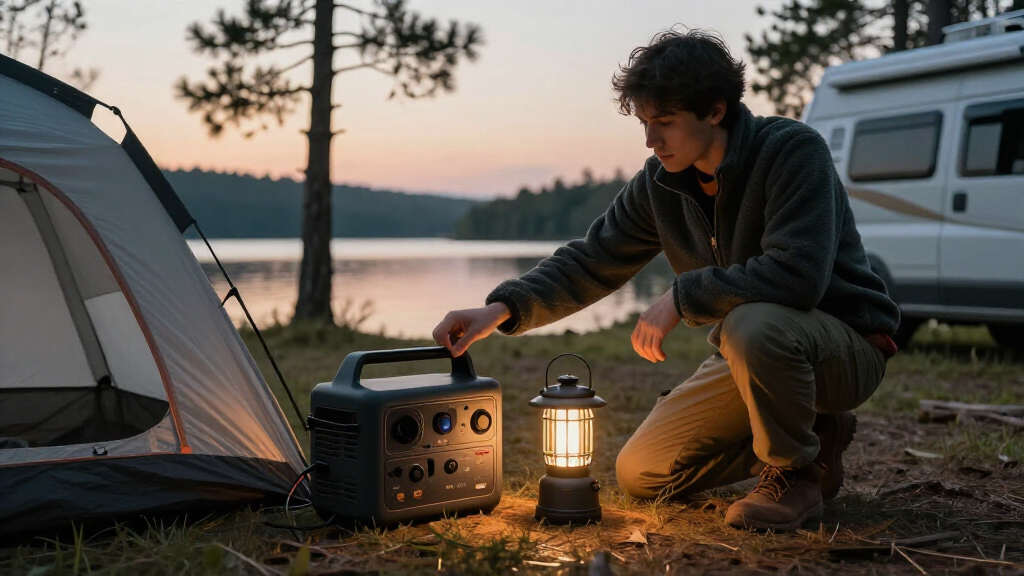
My ranking logic starts with a simple question: would a camper actually carry this to a campsite? Weight-to-capacity ratio served as the first filter, which is why the compact 88–100Wh units and the massive BLUETTI AC180 sit at opposite extremes of this list rather than being judged on raw specs alone. From there, I prioritized battery chemistry — LiFePO4 models earned placement above similarly sized lithium-ion units because their 2000+ cycle lifespan changes the long-term value equation for anyone who camps regularly. Charging speed and solar input capability came next, since a station that takes ten hours to refill via a wall outlet quietly ruins your Friday departure plan.
I also weighed outlet versatility against realistic camping loads. A 300W inverter cannot run a hair dryer or electric kettle no matter how the marketing frames it, so I judged each unit against what it can actually power: phones, headlamps, laptops, drones, CPAP machines, and small 12V fridges. Finally, brand track record and warranty support acted as a tiebreaker between closely matched units — a factor that favors Jackery, Anker, and BLUETTI over lesser-known names with similar spec sheets but shorter support histories.
Factors to Consider When Choosing Portable Camping Power Stations
Before you pick a specific model, it helps to understand the mistakes that trip up most first-time buyers in this category. These six factors shaped my rankings, and they should shape your decision too.Capacity: Calculate Your Real Watt-Hours, Not the Marketing Number
The most common mistake in this category is treating watt-hours as a single number instead of doing basic math. A 288Wh station powering a 60W portable fridge gives you roughly four hours of runtime — not a weekend. Write down every device you plan to run, find its wattage (usually printed on the charger), and multiply by expected hours of use. Add 20% for inverter inefficiency, because converting DC battery power to AC wall power always loses energy. This exercise alone eliminates half the models on any shortlist. Campers who skip it end up either hauling a 30-pound unit they use at 10% capacity, or watching a fridge die Saturday night on a unit that was never big enough.
Battery Chemistry: Why LiFePO4 Is Worth Paying More For
Older lithium-ion stations typically last 500 charge cycles before capacity drops meaningfully, while LiFePO4 units like the ALLWEI, DARAN, DaranEner, and both BLUETTI models are rated for 2000+ cycles. If you camp a dozen weekends a year, a lithium-ion unit may start losing capacity within three seasons, while a LiFePO4 unit lasts a decade of regular use. The tradeoff: LiFePO4 cells are heavier per watt-hour, which is why the chemistry question intersects directly with the portability question. There is also a safety angle — LiFePO4 chemistry is more thermally stable, which matters for a device sitting in a hot car trunk or tent vestibule. My rankings consistently favor LiFePO4 at equal capacity, but only when the weight penalty stays reasonable.
Weight and Size: The Capacity You Won’t Carry Is Worthless
Be honest about how your station will actually travel. Car campers can justify anything up to 40 pounds because it moves from trunk to picnic table once. Anyone hiking to a site, paddling in, or moving camp frequently should stay under seven pounds — which realistically means the sub-100Wh class. The middle ground between eight and 20 pounds is the awkward zone: too heavy for trail use, often underpowered for base-camp duty. Handle shape and weight distribution matter more than buyers expect, too; a compact box with a poor grip is genuinely unpleasant to carry even a quarter mile. If you cannot lift the fully loaded unit comfortably with one hand and walk with it, think hard before buying.
Solar Charging: Bundled Panels Are Not Always a Bargain
Package deals pairing a station with a solar panel look like savings, but bundled panels are often the manufacturer’s lowest-wattage offering. A 60W panel in partial shade or cloudy weather may deliver 25W or less, meaning a full recharge of a 300Wh battery takes more than a day of good sun. If off-grid recharging is central to your plans, buy a station with a high solar input rating — anything accepting 200W or more changes the equation entirely — and source a quality 100W or 200W panel separately. For weekend car campers, solar is often a nice-to-have you will rarely deploy, and a fast wall or car charge before departure serves you better. Match the solar investment to how far you actually get from outlets.
Inverter Wattage and Surge Ratings: Read the Fine Print
Continuous wattage tells you what a station can run indefinitely; surge wattage only covers startup spikes lasting seconds. A 1200W surge rating on a small battery does not make it a power tool station — the continuous rating is what governs real use. The classic camping trap is the electric kettle or hair dryer, both drawing 1000–1500W continuously and defeating nearly every compact station on the market. Look instead at what matters for camping loads: whether the inverter runs a CPAP overnight, a drone battery charger, a laptop brick, or a 12V fridge. Also check whether outlets are pure sine wave (safe for sensitive electronics) or modified sine wave, which can cause motors and some chargers to run hot.
Brand Support and Warranty: The Underrated Differentiator
A power station is a sealed battery with no user-serviceable parts — when it fails, your only recourse is the manufacturer. Established brands like Jackery, Anker, BLUETTI, and Westinghouse maintain US support channels, multi-year warranties, and replacement-part ecosystems. Smaller brands can offer aggressive specs at lower prices, but a two-year-old unit from a company that has exited the market becomes e-waste the day something goes wrong. Check the warranty length before buying, and be skeptical of brands with no stated warranty at all. This factor broke several ties in my rankings: a slightly better spec sheet from an unknown brand lost to a proven product with real support behind it. The cheapest station is rarely the cheapest one over five years.
Frequently Asked Questions
Can a portable power station run a CPAP machine on a camping trip?
Yes, and CPAP use is one of the most common reasons people buy these stations in the first place. A typical CPAP machine draws 30–60W without a heated humidifier, so even a compact 288Wh unit like the Anker SOLIX C300 or Jackery Explorer 300 can cover two nights of sleep — provided you run it without the humidifier and heated tube, which can double or triple the draw. Check whether your machine can run on DC power, because using a 12V DC connection instead of the AC outlet avoids inverter losses and stretches runtime by 15–20%. For a full week of trips or humidifier use, step up to something in the 500Wh-plus range, like the GRECELL 500W. Always test your exact setup at home for one night before relying on it in the field.
Is a bigger capacity always better if I can afford it?
No, and oversizing is arguably the more common mistake than undersizing. Large-capacity units like the BLUETTI AC180 weigh over 25 pounds, take up significant trunk space, and cost far more than most campers ever recover in usefulness. Batteries also self-discharge slowly in storage, so a huge station that sits idle between trips still needs periodic topping off to stay healthy. The right question is what you actually run at camp: if it is phones, headlamps, and a camera charger, a 100Wh unit is genuinely sufficient and infinitely more pleasant to carry. Capacity beyond your real needs is dead weight you paid a premium for. Size to your device list, not to your budget ceiling.
Are solar-panel bundles worth buying, or should I buy the panel separately?
For most campers, buying separately gets you better hardware. Bundled panels are frequently low-wattage units that struggle to hit their rated output even in direct sun, and manufacturers include them to make the total package look like a deal. A quality standalone 100W panel from a reputable solar brand, paired with a station that accepts high solar input, will outperform a bundled 60W panel by a wide margin. Bundles only make sense when the panel wattage genuinely matches the station’s input capacity and the total price undercuts buying the same components apart. If you mostly camp at sites with vehicle access, you may not need solar at all — charging from the car’s 12V outlet while driving between campsites is faster and more reliable than any panel.
What is the real difference between LiFePO4 and lithium-ion power stations for camping?
For camping specifically, three differences matter: lifespan, weight, and heat tolerance. LiFePO4 cells handle roughly 2000+ charge cycles versus 500 or so for standard lithium-ion, meaning a LiFePO4 station you use monthly will still hold most of its capacity a decade from now, while a lithium-ion unit may need replacement within a few seasons. LiFePO4 also tolerates heat better — relevant for anything stored in a car or tent in summer — and is less prone to thermal runaway. The penalty is weight: LiFePO4 stores less energy per pound, so equivalent capacity runs heavier, which matters if you carry the unit any distance. If you camp often and want one purchase to last, LiFePO4 models like the ALLWEI 256Wh or BLUETTI Elite 30 V2 are the smarter buy despite the weight.
Can I take a portable power station on a plane or store it in a hot car?
Airlines prohibit power stations above roughly 100Wh in carry-on and checked baggage, so only the smallest units here — the 88Wh MARBERO and HOWEASY — even approach airline-legal territory, and you should confirm with your carrier first since policies vary. Anything larger must travel by car or be shipped. On car storage: while LiFePO4 chemistry handles heat better than lithium-ion, no battery should live in a parked car through a hot summer, where cabin temperatures can exceed 140°F and permanently degrade cells. Store any power station in a cool, dry place, charged to around 50–70% if it will sit unused for months, and top it off every few months. These habits cost nothing and can double the usable life of your investment.
Conclusion
After comparing all 15 models, the right choice depends almost entirely on how you camp rather than which spec sheet looks longest. For best overall, the Jackery Explorer 1000 v2 stands apart with enough capacity for a full weekend of real loads, fast recharging, and brand support you can rely on years from now. The GRECELL 500W earns best value for car campers who want near-kilowatt-hour practicality without the premium price, and the GRECELL 330W is a smart value play one size down. At the premium end, the BLUETTI AC180 is unbeatable if you want a station that doubles as home backup — just accept that it is a vehicle-based tool, not a hiking companion. Beginners should start with the MARBERO 88Wh or HOWEASY: cheap, light, and ideal for learning what you actually use power for at camp before committing to something bigger. For specific needs, the Anker SOLIX C300 suits tech-heavy campers and drone pilots, the ALLWEI 256Wh rewards buyers who want LiFePO4 longevity on a budget, and the ZeroKor bundle with its 60W panel fits genuinely off-grid campers who have no other way to recharge. Whatever you choose, size to your real device list — the best station is the one whose capacity you actually use and whose weight you can actually carry.
Fall Picks
fall essentials
As an affiliate, we earn on qualifying purchases.