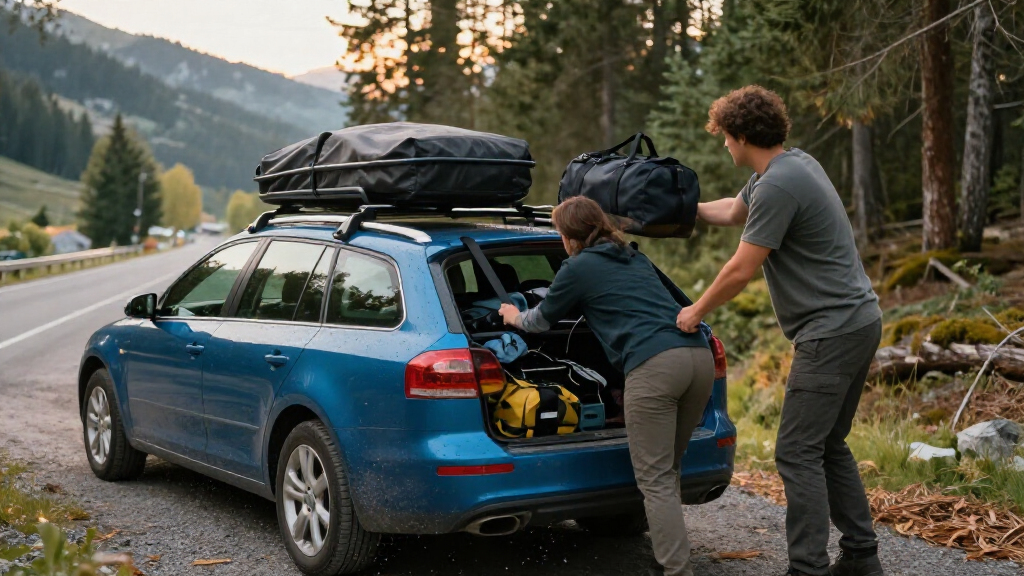

Rooftop cargo carriers add trip-ready storage, but the right choice depends on your roof setup, weather exposure, and how often you need access. I’d name the Thule Motion 3 my best overall pick for buyers who want a hard-shell box, while the RoofPax 28 cu. ft. bag stands out for flexible, high-capacity soft storage and the JEGS 18 cu. ft. hard shell for a simpler box option. Soft bags tend to pack down when not in use, while hard boxes offer a more structured, lockable enclosure but take up storage space at home. Capacity, mounting compatibility, and opening direction can matter as much as the advertised volume. Read on for the full breakdown of all 15 options and help matching one to your vehicle and travel habits.

Get travel and outdoor gear delivered free with Prime
- Fast, free delivery on millions of items
- Prime Video, Amazon Music and more included
- Member-only deals all year
Complete the kit


Key Takeaways
- The lineup splits into two distinct choices: soft bags favor packability and flexible storage, while hard-shell boxes provide a rigid enclosure and are better suited to buyers who want a fixed, reusable carrier.
- Advertised volume is not the whole fit story: the 30-cubic-foot FIVKLEMNZ offers the most listed capacity among these soft carriers, but roof limits, carrier dimensions, and load weight still set the practical ceiling.
- Hard-shell options cover different use patterns: Thule’s Motion 3 and Force 3 XL serve buyers seeking premium box designs, while the JEGS and Thule Pulse 2 L offer smaller-volume alternatives.
- Access direction can change day-to-day usability: the Thule Pulse 2 L is identified as dual-side opening, while the SportRack Vista XL is rear-opening; check which configuration works with your parking and roof layout.
- Several products are close variants: the list includes multiple Asinking, FIVKLEMNZ, and JEGS entries with similar names or capacities, so compare exact model details rather than assuming near-identical listings are interchangeable.
| Asinking Waterproof Rooftop Cargo Carrier Bag, 20 cu. ft. |  | Best for Rack-Free Flexibility | Capacity: 20 cu. ft. | Dimensions: 40 × 52 in. | Material: 900D double-coated PVC laminated tarpaulin | VIEW LATEST PRICE | See Our Full Breakdown |
| RoofPax 28 cu ft Waterproof Rooftop Cargo Carrier Bag |  | Best for Maximum Soft-Bag Capacity | Capacity: 28 cu. ft. | Dimensions: 52 × 39.37 × 24 in. | Weight: 6.75 kg | VIEW LATEST PRICE | See Our Full Breakdown |
| JEGS 18 cu. ft. Rooftop Cargo Carrier, Hard Shell |  | Best Hard-Shell Protection | Capacity: 18 cu. ft. | Dimensions: 57 × 39 × 19.5 in. | Weight: 35.5 lb | VIEW LATEST PRICE | See Our Full Breakdown |
| Asinking 21-Cubic-Foot Waterproof Rooftop Cargo Carrier Bag |  | Best for Accessory-Rich Setup | Capacity: 21 cu. ft. | Dimensions: 52 × 40 × 18 in. | Weight: 4.24 kg | VIEW LATEST PRICE | See Our Full Breakdown |
| FIVKLEMNZ 21-Cubic-Foot Waterproof Soft Rooftop Cargo Bag |  | Best for Strap-Heavy Tie-Downs | Capacity: 21 cu. ft. | Dimensions: 52 × 40 × 17 in. | Weight: 4.68 kg | VIEW LATEST PRICE | See Our Full Breakdown |
| FIVKLEMNZ 30-Cubic-Foot Waterproof Soft Rooftop Cargo Carrier |  | Best for Maximum Soft-Bag Capacity | Capacity: 30 cubic feet | Dimensions: 60 × 43 × 20 inches in one listing; 60 × 60 × 20 inches elsewhere | Material: 840D PVC; Oxford cloth also listed | VIEW LATEST PRICE | See Our Full Breakdown |
| JEGS 18 Cu. Ft. Hard-Shell Rooftop Cargo Carrier |  | Best Hard-Shell Value | Capacity: 18 cubic feet | Interior dimensions: 57 × 38.5 × 17.75 inches | Material: HDPE plastic | VIEW LATEST PRICE | See Our Full Breakdown |
| Thule Motion 3 Rooftop Cargo Box |  | Best for Convenient Hard-Box Access | Listed volume: 3 liters | Weight: 59.5 pounds | Material: Plastic | VIEW LATEST PRICE | See Our Full Breakdown |
| Asinking Waterproof Rooftop Cargo Carrier Bag, 21 Cubic Feet |  | Best Soft Bag for Wet-Weather Trips | Capacity: 21 cubic feet | Full dimensions: 52 × 40 × 18 inches | Material: 900D abrasion-resistant PVC | VIEW LATEST PRICE | See Our Full Breakdown |
| MeeFar XBEEK Waterproof Rooftop Cargo Bag, 20 Cubic Feet |  | Best Compact, Stowable Soft Carrier | Capacity: 20 cubic feet | Dimensions: 51 × 40 × 17 inches | Weight: 3.9 kg | VIEW LATEST PRICE | See Our Full Breakdown |
| FIVKLEMNZ Waterproof Rooftop Cargo Carrier Bag |  | Best for Flexible Roof Setups | Capacity: 15 cubic feet | Material: 840D PVC | Dimensions: 46 x 34 x 17 inches | VIEW LATEST PRICE | See Our Full Breakdown |
| Thule Pulse 2 L Roof-Mounted Cargo Box, 16 cu. ft., Dual-Side Opening |  | Best for Easy Two-Sided Access | Capacity: 450 liters (16 cubic feet) | Load capacity: 75 kg | Dimensions: 81 x 17 x 37 inches | VIEW LATEST PRICE | See Our Full Breakdown |
| Thule Force 3 XL Rooftop Cargo Box |  | Best for Everyday High-Capacity Use | Capacity: 18 cubic feet | Dimensions: 89 x 18 x 40 inches | Weight: 65 pounds | VIEW LATEST PRICE | See Our Full Breakdown |
| SportRack Vista XL Rear-Opening Cargo Box, Black |  | Best for Rear-Access Loading | Capacity: 18 cubic feet (510 liters) | Maximum weight capacity: 100 pounds (45 kg) | Dimensions: 63 x 38 x 19 inches | VIEW LATEST PRICE | See Our Full Breakdown |
| Sailnovo 21-Cubic-Foot Waterproof Rooftop Cargo Carrier |  | Best for Maximum Soft-Bag Capacity | Capacity: 21 cubic feet | Dimensions: 51.9 x 39.37 x 16.9 inches | Material: 1000D PVC tarpaulin | VIEW LATEST PRICE | See Our Full Breakdown |
| rooftop cargo carrier | Material | Capacity | Dimensions | Warranty |
|---|---|---|---|---|
| Asinking Waterproof Rooftop Ca | 900D double-coated PVC laminated tarpaulin | 20 cu. ft. | 40 × 52 in. | 2 years |
| RoofPax 28 cu ft Waterproof Ro | Polyester | 28 cu. ft. | 52 × 39.37 × 24 in. | Lifetime on zippers and buckles; 5 years on fabric tear |
| JEGS 18 cu. ft. Rooftop Cargo | HDPE plastic | 18 cu. ft. | 57 × 39 × 19.5 in. | 30 days |
| Asinking 21-Cubic-Foot Waterpr | 840D PVC | 21 cu. ft. | 52 × 40 × 18 in. | — |
| FIVKLEMNZ 21-Cubic-Foot Waterp | 840D PVC; Oxford cloth also listed in product details | 21 cu. ft. | 52 × 40 × 17 in. | 12 months |
| FIVKLEMNZ 30-Cubic-Foot Waterp | 840D PVC; Oxford cloth also listed | 30 cubic feet | 60 × 43 × 20 inches in one listing; 60 × 60 × 20 inches elsewhere | 12 months |
| JEGS 18 Cu. Ft. Hard-Shell Roo | HDPE plastic | 18 cubic feet | — | — |
| Thule Motion 3 Rooftop Cargo B | Plastic | — | — | Limited lifetime |
| Asinking Waterproof Rooftop Ca | 900D abrasion-resistant PVC | 21 cubic feet | — | — |
| MeeFar XBEEK Waterproof Roofto | 700D PVC tarpaulin | 20 cubic feet | 51 × 40 × 17 inches | 60 days |
| FIVKLEMNZ Waterproof Rooftop C | 840D PVC | 15 cubic feet | 46 x 34 x 17 inches | 60 days |
| Thule Pulse 2 L Roof-Mounted C | ASA-ABS plastic | 450 liters (16 cubic feet) | 81 x 17 x 37 inches | Limited lifetime |
| Thule Force 3 XL Rooftop Cargo | Plastic | 18 cubic feet | 89 x 18 x 40 inches | Limited lifetime |
| SportRack Vista XL Rear-Openin | UV-resistant ABS plastic | 18 cubic feet (510 liters) | 63 x 38 x 19 inches | — |
| Sailnovo 21-Cubic-Foot Waterpr | 1000D PVC tarpaulin | 21 cubic feet | 51.9 x 39.37 x 16.9 inches | — |
More Details on Our Top Picks
Asinking Waterproof Rooftop Cargo Carrier Bag, 20 cu. ft.
The Asinking 20 cu. ft. bag is a practical pick for drivers who need extra luggage space but do not have crossbars: it mounts to roof racks or with the included door hooks. Its double-coated PVC tarpaulin, heat-welded seams, and zipper flap are aimed at keeping out rain and road spray, while the mat helps limit shifting against the roof. Compared with the larger RoofPax 28 cu ft bag, this Asinking model gives up capacity but may suit a smaller load and takes up less roof area. The tradeoff is typical of soft carriers: it relies on careful strap tension rather than a rigid shell, and door-hook installation means securing straps around the vehicle’s door frames. Choose it for flexible fit and bundled mounting accessories, not hard-shell protection.
Pros:- Mounts to roof racks or with included door hooks
- 20 cu. ft. capacity adds room for travel luggage
- Heat-welded seams and a zipper storm flap are designed to resist weather
- Includes a non-slip mat, combination lock, and storage bag
Cons:- Door-hook setup requires routing and securing straps at the door frames
- Soft construction can shift or create wind noise if straps are not carefully tightened
Best for: Drivers without roof racks who need room for a family trip’s extra bags and want a roof bag with mounting accessories included
Not ideal for: Buyers carrying delicate or rigidly packed gear, or anyone who wants a quick, strap-free installation
- Capacity:20 cu. ft.
- Dimensions:40 × 52 in.
- Material:900D double-coated PVC laminated tarpaulin
- Water resistance:IPX66
- Installation:Roof racks or included door hooks
- Included accessories:Non-slip mat, 4 anti-scratch door hooks, combination lock, storage bag, user manual
- Warranty:2 years
Our verdict“Choose this Asinking bag if rack-free installation and included accessories matter more than rigid protection or the extra capacity of the RoofPax.”
RoofPax 28 cu ft Waterproof Rooftop Cargo Carrier Bag
When the main goal is to move a large load overhead, the RoofPax 28 cu ft bag offers the most capacity among these five picks. Its waterproof coating, double seams, and dual zippers are designed for wet-weather travel, and its door-hook straps let it fit vehicles with or without a roof rack. That extra volume makes it a better match than the Asinking 20 cu. ft. bag for several bulky suitcases, though it also calls for more roof space and careful packing so the soft shell stays secure. The supplied tie-down straps, lock, and storage bag add useful trip gear; a lifetime warranty on zippers and buckles plus five years of fabric-tear coverage also set it apart from the shorter warranty listed for the Asinking 20. Skip it if you need a rigid, shape-holding carrier.
Pros:- 28 cu. ft. capacity exceeds the other soft bags in this five-product group
- Waterproof coating, double seams, and dual zippers are designed for wet-weather protection
- Fits vehicles with or without roof racks, raised rails, or crossbars
- Includes patented door-hook straps, tie-down straps, combination lock, and storage bag
Cons:- Large capacity requires ample roof area and careful load distribution
- Soft-shell construction offers less rigid protection than a hard-shell carrier
- Folded storage dimensions are not specified
Best for: SUV-owning families or road-trippers with bulky luggage who need high capacity and a carrier that can mount without crossbars
Not ideal for: Drivers with limited roof space, delicate cargo needing a rigid shell, or anyone who prefers not to manage several straps
- Capacity:28 cu. ft.
- Dimensions:52 × 39.37 × 24 in.
- Weight:6.75 kg
- Material:Polyester
- Shell type:Soft shell
- Water resistance:Waterproof
- Vehicle fit:Universal; with or without a roof rack
- Included components:4 patented door-hook straps/clips, combination lock, storage bag
- Warranty:Lifetime on zippers and buckles; 5 years on fabric tear
Our verdict“Pick the RoofPax when you need more soft-bag capacity than the Asinking 20 provides and can accommodate its larger roof footprint.”
JEGS 18 cu. ft. Rooftop Cargo Carrier, Hard Shell
The JEGS 18 cu. ft. carrier is the hard-shell choice in this group, making it a stronger fit for buyers who prefer a fixed enclosure over the flexible fabric bags. Its HDPE shell and weather-tight seal offer a more structured barrier for packed luggage, while rear loading can make access easier when the carrier sits on the roof. The three-point locking system and tool-free mounting hardware add convenience once you have confirmed fit. That fit check matters: unlike the universal FIVKLEMNZ 21-cubic-foot bag, this JEGS model is listed as vehicle-specific, so it may not suit every roof setup. It also weighs 35.5 lb in the measurements, and its 110 lb maximum load sets a firm cargo ceiling. The short 30-day warranty is another limitation compared with the soft bags’ longer stated coverage.
Pros:- HDPE hard shell and weather-tight seal provide a rigid enclosure
- 18 cu. ft. capacity accommodates luggage and other trip cargo
- Rear loading provides access from the back of the vehicle
- Tool-free installation hardware and a three-point locking system are included
Cons:- Vehicle-specific fit can rule out some cars and roof-rack setups
- Listed weight is 35.5 lb, making it heavier to lift and mount than the soft bags
- 30-day warranty is shorter than the coverage stated for the RoofPax and FIVKLEMNZ bags
Best for: Drivers with a compatible vehicle who want a structured, lockable carrier for luggage and value a weather-tight shell over soft-bag flexibility
Not ideal for: Owners who need universal fit, a lightweight carrier, or longer stated warranty coverage
- Capacity:18 cu. ft.
- Dimensions:57 × 39 × 19.5 in.
- Weight:35.5 lb
- Material:HDPE plastic
- Maximum load:110 lb
- Loading access:Rear
- Locking system:Three-point locking system
- Installation:Tool-free; mounting hardware and instructions included
- Warranty:30 days
Our verdict“Choose the JEGS over the FIVKLEMNZ soft bag if your vehicle is compatible and rigid, lockable protection matters more than universal fit.”
Asinking 21-Cubic-Foot Waterproof Rooftop Cargo Carrier Bag
This Asinking 21-cubic-foot bag is the most accessory-oriented soft carrier in this set: it includes six padded door hooks, an anti-slip mat, two extra straps, a storage bag, and a luggage lock. Its 840D PVC, reinforced welded seams, and waterproof zipper with wide flaps are intended to shield packed gear from rain. Against the nearly same-capacity FIVKLEMNZ 21-cubic-foot bag, the clearest distinction is the Asinking’s stated 18-inch height and its padded hooks; FIVKLEMNZ lists ten reinforced straps and a 12-month warranty. Both remain soft bags that need careful securing and cannot match the rigid protection of the JEGS hard shell. One listing detail is unclear: it mentions eight adjustable straps, while the accessory list specifies two extra straps. Buyers who want a simple, easy-to-verify setup may prefer a less ambiguous package.
Pros:- 21 cu. ft. capacity suits luggage-heavy trips
- 840D PVC and reinforced welded seams are designed for waterproof protection
- Universal fit works with vehicles with or without roof racks
- Includes six padded hooks, an anti-slip mat, extra straps, and a luggage lock
Cons:- Soft shell depends on straps and hooks for secure mounting
- Strap information is inconsistent between the listing’s adjustable-strap description and package details
Best for: Drivers without roof racks who want a 21 cu. ft. soft bag with padded door hooks, an anti-slip mat, and extra tie-down accessories
Not ideal for: Buyers who need hard-shell protection or want the strap count and mounting setup stated consistently
- Capacity:21 cu. ft.
- Dimensions:52 × 40 × 18 in.
- Weight:4.24 kg
- Material:840D PVC
- Water resistance:Waterproof
- Fit:Universal; with or without roof racks
- Included accessories:Anti-slip mat, 6 padded door hooks, storage bag, 2 extra straps, luggage lock
- Closure:Zipper
Our verdict“Choose this Asinking over the FIVKLEMNZ 21 when padded hooks and a fuller accessory bundle appeal, but check the strap arrangement before travel.”
FIVKLEMNZ 21-Cubic-Foot Waterproof Soft Rooftop Cargo Bag
The FIVKLEMNZ 21-cubic-foot bag pairs generous capacity with a particularly substantial tie-down package: the listing specifies ten reinforced straps, six door hooks, and an anti-slip mat. Its 840D PVC, welded seams, and double-layer waterproof cover are intended to protect luggage from rain and snow, while universal fit gives it an advantage over the vehicle-specific JEGS hard shell for drivers whose cars lack a compatible carrier setup. Compared with the similarly sized Asinking 21-cubic-foot bag, FIVKLEMNZ states its strap count more clearly and lists a 12-month warranty, though the Asinking includes padded hooks and extra straps in its package details. This remains a soft bag, not a rigid box, and installing multiple straps and hooks takes effort. The material listing also names both 840D PVC and Oxford cloth, so buyers may want clarification on the fabric construction.
Pros:- 21 cu. ft. capacity accommodates suitcases and travel gear
- Waterproof cover and welded seams are designed for wet-weather protection
- Includes ten reinforced straps, six door hooks, and an anti-slip mat
- Designed to fit vehicles with or without roof racks
Cons:- Soft shell provides less rigid protection than the JEGS hard-shell carrier
- Multiple straps and hooks add time and care to installation
- Product details list both 840D PVC and Oxford cloth without clarifying their roles
Best for: Road-trippers who want a universal 21 cu. ft. bag and value numerous tie-down straps for securing a soft carrier
Not ideal for: Drivers seeking rigid protection, minimal installation steps, or a clearly single-material specification
- Capacity:21 cu. ft.
- Dimensions:52 × 40 × 17 in.
- Weight:4.68 kg
- Material:840D PVC; Oxford cloth also listed in product details
- Water resistance:Waterproof
- Fit:Universal; with or without roof racks
- Included accessories:Anti-slip mat, reinforced straps, 6 door hooks, luggage lock, storage bag
- Warranty:12 months
Our verdict“Pick this FIVKLEMNZ over the Asinking 21 if you want a clearly stated ten-strap tie-down kit and can accept soft-shell protection.”
FIVKLEMNZ 30-Cubic-Foot Waterproof Soft Rooftop Cargo Carrier
With 30 cubic feet of stated capacity, this FIVKLEMNZ bag is the volume-first choice among the soft carriers here. It offers more room than the Asinking 21-Cubic-Foot Waterproof Rooftop Cargo Carrier Bag, which can help families pack bulky trip gear without moving to a rigid box. Its 840D PVC, welded seams, and double-layer cover are intended to shield luggage from wet weather, while the included mat, reinforced straps, and six door hooks give buyers several pieces needed for setup. The tradeoff is that a soft bag needs careful loading and strap tension, and the listed dimensions conflict between 60 × 43 × 20 and 60 × 60 × 20 inches. I would confirm its actual footprint before buying, especially for a shorter roof.
Pros:- Stated 30-cubic-foot capacity exceeds the Asinking 21-cubic-foot bag.
- 840D PVC, welded seams, and a double-layer cover are designed for waterproof protection.
- Includes reinforced straps, six door hooks, and an anti-slip mat.
- Designed for vehicles with or without roof racks.
Cons:- Listed dimensions conflict, making roof-fit planning uncertain.
- Soft construction offers less impact protection than the JEGS hard-shell carrier.
- Requires careful loading and strap adjustment to keep the bag stable.
Best for: Families or group travelers who prioritize high soft-bag capacity and need a carrier that can attach to a vehicle without roof racks.
Not ideal for: Drivers with limited roof space or buyers who need precise fit dimensions, since the listed measurements conflict and the soft shell needs attentive securing.
- Capacity:30 cubic feet
- Dimensions:60 × 43 × 20 inches in one listing; 60 × 60 × 20 inches elsewhere
- Material:840D PVC; Oxford cloth also listed
- Water resistance:Waterproof
- Mounting:Strap mount
- Vehicle fit:Universal; designed for vehicles with or without roof racks
- Included components:Anti-slip mat, reinforced straps, six door hooks, luggage lock, storage bag
- Warranty:12 months
Our verdict“Choose this FIVKLEMNZ if you want the roundup’s largest stated soft-bag capacity, but verify the dimensions before committing.”
JEGS 18 Cu. Ft. Hard-Shell Rooftop Cargo Carrier
The JEGS makes the most sense for buyers who want hard-shell protection without choosing a larger, more feature-focused box like the Thule Motion 3. Its 18 cubic feet of storage is less than the FIVKLEMNZ 30-cubic-foot soft carrier, but the HDPE shell gives luggage a more rigid barrier against bumps and handling. Dual-side opening is a practical advantage when a parking spot or neighboring vehicle blocks one side, and keyed locks plus a weather-tight seal add convenience for regular trips. Those benefits come with real fit and weight tradeoffs: the carrier weighs 35 pounds before cargo is added, and its vehicle-specific fit may rule out some setups. I would favor it over a soft bag when shape and shell protection matter more than maximum volume or flexible compatibility.
Pros:- Rigid HDPE shell offers more impact protection than the soft FIVKLEMNZ and Asinking bags.
- Opens from either side for easier access in tight parking situations.
- Keyed locks and a weather-tight seal support secure, weather-resistant storage.
- 18-cubic-foot capacity provides substantial enclosed space.
Cons:- At 35 pounds, it adds considerable weight before cargo is loaded.
- Vehicle-specific fit may limit compatibility.
- Its capacity is smaller than the FIVKLEMNZ 30-cubic-foot soft carrier.
Best for: Drivers who want a rigid, dual-opening carrier for routine trips and have confirmed that their vehicle and roof-rack setup are compatible.
Not ideal for: Buyers needing the greatest possible capacity, a lightweight roof load, or a carrier that fits a broad range of vehicles without checking fit.
- Capacity:18 cubic feet
- Interior dimensions:57 × 38.5 × 17.75 inches
- Material:HDPE plastic
- Weight:35 pounds
- Opening:Dual-side opening
- Locking system:Dual-side locks with keys; front latch
- Water resistance:Water resistant, with weather-tight seal
- Mounting:Roof mount
Our verdict“Pick the JEGS if a rigid shell and access from either side matter more to you than maximum capacity or lighter roof weight.”
Thule Motion 3 Rooftop Cargo Box
The Motion 3 is the convenience-focused hard box in this group: its wide handle and dual-function SlideLock closure are aimed at making opening and closing simpler, while the PowerClick mount signals when it is properly fitted. Its forward-leaning profile is designed to reduce drag, a useful distinction from the taller, more flexible soft bags such as the MeeFar XBEEK. The tradeoff is that the supplied data lists its volume as 3 liters, which does not establish a meaningful cargo capacity for a rooftop box; I would verify the correct volume before comparing it with the JEGS’s 18 cubic feet. At 59.5 pounds and with vehicle-specific fit, it also asks more of the vehicle and buyer than a strap-on bag. I’d shortlist it for its mounting and closure design, not on the capacity information provided here.
Pros:- PowerClick mounting system includes a torque indicator to signal proper mounting.
- SlideLock closure is designed to lock the lid and indicate when it is closed securely.
- Wide handle supports one-handed opening and closing.
- Forward-leaning profile is designed to reduce drag.
Cons:- The listed volume of 3 liters is inconsistent with a rooftop cargo box and does not provide a reliable capacity comparison.
- At 59.5 pounds, it is heavier than the 35-pound JEGS hard-shell carrier.
- Vehicle-specific fit may limit compatibility; listed accessories such as a liner and storage cover are not included.
Best for: Drivers who prioritize a guided quick-mount system and easier box operation, and who can confirm vehicle fit and usable capacity before purchase.
Not ideal for: Buyers who need a clearly documented cargo volume, a light carrier, or broad compatibility across vehicles.
- Listed volume:3 liters
- Weight:59.5 pounds
- Material:Plastic
- Mounting system:PowerClick quick-mount system
- Closure:SlideLock
- Fit:Vehicle-specific fit
- Water resistance:Water resistant
- Warranty:Limited lifetime
Our verdict“Consider the Motion 3 for its mounting and closure features only after confirming its capacity and compatibility for your vehicle.”
Asinking Waterproof Rooftop Cargo Carrier Bag, 21 Cubic Feet
Among the soft carriers here, the Asinking stands out for its 900D abrasion-resistant PVC and heat-welded seams, a construction-focused choice for travelers concerned about rain and road wear. Its 21 cubic feet sits between the MeeFar XBEEK’s 20 cubic feet and the FIVKLEMNZ bag’s stated 30, giving it useful room without relying on the largest, dimensionally inconsistent option. The included non-slip mat, heavy-duty straps, combination lock, and six door hooks support both rack and no-rack setups. The main fit caveat is specific: the maker recommends a roof longer than 58 inches and wider than 42 inches, so “universal” does not mean it suits every vehicle. Like the MeeFar, it remains a soft bag, so cargo arrangement and strap tension matter more than they would with the rigid JEGS box.
Pros:- 900D PVC and heat-welded, triply reinforced seams are designed to resist water and abrasion.
- 21-cubic-foot capacity is slightly larger than the MeeFar XBEEK.
- Includes a non-slip mat, heavy-duty straps, combination lock, and six door hooks.
- Can be installed on vehicles with or without roof racks.
Cons:- Recommended roof dimensions exceed 58 inches long and 42 inches wide, limiting fit on smaller vehicles.
- Soft construction offers less impact protection than the JEGS hard-shell carrier.
- Needs careful packing and strap adjustment to keep cargo secure.
Best for: Travelers seeking a waterproof soft carrier with reinforced construction who can confirm their roof meets the recommended dimensions.
Not ideal for: Owners of compact vehicles with shorter or narrower roofs, or buyers who want rigid impact protection and a fixed-shape box.
- Capacity:21 cubic feet
- Full dimensions:52 × 40 × 18 inches
- Material:900D abrasion-resistant PVC
- Seams:Triply reinforced, heat-welded
- Recommended roof dimensions:Longer than 58 inches and wider than 42 inches
- Compatibility:Vehicles with or without roof racks
- Included accessories:Non-slip mat, combination lock, six door hooks, storage bag, user manual
Our verdict“Choose the Asinking if you want a reinforced waterproof soft bag and your roof meets its recommended size.”
MeeFar XBEEK Waterproof Rooftop Cargo Bag, 20 Cubic Feet
The MeeFar XBEEK is the most straightforward pick for buyers who want a 20-cubic-foot bag that folds away between trips. At 51 × 40 × 17 inches, its stated footprint is more compact than the Asinking 21-cubic-foot bag’s full dimensions, though buyers should still check their roof and follow the strap setup carefully. Its 700D PVC tarpaulin, anti-slip mat, reinforced straps, six security hooks, and combination lock cover the basics for carrying luggage without a roof rack. Compared with the Asinking, it gives up some capacity and the higher-density 900D material; compared with the JEGS, it cannot offer a rigid shell. The short 60-day warranty is another reason I’d frame it as a stowable, occasional-trip option rather than the strongest choice for demanding frequent use.
Pros:- Folds into its included storage bag when not in use.
- 20-cubic-foot capacity accommodates luggage and camping gear.
- Waterproof 700D PVC tarpaulin is designed to resist tearing.
- Includes an anti-slip mat, reinforced straps, six security hooks, and a combination lock.
Cons:- Soft-shell construction offers less impact protection than the JEGS hard-shell carrier.
- Its capacity is slightly lower than the Asinking 21-cubic-foot bag.
- The listed warranty is only 60 days.
Best for: Occasional road-trippers who need a foldable 20-cubic-foot carrier for vehicles with or without roof racks and have limited storage space at home.
Not ideal for: Frequent travelers seeking a longer warranty, rigid impact protection, or stronger listed fabric than the Asinking’s 900D PVC.
- Capacity:20 cubic feet
- Dimensions:51 × 40 × 17 inches
- Weight:3.9 kg
- Material:700D PVC tarpaulin
- Water resistance:Waterproof
- Mounting:Roof mount; compatible with vehicles with or without roof racks
- Included accessories:Anti-slip mat, combination lock, six security hooks, reinforced straps, storage bag
- Warranty:60 days
Our verdict“Choose the MeeFar XBEEK if easy off-season storage matters more than a rigid shell, maximum capacity, or a longer warranty.”
FIVKLEMNZ Waterproof Rooftop Cargo Carrier Bag
The FIVKLEMNZ 15-cubic-foot bag suits drivers who want weather protection without committing to a rigid box. Its 840D PVC body, welded seams, and double-layer cover are designed to help keep luggage dry in rain or snow, while the included anti-slip mat and six door hooks give it mounting options for vehicles with or without a roof rack. Compared with the hard-shell SportRack Vista XL, this bag is lighter and easier to store when the trip is over, but it cannot shield gear from impacts as well as a rigid carrier. Its 15-cubic-foot capacity is also smaller than the Sailnovo 21-Cubic-Foot bag, making this a better fit for a moderate load than a family’s full holiday haul. Straps and hooks require careful setup, and the soft shell is the clear tradeoff.
Pros:- Welded seams and a double-layer cover are designed to protect cargo from rain and snow.
- Can mount to vehicles with or without a roof rack.
- Includes an anti-slip mat, reinforced straps, six door hooks, and a luggage lock.
- Soft construction is easier to store than a hard-shell box.
Cons:- Straps or door hooks require careful installation and checking before travel.
- Soft sides offer less impact protection than hard-shell carriers.
- Its 15-cubic-foot capacity is smaller than the Sailnovo 21-Cubic-Foot bag.
Best for: Drivers with limited storage space who need a weather-protective bag for occasional trips and may not have a roof rack.
Not ideal for: Travelers carrying fragile equipment or bulky family loads who need rigid impact protection or more than 15 cubic feet of space.
- Capacity:15 cubic feet
- Material:840D PVC
- Dimensions:46 x 34 x 17 inches
- Weight:6.6 pounds
- Weather protection:Waterproof; welded seams and double-layer cover
- Mounting:Roof mount; fits vehicles with or without a roof rack
- Included accessories:Anti-slip mat, reinforced straps, six door hooks, and luggage lock
- Warranty:60 days
Our verdict“Choose this compact soft carrier if you need weather-focused storage that can work with or without a roof rack and can accept less rigid protection.”
Thule Pulse 2 L Roof-Mounted Cargo Box, 16 cu. ft., Dual-Side Opening
The Thule Pulse 2 L is the choice in this group for buyers who value access and a guided installation more than a soft bag’s low weight. Its dual-side opening lets passengers reach gear from whichever side is safer or more convenient, while the tool-free mount’s torque indicator and closure confirmation provide clear fitting and closing cues. The 16-cubic-foot capacity is close to the FIVKLEMNZ 15-cubic-foot bag, but this rigid box offers a more structured enclosure; unlike that bag, it is not listed as water resistant, so buyers should not treat it as the strongest option for wet-weather cargo protection. The Thule Force 3 XL carries more at 18 cubic feet, though it is heavier at 65 pounds; the Pulse 2 weighs 51 pounds, which still makes lifting and fitting a two-person job for many owners.
Pros:- Dual-side opening gives access from either side of the vehicle.
- Tool-free mounting includes a torque indicator and closure confirmation.
- Forward roof positioning is designed to preserve trunk access.
- ASA-ABS shell is designed to resist sun exposure and scratches.
Cons:- The product data does not list water resistance.
- At 51 pounds, lifting and installation may be difficult for one person.
- Offers less capacity than the Thule Force 3 XL and SportRack Vista XL.
Best for: Drivers who want a rigid box with access from either side and a mounting system that gives clear installation and closure feedback.
Not ideal for: Buyers prioritizing stated water resistance, a lightweight carrier, or more cargo room than 16 cubic feet.
- Capacity:450 liters (16 cubic feet)
- Load capacity:75 kg
- Dimensions:81 x 17 x 37 inches
- Weight:51 pounds
- Material:ASA-ABS plastic
- Opening:Dual-side
- Mounting system:Tool-free with torque indicator and closure confirmation
- Warranty:Limited lifetime
Our verdict“Pick the Pulse 2 if two-sided access and guided mounting matter more to you than maximum capacity or stated water resistance.”
Thule Force 3 XL Rooftop Cargo Box
For drivers who want a larger rigid carrier for regular trips, the Thule Force 3 XL brings 18 cubic feet of space and access from either side. Its SlideLock system automatically locks the lid and signals when it is securely closed, while the mounting system clicks to indicate attachment. That combination favors buyers who expect frequent loading and want clear feedback at the roof. Compared with the Thule Pulse 2 L, the Force 3 XL adds two cubic feet and is listed as water resistant, but it weighs 65 pounds rather than 51, so fitting it is a more demanding task. The SportRack Vista XL also offers 18 cubic feet and a lower 100-pound maximum load specification, but it opens only from the rear; the Force’s side access is more flexible, at the cost of a long 89-inch body that may not fit every vehicle or storage area.
Pros:- 18-cubic-foot capacity for larger travel loads.
- Access from either side of the vehicle.
- SlideLock system locks the lid and indicates secure closure.
- Water-resistant plastic shell and click-indicating mounting system.
Cons:- At 65 pounds, it can be difficult to lift and install.
- Its 89-inch length may not suit every vehicle or storage space.
- The product data does not specify a maximum load capacity.
Best for: Frequent travelers who need an 18-cubic-foot rigid box, side access, and clear signals that the lid and mounts are secured.
Not ideal for: Solo installers or owners of shorter vehicles and tight garages who may struggle with its 65-pound weight and 89-inch length.
- Capacity:18 cubic feet
- Dimensions:89 x 18 x 40 inches
- Weight:65 pounds
- Material:Plastic
- Weather protection:Water resistant
- Access:Both sides
- Locking system:SlideLock
- Warranty:Limited lifetime
Our verdict“Choose the Force 3 XL if you want a water-resistant, side-access hard box for regular larger loads and have help for installation.”
SportRack Vista XL Rear-Opening Cargo Box, Black
The SportRack Vista XL makes the most sense for buyers who want 18 cubic feet of rigid storage and prefer to load from behind the vehicle. Its rear-opening lid can keep loading away from roadside traffic, a practical distinction from the side-opening Thule Force 3 XL and Thule Pulse 2 L. Tool-free mounting hardware and an included lock and key keep the setup straightforward, while UV-resistant ABS is designed for exposure to sunlight. Fit is less universal than the soft bags in this roundup: the Vista XL needs compatible crossbars spaced 23 5/8 to 29 3/4 inches apart. Its 100-pound maximum load is also a firm ceiling, and the rear-only access gives up the flexibility of Thule’s two-sided boxes. Check rack measurements before choosing it.
Pros:- 18 cubic feet of rigid cargo space.
- Rear opening keeps loading access at the back of the vehicle.
- UV-resistant ABS construction.
- Tool-free mounting hardware and lock with key are included.
Cons:- Requires crossbars spaced 23 5/8 to 29 3/4 inches apart.
- Maximum load capacity is 100 pounds.
- Rear-only opening is less flexible than the Thule Force 3 XL’s two-sided access.
Best for: Drivers with compatible crossbars who want an 18-cubic-foot hard box and prefer loading from the rear of the vehicle.
Not ideal for: Owners without crossbars in the specified spacing range or anyone who needs side access to cargo.
- Capacity:18 cubic feet (510 liters)
- Maximum weight capacity:100 pounds (45 kg)
- Dimensions:63 x 38 x 19 inches
- Material:UV-resistant ABS plastic
- Opening:Rear opening
- Mounting:Tool-free crossbar mount
- Crossbar spacing:23 5/8–29 3/4 inches (60–75.5 cm)
- Included components:Roof box, mounting hardware, key, and lock
Our verdict“Choose the Vista XL if your crossbars match its spacing and rear access suits your loading routine better than side-opening access.”
Sailnovo 21-Cubic-Foot Waterproof Rooftop Cargo Carrier
With 21 cubic feet of soft-sided storage, the Sailnovo is the capacity-focused bag in this set. Its 1000D PVC tarpaulin is designed to protect cargo from rain, snow, wind, and dust, while ten reinforced adjustable straps and six door hooks give buyers several ways to secure it across compatible roof setups. Compared with the FIVKLEMNZ 15-cubic-foot bag, it offers substantially more room and a more extensive strap arrangement, but it also occupies a broad roof footprint and remains vulnerable to punctures from sharp objects. The anti-slip mat, combination lock, and storage bag add useful trip and storage accessories. Compatibility has limits: it is not suited to sunroofs or most vans without roof racks, and bare-roof installation depends on being able to lift the window weatherstripping for the hooks.
Pros:- 21-cubic-foot capacity exceeds the FIVKLEMNZ 15-cubic-foot bag.
- 1000D PVC tarpaulin is designed for protection from rain, snow, wind, and dust.
- Ten reinforced straps, six door hooks, and an anti-slip mat support varied mounting setups.
- Folds into the included storage bag when not in use.
Cons:- Sharp objects can puncture the soft material.
- Not suitable for sunroofs or most vans without roof rack systems.
- Bare-roof installation requires liftable window weatherstripping for the door hooks.
Best for: Traveling families or outdoor gear haulers who need a large, fold-away soft carrier and have a compatible roof setup.
Not ideal for: Owners of vehicles with sunroofs, most vans without roof racks, or anyone carrying sharp gear that could puncture a soft bag.
- Capacity:21 cubic feet
- Dimensions:51.9 x 39.37 x 16.9 inches
- Material:1000D PVC tarpaulin
- Securing system:Ten reinforced adjustable straps and six door hooks
- Compatibility:Most vehicles with crossbars, side rails, roof baskets, or bare roofs
- Fit limitations:Not suitable for most vans without roof rack systems or vehicles with sunroofs
- Included accessories:Anti-slip mat, combination lock, storage bag, safety hooks storage bag, and user manual
Our verdict“Pick the Sailnovo if you need a large, stowable soft carrier and your vehicle meets its roof and door-hook requirements.”
How We Picked
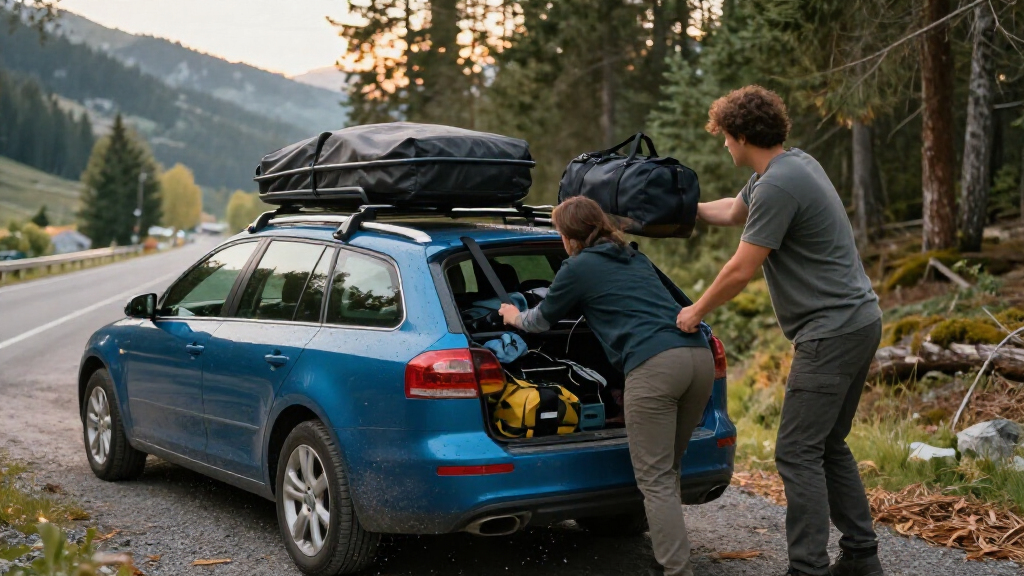
I compared these 15 rooftop cargo carriers across the factors that shape real buying decisions: carrier type, stated capacity, weather protection claims, access design, storage needs when the carrier is off the vehicle, and the likely fit with different travel routines. I treated soft bags and hard-shell boxes as separate solutions rather than assuming one format suits every roof or trip. I also gave weight to practical limitations: a large capacity figure is useful only if the carrier fits the roof and stays within the vehicle’s load limits.
The ranking favors options with a clear role and a useful balance of capacity, usability, and format. Versatility and ease of choosing place the Motion 3 at the top for a broad range of hard-box buyers; the RoofPax bag ranks highly for shoppers prioritizing soft-sided capacity. Compact and specialized choices sit lower because they suit narrower needs, not because they are poor fits for those buyers. Where the supplied product names do not specify details such as mounting hardware, dimensions, or security features, I avoid treating those as confirmed advantages and recommend checking the exact listing and vehicle requirements.
| rooftop cargo carrier | Water resistance |
|---|---|
| Asinking Waterproof Rooftop Ca | IPX66 |
| RoofPax 28 cu ft Waterproof Ro | Waterproof |
| JEGS 18 cu. ft. Rooftop Cargo | — |
| Asinking 21-Cubic-Foot Waterpr | Waterproof |
| FIVKLEMNZ 21-Cubic-Foot Waterp | Waterproof |
| FIVKLEMNZ 30-Cubic-Foot Waterp | Waterproof |
| JEGS 18 Cu. Ft. Hard-Shell Roo | Water resistant, with weather-tight seal |
| Thule Motion 3 Rooftop Cargo B | Water resistant |
| Asinking Waterproof Rooftop Ca | — |
| MeeFar XBEEK Waterproof Roofto | Waterproof |
| FIVKLEMNZ Waterproof Rooftop C | — |
| Thule Pulse 2 L Roof-Mounted C | — |
| Thule Force 3 XL Rooftop Cargo | — |
| SportRack Vista XL Rear-Openin | — |
| Sailnovo 21-Cubic-Foot Waterpr | — |
Factors to Consider When Choosing Rooftop Cargo Carriers
Before choosing from this lineup, I’d work through a few questions that product names and capacity figures can’t answer on their own. These broader checks help prevent a carrier that is too large for the roof, awkward to load, or inconvenient to store between trips.
Match the Carrier to Your Roof and Vehicle Limits
Start with the vehicle manual and roof-rack documentation, not the carrier’s advertised capacity. The roof’s load limit usually includes the weight of the rack and carrier as well as the cargo, and that limit may differ when the vehicle is moving. Check whether your car has crossbars, raised rails, or another approved mounting setup, then verify that the carrier’s attachment system suits it. A bag that can be secured in several ways still needs a safe, compatible anchor point. Avoid choosing by cubic feet alone: a wide carrier can interfere with a hatch, sunroof, or other roof equipment even when the load is light. If you are uncertain about fit, compare the carrier’s exact dimensions with the usable roof area before ordering.
Choose Soft or Hard Shell Around Your Storage Habits
A soft carrier is usually easier to fold away, which matters if you lack garage or shed space for a bulky box. It can also adapt to irregularly shaped luggage, though packing discipline matters because protruding items can strain closures or create an uneven load. A hard box keeps its shape and can make loading more orderly, but you need somewhere to store it when it is not mounted. Think about how often you travel: occasional trips may favor a packable bag, while frequent use can make a rigid box’s structure more convenient. Neither format automatically guarantees protection from every weather condition, so examine construction details and care instructions. Choose the format that solves your storage problem without creating a larger one at home.
Treat Capacity as a Planning Guide, Not a Packing Target
Listed volume helps compare carriers, but it does not tell you how much weight your roof can safely carry or how efficiently your own luggage will fit. Soft bags may accommodate flexible loads, while rigid boxes can limit the shape of items that fit inside. Before packing, sort cargo by weight and keep heavy items low and secured inside the vehicle whenever possible. Reserve roof space for bulky, lighter items rather than treating the carrier as a place for everything that will not fit in the trunk. A larger model can add wind exposure and height, so the biggest capacity is not automatically the best road-trip choice. Measure your typical luggage and select enough room for it without exceeding vehicle or rack limits.
Plan for Access, Parking, and Everyday Loading
Opening direction affects how easily you can reach bags when the vehicle is parked beside a wall, another car, or a curb. A rear-opening design may suit a driveway or campsite routine, while access from the sides can be useful when the rear hatch is blocked; the best arrangement depends on where you load and unload. Check whether an open carrier could obstruct the hatch or make it difficult to reach roof-mounted equipment. Think about who will load it, too: a carrier that requires lifting bulky items overhead may be awkward for a solo traveler. Use the vehicle’s height as part of the decision, especially if you regularly enter garages or covered parking. Build a habit of checking total vehicle height after installation.
Compare Weather Claims With Real Exposure
Waterproof language on a soft bag is useful, but it does not remove the need to inspect seams, closures, and attachment points. Road spray, sustained rain, and wind can put more stress on a carrier than a brief shower, so protect sensitive belongings inside separate waterproof bags. A hard shell offers a rigid cover, yet the lid and closure area still deserve attention when you are carrying electronics or clothing. Do not assume a product name alone confirms how it performs in every storm or at highway speed. For trips with uncertain weather, pack valuables in the cabin and treat the roof carrier as an added layer of storage rather than a substitute for careful packing. Follow the maker’s loading and cleaning guidance to preserve the material and closures.
Know When a Premium Box Is Worth the Extra Commitment
A premium hard-shell carrier makes more sense when you expect frequent use, value a structured enclosure, and have a place to keep it between trips. For occasional travel, a soft bag may meet the need with less storage burden, provided its mounting approach works for your vehicle. Compare opening style, supplied mounting hardware, dimensions, and any lock or security details in the exact listing rather than relying on a product family name. A compact box can be a better fit than a larger model if your roof is short or your parking has a height restriction. Look beyond the initial purchase decision to installation effort and whether you can manage the carrier safely without help. Paying for capacity you rarely use can leave you with a heavier, bulkier setup and no meaningful trip benefit.
Frequently Asked Questions
Can I use a rooftop cargo bag without crossbars?
That depends on the specific bag’s approved mounting method and the vehicle’s roof design. Some soft carriers are marketed for use with different roof setups, but a bare roof is not automatically a safe attachment surface. Read the exact instructions and confirm that the straps will not interfere with doors, seals, or airbags. Check the vehicle manual for roof-loading guidance, then test the fit before a long drive. If the maker does not list your roof configuration as compatible, choose a suitable rack or another carrier rather than improvising.
Is a soft rooftop bag or a hard-shell box better for a long road trip?
Neither format is universally better; the trip conditions and how often you travel matter. A soft bag can be easier to store and may suit occasional trips, while a hard box keeps a firm shape and may feel more convenient for frequent loading. For either type, verify the fit, attachment system, and vehicle load limits before packing. Keep rain-sensitive belongings in protective inner bags, even when the carrier is described as waterproof. If you expect frequent use and have room to store a box, a hard shell may justify its larger storage footprint.
How much can I safely put in a rooftop cargo carrier?
Use the lowest applicable limit among the vehicle roof, roof rack, carrier, and mounting hardware. The roof’s stated limit may include the carrier and rack weight, so do not treat it as a cargo allowance. A carrier’s volume rating describes space, not safe carrying weight. Distribute cargo evenly, secure it against shifting, and keep heavy items inside the vehicle when possible. Check your vehicle and product manuals for the exact limits before every trip, especially if passengers or other roof equipment add weight.
How do I know whether a rooftop carrier will fit my car?
Compare the carrier’s exact length, width, mounting requirements, and opening clearance with your vehicle’s roof and rack layout. Confirm that your rack type is supported and that the carrier will not block the hatch, roof equipment, or other required features. Also check total vehicle height after installation if you use garages, parking structures, or height-restricted routes. Product family names can cover multiple sizes, so rely on the precise model details in the listing. When fit information is unclear, ask the manufacturer or retailer before buying rather than assuming a universal fit.
Should I leave a rooftop cargo carrier on my car between trips?
Leaving one mounted may save setup time, but it adds bulk and can affect everyday use, vehicle height, and exposure to weather. A soft bag is generally easier to remove and store compactly, while a hard box needs more space and may take more effort to handle. Follow the maker’s guidance on storage and care, and check the carrier and mounts before each journey if it remains on the vehicle. Consider whether it will restrict access to a garage or create a problem in low-clearance parking. For infrequent trips, removing the carrier can protect it from unnecessary exposure and keep the vehicle easier to use.
Conclusion
For a broad range of buyers who want a hard-shell carrier, I’d start with the Thule Motion 3 as my best overall pick; it leads this roundup’s general-purpose box choices. The RoofPax 28 cu. ft. bag is my best value-style pick for shoppers prioritizing flexible, high-capacity soft storage, while the Thule Force 3 XL is my best premium choice for buyers focused on a larger hard-box format. Beginners should first confirm roof compatibility and may prefer a straightforward soft carrier such as an Asinking or FIVKLEMNZ bag if compact off-car storage matters more than a rigid enclosure. For specific needs, choose the Thule Pulse 2 L when its 16-cu.-ft. capacity and dual-side opening suit your routine, or the SportRack Vista XL if rear access matches your parking setup. My final recommendation is to choose by roof fit, load limits, and access pattern first, then use capacity and carrier style to narrow the field.
Black Friday Picks

Amazon Kindle Paperwhite (16 GB, 11th Generation, 2021) – 6.8-inch Display, Adjustable Warm Light, Black
As an affiliate, we earn on qualifying purchases.