Ultralight backpacking sleeping bags can save pack space and weight, but warmth, fit, and insulation type matter as much as a low carry weight. I rank the Naturehike Ultralight 750FP RDS Goose Down Sleeping Bag as the best overall pick for its high-fill-power down, while the ZOOOBELIVES AlpliveT400 stands out as a down alternative and the TETON Sports LEEF as a practical synthetic option. The main tradeoff is between down’s compressibility and warmth for its weight and synthetic insulation’s easier care and better tolerance of damp conditions. Temperature ratings, shape, and packed size also affect whether a bag suits a particular route. Continue reading for the full comparison and guidance on matching a bag to your conditions.

Get travel and outdoor gear delivered free with Prime
- Fast, free delivery on millions of items
- Prime Video, Amazon Music and more included
- Member-only deals all year
Complete the kit

Key Takeaways
- The 750FP goose-down Naturehike is the strongest all-around match for weight-conscious buyers, while its down construction makes moisture management part of the decision.
- The ZOOOBELIVES AlpliveT400 and Naturehike 650FP down models offer different down-focused alternatives; compare their warmth needs and packability rather than treating fill power alone as a complete performance measure.
- The TETON Sports LEEF and TrailHead +20°F provide synthetic-focused choices for buyers who value simpler care or want a clearly stated temperature class, with added packed bulk as a likely tradeoff.
- Several entries are aimed at mild conditions, not cold-weather trips: the ECOOPRO, Nature Link, and wearable Naturehike models need careful matching to expected overnight lows.
- Compact and family-oriented options broaden the list beyond solo ultralight use, but a low packed volume or broad use label does not by itself establish warmth, fit, or trail weight.
| Naturehike Ultralight 750FP RDS Goose Down Sleeping Bag |  | Best for Warm-Weather Weight Savings | Fill: 90% RDS-certified goose down | Fill power: 750 | Weight: 0.94 lb (425 g) size M; 1.09 lb (495 g) size L | VIEW LATEST PRICE | See Our Full Breakdown |
| TETON Sports LEEF Ultralight Mummy Sleeping Bag |  | Best Synthetic Mummy Pick | Fill: Microfiber | Shell material: Polyester ripstop | Shape: Mummy | VIEW LATEST PRICE | See Our Full Breakdown |
| TETON Sports TrailHead Ultralight Mummy Sleeping Bag, +20°F |  | Best for Colder-Weather Coverage | Weight: 2.9 lb | Fill: Synthetic microfiber insulation | Shell: Polyester ripstop | VIEW LATEST PRICE | See Our Full Breakdown |
| BORULL Lightweight 3-Season Sleeping Bag for Adults and Kids |  | Best Roomy Option for Mild-Weather Campers | Weight: 3 lb | Comfort temperature: 50°F–80°F | Dimensions: 86.6 × 33 in | VIEW LATEST PRICE | See Our Full Breakdown |
| ZOOOBELIVES AlpliveT400 Ultralight Down Sleeping Bag |  | Best Down Pick with a Defined Lower Limit | Weight: 27 oz (1.7 lb / 770 g) | Fill power: 650 | Comfort temperature: 50°F | VIEW LATEST PRICE | See Our Full Breakdown |
| Wind Tour 3-Season Lightweight Sleeping Bag |  | Best Convertible Sleep System | Occupancy: 1 person | Seasons: 3 seasons | Temperature range: 43–59°F (6–15°C) | VIEW LATEST PRICE | See Our Full Breakdown |
| BORULL Lightweight Compact Adult Sleeping Bag for Backpacking, Camping, and Hiking |  | Best Compact Warm-Weather Pick | Occupancy: 1 person | Weight: 1.5 lb | Packed size: 4.7 × 7.9 in | VIEW LATEST PRICE | See Our Full Breakdown |
| Naturehike Lightweight Wearable Mummy Sleeping Bag, 41°F/28°F |  | Best for Camp Mobility | Occupancy: 1 person | Seasons: 3 seasons | Shell material: 20D 380T nylon, PFAS-free and GRS-certified | VIEW LATEST PRICE | See Our Full Breakdown |
| Naturehike Lightweight Compact Sleeping Bag | 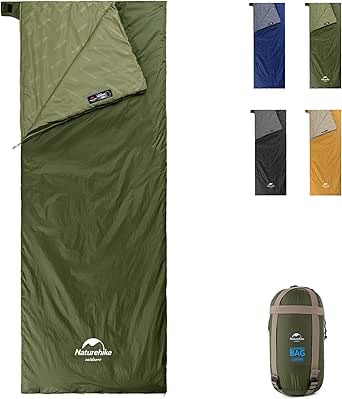 | Best Roomy Synthetic Option | Brand: Naturehike | Fabric: Nylon | Filling: 80 g/m² imitation silk cotton | VIEW LATEST PRICE | See Our Full Breakdown |
| Naturehike Ultralight RDS Duck Down Sleeping Bag |  | Best Down Pick for Low Pack Weight | Occupancy: 1 person | Seasons: 3 seasons | Fill material: RDS-certified duck down | VIEW LATEST PRICE | See Our Full Breakdown |
| ECOOPRO Warm Weather Sleeping Bag, 83 x 30 Inches |  | Best for Warm-Weather Minimalists | Weight: 1.5 lb listed; description also states 1.7 lb | Dimensions: 83 x 30 in | Temperature range: 55–60°F | VIEW LATEST PRICE | See Our Full Breakdown |
| Naturehike Ultralight 650FP Down Sleeping Bag |  | Best for Down-Filled Versatility | Fill: 650-fill-power duck down | Comfort temperature: 41°F (5°C) | Temperature limit: 33.8°F (1°C) | VIEW LATEST PRICE | See Our Full Breakdown |
| Nature Link Lightweight Mummy Sleeping Bag, 42°F–55°F |  | Best for Easy-Care Synthetic Insulation | Weight: 2.87 lb | Dimensions: 86.6 x 29.5 x 22.8 in | Temperature range: 42°F–55°F | VIEW LATEST PRICE | See Our Full Breakdown |
| Night Cat Ultralight Duck Down Mummy Sleeping Bag |  | Best Compact Mummy Pick | Weight: 2.3 lb | Fill: 500 g duck down, 600 fill power | Temperature range: 32–59°F (0–15°C) | VIEW LATEST PRICE | See Our Full Breakdown |
| REDCAMP Ultralight Compact Sleeping Bag |  | Best for Warm-Weather Pairing | Weight: 1.5 lb | Dimensions: 75 x 32.5 in | Comfort temperature: 68°F (20°C) | VIEW LATEST PRICE | See Our Full Breakdown |
| ultralight backpacking sleeping bag | Weight | Shape | Fill | Shell |
|---|---|---|---|---|
| Naturehike Ultralight 750FP RD | 0.94 lb (425 g) size M; 1.09 lb (495 g) size L | Rectangular | 90% RDS-certified goose down | PFAS-free, water-repellent 10D nylon |
| TETON Sports LEEF Ultralight M | — | Mummy | Microfiber | — |
| TETON Sports TrailHead Ultrali | 2.9 lb | Mummy | Synthetic microfiber insulation | Polyester ripstop |
| BORULL Lightweight 3-Season Sl | 3 lb | Envelope | Cotton | Water-resistant polyester |
| ZOOOBELIVES AlpliveT400 Ultral | 27 oz (1.7 lb / 770 g) | — | — | 20D nylon |
| Wind Tour 3-Season Lightweight | 2.2 lb (1 kg) | Rectangular | — | — |
| BORULL Lightweight Compact Adu | 1.5 lb | — | — | — |
| Naturehike Lightweight Wearabl | Medium: 1.63 lb; Large: 1.81 lb | — | — | — |
| Naturehike Lightweight Compact | 0.76 kg (1.68 lb) | — | — | — |
| Naturehike Ultralight RDS Duck | 1.3 lb / 565 g (CW295) | — | — | — |
| ECOOPRO Warm Weather Sleeping | 1.5 lb listed; description also states 1.7 lb | Envelope | — | Nylon |
| Naturehike Ultralight 650FP Do | — | — | 650-fill-power duck down | 400T 20D ripstop nylon |
| Nature Link Lightweight Mummy | 2.87 lb | Mummy | Polyester imitation silk cotton, 300 g/m² | 20D water-repellent ripstop nylon |
| Night Cat Ultralight Duck Down | 2.3 lb | Mummy | 500 g duck down, 600 fill power | 400T nylon |
| REDCAMP Ultralight Compact Sle | 1.5 lb | Rectangular | Synthetic | — |
More Details on Our Top Picks
Naturehike Ultralight 750FP RDS Goose Down Sleeping Bag
At 425 g in size M or 495 g in size L, this is the lightest clearly specified option here, making it a strong fit for hikers who put pack weight first on mild-weather trips. Its 750-fill-power RDS-certified goose down and compact packed dimensions offer a different kind of carry advantage from the synthetic TETON Sports LEEF: down packs smaller, while the LEEF’s mummy shape and draft features suit buyers seeking more coverage. This Naturehike can also open into a blanket or serve as a liner, adding flexibility at camp. The tradeoff is its stated 51°F temperature rating, which limits it to warm nights rather than broad three-season use. Product weight details are reported inconsistently, so I would verify the chosen size before planning a strict pack-weight budget.
Pros:- Low listed weight of 425 g for size M and 495 g for size L
- 750-fill-power RDS-certified goose down packs compactly
- PFAS-free, water-repellent 10D nylon shell
- Can be unfolded as a blanket or used as a liner
Cons:- 51°F rating makes it unsuitable for cold-weather use
- Conflicting weight details make the exact carry weight less certain
- Rectangular design offers less close-fitting coverage than a mummy bag
Best for: Ultralight hikers on warm-weather trips who want a compact down bag that can also serve as a blanket or liner.
Not ideal for: Backpackers expecting cold nights or seeking a single bag for a wide range of three-season temperatures.
- Fill:90% RDS-certified goose down
- Fill power:750
- Weight:0.94 lb (425 g) size M; 1.09 lb (495 g) size L
- Shell:PFAS-free, water-repellent 10D nylon
- Shape:Rectangular
- Packed size:5.9 in diameter × 11 in length (15 × 28 cm), size L
- Seasons:3 seasons
Our verdict“Choose this Naturehike for minimum listed weight and warm-weather flexibility, not for cold nights or dependable temperature range.”
TETON Sports LEEF Ultralight Mummy Sleeping Bag
The LEEF is the practical choice for backpackers who prefer a synthetic mummy bag with useful heat-retention details rather than down’s smaller packed volume. Its contoured hood, draft tube, and built-out foot box address common cold spots, while the matching compression sack helps manage bulk on the trail. Compared with the lighter Naturehike 750FP, the LEEF trades compactness for a more enclosed shape and synthetic fill; compared with the TETON TrailHead +20°F, its stated details do not give a fixed temperature rating, so buyers must check the specific option. That variable rating and sizing make it harder to compare directly across versions. It is a sensible pick for hikers who value a roomy mummy cut and simple packing, but less compelling for strict ultralight kits prioritizing known weight and temperature figures.
Pros:- Synthetic microfiber fill avoids reliance on down insulation
- Contoured hood and draft tube help limit heat loss
- Roomier mummy design includes a built-out foot box
- Matching compression sack is included
Cons:- Temperature rating and sizes vary by option
- Synthetic fill generally packs bulkier than the down in the Naturehike 750FP
- One-person capacity does not suit couples sharing a bag
Best for: Backpackers who want synthetic insulation, a supportive hood, and a roomy mummy foot box for general camping and hiking.
Not ideal for: Weight-focused hikers who need a confirmed packed weight and temperature rating before choosing a bag.
- Fill:Microfiber
- Shell material:Polyester ripstop
- Shape:Mummy
- Occupancy:1 person
- Maximum recommended height:87 in
- Seasons:3 seasons
- Closure:Zipper
- Included:Mummy sleeping bag and compression sack
Our verdict“Pick the LEEF if you prefer a synthetic mummy design with comfort details, but confirm the rating and size for the exact version.”
TETON Sports TrailHead Ultralight Mummy Sleeping Bag, +20°F
Among these five, the TrailHead is the most cold-weather-oriented choice on paper, with a +20°F survival rating, hood, and zipper draft tube. That makes it a more plausible pick for chilly trips than the 51°F-rated Naturehike 750FP or the mild-weather BORULL, though its stated comfort range is 20–30°F warmer than the survival figure. At 2.9 lb, it also carries a clear weight penalty against the down options and the warm-weather-focused designs. The synthetic microfiber fill, soft brushed liner, and roomy footbox favor comfort and coverage over minimum pack weight. I would treat the survival rating as a lower boundary, not a promise of comfortable sleep at that temperature. For ultralight backpacking, this makes most sense when cooler conditions matter more than saving every ounce.
Pros:- Mummy shape, hood, and draft tube support coverage in cooler conditions
- Soft double-brushed liner and roomy footbox add sleeping comfort
- Synthetic microfiber insulation
- Compression sack is included
Cons:- At 2.9 lb, it is substantially heavier than the listed Naturehike down bag
- Comfort rating is stated to be 20–30°F warmer than the +20°F survival rating
- The survival temperature should not be treated as its comfort temperature
Best for: Backpackers who expect cold conditions and want a synthetic mummy bag with a hood and draft tube.
Not ideal for: Ultralight hikers on mild-weather trips who can use a lighter, more compact down bag instead.
- Weight:2.9 lb
- Fill:Synthetic microfiber insulation
- Shell:Polyester ripstop
- Dimensions:87 × 32 in
- Shape:Mummy
- Maximum recommended height:7 ft
- Warranty:Limited lifetime warranty for original owner against defects in materials or workmanship
Our verdict“Choose the TrailHead when colder-weather coverage outweighs weight savings, while planning around its warmer stated comfort range.”
BORULL Lightweight 3-Season Sleeping Bag for Adults and Kids
The BORULL favors space and easy care over trail efficiency. Its envelope shape measures 33 inches wide, and the foot zipper lets sleepers vent excess warmth without opening the whole bag. It is also machine washable, a practical advantage for family camping that the down-filled Naturehike and ZOOOBELIVES options do not share in the listed details. But at 3 lb with cotton fill, it is the heaviest clearly specified bag in this group, and its 50°F–80°F comfort range points to mild nights rather than broad three-season backpacking. The 86.6-inch length may sound generous, but the listed maximum recommended height is only 5 feet, a major fit limitation for many adults. I would rank it for casual, short-distance trips rather than ounce-conscious backpacking.
Pros:- Roomy envelope shape with an adjustable hood
- Machine-washable construction simplifies cleanup
- Foot zipper allows ventilation
- Can zip together with another compatible bag
Cons:- 3 lb weight is high for an ultralight backpacking bag
- 50°F–80°F comfort range limits use to mild conditions
- Maximum recommended height is listed as 5 feet
Best for: Shorter sleepers, teens, or families who want a washable, roomy bag for mild-weather camping and short hikes.
Not ideal for: Tall adults and backpackers seeking low carry weight or reliable warmth on cold nights.
- Weight:3 lb
- Comfort temperature:50°F–80°F
- Dimensions:86.6 × 33 in
- Fill:Cotton
- Shell:Water-resistant polyester
- Lining:Pongee
- Shape:Envelope
- Packed size:8 × 14 in
- Care:Machine washable
Our verdict“Choose the BORULL for mild-weather trips where easy washing and a roomy fit matter more than low weight or adult-length fit.”
ZOOOBELIVES AlpliveT400 Ultralight Down Sleeping Bag
The AlpliveT400 gives backpackers a clearer temperature reference than the Naturehike 750FP: it lists 50°F comfort and a 32°F lower limit, making its mild-weather range easier to interpret. At 27 oz, it remains a relatively light option, though the Naturehike lists a lower weight for its smaller size and uses higher-fill-power down. ZOOOBELIVES counters with practical ventilation: the full-length zipper and separate footbox zipper let sleepers adjust coverage as conditions change, and the bag can unzip flat as a quilt. Its 650-fill-power down and 20D shell prioritize a usable balance of packability and function rather than the Naturehike’s more weight-focused specifications. The limit is still real: a 50°F comfort rating makes this a warm-season choice, not a dependable cold-weather bag.
Pros:- 27 oz listed weight supports a relatively light pack
- 650-fill-power down offers compact insulation
- Full-length zipper and separate footbox zipper provide ventilation options
- Can open flat as a quilt and zip with a compatible bag
Cons:- 50°F comfort rating limits use to warm conditions
- Heavier than the listed size M Naturehike 750FP
- Maximum user height is 6 ft 2 in
Best for: Backpackers seeking a lightweight down bag for mild nights who value a stated comfort rating and adjustable foot ventilation.
Not ideal for: Hikers expecting cold nights or anyone needing more warmth than the listed 50°F comfort rating suggests.
- Weight:27 oz (1.7 lb / 770 g)
- Fill power:650
- Comfort temperature:50°F
- Lower limit:32°F
- Shell:20D nylon
- Length:79 in
- Shoulder circumference:63 in
- Maximum user height:6 ft 2 in
- Packed size:11.8 × 6.7 in
Our verdict“Pick the AlpliveT400 for mild-weather down performance and adjustable ventilation, not for trips where nights may turn cold.”
Wind Tour 3-Season Lightweight Sleeping Bag
The Wind Tour’s strongest case is flexibility at camp: zip it as a rectangular bag, or open it into a broad quilt when conditions are mild. At 2.2 lb, it is heavier than the BORULL compact bag and the down-filled Naturehike Ultralight RDS Duck Down, so it suits hikers who value a roomier sleep setup more than shaving every ounce. Its stated 43–59°F range points to cool-weather use, not cold nights, and the cotton fill makes damp conditions a concern compared with synthetic options. The generous 84.6-inch length also accommodates taller sleepers, though its weight and rectangular cut make it less pack-focused than a mummy bag. I’d choose it for flexible shoulder-season trips with a dry forecast, not for wet routes or ounce-counting itineraries.
Pros:- Converts from a zippered sleeping bag to a wide quilt
- Long 84.6-inch sleep-mode length suits taller sleepers
- Useful stated range for cool summer and shoulder-season nights
- Includes a storage sack
Cons:- At 2.2 lb, it is heavier than the BORULL and down-filled Naturehike options
- Cotton fill is less suitable for damp conditions
- Its 43°F lower stated temperature limits use in colder weather
Best for: Backpackers who want one roomy bag that can also serve as a quilt on mild, dry trips.
Not ideal for: Ounce-conscious hikers and anyone expecting wet conditions or nights below the stated 43°F lower range.
- Occupancy:1 person
- Seasons:3 seasons
- Temperature range:43–59°F (6–15°C)
- Weight:2.2 lb (1 kg)
- Sleep mode dimensions:84.6 × 31.5 in (215 × 80 cm)
- Quilt mode dimensions:72.8 × 63 in (185 × 160 cm)
- Fill material:Cotton
- Shell material:Polyester
- Shape:Rectangular
Our verdict“Choose the Wind Tour if a convertible, roomy sleep setup matters more than minimum pack weight or wet-weather versatility.”
BORULL Lightweight Compact Adult Sleeping Bag for Backpacking, Camping, and Hiking
The BORULL is the most packable warm-weather choice in this group: it weighs 1.5 lb and compresses to 4.7 × 7.9 inches, giving it a smaller carry footprint than the Naturehike Lightweight Compact Sleeping Bag. Its 50–80°F comfort range is aimed at mild nights, so this is not a substitute for a cooler-weather three-season bag like the Wind Tour. The 79-inch envelope cut offers more freedom to move than a mummy shape, while the stated height limit and under-165-pound recommendation make fit a real part of the decision. A breathable nylon liner and machine-washable construction suit frequent summer trips, but the light polyester fill and warm-weather rating leave little margin when temperatures drop. I’d pick it for compact summer packing, not for uncertain shoulder-season forecasts.
Pros:- Compact 4.7 × 7.9-inch packed size
- Light 1.5-pound carry weight
- Machine-washable construction
- Dual-side auto-lock zipper opens from inside or outside
Cons:- 50–80°F comfort range is not suited to cold-weather trips
- Recommended for users under 165 lb
- 79-inch length may not fit taller sleepers comfortably
Best for: Light-packers taking summer trips in reliably mild conditions who fit the stated height and weight guidance.
Not ideal for: Backpackers facing cool nights, people over the stated 165-pound recommendation, or sleepers who need a longer fit than 79 inches.
- Occupancy:1 person
- Weight:1.5 lb
- Packed size:4.7 × 7.9 in
- Dimensions:79 × 30 in
- Comfort temperature:50–80°F
- Shell material:100% polyester microfiber, 400T/30D
- Liner material:100% nylon, 380T/20D
- Fill material:100% polyester, 100 GSM
- Care:Machine washable
Our verdict“Pick the BORULL for compact summer travel if its fit limits suit you and you do not need insulation for chilly nights.”
Naturehike Lightweight Wearable Mummy Sleeping Bag, 41°F/28°F
Unlike the conventional rectangular Wind Tour, this Naturehike uses a wearable design with zippers on both sides, letting sleepers move around camp without fully leaving the bag. That feature gives it a distinct use case, though it adds complexity compared with a standard sleeping bag and may not appeal to hikers seeking a simple, efficient sleep system. The medium weighs 1.63 lb and the large 1.81 lb; both use a PFAS-free, GRS-certified nylon shell and synthetic fill. The listing describes 41°F and 28°F versions, but does not assign those ratings to specific sizes here, so I’d verify the chosen model before buying. It is heavier than the BORULL but offers a more ambitious three-season format. Machine washing is convenient; the 77-inch maximum recommended height may rule it out for taller users.
Pros:- Wearable construction with zippers on both sides
- PFAS-free, GRS-certified nylon shell
- Synthetic fill and machine-washable care
- Medium and large sizes with listed weights of 1.63 and 1.81 lb
Cons:- Heavier than the 1.5-pound BORULL compact bag
- Temperature ratings and some features vary by model
- Maximum recommended height is 77 inches
Best for: Campers who want a wearable sleeping bag for moving around at camp and prefer synthetic, machine-washable insulation.
Not ideal for: Tall backpackers over the 77-inch recommended height or buyers who need one clearly specified temperature rating without checking model details.
- Occupancy:1 person
- Seasons:3 seasons
- Shell material:20D 380T nylon, PFAS-free and GRS-certified
- Fill material:SUNDOUCE synthetic polyester fibers
- Medium size:80.7 × 31.5 in
- Large size:86.6 × 33.5 in
- Weight:Medium: 1.63 lb; Large: 1.81 lb
- Packed size:Medium: 12.6 × 7.5 in; Large: 13.4 × 7.5 in
- Care:Machine washable
Our verdict“Choose this Naturehike if camp mobility is worth more to you than the BORULL’s smaller carry weight and simpler design.”
Naturehike Lightweight Compact Sleeping Bag
At 80.7 × 33.5 inches, this Naturehike offers more width than the 79 × 30-inch BORULL, making it the better fit for sleepers who want room to shift rather than a snugger backpacking cut. Its 1.68-pound weight is still manageable for lightweight trips, though the 5 × 12-inch compressed package is less compact than the BORULL’s stated packed dimensions. Reinforced seams and a tested zipper address durability concerns, but the listing gives no temperature range, so I would not choose it for trips where overnight lows are a key planning factor. The imitation silk cotton fill and hand-wash care also make it less convenient than the machine-washable Naturehike wearable bag. This is a straightforward roomy option for mild-weather travel when fit matters more than detailed warmth guidance.
Pros:- Roomy 33.5-inch width allows more movement than the BORULL
- Relatively light at 1.68 lb
- Reinforced seams and tested zipper
- Includes a compression carrying sack
Cons:- No temperature rating is provided in the product data
- Hand-wash care is less convenient than machine-washable alternatives
- Compressed size is larger than the BORULL’s listed packed size
Best for: Backpackers and travelers who want a wider sleeping bag and can plan around mild conditions without a stated temperature rating.
Not ideal for: Hikers who need a specified temperature range, a very small packed bundle, or machine-washable care.
- Brand:Naturehike
- Fabric:Nylon
- Filling:80 g/m² imitation silk cotton
- Dimensions:80.7 × 33.5 in
- Weight:0.76 kg (1.68 lb)
- Compressed size:13 × 31 cm (5 × 12 in)
- Care instructions:Hand wash
- Included accessory:Compression carrying sack
Our verdict“Pick this Naturehike for its roomy cut on mild trips, but choose a temperature-rated alternative when cold-night planning matters.”
Naturehike Ultralight RDS Duck Down Sleeping Bag
The down-filled Naturehike is the lightest option in this batch at 1.3 lb, with a 4.7 × 10.2-inch packed size that makes it a stronger choice for minimizing pack bulk than the synthetic BORULL or either roomy Naturehike bag. Its 650-fill-power, RDS-certified duck down delivers that weight advantage, while the water-repellent nylon shell and individual down channels add practical protection and structure. The tradeoff is a listed comfort temperature of 51.8°F, which confines this model to mild nights rather than broad three-season use. The CW295 size is only 74.8 inches long, so buyers should check fit carefully; the CWM400 is longer but has different stated dimensions. Compared with the Wind Tour, this is much lighter but offers less flexibility as a quilt and less room for taller sleepers in its short version.
Pros:- Light 1.3-pound CW295 weight
- 650-fill-power RDS-certified duck down
- Compact 4.7 × 10.2-inch packed size
- Water-repellent nylon shell and two-way YKK zipper
Cons:- Listed 51.8°F comfort temperature is too warm for colder conditions
- CW295 is only 74.8 inches long
- Down requires more care around moisture than synthetic-fill options
Best for: Weight-conscious backpackers on mild-weather trips who want a compact down bag and fit the selected size.
Not ideal for: People expecting cold nights, buyers avoiding down, or taller sleepers considering the short CW295 size without checking dimensions.
- Occupancy:1 person
- Seasons:3 seasons
- Fill material:RDS-certified duck down
- Fill power:650
- Down fill weight:295 g (CW295)
- Weight:1.3 lb / 565 g (CW295)
- Unfolded size:CW295: 74.8 × 28.3 in; CWM400: 78.74 × 31.50 in
- Packed size:4.7 in diameter × 10.2 in (12 × 26 cm)
- Shell and lining:20D 400T nylon
Our verdict“Choose the down Naturehike for compact, low-weight packing on mild trips, provided its temperature rating and selected size fit your needs.”
ECOOPRO Warm Weather Sleeping Bag, 83 x 30 Inches
At 1.5 pounds, the ECOOPRO is the lightest straightforward option here, making it a sensible pick for summer trips where insulation needs are modest. Its 83 x 30-inch envelope shape gives more room to shift than the mummy-shaped Night Cat, while the included compression sack helps keep it manageable in a pack. The tradeoff is its narrow temperature window: the stated 55–60°F range is for genuinely mild nights, not a dependable choice when temperatures dip. Its synthetic fill and nylon shell favor simple warm-weather use over the compact insulation advantage of the down-filled Naturehike 650FP. I also note conflicting listed weights of 1.5 and 1.7 pounds, so pack planners should allow for some uncertainty.
Pros:- Low listed weight of 1.5 pounds
- Roomy 83 x 30-inch envelope shape
- Nylon shell is described as waterproof
- Compression sack is included
Cons:- Stated 55–60°F range limits it to warm conditions
- Product information gives conflicting weights of 1.5 and 1.7 pounds
- Synthetic fill is less suited to compact packing than the down-filled Naturehike 650FP
Best for: Summer backpackers who prioritize a low listed weight and prefer a roomy envelope cut for mild nights.
Not ideal for: Hikers expecting cool nights or seeking one bag for varied temperatures; its stated 55–60°F range leaves little cold-weather margin.
- Weight:1.5 lb listed; description also states 1.7 lb
- Dimensions:83 x 30 in
- Temperature range:55–60°F
- Shape:Envelope
- Shell:Nylon
- Lining and fill:Polyester
- Closure:Zipper
- Included:Compression sack
Our verdict“Choose the ECOOPRO for mild summer trips when low weight and a less restrictive shape matter more than cold-weather coverage.”
Naturehike Ultralight 650FP Down Sleeping Bag
The Naturehike 650FP offers a useful middle ground for backpackers who want down insulation without committing to the warmer-weather-only limits of the ECOOPRO. Its 650-fill-power duck down and compact packed dimensions suit weight-conscious packing, while the hybrid cut pairs a close-fitting mummy upper with a roomier rectangular lower section. That foot space can feel less confining than the full mummy shape of the Night Cat, though it gives up some of that bag’s simpler, fully mummy-style profile. The stated 41°F comfort temperature is the key boundary: this is not the choice for reliably colder nights, despite its all-seasons listing. Medium weighs 1.67 pounds; the larger size adds room but rises to 1.95 pounds, so the fit decision also changes pack weight.
Pros:- 650-fill-power duck down supports compact packing
- Hybrid cut gives the feet more room than a full mummy shape
- Medium option weighs 1.67 pounds
- Compression sack and storage bag are included
Cons:- 41°F comfort temperature limits use on colder trips
- Large size weighs 1.95 pounds, adding pack load for extra room
- Single-person design does not accommodate two sleepers
Best for: Backpackers who want a compact down bag for mild-to-cool trips and value extra room around their feet.
Not ideal for: Cold sleepers or hikers planning nights well below the stated 41°F comfort temperature; those needing shared occupancy should also look elsewhere.
- Fill:650-fill-power duck down
- Comfort temperature:41°F (5°C)
- Temperature limit:33.8°F (1°C)
- Medium size and weight:82.7 x 29.5 in; 1.67 lb
- Large size and weight:86.6 x 33.5 in; 1.95 lb
- Packed size:Medium: 13.8 x 6.3 in; Large: 13.8 x 7.1 in
- Shell:400T 20D ripstop nylon
- Zipper:YKK zipper
- Included:Storage bag and compression sack
Our verdict“Pick the Naturehike 650FP if you want packable down and a less constricting foot area for trips near its 41°F comfort rating.”
Nature Link Lightweight Mummy Sleeping Bag, 42°F–55°F
The Nature Link is the practical synthetic choice in this group: its machine-washable construction is easier to care for than the down-filled Naturehike 650FP or Night Cat, and its water-repellent shell adds some protection against damp conditions. It has a roomy insulated foot box, but at 2.87 pounds it is a clear step up in carried weight from those down options and the 1.5-pound ECOOPRO. That added load makes it less compelling for mileage-focused ultralight trips, especially since its listed 42°F–55°F range still points to mild conditions rather than dependable cold-weather use. The 13-inch compressed height helps with packing, but the listing does not give a full packed volume, so it is harder to compare directly with the smaller stated packed dimensions of the Naturehike.
Pros:- Machine-washable care is convenient for frequent use
- Water-repellent 20D ripstop nylon shell
- Roomy insulated foot box
- Compression sack is included
Cons:- At 2.87 pounds, it is heavier than the down-filled Naturehike 650FP and Night Cat
- 42°F–55°F range does not make it a cold-weather option
- Compressed height is listed, but full packed dimensions are not provided
Best for: Backpackers who prefer synthetic insulation, want a washable bag, and expect damp or mild three-season conditions.
Not ideal for: Strict ultralight hikers focused on minimizing carried weight, or anyone who needs reliable warmth below the listed mild-weather range.
- Weight:2.87 lb
- Dimensions:86.6 x 29.5 x 22.8 in
- Temperature range:42°F–55°F
- Fill:Polyester imitation silk cotton, 300 g/m²
- Shell:20D water-repellent ripstop nylon
- Lining:20D nylon
- Shape:Mummy
- Compressed height:13 in
- Care:Machine washable
Our verdict“Choose the Nature Link if easy washing and synthetic insulation matter more to you than the lowest possible pack weight.”
Night Cat Ultralight Duck Down Mummy Sleeping Bag
For hikers who want a traditional mummy bag with a clear packing profile, the Night Cat pairs 500 g of 600-fill-power duck down with a listed packed size of 6.7 x 13.8 inches. At 2.3 pounds, it is lighter than the synthetic Nature Link but heavier than the medium Naturehike 650FP, so it suits buyers who value its stated compact format and dimensions over chasing the lowest listed weight. The 32–59°F range is broad on paper, but the listing does not identify a separate comfort rating; I would not treat the 32°F lower end as a guarantee of comfortable sleep there. Its 84.7 x 31.5-inch dimensions offer more width than the Naturehike medium, though a mummy shape can still feel restrictive compared with the ECOOPRO’s envelope cut.
Pros:- 600-fill-power duck down offers packable insulation
- Packed dimensions are specified at 6.7 x 13.8 inches
- 84.7 x 31.5-inch unfolded size provides a roomy adult fit
- Dual zipper is designed to reduce snagging
Cons:- At 2.3 pounds, it is heavier than the medium Naturehike 650FP
- The 32–59°F range does not specify a separate comfort rating
- Mummy shape may feel restrictive compared with the ECOOPRO envelope bag
Best for: Backpackers who want a compactly specified down mummy bag with more width than a narrow-fitting option.
Not ideal for: Sleepers who dislike mummy cuts or need a clearly stated comfort rating for trips near freezing.
- Weight:2.3 lb
- Fill:500 g duck down, 600 fill power
- Temperature range:32–59°F (0–15°C)
- Packed dimensions:6.7 x 13.8 in
- Unfolded dimensions:84.7 x 31.5 in
- Shape:Mummy
- Shell:400T nylon
- Closure:Dual zipper
Our verdict“Choose the Night Cat if you want a compactly listed down mummy bag and can accept uncertainty about comfort near the low end of its temperature range.”
REDCAMP Ultralight Compact Sleeping Bag
The REDCAMP is a simple warm-weather option for hikers who may want to join two bags together: its two-way zipper allows pairing, a flexibility the single-person ECOOPRO does not list. It weighs 1.5 pounds and packs to a stated 7.9 x 4.7 inches, making it a compact carry for summer use. Its polyester construction is less suited to compact insulation than the down-filled Night Cat or Naturehike 650FP, and its 68°F comfort temperature places it firmly in the warm-night category. The rectangular shape gives room to move, but there is no hood for retaining warmth around the head. At 75 inches long with a six-foot maximum recommended height, taller hikers should check the fit before choosing it.
Pros:- Listed weight of 1.5 pounds
- Compact 7.9 x 4.7-inch pack size
- Two-way zipper can connect compatible bags
- Internal pocket and compression sack are included
Cons:- 68°F comfort temperature limits it to warm nights
- No hood for added head coverage
- 75-inch length and six-foot height recommendation may not suit taller users
Best for: Summer backpackers who want a compact, lightweight bag with a zipper that can connect to a compatible second bag.
Not ideal for: Tall hikers over the six-foot recommendation, cold sleepers, or anyone needing warmth for cool-weather camping.
- Weight:1.5 lb
- Dimensions:75 x 32.5 in
- Comfort temperature:68°F (20°C)
- Temperature range:59–77°F (15–25°C)
- Fill:Synthetic
- Shape:Rectangular
- Pack size:7.9 x 4.7 in
- Closure:Two-way zipper
- Recommended maximum height:6 ft
Our verdict“Pick the REDCAMP for compact summer trips or paired sleeping arrangements, but not for cool nights or taller users.”
How We Picked
I compared the 15 bags by the factors that shape a backpacking choice: insulation type, stated temperature range, likely warmth-to-weight usefulness, packed size, cut and fit, and ease of care. I gave more weight to clear, relevant specifications and practical versatility than to broad claims such as “ultralight” or “compact.” A bag’s listed temperature is not a guarantee of comfort, so I treated ratings as a starting point and considered how much room each option leaves for layering and varied conditions.
The ranking favors models that appear to balance packability and useful warmth for typical backpacking, then separates specialized choices by their strongest use case. Down models earn attention for compressibility, while synthetic and warm-weather bags can make more sense for damp climates, simple care, or mild trips. I also considered whether a model’s stated use and design make it a sensible match for backpacking rather than general camping. Where product details do not establish a clear advantage, I avoid treating a label as proof of performance.
| ultralight backpacking sleeping bag | Shape |
|---|---|
| Naturehike Ultralight 750FP RD | Rectangular |
| TETON Sports LEEF Ultralight M | Mummy |
| TETON Sports TrailHead Ultrali | Mummy |
| BORULL Lightweight 3-Season Sl | Envelope |
| ZOOOBELIVES AlpliveT400 Ultral | — |
| Wind Tour 3-Season Lightweight | Rectangular |
| BORULL Lightweight Compact Adu | — |
| Naturehike Lightweight Wearabl | — |
| Naturehike Lightweight Compact | — |
| Naturehike Ultralight RDS Duck | — |
| ECOOPRO Warm Weather Sleeping | Envelope |
| Naturehike Ultralight 650FP Do | — |
| Nature Link Lightweight Mummy | Mummy |
| Night Cat Ultralight Duck Down | Mummy |
| REDCAMP Ultralight Compact Sle | Rectangular |
Factors to Consider When Choosing Ultralight Backpacking Sleeping Bags
Choosing among ultralight backpacking sleeping bags is less about finding the smallest stuff sack and more about matching insulation, temperature range, and fit to your actual nights outside. I use these factors to decide when low weight is worth a compromise—and when a roomier, easier-care, or warmer bag is the better trail choice.
Match the Temperature Rating to Your Coldest Likely Night
Start with the coldest conditions you expect, not the average forecast for a trip. A rating may describe a limit rather than the temperature at which every sleeper feels comfortable, and different brands may present ratings in different ways. If you tend to sleep cold, leave room for a warmer choice or plan to add suitable sleep clothing. A bag that is too warm can be uncomfortably hot, but a bag that is too cool can make a night miserable even when the rest of your kit is light. Check the product’s rating details and compare them with your sleeping pad, clothing, and shelter before deciding. Do not assume that a “3-season” label means the same level of warmth across brands.
Choose Down or Synthetic for Your Conditions
Down usually packs smaller and delivers strong warmth for its weight, which suits long routes where every liter in the pack matters. Its weakness is moisture: wet down can lose loft, so humid weather, condensation, and storage habits deserve attention. Synthetic insulation often handles damp conditions more forgivingly and is generally simpler to wash, though it can take more space for comparable warmth. Neither material is automatically best for every backpacker; climate and care habits change the calculation. If you choose down, store it uncompressed between trips and follow the maker’s cleaning guidance. If you choose synthetic, make sure the extra packed bulk fits your pack and trip length.
Judge Packability Alongside Total System Weight
A compressed bag can free space for food or other gear, but its stuff-sack size is only one part of the load. Compare the bag’s actual weight, packed dimensions, and any included storage sack rather than relying on “compact” in the name. Also account for the pad, liner, dry bag, and clothing needed to use it safely in your expected weather. Buyers sometimes choose the smallest bag and then carry extra layers to compensate, losing the weight or space they hoped to save. For a short trip with a roomy pack, a slightly bulkier bag may be the more comfortable choice. On a long route with limited volume, compressibility can justify paying closer attention to down options.
Check Fit, Shape, and Closure Details
A mummy shape reduces unused air space and can help retain warmth, but it may feel restrictive if you move around or sleep with bent knees. A roomier cut can improve comfort while adding material and packed bulk. Check the listed length and shoulder or hip dimensions against your body and preferred sleep position, especially if you are tall or broad-shouldered. Hood shape, zipper placement, and the ability to vent excess heat affect comfort over a full night, even when they do not change the headline temperature rating. Do not assume a unisex label guarantees a good fit. If you are between sizes or often feel confined, prioritize fit over a small difference in packed volume.
Plan for Moisture, Cleaning, and Storage
Backpacking exposes a sleeping bag to sweat, damp clothing, condensation, and occasional spills, so care affects how well it serves over time. A liner can reduce grime inside the bag, but it adds weight and should not be treated as a substitute for a suitable temperature rating. Down models need careful drying and long-term storage without compression; synthetic bags are often less demanding but still need to dry fully. Check the maker’s washing instructions before using a household detergent or machine cycle. For wet routes, think about how you will protect the bag inside your pack, not just what insulation it contains. A slightly heavier option may be a better fit if your trip makes moisture control difficult.
Decide Where a Premium Bag Is Worth It
Paying more makes the clearest sense when a lighter, more compressible bag will improve a long-distance load or when better materials suit repeated use. It matters less for occasional warm-weather trips where a simple synthetic bag may cover the need without demanding careful handling. Compare verified weight, fill details, construction, and warranty terms rather than assuming a higher fill-power number settles the choice. A premium bag cannot compensate for an inadequate sleeping pad or poor campsite protection, so assess the whole sleep system. Beginners may gain more from a dependable temperature match and forgiving care than from the lightest possible build. Buy for the trips you expect to take, not an imagined itinerary that calls for specialized gear.
Frequently Asked Questions
Which of these bags makes the most sense for a first backpacking trip?
I would start with the TETON Sports LEEF if you want a straightforward synthetic-style option, or the Naturehike compact models if their listed temperature range fits your route. Beginners benefit most from a clear match between expected overnight lows, bag rating, and sleeping pad rather than from chasing the lowest packed weight. Check sizing and the product’s care instructions before buying. If your first trip is in variable or damp weather, a bag that is easier to manage may be a better learning choice than a highly compressible down model. Avoid using a warm-weather bag for a trip with nights near or below its stated range.
Is a down sleeping bag worth choosing for ultralight backpacking?
Down is often a strong choice when you need low weight and a small packed size, which is why the Naturehike 750FP and other down options stand out in this lineup. Its value depends on whether you can keep it dry and care for it properly. In persistently damp conditions, or if you prefer low-maintenance gear, synthetic insulation may be the more practical tradeoff even when it packs larger. Compare the full bag specifications, not fill power alone: cut, fill amount, construction, and temperature rating all affect real warmth. For a short, mild trip, a premium down bag may offer less benefit than a simpler option.
Can I use a warm-weather bag for shoulder-season backpacking?
Only if the expected lows and your personal cold tolerance fit the bag’s rating, with a suitable pad and clothing. Models such as the ECOOPRO and the Nature Link are presented for warmer conditions, so their names or compact designs should not be read as evidence of cold-weather protection. Shoulder-season temperatures can fall quickly, and wind or dampness can make a night feel colder. Check whether the stated rating is a comfort or limit figure and leave a margin if you sleep cold. When the forecast is uncertain, choose a warmer-rated bag rather than relying on extra layers to fix a poor match.
How much should packed size affect my choice?
Packed size matters most when your pack has limited volume or you carry several days of food and other bulky gear. It should not outweigh temperature suitability, fit, or total weight, since a tiny stuff sack cannot make an inadequately warm bag useful. Down models often appeal to backpackers who need compression, while synthetic choices may make more sense when damp-weather handling is the priority. Check the dimensions and weight from the manufacturer and remember that compression sacks can affect how the bag should be stored between trips. For short outings with a larger pack, comfort and easy care may matter more than the smallest packed volume.
Should I buy a sleeping bag rated colder than the temperatures I expect?
A warmer rating can provide a useful buffer if you sleep cold or expect unpredictable weather, but it may add weight, bulk, and heat when nights are mild. Start by checking how the brand defines its rating and whether it reflects comfort or a lower limit. Your sleeping pad, clothing, shelter, and campsite conditions all affect warmth, so a bag rating cannot be judged in isolation. If your route has a wide temperature range, a versatile bag and planned sleep layers may work better than buying far more insulation than you need. For cold or remote trips, prioritize a safe margin over a minimal pack weight.
Conclusion
Best overall: I’d choose the Naturehike Ultralight 750FP RDS Goose Down Sleeping Bag for buyers seeking a strong balance of compressible down and backpacking usefulness. Best value: the TETON Sports LEEF is the practical pick for shoppers who prefer a straightforward synthetic option and do not need the smallest packed size. Best premium: the Naturehike 750FP is also the down-focused choice for buyers willing to prioritize packability and manage moisture carefully. Best for beginners: the TETON Sports TrailHead +20°F offers a clearly labeled temperature class to compare against planned conditions. For specific needs, choose the ECOOPRO or Nature Link for mild-weather trips, the wearable Naturehike for a distinct sleep setup, or a compact BORULL or REDCAMP option when general camping use matters more than the lightest possible build. Before choosing, match the bag’s rating and fit to your coldest expected night.
Halloween Picks
halloween
As an affiliate, we earn on qualifying purchases.