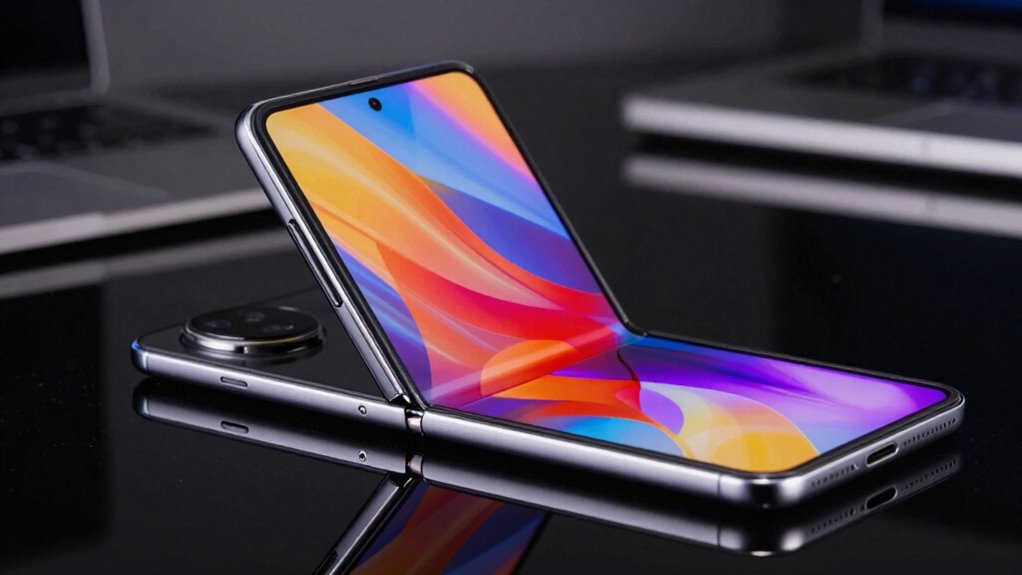

Foldable phones combine the portability of a smartphone with a larger, flexible screen that opens up for multitasking or media. While they offer impressive versatility, you should know the screens and hinges are more vulnerable to wear and tear, and battery life may suffer during heavy use. Manufacturers are working on improvements, but long-term durability remains a concern. To discover how these devices are evolving to address these issues, keep exploring the details below.
Key Takeaways
- Foldable phones combine smartphone and tablet features, offering larger screens with portability through flexible, foldable displays.
- Battery life can be affected by larger screens, requiring efficient management and portable chargers for extended use.
- Durability concerns include hinge wear, screen creases, and susceptibility to damage from daily handling and environmental factors.
- Long-term reliability remains a challenge, with ongoing technological advancements aimed at improving durability and component longevity.
- Future innovations focus on stronger materials, better hinge mechanisms, and enhanced battery efficiency to address current limitations.
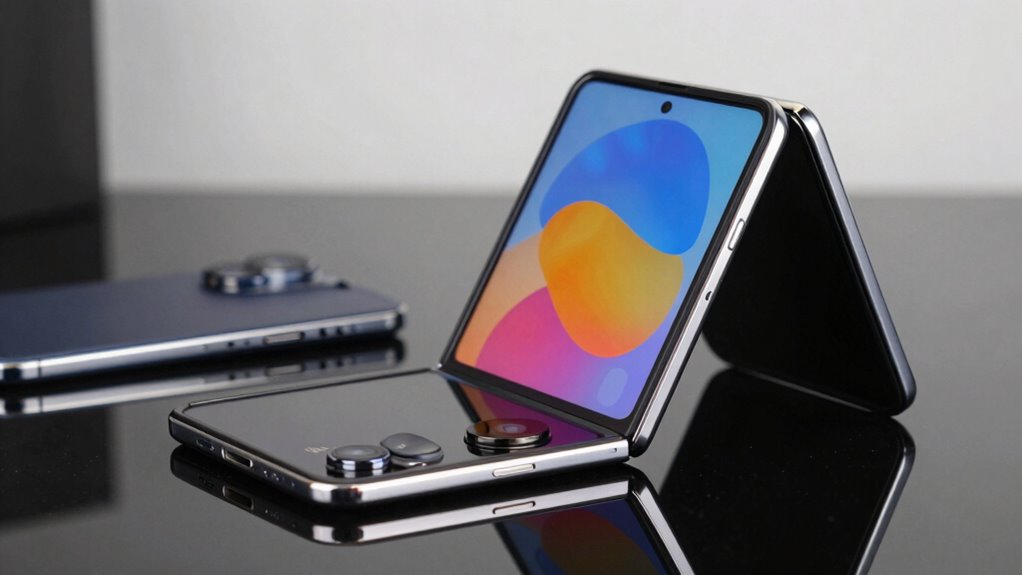
Foldable phones are revolutionizing the way we think about mobile devices, offering a versatile blend of smartphone and tablet features in a single device. With their flexible screens that fold and unfold, you get the convenience of portability combined with larger display real estate when needed. This innovation allows you to switch seamlessly between tasks, whether you’re messaging, browsing, or watching videos. However, beneath the sleek exterior, there are important considerations to keep in mind—particularly regarding battery life and durability concerns.
When it comes to battery life, foldable phones can be a mixed bag. Their larger screens demand more power, which can lead to shorter battery life compared to traditional smartphones. If you’re someone who relies heavily on your device throughout the day, you might find yourself needing to recharge more frequently. Manufacturers are working to improve this aspect, but the current generation of foldables often balances performance with battery efficiency. To maximize your device’s longevity, it’s wise to manage screen brightness and limit background app activity. You may also want to carry a portable charger if you’re often on the go, ensuring you don’t get stranded without power.
Durability concerns are another vital aspect of foldable phones. The flexible display and hinge mechanisms are more vulnerable than standard phone components. Frequent folding and unfolding can cause wear and tear over time, raising questions about long-term reliability. You need to be gentle when opening and closing your device, avoiding excessive force that might damage the hinge or screen. Many foldable phones now feature reinforced hinges and protective layers on the display to mitigate these issues, but they still require careful handling. It’s also wise to keep your device away from sharp objects, extreme temperatures, and moisture—conditions that can accelerate wear or cause damage. Some users report creases or small cracks developing after months of use, so understanding that durability may not match traditional phones is essential before making the switch. As the technology advances, we can expect improved durability and longer-lasting components to address these concerns, especially with ongoing innovations in flexible display technology.
Despite these concerns, foldable phones are rapidly evolving. Tech companies are investing heavily in creating more durable, longer-lasting models. You’re likely to see improvements in battery efficiency and hinge technology in the coming years. Additionally, ongoing research into flexible display materials suggests that future models will be even more resilient and reliable. The development of advanced hinge mechanisms is also a key focus area to enhance longevity and user experience. For now, if you choose to embrace a foldable device, prepare to take extra care of it and manage your expectations regarding battery life. These phones aren’t just a flashy gadget—they’re a glimpse into the future of mobile technology. But, like any innovation, they come with a learning curve and some trade-offs that you should consider before making the leap.
![TOCOL for Samsung Galaxy Z Fold 7 Screen Protector [9H Hardness] [Military Grade Shatterproof] HD Tempered Glass 2 Pack](https://m.media-amazon.com/images/I/51Cx+JLGhHL._SL500_.jpg)
TOCOL for Samsung Galaxy Z Fold 7 Screen Protector [9H Hardness] [Military Grade Shatterproof] HD Tempered Glass 2 Pack
- Auto Installation Technology: Easy, quick, and precise setup
- Military-Grade Drop Protection: 9H hardness with triple ion exchange
- HD Transparent Eye Protection: High clarity with blue light filter
As an affiliate, we earn on qualifying purchases.
As an affiliate, we earn on qualifying purchases.
Frequently Asked Questions
How Durable Are Foldable Screens Over Time?
Foldable screens have improved considerably, but their durability over time depends on screen flexibility and hinge longevity. You might notice some wear after extensive use, especially around the fold area. However, modern designs incorporate stronger materials and better hinges to extend lifespan. If you handle your device carefully, avoiding excessive bending or pressure, your foldable phone can stay functional and looking good for years.
What Are the Best Foldable Phones for Rugged Use?
Think of the Samsung Galaxy XCover Fold 5 as your rugged knight in shining armor, perfect for tough environments. Its innovative design offers enhanced durability, ensuring the user experience remains smooth under harsh conditions. You’ll love how it withstands drops and water, making it ideal for outdoor adventures or demanding jobs. If you want a foldable phone that combines resilience with cutting-edge features, this model’s your best bet for rugged use.
Do Foldable Phones Support All Apps Seamlessly?
Foldable phones generally support most apps seamlessly, but user interface and software compatibility can vary. Many apps are optimized for foldables, offering smooth experiences on larger screens, but some may still have issues with layout or functionality. You might encounter glitches or less-than-perfect performance with certain apps, especially older or less common ones. Overall, newer foldable models tend to improve compatibility, but it’s wise to check app support before switching.
How Do Foldable Phones Impact Battery Life?
Foldable phones tend to use more battery power, with some models consuming up to 20% more than traditional smartphones. You should focus on battery optimization features to extend usage. The large, flexible screens increase power consumption, especially when multitasking or using high-brightness settings. To manage this, enable power-saving modes and reduce screen brightness, which helps conserve battery life despite the increased energy demands of foldable technology.
Are Foldable Phones More Expensive to Repair?
Yes, foldable phones tend to be more expensive to repair due to pricing concerns and repair feasibility. The complex design, flexible screens, and delicate hinges make repairs challenging and costly. You’ll likely pay more for screen replacements or hinge fixes compared to traditional smartphones. If you’re considering a foldable, be prepared for higher repair costs, especially if accidental damage occurs, which can impact your overall ownership expenses.
Conclusion
So, as you consider the future of foldable phones, one thing’s clear: they’re more than just a fleeting trend. With innovation accelerating, you might wonder if they’ll truly revolutionize how you use your device—or if they’re just a temporary hype. The next few years will reveal whether foldables become your daily driver or a passing fad. Are you ready to see what’s next? The future of foldable phones is unfolding—literally—and it’s worth watching closely.