Clean beauty labels and certifications help you identify products that are safer, transparent, and environmentally friendly. Certifications like EWG Verified, MADE SAFE®, and USDA Organic set standards for safe ingredients, minimal toxins, and sustainable sourcing. Understanding the difference between organic and clean labels helps you make informed choices. By recognizing banned ingredients and how certification processes work, you can confidently select products that align with your health and values—more details await to guide your decisions.
Open a free Amazon Business account
Business pricing, bulk buying and tax-exempt orders.
As an affiliate, we earn on qualifying purchases.
Key Takeaways
- Clean beauty labels like EWG Verified and MADE SAFE focus on toxin avoidance, ingredient transparency, and safe sourcing practices.
- Certifications such as USDA Organic and NSF Organic verify organic content and agricultural standards in products.
- Many clean labels prohibit harmful ingredients like parabens, phthalates, synthetic fragrances, and certain chemicals.
- Certification processes involve rigorous third-party evaluations, ingredient reviews, and ongoing audits for safety compliance.
- Understanding each label helps consumers identify genuinely non-toxic products aligned with safety, transparency, and environmental standards.

Honest Beauty Gentle Gel Daily Face Cleanser, Sensitive Skin, 5 fl oz
- Gentle Daily Facial Cleanser: Infused with Chamomile and Calendula
- Non-Drying, Hydrating Formula: Soothes and protects skin daily
- Vegan and Suitable for All Skin Types: Safe for sensitive skin, AM and PM use
As an affiliate, we earn on qualifying purchases.
As an affiliate, we earn on qualifying purchases.
Key Certifications and What They Guarantee
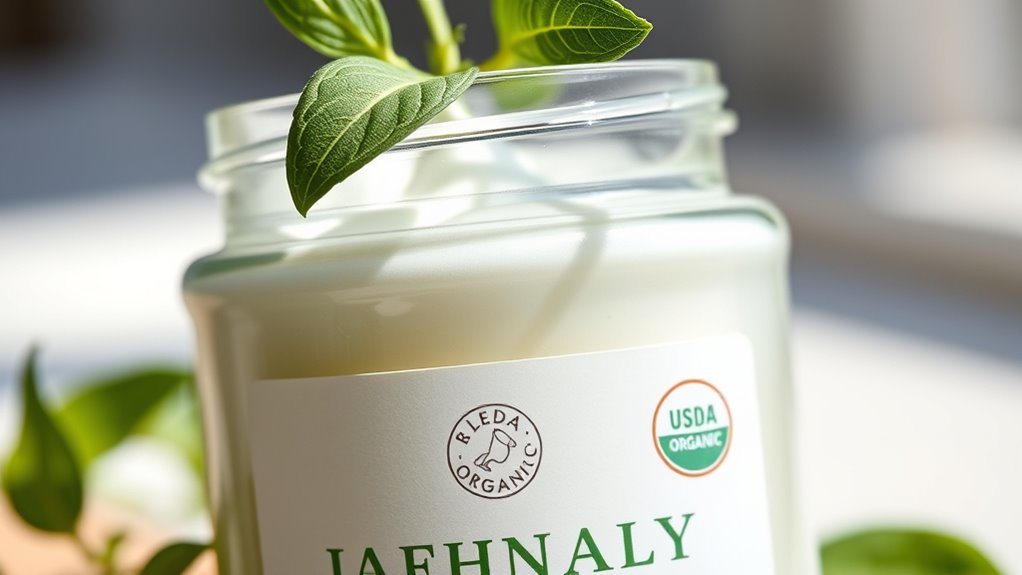
Understanding key clean beauty certifications can help you make informed choices about the products you use. Certifications like EWG Verified ensure products are free from harmful chemicals and demand transparency from brands. MADE SAFE® bans over 6,000 toxic substances, certifying products safe for humans and the environment. NSF Certified Organic requires at least 70% organic ingredients and prohibits many chemical processes and synthetics. USDA Organic certification demands 95% organic ingredients, grown without pesticides or GMOs. COSMOS/Ecocert emphasizes eco-conscious production, banning petroleum-based ingredients and supporting sustainability. These certifications guarantee that products meet strict safety, ingredient, and environmental standards. They also promote transparency, helping you avoid harmful ingredients and choose products aligned with your values. Using products with certification standards ensures adherence to rigorous safety and environmental criteria, giving consumers added confidence in their choices.
Comparing Organic and Clean Beauty Labels
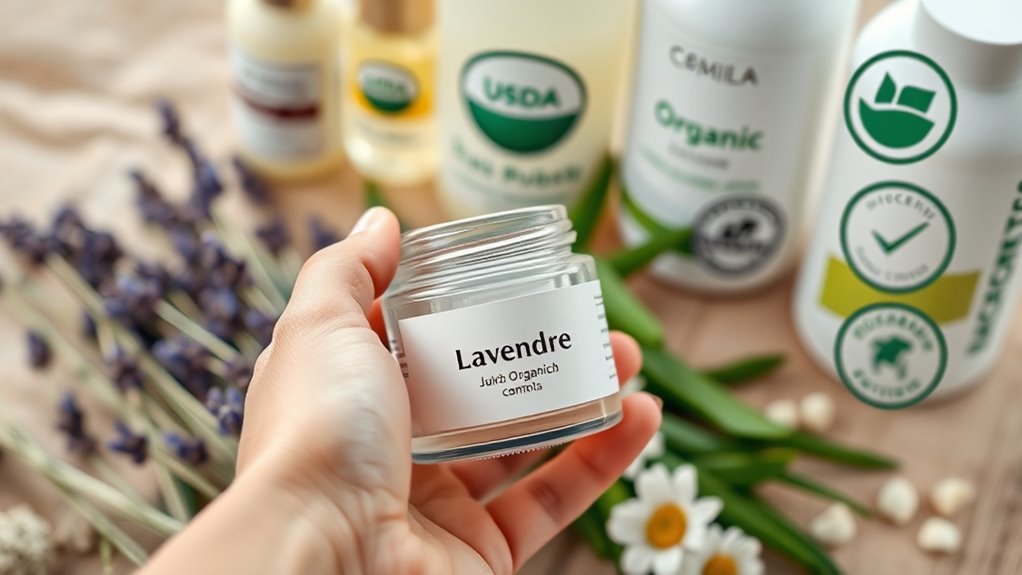
Organic and clean beauty labels focus on different standards: organic certifications verify the percentage of organic ingredients, while clean labels prioritize avoiding harmful chemicals regardless of ingredient origin. You might find products with high organic content that aren’t labeled clean, or vice versa, depending on the certifications they carry. Understanding these distinctions helps you choose products that align with your health and environmental priorities. Additionally, the Forsale 100 indicates the availability or demand for these products in the marketplace.
Certification Focus Differences
Have you ever wondered what truly sets organic and clean beauty labels apart? Organic certifications, like USDA Organic or NSF, focus mainly on the *amount* and *quality* of organic ingredients in a product. They require specific agricultural standards, minimum organic content, and restrictions on synthetic processes. Clean beauty labels, such as EWG Verified or MADE SAFE, prioritize *toxicity avoidance* and *transparency*. They emphasize eliminating harmful chemicals regardless of organic content, evaluating environmental impact, and promoting safer formulations. While organic standards confirm the product’s agricultural origins, clean standards focus on *safety*, *ingredient transparency*, and *environmental responsibility*. This difference means organic labels verify ingredient sourcing; clean labels scrutinize chemical safety and overall product impact. Understanding these focus areas helps you choose products aligned with your health and environmental priorities. Additionally, airless paint sprayers are a prime example of tools designed for efficiency, safety, and reduced mess, much like the transparency and safety emphasized in clean beauty standards.
Ingredient Content Standards
While both organic and clean beauty labels aim to guarantee product safety and quality, they differ considerably in their standards for ingredient content. Organic labels, like USDA Organic or NSF Organic, require a high percentage of organic ingredients—usually 70-95%. Clean beauty labels, such as EWG Verified or MADE SAFE, focus on avoiding harmful chemicals regardless of organic content. They emphasize transparency and toxicity reduction rather than ingredient origin. Additionally, vetted ingredients and clear labeling practices are crucial components that help consumers make informed choices.
Commonly Banned Ingredients and Practices in Clean Beauty

In clean beauty, certain ingredients and practices are widely prohibited because they pose risks to human health and the environment. You’ll find parabens, phthalates, formaldehyde releasers, and synthetic fragrances on the list of forbidden substances, as they can disrupt hormones or cause allergies. Mineral oil, oxybenzone, and coal tar are also banned due to their potential toxicity and environmental impact. Practices like bleaching, sulphonation, and ionizing radiation are forbidden to prevent harmful chemical alterations. Ingredients derived from GMOs or sewage sludge are excluded, ensuring safer, eco-friendly sourcing. Petrochemical-based ingredients not on approved lists are avoided, and animal testing is often prohibited, especially in cruelty-free certifications. These bans help ensure products are safer for you and better for the planet. Additionally, regulations emphasize the importance of infrastructure safety standards to maintain product integrity and environmental safety.
How Certification Processes Ensure Product Safety
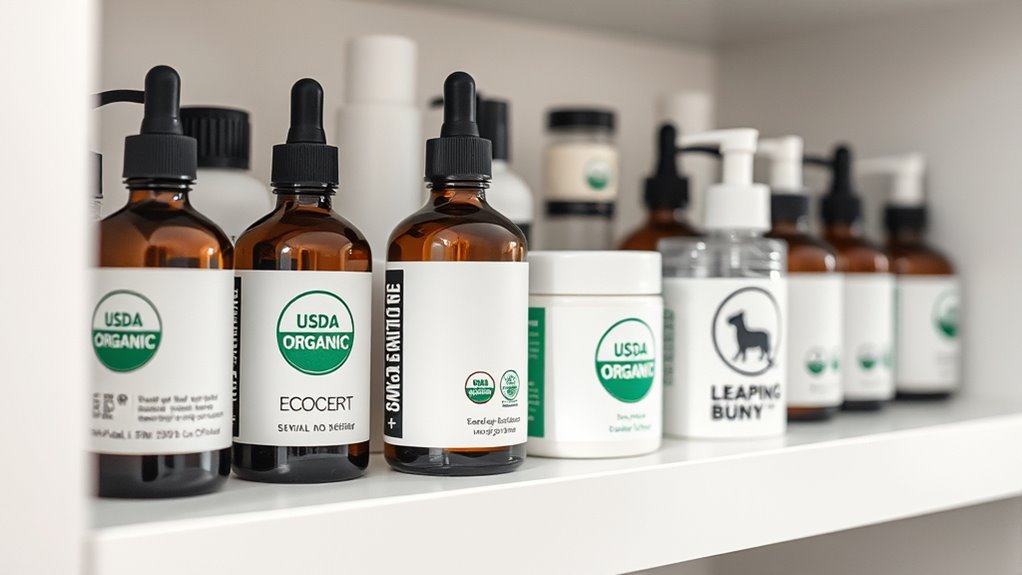
Certification processes play an essential role in verifying that beauty products meet safety standards before they reach consumers. You’re assured that products bearing certifications have undergone rigorous evaluation of ingredients, sourcing, and manufacturing practices. Certification bodies review ingredient impact on human health and the environment, ensuring harmful chemicals are avoided. They conduct detailed audits, including inspecting production facilities and reviewing batch records, often annually. These processes also verify labeling accuracy and ingredient disclosures, preventing greenwashing. Third-party auditors independently assess compliance, providing an unbiased confirmation of safety and adherence to standards. By enforcing strict guidelines and continuous oversight, certification processes create a reliable system that helps you confidently choose products that are safe, transparent, and environmentally responsible. Additionally, these evaluations often include unique and wicked planters to ensure eco-friendly and sustainable sourcing practices.
Industry Initiatives and Labels Beyond Certification
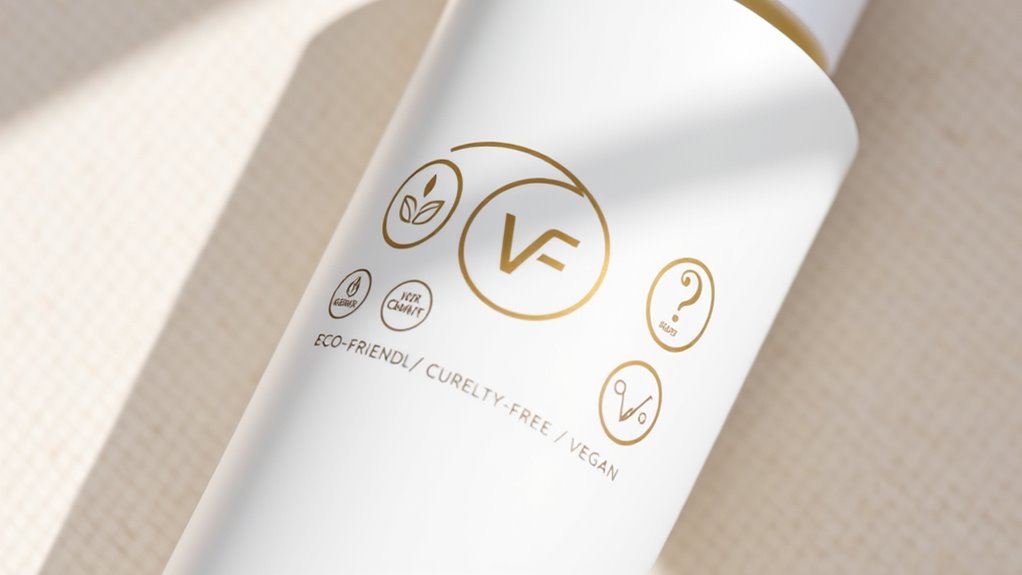
Industry initiatives and labels beyond formal certification play a crucial role in guiding consumers toward safer, more sustainable beauty choices. These efforts often set stricter standards or offer additional transparency, helping you make informed decisions. For example, brands may participate in programs like “Clean at Sephora,” which restricts toxic chemicals and synthetic fragrances. Leaping Bunny certification emphasizes cruelty-free practices, while biodynamic or Demeter labels highlight sustainable farming methods. Some brands also use proprietary standards, enforcing even stricter ingredient bans and sourcing practices. These initiatives often involve:
- Retailer-led programs limiting harmful ingredients
- Third-party certifications emphasizing cruelty-free practices
- Sustainable farming labels like biodynamic certifications
- Brand-developed standards exceeding regulatory requirements
- Emphasis on Growth mindset and continuous learning within organizations to improve standards and transparency
Together, they help you navigate the complex beauty landscape with confidence.
Wondering how to confidently select clean beauty products in a crowded market? Focus on certifications that match your priorities, whether it’s safety, organic ingredients, or eco-conscious practices. Look for recognized labels like EWG Verified or MADE SAFE®, which verify low toxicity and ingredient safety. Check product labels and ingredient lists carefully—avoid known harmful substances like parabens, phthalates, and synthetic fragrances. Research brands’ transparency and sourcing standards, and prioritize those with third-party certifications. Remember, certifications like USDA Organic or NSF Organic show organic content, but clean labels emphasize toxin avoidance regardless of organic status. Use trusted databases or resources to verify claims and stay informed about industry standards. By understanding what each certification signifies, you’ll make smarter, safer choices in your beauty routine.
Frequently Asked Questions
How Can I Verify a Product’s Certification Status Quickly?
You can verify a product’s certification quickly by checking the brand’s website for official certification seals from organizations like EWG, MADE SAFE, NSF, USDA Organic, or COSMOS. Look for a link or badge that directs you to the certifier’s database or verification page. You can also scan QR codes on packaging or search the certifier’s online database to confirm the product’s current certification status easily.
Do Certified Products Guarantee Allergy Safety for Sensitive Skin?
Did you know that nearly 30% of people with sensitive skin still react to certified products? Certifications focus on reducing harmful chemicals, but they don’t guarantee allergy safety for sensitive skin. You should always check ingredient lists carefully, even for certified products. Patch testing new items is essential. Certifications help help ensure safety standards, but individual sensitivities vary, so personal testing remains the best way to avoid allergic reactions.
Are Natural Ingredients Always Better Than Certified Clean Ingredients?
Natural ingredients aren’t always better than certified clean ingredients. While natural options often sound appealing, they can still cause allergies or sensitivities. Certified clean ingredients undergo testing to guarantee they’re safe, non-toxic, and free from harmful chemicals. By choosing products with trusted certifications, you get transparency and safety guarantees. So, don’t assume natural automatically means safer—check for certifications to make informed, healthier choices for your skin.
Can a Product Have Multiple Certifications Simultaneously?
Yes, a product can have multiple certifications simultaneously. When it does, it means the product meets various standards for safety, organic content, and eco-friendliness. For example, it might be USDA Organic and EWG Verified at the same time, ensuring it’s both organic and non-toxic. This offers you added confidence, as the product has undergone multiple rigorous reviews, confirming it aligns with different criteria for quality, safety, and sustainability.
How Often Do Certification Standards Change or Update?
Certification standards typically update annually or every few years, depending on the organization. You should check each certifier’s website regularly, as they review and revise their criteria to reflect new scientific data, industry practices, and environmental concerns. Staying informed helps you verify your products meet the latest safety and sustainability standards. Recognizing these updates allows you to make confident, informed choices about the clean beauty products you buy and use.
Conclusion
Finding clean beauty labels can feel overwhelming, but don’t buy into the myth that all certifications guarantee perfect safety. While they’re helpful, some brands still cut corners. Trust verified certifications and stay informed—your skin and health deserve transparency. Remember, the idea that “clean” always means completely safe isn’t entirely true. By staying educated and skeptical, you’ll make smarter choices and find products that genuinely align with your values and skin’s needs.
Pool season Picks
robotic pool cleaners
As an affiliate, we earn on qualifying purchases.