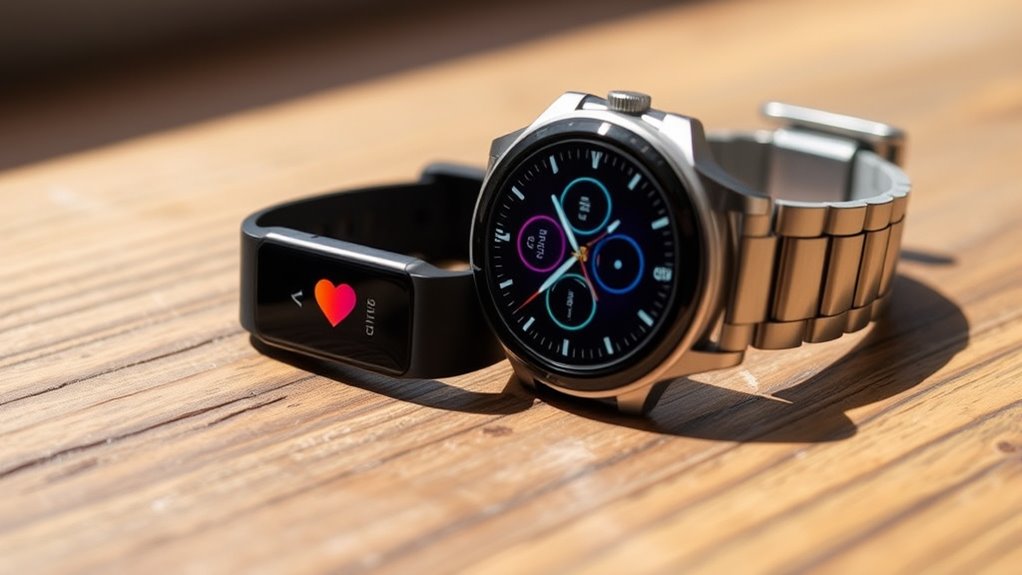
If you’re looking for a device to monitor your health and stay motivated, a fitness tracker could be perfect with its simple design, long battery life, and focus on activity metrics. If you want notifications, apps, and more versatile features, a smartwatch offers a larger display and connectivity options. Consider your daily needs, budget, and preferred ecosystem—your ideal choice depends on what matters most. Keep exploring to find out which device suits your lifestyle best.
Key Takeaways
- Choose a fitness tracker for simple health monitoring, long battery life, and affordability.
- Opt for a smartwatch if you want comprehensive features, app support, and device connectivity.
- Consider device ecosystem compatibility: iOS users benefit from Apple Watch, Android users from compatible Samsung or Google models.
- For extended wear and comfort, fitness trackers are lighter; smartwatches offer more display and functionality.
- Match your budget and fitness goals to select a basic tracker or a feature-rich smartwatch.
Core Differences in Functionality and Design
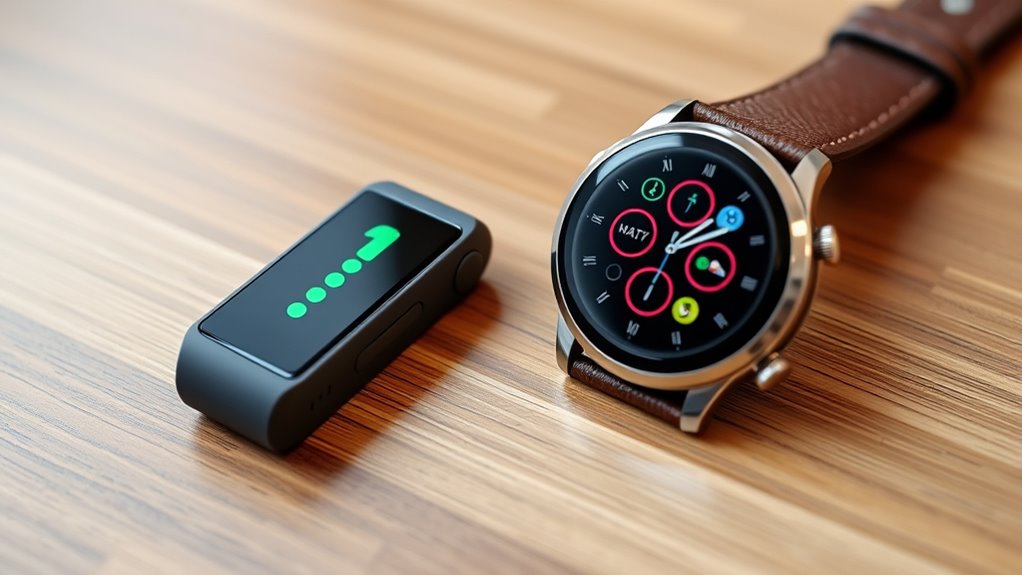
When comparing fitness trackers and smartwatches, the most noticeable difference lies in their core functionalities and design. Fitness trackers mainly focus on health metrics like step count, heart rate, sleep, and exercise tracking. They’re lightweight, simple, and comfortable for all-day wear, often lasting days or weeks on a single charge. Smartwatches, on the other hand, offer a wide range of features including apps, notifications, calls, and messaging, alongside fitness tracking. They typically have larger, colorful touchscreens and a more substantial build, which can be less comfortable for continuous wear. While fitness trackers prioritize wellness monitoring and extended battery life, smartwatches emphasize connectivity and multimedia capabilities. These fundamental differences help you decide which device aligns best with your lifestyle and needs. Additionally, selecting the right device may involve considering market trends and how evolving technology can further enhance your user experience.
Tracking Capabilities and Fitness Features
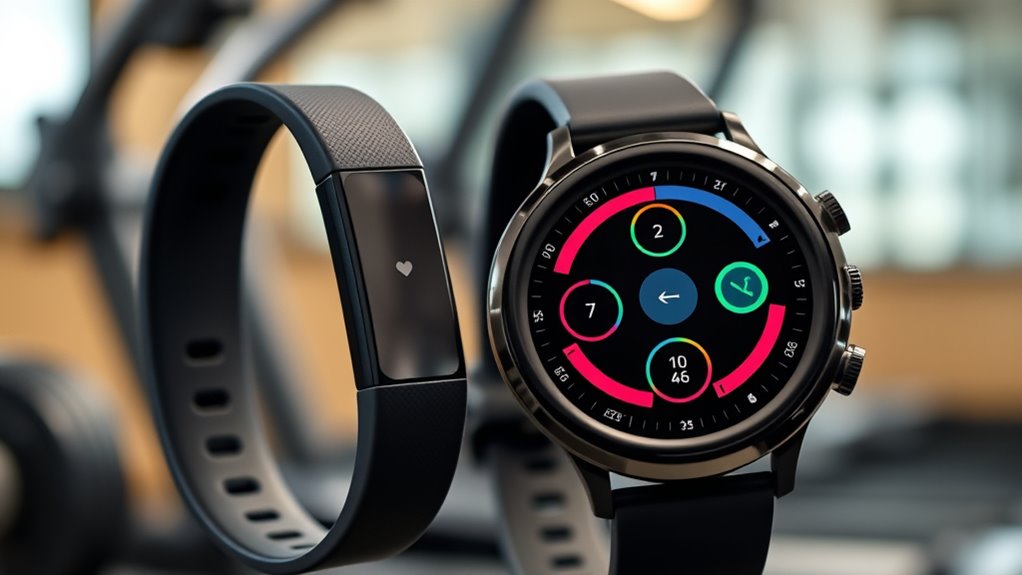
Tracking capabilities and fitness features are at the core of both fitness trackers and smartwatches, but they serve different levels of detail and accuracy. Fitness trackers excel at basic metrics like steps, heart rate, sleep, and calories burned, often providing consistent, long-lasting data for everyday wellness. They use specialized sensors to deliver reliable insights, especially for athletes or dedicated health monitoring. Smartwatches go further, offering advanced health metrics such as ECG, heart rate variability, skin temperature, and fall detection. They support multiple fitness apps, allowing you to customize workouts and access detailed analyses. While both devices track your activity, fitness trackers focus on simplicity and endurance, whereas smartwatches provide exhaustive fitness data alongside broader smart features. Additionally, reliable sensors play a crucial role in ensuring the accuracy of these health metrics across both devices.
Compatibility, Ecosystems, and App Integration

Compatibility and ecosystem integration play a crucial role in choosing between fitness trackers and smartwatches. If you’re an iPhone user, an Apple Watch works seamlessly, offering smooth integration with iOS features like Messages, Siri, and Apple Music. Conversely, Android users benefit from devices like the Google Pixel Watch or Samsung Galaxy Watch, which sync well with Android apps, notifications, and assistant features. Fitness trackers typically support both iOS and Android with fewer restrictions, making them versatile for many users. Smartwatches often provide more advanced app integration, including third-party fitness apps, notifications, and voice assistants, enhancing overall functionality. Your choice depends on your existing device ecosystem and how deeply you want your wearable to integrate with your smartphone and apps. Additionally, understanding compatibility and ecosystem can help you make a more confident decision aligned with your device preferences.
Battery Life, Charging, and Usage Convenience

Battery life and charging routines considerably influence how you use fitness trackers and smartwatches daily. Fitness trackers typically last days or weeks on a single charge, making them ideal for continuous health monitoring without frequent recharging. Smartwatches, like the Apple Watch or Galaxy Watch, usually need daily or every-other-day charging due to their larger displays and extensive features. This can impact your routine, especially if you prefer less maintenance. Additionally, incorporating sound healing science principles can help you relax during charging sessions, making the process more enjoyable.
Pricing, Target Audience, and Choosing the Right Device

Pricing plays a significant role in deciding between fitness trackers and smartwatches, especially as their features and target audiences differ. Fitness trackers are generally more affordable, making them ideal if your main focus is health monitoring without extra bells and whistles. Smartwatches tend to cost more due to their advanced functionalities, like apps, notifications, and customizable designs. Your target audience influences your choice: serious athletes or fitness enthusiasts might prefer specialized trackers like Garmin or Whoop, while casual users seeking convenience often opt for smartwatches like the Apple Watch or Galaxy Watch. Consider your budget, desired features, and how integrated you want your device to be with your smartphone ecosystem. Choosing the right device depends on balancing your fitness needs with your budget and lifestyle preferences. Additionally, understanding the target audience can help determine which device aligns best with your personal or professional needs.
Frequently Asked Questions
Can Fitness Trackers or Smartwatches Improve Mental Health or Stress Management?
You can definitely use fitness trackers or smartwatches to improve mental health and manage stress. These devices often feature guided breathing exercises, mindfulness prompts, and sleep tracking, helping you become more aware of your stress levels. By monitoring your heart rate variability and sleep patterns, they encourage healthier habits. Regular use can boost your awareness, promote relaxation, and ultimately support your mental well-being by encouraging consistent self-care.
Are There Any Waterproof or Water-Resistant Options for Both Device Types?
Yes, both fitness trackers and smartwatches often come with waterproof or water-resistant features. You can find models that are suitable for swimming, showering, or rain, depending on their ratings, like IP68 or 5 ATM. Check the specifications before buying to verify the device can withstand water exposure in your activities. This way, you won’t have to worry about damaging your device during workouts or daily life.
How Secure Is My Data on Fitness Trackers and Smartwatches?
Your data’s security varies between devices. With fitness trackers, you often get basic encryption, but some may lack advanced protections, making your info vulnerable. Smartwatches, especially those from big brands like Apple or Samsung, typically have stronger security features, including biometric locks and regular software updates. However, both can be at risk if you don’t keep software current or share your data freely. Always review privacy policies to understand how your data is handled.
Do These Devices Support Voice Commands and Voice Assistant Features?
Yes, both fitness trackers and smartwatches support voice commands and voice assistants. With a smartwatch, you can easily access features like setting reminders, sending messages, or controlling music using voice commands through built-in assistants like Siri, Google Assistant, or Bixby. Fitness trackers may have limited voice support, but some offer basic voice controls or integrate with your smartphone’s voice assistant for quick commands.
Can They Be Used Effectively for Customized or Advanced Training Programs?
Yes, both devices can support customized or advanced training programs, but smartwatches like Apple Watch or Samsung Galaxy Watch offer more extensive options. They sync with third-party fitness apps, provide detailed workout plans, and offer personalized coaching features. Fitness trackers focus more on basic metrics, so if you want tailored workouts and in-depth training analysis, a smartwatch is your best choice, especially if you value additional smart features.
Conclusion
Ultimately, choosing between a fitness tracker and a smartwatch depends on your lifestyle and goals. Consider what features matter most—whether it’s detailed health metrics or seamless connectivity. Remember, “the proof of the pudding is in the eating,” so prioritize what aligns with your daily routine. Whichever you pick, investing in the right device can motivate you to stay active and healthy, making your journey to wellness both enjoyable and effective.