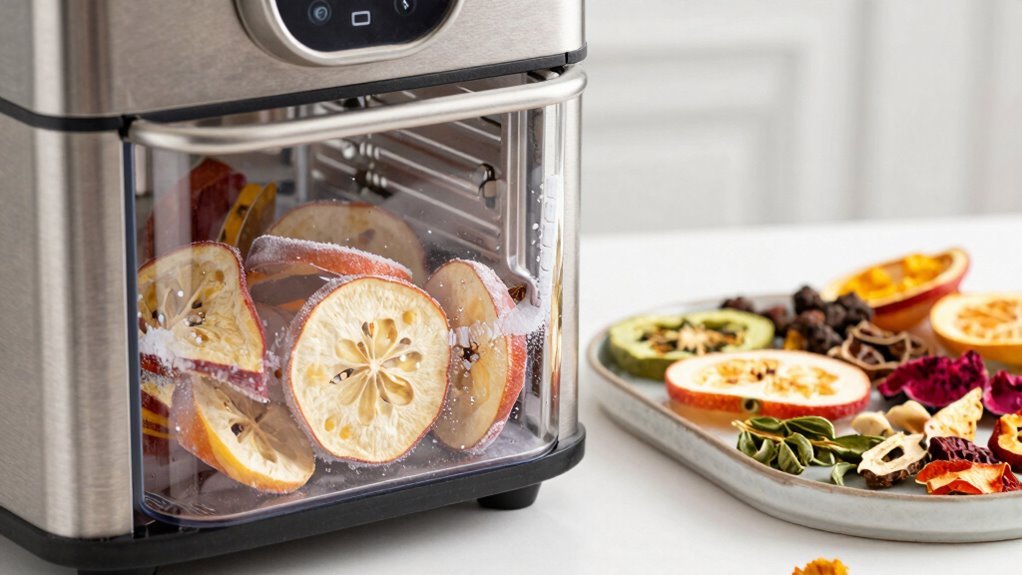

A freeze dryer differs from a dehydrator mainly in how it removes moisture. Freeze drying uses sublimation, turning ice directly into vapor at low temperatures, which helps preserve the food’s texture, flavor, and nutrients better. Dehydrators rely on warm air to evaporate moisture, which can cause slight nutrient loss and texture changes. If you want to understand how these differences impact food quality and storage, there’s more to discover below.
Listen free for 30 days with Audible
Thousands of audiobooks and originals — cancel anytime.
As an affiliate, we earn on qualifying purchases.
Key Takeaways
- Freeze dryers use sublimation under vacuum, removing ice directly as vapor, unlike dehydrators that rely on heat for evaporation.
- Freeze drying preserves more nutrients, flavor, and delicate textures compared to heat-based dehydration.
- Freeze dryers produce lightweight, long-lasting, and stable foods suitable for long-term storage.
- Dehydrators are smaller, more affordable, and better suited for everyday use and tougher foods.
- Freeze dryers handle a wider variety of foods, including delicate and complex items, due to their specialized process.
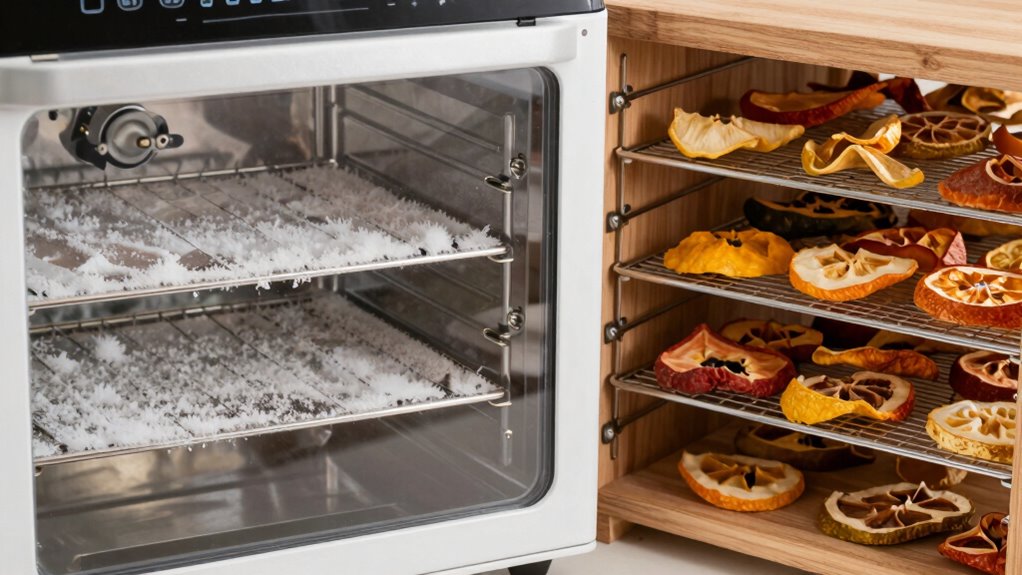
When it comes to preserving food, choosing between a freeze dryer and a dehydrator can be confusing, as both methods dry out food effectively but do so through different processes. A freeze dryer uses a process called sublimation, where the food is first frozen and then placed under a vacuum. This causes the ice in the food to bypass the liquid stage and shift directly into vapor, removing moisture while preserving the structure of the food. Dehydrators, on the other hand, work by circulating warm air over the food, gradually removing moisture through evaporation. While both methods extend shelf life, their impact on shelf preservation and nutrient retention varies considerably.
A freeze dryer excels at maintaining the food’s original texture, flavor, and nutritional profile. Because it operates at low temperatures and removes moisture rapidly, it minimizes nutrient loss—particularly sensitive vitamins like C and B complex. This means you get a product that’s closer to fresh in terms of nutritional value, making it ideal for long-term storage of fruits, meats, and even dairy. Dehydrators, although effective, often cause a slight decline in some nutrients due to prolonged exposure to heat. They are better suited for foods that don’t require the same level of nutrient preservation, like herbs or tougher vegetables, where texture and flavor are primary concerns. Additionally, the nutrient retention of freeze drying makes it particularly suitable for health-conscious consumers looking to preserve vitamins and minerals.
Shelf preservation is another area where these methods differ. Freeze-dried foods are incredibly lightweight and stable, making them perfect for emergency preparedness, camping, or long-term storage without refrigeration. Their low moisture content inhibits bacterial growth and spoilage, ensuring a longer shelf life. Dehydrated foods also last long but may not be as shelf-stable for extremely extended periods, especially if not stored properly in airtight containers. They’re more susceptible to moisture re-entry, which can lead to mold or spoilage over time. The food texture preservation is often superior with freeze drying, which helps retain the original consistency of delicate items like berries or cooked meals. Proper storage conditions are critical for both methods to maximize shelf life and prevent spoilage.
Furthermore, freeze drying also allows for better retention of flavor because the sublimation process minimizes flavor loss compared to heat-based drying methods. The versatility of equipment and the types of food you can process also differ significantly, with freeze dryers accommodating a broader range of delicate or complex foods. Another key difference lies in the versatility of the equipment and the types of food you can process. Freeze dryers tend to be larger, more expensive, and suited for batch processing of a wide variety of foods, including delicate items like berries or cooked meals. Dehydrators are generally smaller, more affordable, and easier to use for everyday dehydration tasks, such as making fruit leathers or drying herbs.
freeze dryer for food preservation
As an affiliate, we earn on qualifying purchases.
As an affiliate, we earn on qualifying purchases.
Frequently Asked Questions
Can Freeze Dryers Preserve Nutrients Better Than Dehydrators?
Yes, freeze dryers preserve nutrients better than dehydrators. You’ll notice improved nutrient retention because the freeze-drying process removes moisture through sublimation at low temperatures, which helps lock in vitamins, minerals, and flavors. This method maintains the food’s original food quality more effectively, ensuring you get healthier, tastier preserved foods. So, if nutrient preservation is your priority, a freeze dryer is the better choice for maintaining the nutritional value of your food.
How Long Does Each Process Typically Take?
You’ll find that dehydrators typically take anywhere from 6 to 12 hours, depending on the moisture removal needed and the food type, making them relatively fast for simple drying tasks. Freeze dryers, however, process food much slower, often taking 24 to 48 hours, because they remove moisture through sublimation at low temperatures. The processing speed varies considerably, with dehydrators being quicker for small, thin items, and freeze dryers suited for preserving nutrients with detailed moisture removal.
Are Freeze Dryers Suitable for Commercial Use?
Yes, freeze dryers are suitable for commercial use, especially considering their high efficiency—up to 98% preservation of nutrients. You’ll find that they excel in handling large batches, but capacity considerations matter; industrial models can process tons of product daily. Their ability to produce consistent, high-quality output makes them ideal for commercial operations, from food production to pharmaceuticals, ensuring you meet demand while maintaining product integrity.
What Is the Energy Consumption Difference?
You’ll find that freeze dryers generally consume more power than dehydrators due to their energy-intensive process of freezing and sublimation. Freeze dryers prioritize energy efficiency in long-term operation but have higher initial power consumption, whereas dehydrators use less power with straightforward drying techniques. If you’re considering operational costs, expect freeze dryers to use more electricity, impacting your overall power consumption and energy efficiency over time.
Can Both Methods Be Used for Medicinal Herbs?
Yes, both methods can be used for medicinal herbs, but they impact herb potency differently. Freeze drying preserves more active compounds because it uses low temperatures and sublimation, maintaining the herbs’ original qualities. Dehydrators use heat, which can degrade some medicinal properties over time. Your choice depends on how much you value preserving the herbs’ full strength and the drying techniques you prefer for ideal medicinal benefits.
Conclusion
So, when choosing between a freeze dryer and a dehydrator, think of it like selecting a painter’s brush—each has its own unique stroke. The freeze dryer is your precision instrument, preserving flavors and nutrients like a master artist, while the dehydrator offers a more relaxed, sun-dried feel. Understanding their differences helps you pick the right tool, ensuring your food’s journey from fresh to fabulous is perfectly tailored—like a symphony, each instrument playing its part in harmony.
Grilling season Picks
grills
As an affiliate, we earn on qualifying purchases.