One of the biggest mistakes is choosing dark, heavy colors or overloading your small room with bold hues, which can make it feel cramped. You might also place oversized furniture in tight spaces or block pathways, reducing openness. Poor lighting and clutter can add to the chaotic vibe, making the room feel even smaller. To avoid these pitfalls, focus on light colors, strategic furniture placement, and proper lighting—more tips await to help you create a stylish, spacious feel.

Get travel and outdoor gear delivered free — and shop member deals
- Fast, free delivery on millions of items
- Access to Prime Big Deal Days deals on October 6–7
- Prime Video, Amazon Music and more included
Key Takeaways
- Using dark, heavy colors that make the space feel cramped and confined.
- Overfilling the room with oversized furniture or too many accessories.
- Blocking pathways with furniture, reducing functionality and flow.
- Neglecting proper lighting, creating shadows and dark corners.
- Cluttering decor, which overwhelms the space and reduces openness.
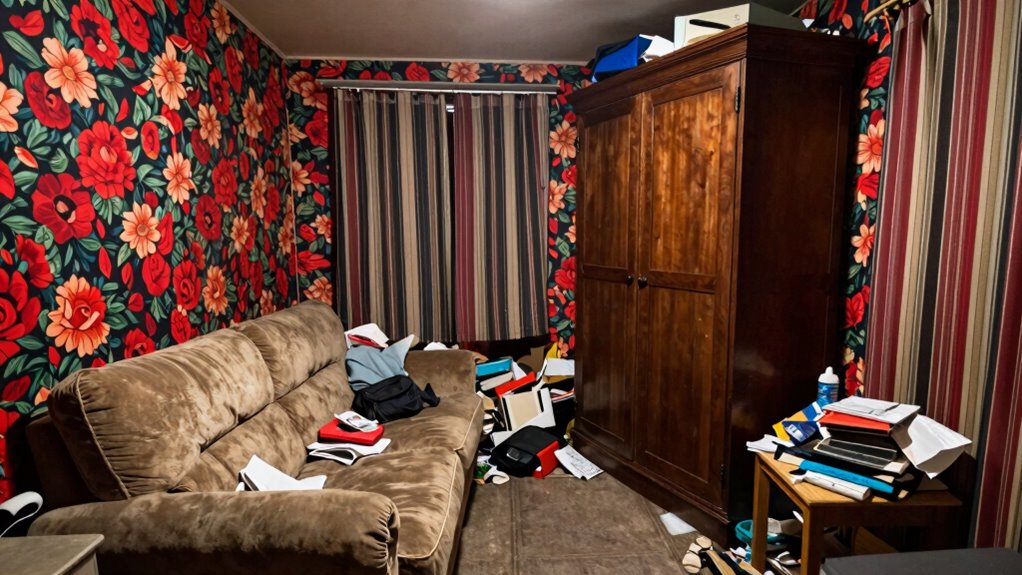
Decorating small rooms can be challenging, especially if you’re trying to maximize space without sacrificing style. One of the biggest mistakes you might make is choosing the wrong color schemes. Bright, light colors can open up a room and make it feel larger, while dark, heavy hues tend to make a space feel cramped and confined. You might be tempted to go bold with dark walls to add personality, but in a small room, this can backfire. Instead, opt for soft neutrals, pastels, or cool shades like pale blue or mint green. These colors reflect more light and create an airy, open atmosphere. Be cautious about using too many contrasting or saturated colors, as they can overwhelm the space and make it feel cluttered, even if it’s not physically crowded. Additionally, choosing appropriate color schemes can significantly influence the perceived size and comfort of your space.
Another common mistake is poor furniture placement. In small rooms, every piece of furniture should serve a purpose and be positioned thoughtfully. If you clutter the space with oversized furniture or place items in a way that blocks pathways, you’ll instantly feel more confined. To avoid this, measure your room carefully and choose appropriately scaled furniture. Keep larger pieces against the walls to free up central space, and consider multi-functional furniture like a bed with storage drawers or a fold-out desk. When arranging furniture, think about flow and accessibility. For example, don’t block windows or doorways, as this can make the room feel more closed off and less inviting. Use the “floating furniture” technique, where you don’t push everything right up against the walls, but instead create a more balanced layout that encourages movement. Additionally, incorporating spatial planning ensures that your furniture arrangement optimizes both function and openness.
You also need to be mindful of your overall design approach. Overcrowding the small space with too many pieces or accessories can make it feel chaotic rather than cozy. Keep decor minimal and choose a few statement pieces instead of a clutter of small items. Mirrors are your friends—they reflect light and give the illusion of more space. Properly placed, they can make your room feel twice as big. Lighting is equally important; avoid relying solely on overhead fixtures that can cast shadows and make corners feel darker. Incorporate layered lighting with table lamps or wall sconces to brighten every nook.
As an affiliate, we earn on qualifying purchases.
Frequently Asked Questions
How Can I Make Small Rooms Feel More Spacious Instantly?
To make small rooms feel more spacious instantly, utilize space-saving tips like multi-functional furniture and vertical storage. Incorporate optical illusions, such as mirrors and light colors, to reflect light and create depth. Keep clutter to a minimum and choose furniture in light shades to open up the space. These quick tricks will make your room appear larger and more inviting without a major overhaul.
What Color Schemes Work Best for Tiny Spaces?
You can instantly transform your tiny space with color schemes that breathe life into it! Opt for monochrome palettes to create a seamless, expansive feel, making walls seem endless. High contrast color schemes add drama without overwhelming—think bold blacks and whites or deep navy with crisp whites. Light, neutral tones also work wonders, reflecting natural light and making your room feel open and airy. Mix and match these for a visually stunning, spacious effect!
Are Multi-Functional Furniture Pieces Worth the Investment?
Yes, multi-functional furniture pieces are definitely worth the investment. Convertible furniture and modular designs help maximize limited space by offering flexible solutions, like a sofa bed or a fold-out desk. They allow you to easily transform your room for different needs, saving space and reducing clutter. Plus, they add versatility and style, making your small room feel more functional and comfortable without sacrificing design.
How Should I Prioritize Storage in Small Rooms?
Imagine a tiny apartment where clever storage organization transformed chaos into order. Prioritize storage in small rooms by using vertical space with wall-mounted shelving solutions to free up floor area. Incorporate multifunctional furniture with hidden compartments to maximize storage without clutter. Keep essentials accessible and declutter regularly, ensuring your space feels open and functional. Efficient storage solutions make your small room feel larger and more comfortable.
What Lighting Options Enhance Small Room Decor?
You should choose lighting options that brighten and enhance your small room decor, like ambient lighting to create warmth and comfort. Incorporate statement fixtures, such as a bold chandelier or pendant light, to add personality without cluttering the space. Use layered lighting to improve functionality and ambiance, and opt for sleek, compact designs that don’t overwhelm the room. This approach makes your small space feel larger, inviting, and stylish.
Conclusion
So, next time you’re decorating a small room, remember to keep it simple, choose the right scale, and maximize storage. Don’t let clutter or overwhelming furniture make the space feel even smaller. After all, isn’t it better to create an inviting, functional space rather than one that feels cramped and chaotic? With a bit of planning and a keen eye, you can transform any tiny room into a stylish, comfortable retreat. Why settle for less when you can make it perfect?
Fall Picks
fall essentials
As an affiliate, we earn on qualifying purchases.