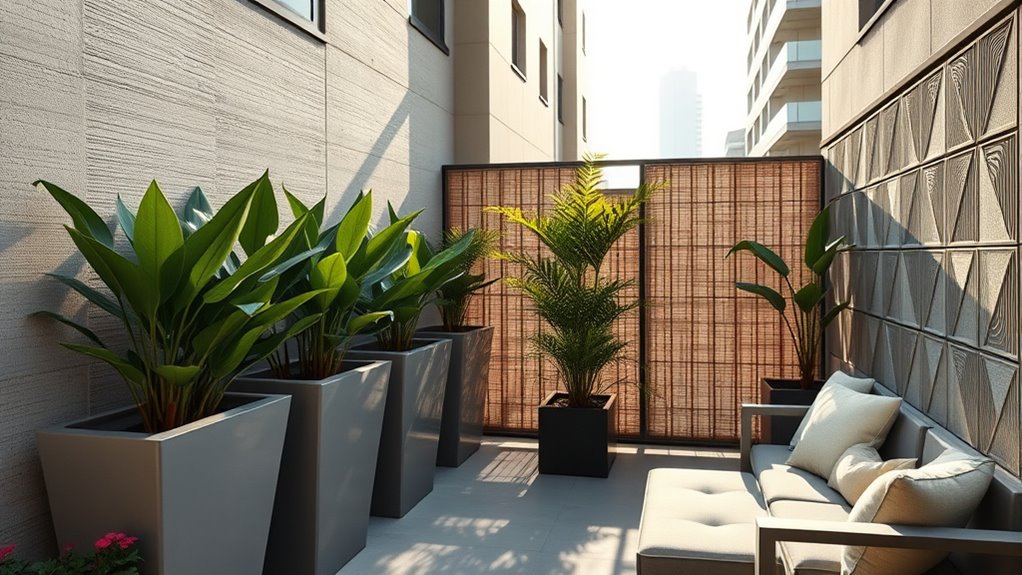

To create a peaceful urban oasis, start by adding acoustic panels or foam behind your walls to absorb noise. Upgrade to double- or triple-glazed windows, and use thick curtains to block sound. Seal gaps around windows and doors for extra insulation. Combining these steps with strategic window treatments and sealing techniques will considerably reduce city noise, transforming your home into a calming retreat. Explore more tips to make your space even more tranquil.
Key Takeaways
- Install acoustic panels or foam on walls to absorb external noise and enhance room tranquility.
- Upgrade windows to double- or triple-glazed models and add soundproof curtains for effective noise barriers.
- Seal gaps around windows and doors with weatherstripping or caulking to prevent sound leaks.
- Use layered soundproofing strategies combining insulation, window treatments, and sealing for maximum noise reduction.
- Personalize space with calming decor to create a relaxing, peaceful environment amidst urban noise.

Living in a busy city doesn’t mean you have to accept constant noise pollution. You can create a tranquil haven right inside your home by focusing on effective soundproofing strategies. One of the most impactful steps is to invest in acoustic insulation. This material helps absorb sound waves, preventing noise from traveling through walls and ceilings. Installing acoustic panels or foam in your walls can substantially reduce city noise, making your space more peaceful. It’s especially useful if you live near busy streets or noisy neighbors. Acoustic insulation doesn’t have to be intrusive; it can be added behind drywall or within wall cavities, maintaining your room’s aesthetics while enhancing soundproofing. Using fabric decorating markers can also help personalize your space, making it more inviting and calming amidst the urban environment.
Invest in acoustic insulation to create a peaceful, noise-free home amid city life.
Another key element is choosing the right window treatments. Windows are often the weakest link in soundproofing efforts because they let in a lot of outside noise. Upgrading to double-glazed or even triple-glazed windows can drastically cut down on noise infiltration. But if replacing windows isn’t an option, thick, heavy curtains or specialized soundproof drapes can help. These window treatments act as a barrier, absorbing sound waves before they enter your space. They’re easy to install and can be drawn closed during noisy times, providing immediate relief. Additionally, sealing gaps around your windows with weatherstripping or caulking can prevent sound leaks, further enhancing your room’s acoustic barrier.
Combining acoustic insulation with strategic window treatments creates a layered approach to soundproofing. This way, you’re not relying solely on one solution but reinforcing your defenses against noise. For instance, adding acoustic panels inside your walls and choosing heavy curtains for your windows can make a noticeable difference even in a bustling urban environment. Remember, the goal is to block or absorb as much outside noise as possible while maintaining a comfortable and inviting space. Small changes, like sealing gaps and upgrading window treatments, are often quick and cost-effective ways to boost your home’s tranquility.
Ultimately, you hold the power to turn your apartment or house into a peaceful retreat. With a little effort—focusing on acoustic insulation and smart window treatments—you can enjoy quiet mornings, restful nights, and a sense of calm amid the city’s hustle and bustle. These upgrades don’t just improve your comfort; they create a sanctuary where you can truly unwind and escape the noise of urban life.
Frequently Asked Questions
What Are the Best Plants for Noise Absorption Indoors?
If you’re looking for the best plants for noise absorption indoors, focus on plant varieties known for dense foliage and thick leaves. Indoor greenery like rubber plants, snake plants, and pothos are excellent choices, as their lush leaves help dampen sound. Keep in mind, the more vibrant and full your indoor greenery, the more effective it is at absorbing noise, creating a calmer, more peaceful environment.
How Can Furniture Placement Reduce Noise Transmission?
You might think furniture placement won’t make much difference, but a strategic room layout can considerably reduce noise transmission. Position plush sofas and thick bookcases against shared walls to absorb sound, and arrange furniture to create barriers that block noise from entering or leaving a space. By carefully planning your furniture arrangement, you can craft a quieter, more peaceful environment that transforms your urban dwelling into a calming oasis.
Are There Eco-Friendly Soundproofing Options?
You can choose eco-friendly soundproofing options by selecting products made from eco-conscious materials like recycled cotton, cellulose, or cork. Recyclable solutions such as reclaimed wood panels or biodegradable insulation help reduce environmental impact. These options not only effectively dampen noise but also support sustainability. By opting for eco-conscious materials, you create a peaceful space while minimizing your carbon footprint, making your urban oasis both tranquil and environmentally friendly.
How Does Window Insulation Impact Soundproofing?
Ever wonder how window insulation can transform your space? It’s more than just adding a layer; it’s about sealing gaps with quality window seals and choosing glass with the right thickness. These factors work together to block noise effectively, creating a quieter sanctuary amidst urban chaos. When you upgrade your window insulation, you’re not just improving comfort—you’re sealing out disturbances and crafting a peaceful, serene environment.
Can DIY Soundproofing Be as Effective as Professional Installations?
You might wonder if DIY soundproofing is as effective as professional installations. While DIY methods can considerably reduce noise and improve your space’s comfort, their effectiveness often falls short of professional comparison. Professionals use advanced materials and techniques, ensuring better sound isolation. However, if you’re on a budget or tackling minor issues, DIY effectiveness can be quite satisfactory, especially with proper research and effort.
Conclusion
Think of your space as a quiet harbor amid a bustling sea. With these soundproofing tricks, you’re building walls to block the noise and planting barriers to keep chaos at bay. Each improvement is like adding a lighthouse, guiding peace into your home. Soon, your urban oasis becomes a sanctuary—a calm island where stress drifts away, and serenity reigns. Embrace these tricks, and turn your city life into a peaceful, protected haven.